

As they approve bikes plan, Lawrence city leaders ask about data collection, Kentucky and Tennessee streets
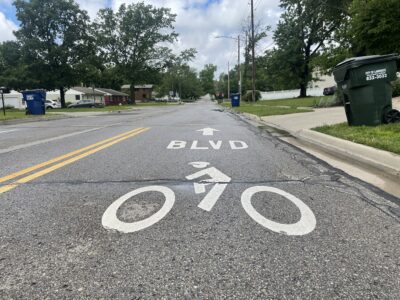
photo by: Sylas May/Journal-World
Road markings indicate the bike boulevard route on 21st Street in central Lawrence on Friday, May 29, 2026.
When city leaders approved Lawrence’s new bicycle infrastructure plan on Tuesday, they also had questions about some roads that weren’t prioritized in it – Kentucky and Tennessee streets.
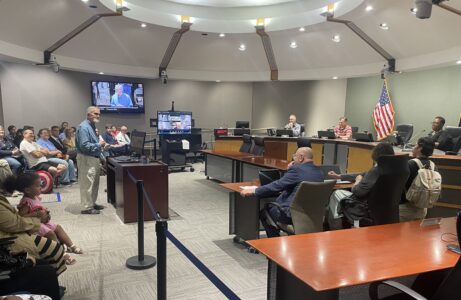
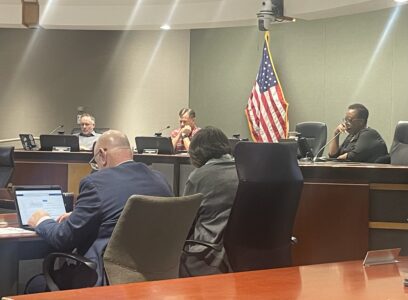
The Lawrence City Commission voted 4-0 to adopt the updated Lawrence Bikes Plan, which will serve as a framework for bicycle infrastructure improvements in the community in the years to come. The plan had not been updated since 2019, and, among other things, it identifies “priority” and “secondary” networks of bikeways in the community that help guide the city’s decisions on which projects to fund and seek grants for.
Grants are a key component of bicycle and pedestrian infrastructure projects, Mayor Brad Finkeldei noted – he said the Lawrence Loop trail around the city, one of the highest priorities for survey respondents in the bikes plan feedback, was 80% grant-funded.
“The Loop would never have been funded if we didn’t have a bikes plan,” he said.
But Kentucky and Tennessee are not on the priority or secondary networks of the plan. The one-way streets are, however, on what’s called the “high-injury network” of areas where crashes are most concentrated.
As the Journal-World has reported, some Lawrence residents have suggested reducing Kentucky and Tennessee to one lane each for motor vehicle traffic and turning the other lane into a protected bike lane with a physical barrier separating it from the cars. But city commissioners have said they want to wait and see how similar bike lane projects, like the one currently happening on Ninth Street and another on Massachusetts Street, play out.
Finkeldei said he’d gotten a letter from an advocacy group asking for protected bike lanes to be designated in the plan for the one-ways. “Would it be appropriate at this planning stage to put that in this plan, or is that for future consideration?” he asked.
“We really haven’t felt that’s appropriate,” Transportation Planning Manager Jessica Mortinger told him. She said this was more of a high-level plan, and they couldn’t do the necessary due diligence for a single project at that level.
That doesn’t mean that bikeways on Kentucky and Tennessee couldn’t get funded, she said. The priority and secondary networks are for prioritizing standalone bike infrastructure, and that’s not the only way that bike projects get built in the city. Mortinger said that there would need to be a “conversation” about what should take place with those streets.
Commissioners had previously said they wanted more data for that conversation, but Mortinger told them Tuesday that “data is really hard in this space.” She said the Kansas Department of Transportation collects data on traffic for motor vehicles, but not for bike and pedestrian activity.
The city does have counting equipment for bikes and pedestrians, but Mortinger said the problem is dedicating enough labor to get a meaningful count. Most of the counting has been done as “before and after” when a bikeway project is done, she said.
“I know that’s been part of the conversation around Mass. Street, and I’m sure it will be part of the conversation around Ninth Street,” she said.
Commissioner Mike Dever wondered whether a camera could be put up to monitor how many bikers there were in certain areas. “AI could analyze that data pretty easily, I’m sure,” he said.
And Vice Mayor Mike Courtney agreed that technology could play a role here.
“I really do want to see some data after we have Ninth Street set up, after Mass. Street is done, to be able to say, ‘What does that look like? How many people actually are using these road diet levels of infrastructure?'” he said. “And if we need help to do that, I’m sure we can get some tech people to help figure that out.”
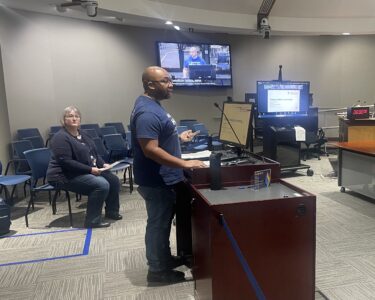
A couple of commenters expressed their support for the plan, including Samuel Carter, who was on the steering committee that produced it, and Keith Muller, owner of the bike shop Cycle Works.
“Research shows when a community has good infrastructure for safe cycling, everyone benefits,” Muller said. “Roads become safer for all users, businesses like restaurants and shops get an economic boost, people have more options for transportation, and community health improves.”
And Carter said, “I am personally proud of what has come forth, and I look forward to more bikeways in the future.”
City Government
As they approve bikes plan, Lawrence city leaders ask about data collection, Kentucky and Tennessee streets
Lawrence city leaders want to toughen tobacco licensing rules ‘sooner than later’
Algerian government invites Mayor Brad Finkeldei, Lawrence delegation for a visit
Construction on Wakarusa Drive to resume; city manager says KDOT’s secretary has apologized for delay
Evacuation drill planned Tuesday at Lawrence City Hall
