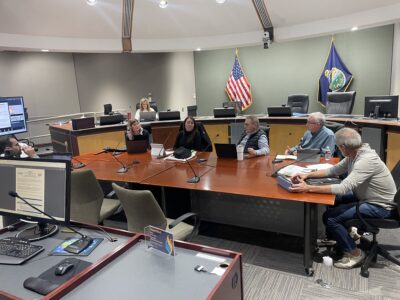

Lawrence city staff says a 6-month tobacco license pause will be enough to craft new rules, and commissioners approve it
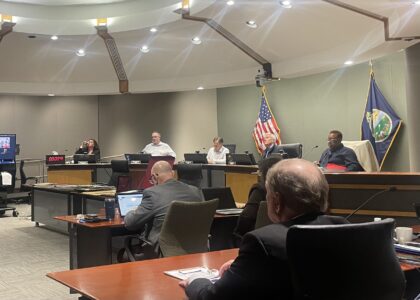
photo by: Sylas May/Journal-World
The Lawrence City Commission meets on Tuesday, Nov. 17, 2026, to discuss a moratorium on tobacco licenses.
A six-month moratorium on tobacco licenses is all city staff says it will need to develop tighter rules, and that’s what the City Commission unanimously approved on Tuesday night.
As the Journal-World has reported, the moratorium will prevent new tobacco licenses from being issued within the city limits, but won’t stop existing businesses from renewing their licenses. It’s been requested by Lawrence-Douglas County Public Health, the city-county health department, as a stopgap while the city considers how to strengthen its tobacco retail licensing program.
Among other things, LDCPH has been concerned about the number of licensed retailers (nearly 90), their concentration in low-income areas and the fact that between 15% and 18% of them have failed compliance checks by selling to underage buyers.
The commission and staff had previously discussed a 12-month moratorium, but on Tuesday, Deputy City Attorney Randy Larkin said staff believed it was possible to develop stronger regulations in half that time.
“I think six months is a pretty quick turnaround, so thank you, staff, for committing to that,” Commissioner Kristine Polian said.
Several people spoke about the moratorium during the public comment period, and most were supportive. One was a pulmonary rehab nurse and activist with the American Heart Association, who said she saw the effects of tobacco on patients every day, and that more than $1 billion a year was spent in Kansas on tobacco-related diseases and disabilities.
Another commenter represented a convenience store trade group. “We do not love the idea of a blanket moratorium, but if we’re going to have one, briefer is better,” he said. He also asked the commission to allow transfers of ownership; they could be for legitimate business reasons, such as someone retiring and passing a business to a relative, and not just for skirting around the city’s enforcement.
One thing the health department has wanted is a way to stop stores from reopening under a new name and new ownership after their license is suspended for noncompliance. They wouldn’t be allowed to do that during the moratorium period, said LDCPH Executive Director Jonathan Smith, and multiple commissioners thought it was important to keep those kinds of ownership changes from happening.
“Because of the issues we had with transfers of ownership,” Mayor Brad Finkeldei said, “… I support the moratorium as it is.”
However, just like with a recent moratorium on data center development, business owners could seek an exception from the City Commission if the moratorium causes them “extraordinary hardship.” Finkeldei said that a legitimate sale or ownership transfer could be addressed through that mechanism.
Finkeldei also said the city was crafting its new regulations at a good time. The Kansas Legislature convenes for its 2027 session in January, and this year, Republicans no longer have a supermajority. Finkeldei said there could be a better chance next year for legislation that has failed in the past, including not only tobacco- and vaping-related measures, but maybe even medical marijuana bills, and the city would have to take any new laws into account.
“The timing might be good,” he said. “There might be some things we need to fold into this.”
City Government
Lawrence city staff says a 6-month tobacco license pause will be enough to craft new rules, and commissioners approve it
Proposed Aldi store in northwest Lawrence receives approvals from Planning Commission; City Commission to vote on incentive soon

In Algeria, Lawrence cops who helped out during the World Cup get the celebrity treatment

Lawrence City Commission to consider 12-month moratorium on new tobacco retail licenses

Plans for Aldi grocery store in northwest Lawrence moving ahead; vote on tax district coming up next week