Experts at town hall share potential for negative consequences to health care and Indigenous institutions from ‘One Big Beautiful Bill’
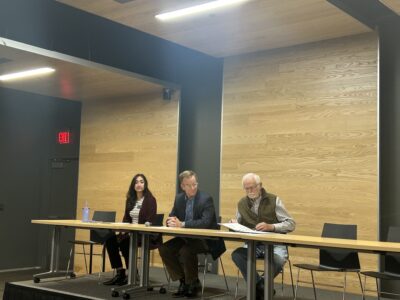
photo by: Bremen Keasey
Panelists spoke about the impacts to Douglas County of the "One Big Beautiful" legislation passed earlier this year in during a town hall Thursday night. From left, Marissa Alcantar, Rob Chestnut and Thad Holcombe spoke about the negative impacts of the legislation on health care and the Indigenous community.
Panelists shared during a town hall how many pieces of House Bill HR1, otherwise known as the “One Big Beautiful Bill,” will have negative consequences across Douglas County, especially in the health care space and at Haskell Indian Nations University.
The panel was hosted Thursday night at the Lawrence Public Library by Lawrence Indivisible, a local chapter of the national Indivisible movement, which is a group of people that resist what they consider authoritarianism and advocate for their political beliefs.
Three people served on the panel, including Marissa Alcantar, the policy and advocacy manager for the Alliance for a Healthy Kansas, an advocacy group pushing for the state to expand Medicaid; Rob Chestnut, the CFO for LMH Health and Thad Holcombe, a retired pastor who leads the Friends of Haskell Indian Nations University, a group that helps support faculty and staff there.
The discussion focused on the legislative package passed by Congress earlier this year that included a combination of tax cuts and significant changes to social safety net programs, like adding stricter work requirements for Medicaid and restricting eligibility for certain government programs like the Supplemental Nutrition Assistance Program, or SNAP.
Alcantar said the Congressional Budget Office estimated those cuts to Medicaid will lead to 10 million Americans becoming uninsured in the next decade, with about 180,000 Kansans becoming uninsured.
Additionally, Alcantar said the tax cuts on premiums for health insurance under the Affordable Care Act currently won’t be extended in 2026 — that issue is at the heart of the current federal government shutdown, according to Alcantar. She said if Congress does not end up passing legislation to extend those tax credits, health insurance premiums for people might go up by “hundreds or thousands” of dollars per year.
“If (Congress) lets that expire at the end of the year, there are going to be some pretty big consequences,” Alcantar said.
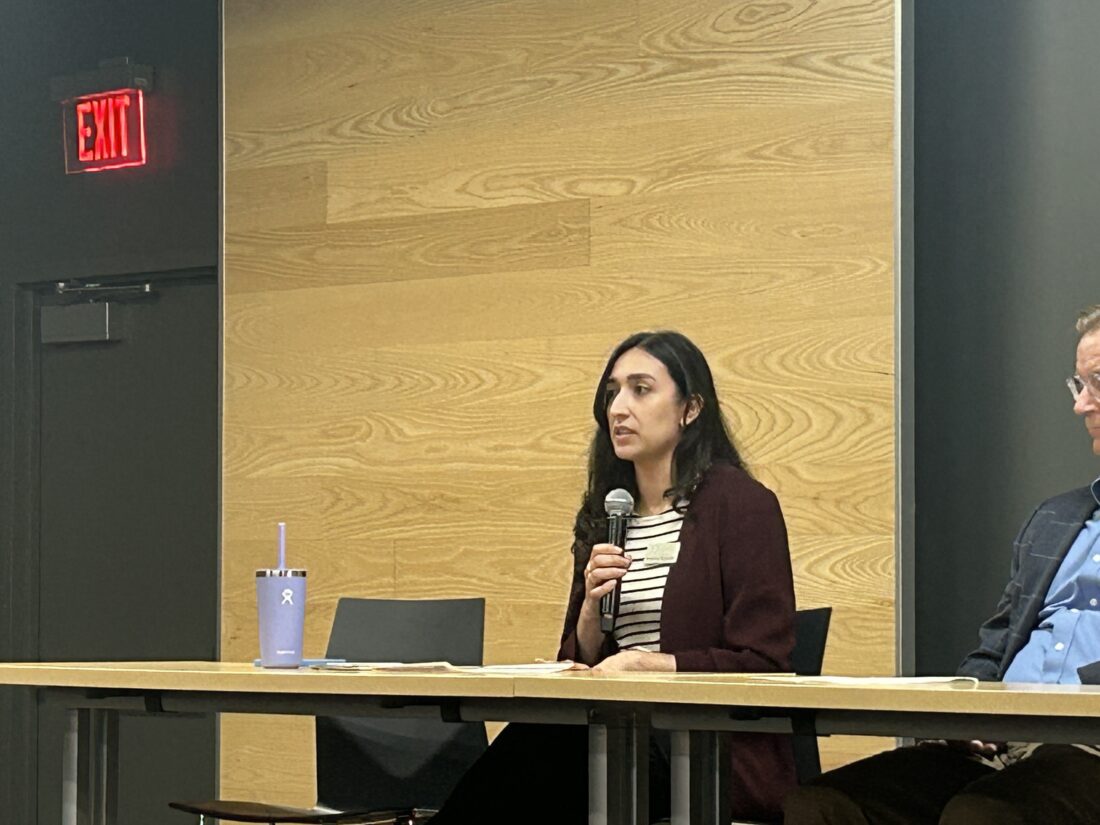
photo by: Bremen Keasey/Journal-World
Marissa Alcantar, the policy and advocacy manager for the Alliance for a Healthy Kansas, an advocacy group pushing for the state to expand Medicaid, speaking during a Town Hall at the Lawrence Public Library.
Chestnut said those higher rates make it more likely people cannot afford health insurance. If people don’t have insurance, those patients won’t access preventative care and be more likely to end up in the emergency room. In addition, Chestnut said the changes to Medicare access seems like “barriers (are) being put up” for patients, and he said that LMH will look to find more ways to help its patients better navigate Medicare or Medicaid.
“It is getting more complex, we have to pick up the slack,” Chestnut said.
The changes to Medicare in the legislation package also can create some issues for LMH down the road. Chestnut said in nearly all states, hospitals pay a tax which is then reimbursed by the federal government by that rate “and a good deal more.” In 2028, the legislation would lower the reimbursement rate and eventually eliminate it, which Chestnut said will be a big issue for many hospitals across the state — especially those in rural areas. Chestnut also said the legislation pushes for more patients to use Medicare Advantage programs which he said can be “challenging plans” for the hospital because the way they are structured can make it “harder to treat patients.”
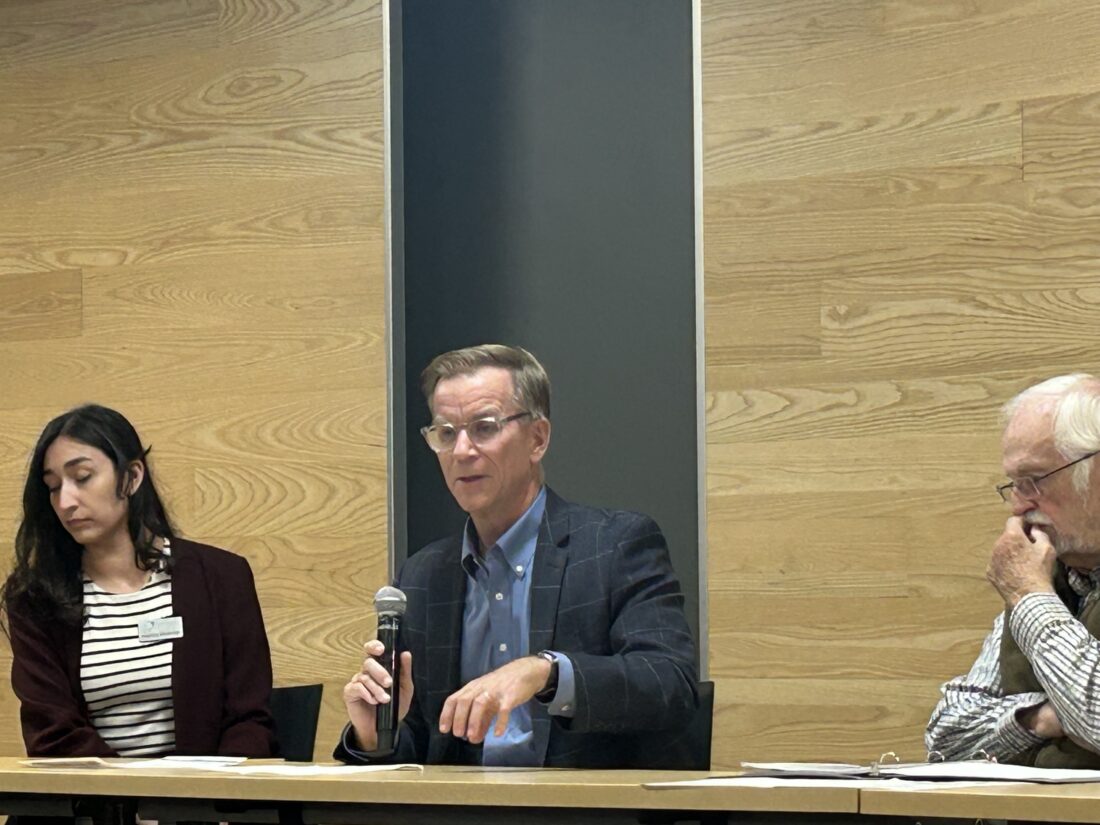
photo by: Bremen Keasey
Rob Chestnut, the CFO for LMH Health, speaking during a town hall meeting on Oct. 30, 2025.
For Haskell and the Indigenous community as a whole, Holcombe felt that many of the changes put forth in the bill highlighted a kind of “slow violence” against the Indigenous community.
As part of the legislation, Haskell and other tribal colleges faced a 90% reduction in funds, but even before that, Holcombe mentioned the “debacle” from this February when nearly 40 Haskell workers, including several instructors, were fired due to the Trump administration’s orders to cut the federal workforce, as the Journal-World reported. Since then, Holcombe started to try to organize people through meetings and be a “convener” between a lot of different stakeholders working to help Haskell.
Holcombe said the reduction in funds and resources to Indigenous groups to him represents the ways that “insidious and unseen oppression” happens to the community. Holcombe discussed how throughout American history, the idea that Indigenous peoples were inferior permeated and became part of policy — he noted Haskell was founded in 1884 as an institution to forcibly assimilate Native students.
In that light, Holcombe said the fact there is “way too little” funding for Haskell and other schools, no increase in funding for Indian Health Services and reducing federal grants for programs continues the slow violence. Additionally, the fact there was no support in removing the Bureau of Indian Education from administering Haskell — which Kansas legislators have drafted a bill to do — indicates to him that policies are still causing pain to Indigenous people.
“It’s what isn’t in the bill that’s as much of a damage,” Holcombe said.
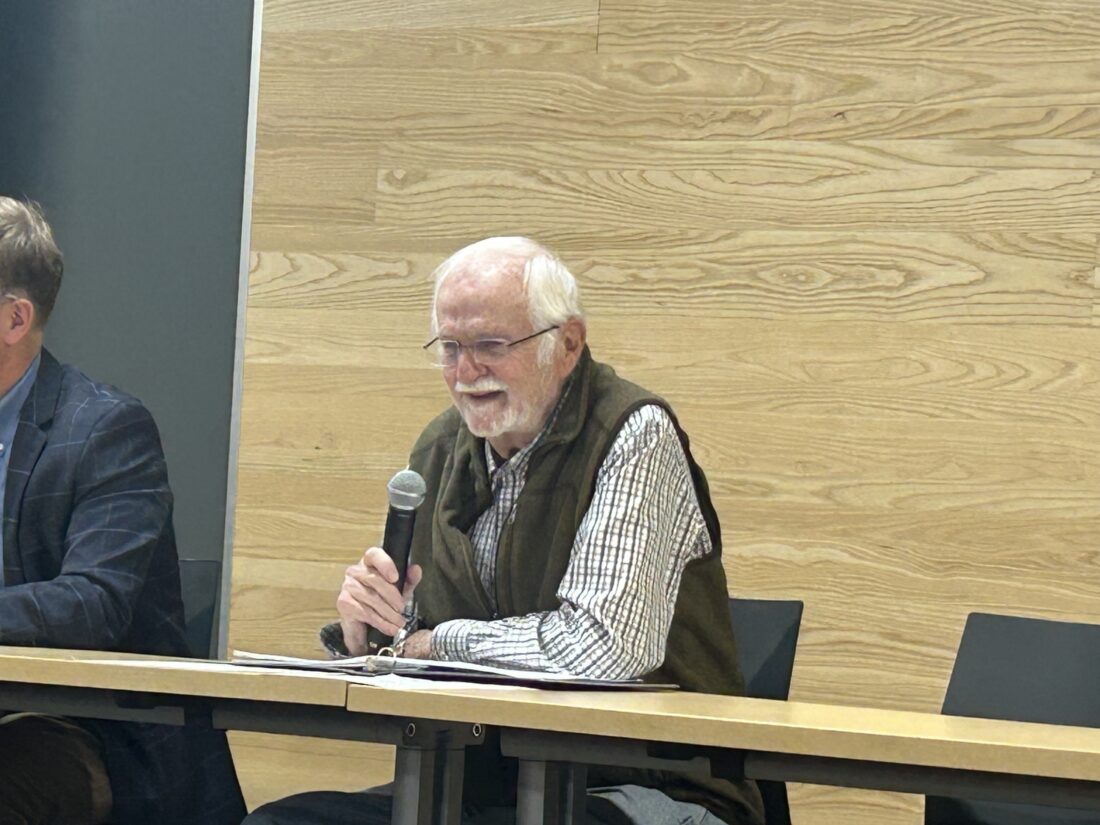
photo by: Bremen Keasey
Thad Holcombe, a retired pastor who leads the Friends of Haskell Indian Nations University, a group that helps support faculty and staff there, speaking during a Thursday night town hall
During a question and answer session afterward, many in the audience asked and expressed their concerns about the potential loss in SNAP benefits that could impact 42 million Americans starting Nov. 1. Additionally, they asked how the panelists can move people to action or find ways to take care of more people in the community.
Chestnut, the LMH Health CFO, felt because he “doesn’t see a future” at the moment where institutions will get more state or federal funding, one of his goals for LMH is to focus on doing more with less resources, while finding local advantages to ensure it provides a high level of care to the community.
Other people in the audience suggested getting together locally and finding ways to support others, whether through volunteering, donating to foundations and nonprofits or finding more ways of spreading awareness of the local impacts.
One audience member said that while Lawrence is a very giving and active community, they need to work on longer term solutions to help all of the city’s agencies and residents.
“Something bigger has to be done,” they said.
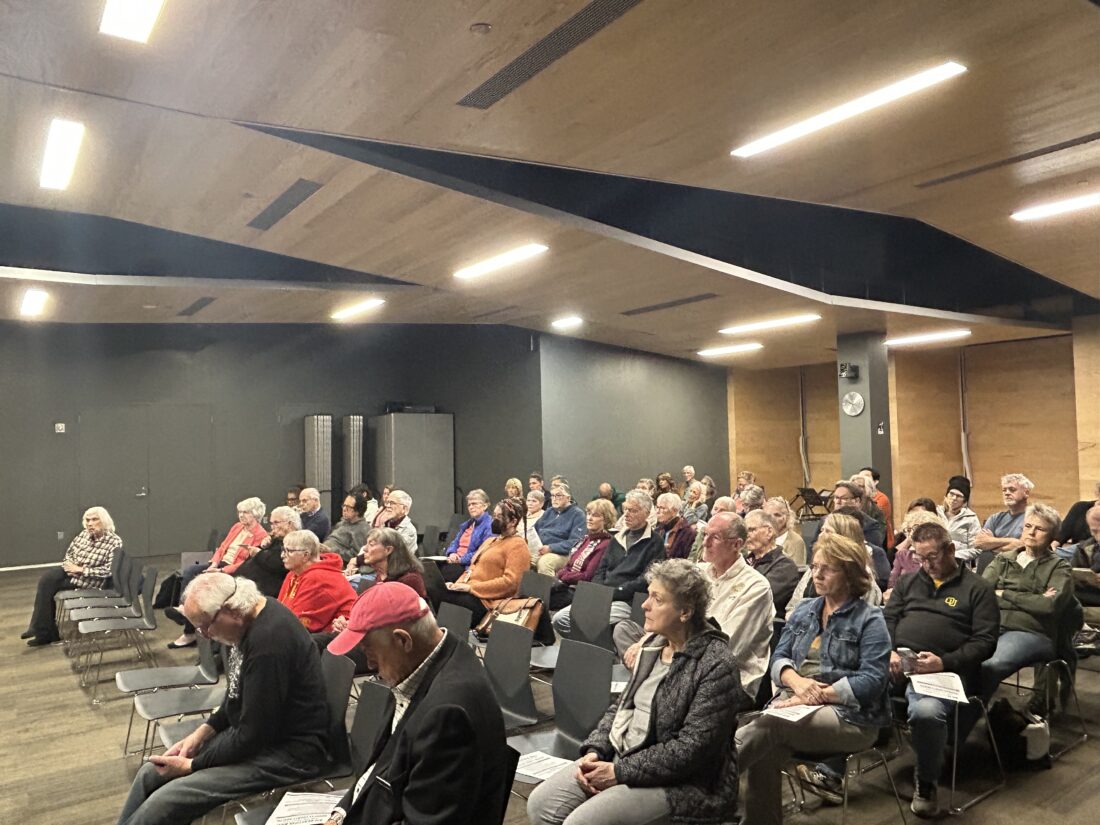
photo by: Bremen Keasey
Several dozen people attended a town hall hosted by the Lawrence Indivisible group Thursday night at the Lawrence Public Library that discussed the local impact of the “Big Beautiful Bill” on health care and Haskell Indian Nations University.
Other News

Clinton State Park and other state parks will increase overnight camping, vehicle permit fees starting next month
‘No day is like the other here’: Students from Lawrence’s German sister city discover football, new foods and new friends on exchange

GCSAA celebrates 100 years with new plaza and statue honoring its founder and first president

Go, See, Do: Library book sale, candidate forum and more

Gas station at Lawrence’s new Costco will be open starting next Wednesday