Douglas County commissioners defend keeping tense conversations about crisis center secret

photo by: Contributed Photos
Left to right: Douglas County Commissioners Patrick Kelly, Shannon Reid and Karen Willey.
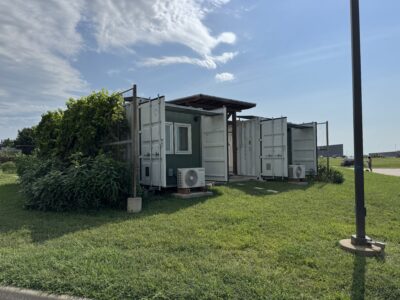
Douglas County leaders say they think county staff had good reasons for keeping the tense conversations that have come to light recently about the county’s new behavioral health crisis center under wraps and that it was better for the public to be unaware of certain discussions until a plan was solidified.
All three elected officials on the Douglas County Commission told the Journal-World as much after the commission’s meeting on Wednesday. That was immediately following a statement that County Administrator Sarah Plinsky shared at the end of the meeting that spelled out why county staff had been exploring a proposal to have Arizona-based Connections Health Solutions, a private for-profit company, operate the center for several years.
Though there’s no formal proposal to go with the out-of-state company at this time, Plinsky cited as reasons for doing so the fact that the local nonprofit in charge of the multimillion-dollar Treatment and Recovery Center of Douglas County, Behavioral Health Partners, had missed several deadlines and had not produced a budget.
The issue of the out-of-state operator came to light after the Journal-World obtained documents from LMH Health via a Kansas Open Records Act request last week. The Journal-World first asked Plinsky directly about whether the county was considering Connections as an alternative for governing the center’s operations in late September. At that time, she referred to Connections as a “valued collaborator” with the county, BHP, LMH Health and Bert Nash Community Mental Health Center. When asked the same question about a possible change in the center’s governance, Cindy Yulich, the chair of BHP’s board of directors, said a day later only that community partnerships have been a key part in making the center a reality and are “united in their commitment to this effort.”
LMH Health, after the record request from the Journal-World, disclosed emails highlighting tensions between LMH Health’s CEO, Russ Johnson, and Plinsky, including one email that says Plinsky reportedly commented that Connections “got more done in two weeks than your organizations did in two years,” a characterization that Johnson disagreed with. After being notified that the Journal-World would be publishing an article about the potential changes and dispute Monday, LMH Health released a statement expressing displeasure at the prospect of an out-of-state for-profit firm running the crisis center in Lawrence.
Commissioner Shannon Reid told the Journal-World that she thinks county staff made the right choice in keeping its conversations with Behavioral Health Partners, the nonprofit formed by LMH Health and Bert Nash Community Mental Health Center, out of the public arena.
Leaders involved with the Treatment and Recovery Center didn’t dispute any of Plinsky’s claims about missed deadlines and failure to produce a budget. On Wednesday night, a press release from the county issued immediately after the commission meeting noted that the county’s total investment in the facility is more than $10 million, and the county has paid more than $1 million to BHP for the purpose of developing and opening the center, which had its ribbon cutting in June but remains closed.
Reid said she felt that the dialogue addressing those issues needed to remain private to maintain a “positive and safe enough space” for conversations to evolve. When a conversation completely enters the public sphere, she said, that could color different responses, postures and reactions to concerns or publicly announced issues.
“I think it was very much with the intent to try and just keep moving forward on a path forward, recognizing that some things have gone differently than planned, or have been unexpected, and how do we course correct and then tell the community what our solid plan is?” Reid said. “The other piece of that is constant updating of new information as things evolve creates a ton of confusion … in addition to I think confusion fosters mistrust. So I think that was really what was behind the county’s choice to try and just keep these conversations moving along with intention.”
Fellow Commissioners Patrick Kelly and Karen Willey echoed some of those points, and Kelly said a couple of times during the commission’s discussion at the end of the meeting that he felt the public arena wasn’t the place for the dialogue between the county and BHP to take place.
Willey agreed, and also said she thinks conversations should continue to remain more private until there’s actually a decision to be made.
Even so, Kelly said commissioners don’t want community members to think the Treatment and Recovery Center won’t be run well because partners can’t agree with one another, whether those disagreements happen behind closed doors or not.
“That’s not the image I want to give for this center,” Kelly told the Journal-World. “That’s why I think these conversations need to happen in meeting rooms … There’s a proper space for that to happen.”
Kelly said the county and BHP need to show that they’re working together toward affirming the public’s trust, not that they’re divided, and he thinks they’ve got some work to do on that front.
Commissioners stopped short of sharing their comfort levels with Connections potentially operating the center. Kelly said it would be inappropriate to respond to that question altogether since there’s no formal proposal on the table.
However, Reid said she didn’t think Plinsky would have been considering alternatives to the original plan — having BHP hold responsibility for operating the center — without the presence of “significant concerns” communicated by commissioners and county staff privy to the conversation.
County Government
Douglas County commissioners to discuss proposed changes to funding agreements with community partners
County leaders express support for plan for the Wakarusa River Valley, but say this is just a starting point

As development pressures grow, Douglas County lays out drafted vision for Wakarusa River Valley
Douglas County Commissioner Gene Dorsey announces write-in campaign after losing in primary election
Douglas County commissioners support pilot idea to use ‘tiny homes’ to expand care after health crises