Douglas County tax rebate program for seniors and disabled veterans expands sharply, distributing over $156K in 2026
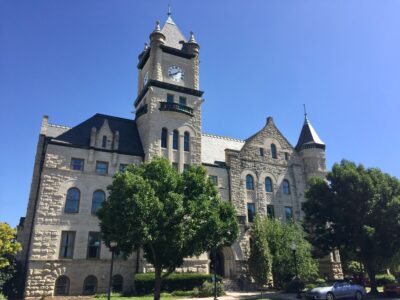
photo by: Journal-World
The west side of the Douglas County Courthouse, 1100 Massachusetts St.
Payouts for Douglas County’s senior and disabled veteran tax rebate program significantly increased in 2026 – distributing more than five times as much property tax relief as its pilot year.
The county’s one-year property tax rebate program was approved by the Douglas County Commission in 2024, and the program accepted applications from low-income county residents who are 65 and older or disabled veterans for its pilot year in 2025. The program continued in 2026, and had a large increase in total dollars distributed and applicants compared to last year.
In 2026, Douglas County will be awarding $156,123 in total property tax relief – which is roughly five times the pilot year total – compared to $30,624 awarded in 2025. The average payout also increased to $393 from $281 last year. Rebates will be mailed to the applicants by July 2026.
The county received more than triple the amount of applications this year with 475, and in 2025 they got 135 applications. However, 397 applicants actually qualified for the rebates in 2026, while 109 applicants were approved for rebates in 2025.
Douglas County staff said they have made many changes this year to get more county residents informed about the program and how it can benefit seniors and disabled veterans.
“Douglas County staff believe that several changes to the property tax rebate program this year are believed to have contributed to the increase in applications,” County Administrator Sarah Plinsky said via email. “To improve outreach, flyers and inserts were included in all tax bills so more residents would know about the program and how to apply.”
The county also changed the rules so some income, specifically social security benefits, only counts halfway when figuring out if someone qualifies, which helps more seniors and people on fixed incomes qualify. The county also raised household income limits to align with the state’s Homestead Refund program.
Even though the average rebate as a share of total property tax bills dipped slightly from 13% to 12%, the share of the county portion covered increased from 37% to 41%, indicating a greater share of county-collected taxes being offset.
The eligibility requirements for the program included owning and occupying a home that is not used as a short-term rental; the home’s county appraised value being $350,000 or less; and the applicant being at or below the Kansas Homestead Refund program income limit of $43,389 or the U.S. Department of Housing and Urban Development’s very low income limits, whichever is higher for household size.
This year’s rebate program was funded by $500,000 that was initially set aside in 2025 by commissioners for the pilot.
Douglas County received the most applicants from residents in Lawrence, with 297 applicants, followed by the unincorporated area with 55 applicants. There are 30 residents who are eligible for tax rebates from Eudora and nine from Baldwin City.
In addition, the average rebate amount was the highest in Baldwin City at $400 with Eudora following at $396. Lawrence applicants had an average award of $393 and the unincorporated areas had an average of $392.
Plinsky said as far as discussions for next year’s program goes, county staff will meet in the fall to evaluate any potential changes to the program.
Other News
Douglas County commissioners discuss tracking results of awarded funding to community partners

Baldwin High already has won $25K and is competing for $1M through national sports program

On sister city visit, delegates from Hiratsuka, Japan, see Lawrence’s friendship firsthand
U.S. Sen. Roger Marshall faces Democratic, Libertarian challengers in general election

Incumbent Douglas County commissioner and newcomer challenger face off for District 5 seat