A ‘maze’ or a ‘straight path’? Jurors weighing evidence in double-murder trial
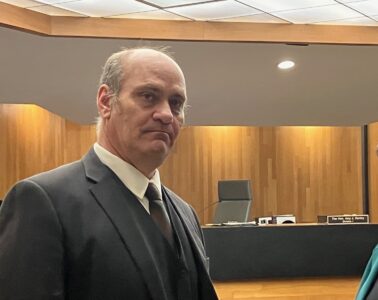
photo by: Kim Callahan/Journal-World
Rodney Marshall appears Friday, May 15, 2026, at his double-murder trial n Douglas County District Court.
Updated at 5:53 p.m. Friday, May 15
Jurors are now deciding whether the state has proved beyond a reasonable doubt that Rodney Marshall murdered two Lawrence men and attempted to murder several law enforcement officers during an alleged crime spree four years ago.
The Douglas County jury of seven women and five men got the case shortly before 12:45 p.m. Friday — with nine felony counts to consider — and deliberated for about four hours before breaking for the weekend. Their instruction packet, read to them by Judge Amy Hanley, contained 50 pages and 41 instructions.
In most instances, in addition to the crimes charged, they have been given lesser included offenses to consider. Jurors will also be considering the defense of voluntary intoxication — a defense that allows Marshall to argue that his drug use prevented him from forming intent or premeditation, which is required for the most serious charges.
Despite the number of charges, prosecutor David Melton told jurors during his closing argument that the most complicated thing about the case was the jury instructions.
The case itself was not complex, he said. “The facts are fairly simple.”
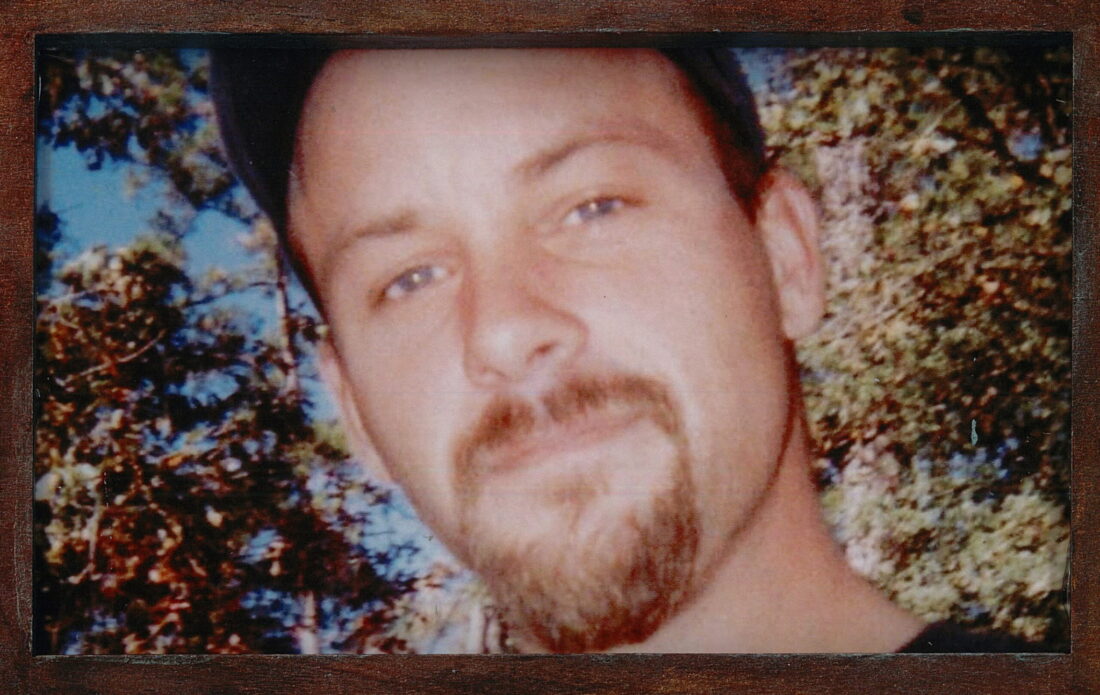
photo by: Contributed
Shelby McCoy was shot to death on July 31, 2022.
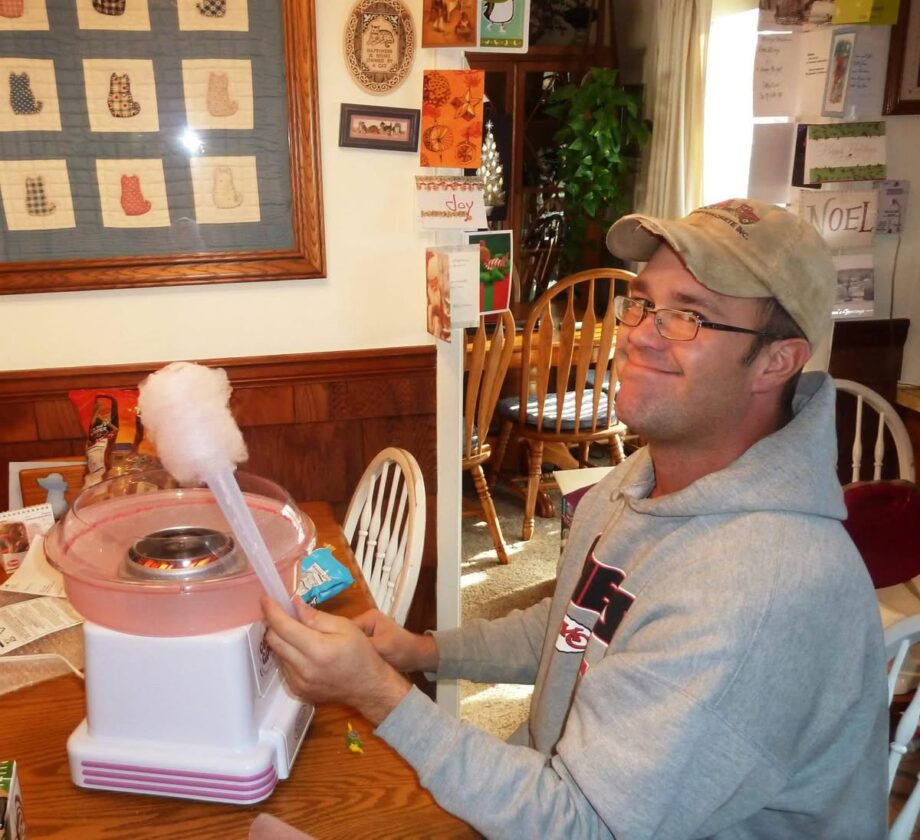
photo by: Contributed
William D. O’Brien was shot to death on July 31, 2022.
Melton argued that Marshall planned to kill Shelby McCoy, 52, and William O’Brien, 43, disguised himself in a costume in the early-morning hours of July 31, 2022, and rode a moped to the men’s separate residences — on Tennessee Street and Northwood Lane respectively — and shot them both in “a premeditated cold-blooded killing.”
“He was on a mission,” Melton said. “He prepared for that mission, and he carried it out.”
He then confessed hours later, saying that he believed the men to be child molesters who deserved their fate — a confession that defense attorneys Jennifer Amyx and Branden Bell had fought to keep from the jury. Once admitted, though, they argued that it was all the product of Marshall’s heavy drug use, particularly in the days leading up to the killings. They acknowledged that Marshall led police on a chase on Kansas Highway 10 and shot from the window of his vehicle, but they maintained that he was not attempting to murder police officers.
They invited the jury to convict Marshall of the two counts of aggravated assault of law enforcement officers and fleeing and eluding, but Amyx, in an impassioned closing argument, told jurors that the rest of the state’s case — two counts of first-degree murder, three counts of attempted capital murder, and one count of attempted first-degree murder — couldn’t stand up to scrutiny.
“Let’s start by thinking of a maze,” she said, while displaying a large image of a maze with “REASONABLE DOUBT” printed above it, prompting Melton to immediately object. After a conference at the bench, the words “REASONABLE DOUBT” were removed from the maze image, and Amyx told the jury that “nothing I say is meant to define reasonable doubt” — a concept that in Kansas is never specifically defined for juries.
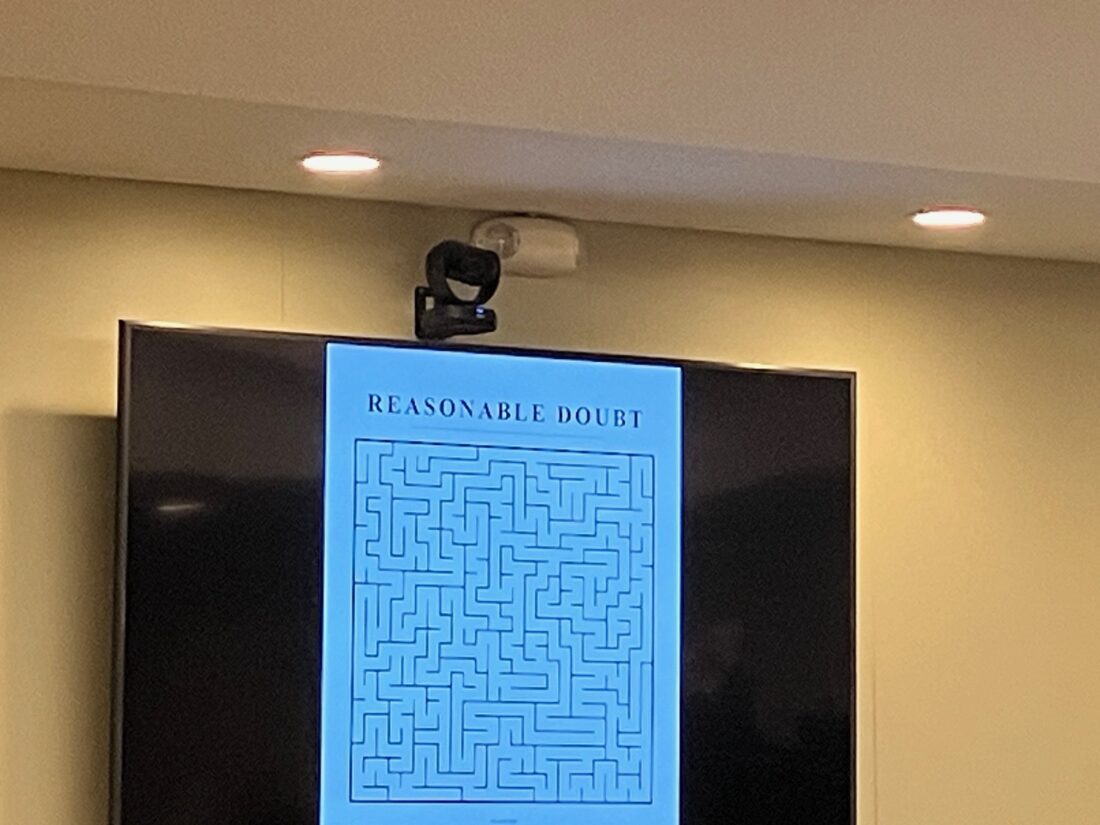
photo by: Kim Callahan/Journal-World
The defense team used this visual during their closing argument in the double-murder trial of Rodney Marshall on May 15, 2026, in Douglas County District Court.
Amyx went on to characterize Marshall as a longtime heavy drug user who, even if he was at the men’s homes that night, wasn’t there alone.
“There has to be more people involved,” she said.
She also said that Marshall was friends with both men and that he could have gone to their homes for other reasons that night. She argued that McCoy repaired guns and scooters for Marshall, and she pointed to a witness statement that Marshall had gone to O’Brien’s in search of heroin. In his statement to police, though, Marshall said the thing he said to O’Brien when O’Brien opened the door was “this is for the children.”
She additionally directed the jury’s attention to Marshall’s claim of self-defense with regard to McCoy, noting that people connected to McCoy removed a gun from his apartment before the police arrived. Marshall, as the police interview progressed, had changed his story and told detectives that he had innocently gone over to McCoy’s to taunt him about a lost bet and that McCoy had gotten angry and pulled a gun on him.
So why did Marshall claim to have committed the crimes, then? Amyx asked, anticipating a question jurors would have.
“It was a grandiose delusion brought about by a PCP-fueled week,” she said, referring to a drug he had allegedly been tripping on. He simply wasn’t in touch with reality, she argued.
Melton wondered aloud why the defense was asking jurors to regard parts of Marshall’s statements to police as sober and accurate and other parts as drug-induced and false. He characterized Marshall as having regretted the confession and having sought to repair the damage with other explanations of his behavior.
Far from being disoriented on drugs, Melton said, Marshall was thinking strategically.
He noted that Marshall had told police, “I’m one smart mother-(expletive).”
“And you know what?” Melton asked the jury, “he kind of was.”
Amyx criticized police for not recognizing that Marshall was in the throes of a drug trip and was perhaps delivering a false confession, but Melton countered that detectives had no reason to believe that and considered Marshall to have communicated clearly and coherently with a “perfect memory” of the night’s events. Marshall deemed himself a vigilante hero, as the detectives saw it — but Amyx asked jurors to see in the self-martyrdom further evidence of drug-addled delusion.
Amyx also argued, as defense attorneys regularly do, that the police had engaged in “confirmation bias” — that is, they were so certain Marshall was their culprit that they failed to look at anyone else. This included, Amyx said, failing to investigate a message on the day of the deaths between McCoy and someone else in which McCoy threatens to kill someone. She said police also failed to follow up on a message from a woman that said, “They killed Dale.” Dale referred to O’Brien, and the “they” suggested more than one killer, Amyx said, noting that the same witness had testified to seeing a truck and scooter associated with Marshall in the neighborhood of Northwood Lane that night.
“It does not add up,” Amyx insisted. “It is not simple. It is far more complex than they want you to believe.”
In his rebuttal, Melton calmly dismissed that notion: “There is no maze here. It’s more like a straight path.”
Jurors are scheduled to resume deliberations at 10 a.m. Monday.
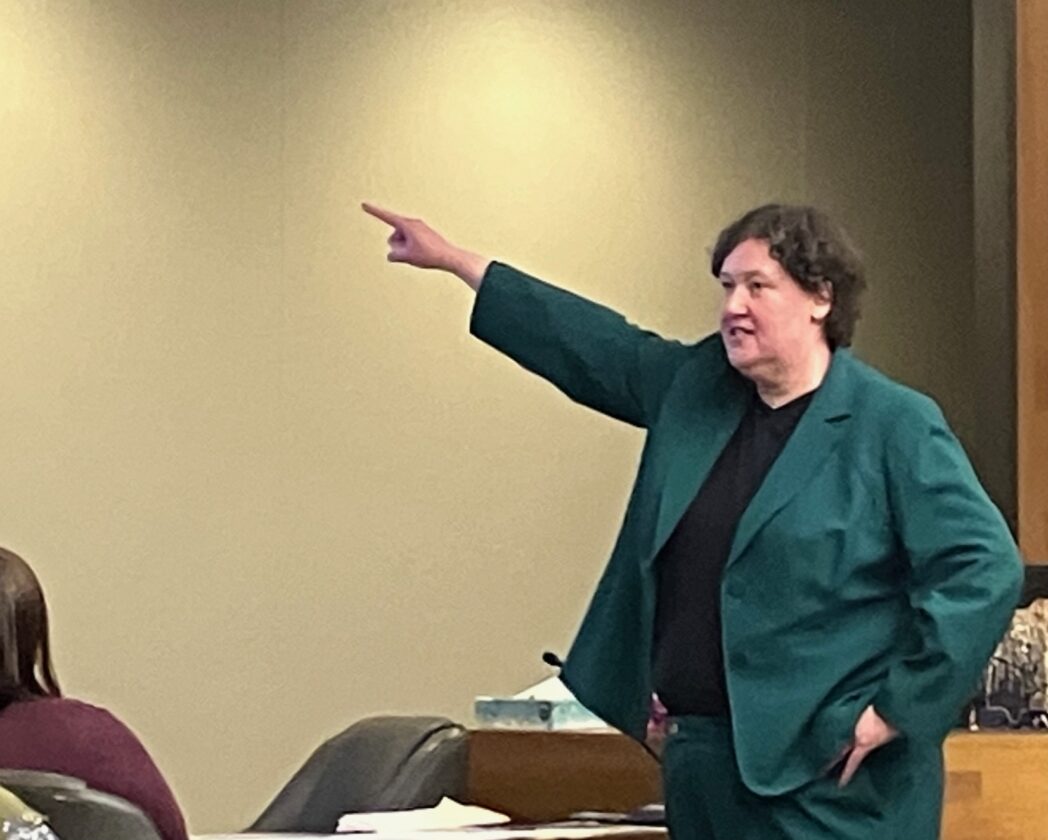
photo by: Kim Callahan/Journal-World
Defense attorney Jennifer Amyx gives her closing argument in the double-murder trial of Rodney Marshall on Friday, May 15, 2026.
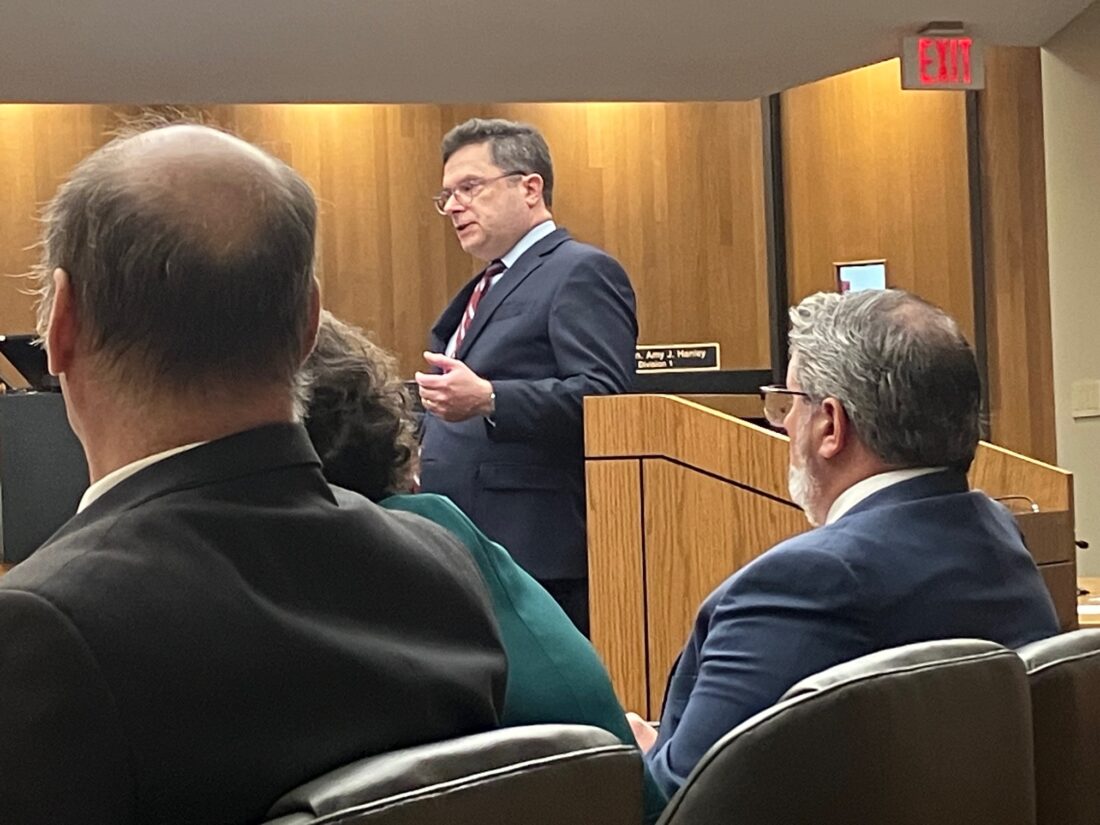
photo by: Kim Callahan/Journal-World
Deputy District Attorney David Melton gives his closing argument in the double-murder trial of Rodney Marshall on Friday, May 15, 2026, in Douglas County District Court.
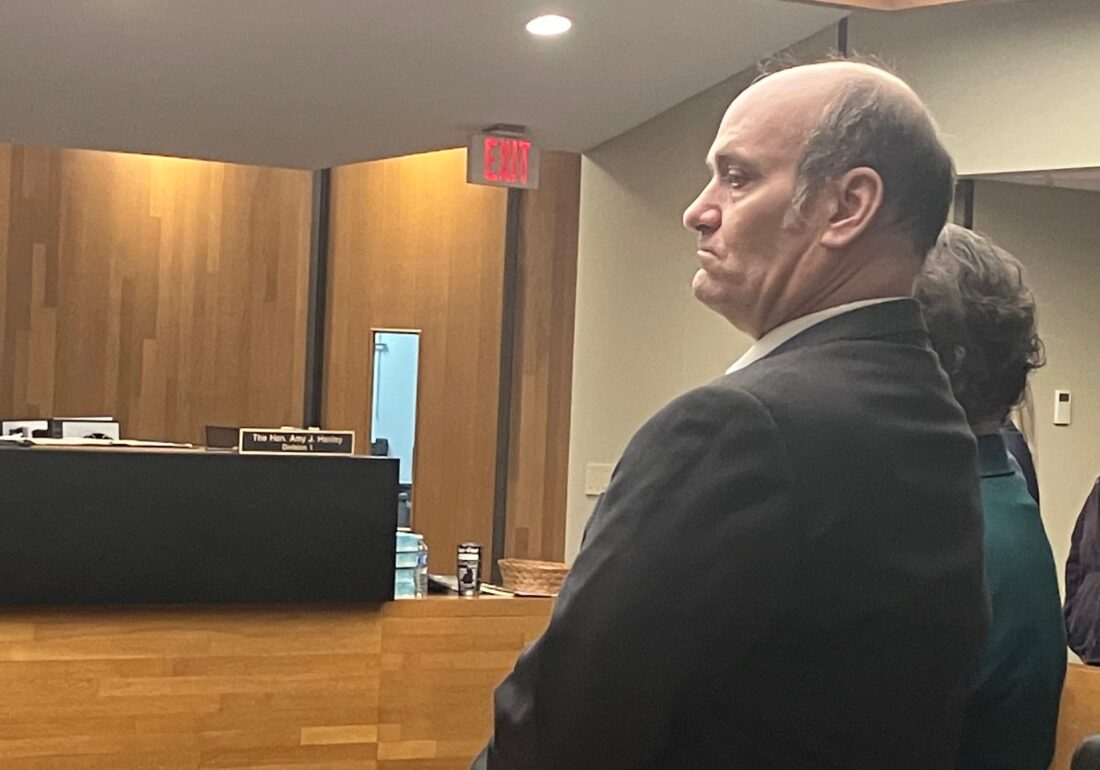
Rodney Marshall appears Friday, May 15, 2026, at closing arguments in his murder trial in Douglas County District Court.
Public Safety
‘Restoring important people in our community’: Veterans Court nearing capacity as it celebrates 1st anniversary
In domestic violence case, Lawrence woman is acquitted of 5 of 6 charges; jury finds her guilty of one misdemeanor
Man ordered to stand trial after friend testifies that night of drinking ended with a rape

24-year-old ordered to stand trial in connection with Lawrence mother’s drug death
Former LHS teacher admitted having sex with a sophomore 26 years ago, but a lot turns on whether she was 15 or 16 at the time