Defense rests in double-murder case; defendant doesn’t testify; judge forbids doctor’s drug testimony
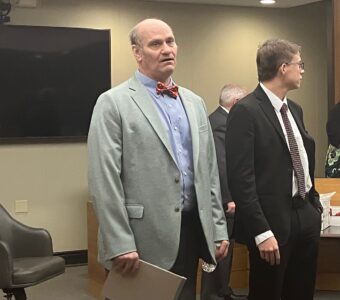
photo by: Kim Callahan/Journal-World
Rodney Marshall, left, is pictured Wednesday, May 13, 2026, at his murder trial in Douglas County District Court.
After double-murder defendant Rodney Marshall declined to testify on Wednesday, the defense rested its case on the eighth day of his trial, and jurors will soon begin deliberations.
“I am hesitantly not going to take the stand in my own defense,” Marshall, under oath, told Judge Amy Hanley outside of the jury’s presence. Marshall seemed initially uncertain that the decision was his alone to make until Hanley repeatedly assured him that it was entirely up to him.
“It’s a lot to take in,” he said. “It’s a tough decision to make.”
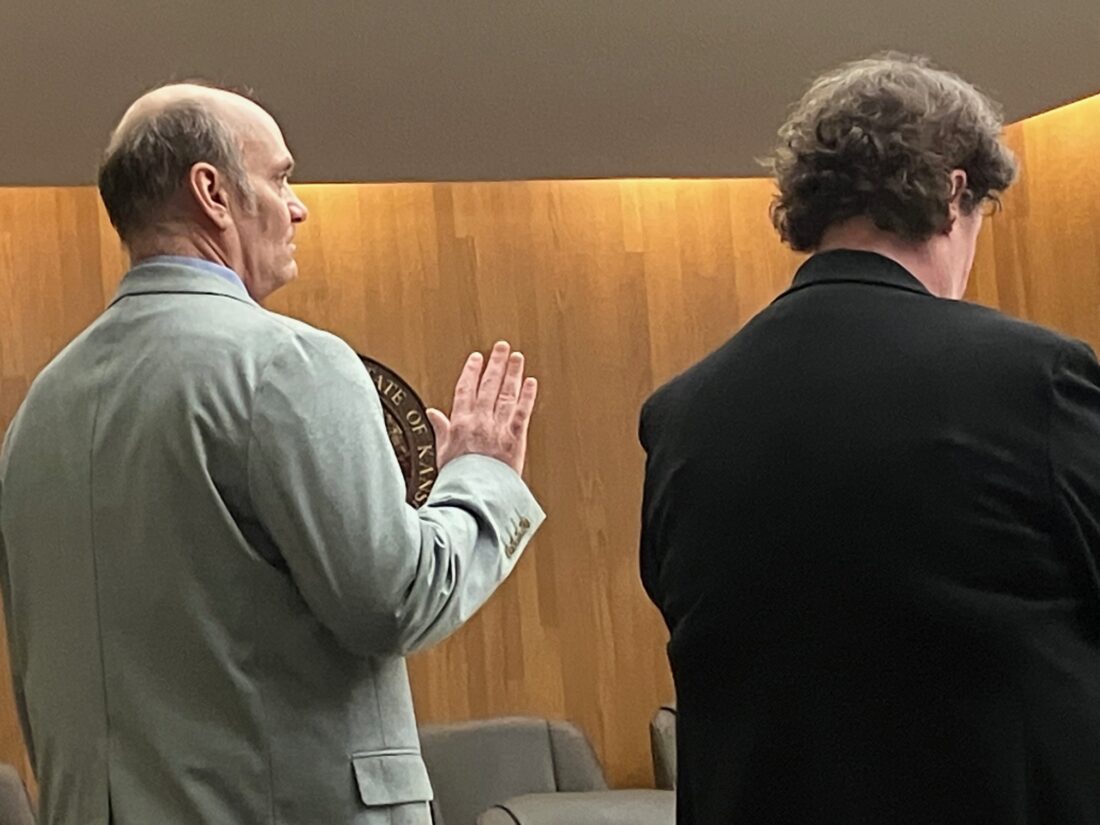
photo by: Kim Callahan/Journal-World
Rodney Marshall, left, is put under oath before being questioned about his decision to not testify on Wednesday, May 13, 2026, at his murder trial in Douglas County District Court.
In the end, he decided that it was “in my best interest to follow the advice of my attorneys” and not tell the jury his version of what happened on July 31, 2022, when he is accused of donning a costume and fatally shooting Shelby McCoy, 52, at his Tennessee Street apartment, then riding a moped across town to shoot William O’Brien, 43, at his Northwood Lane residence.
Though he won’t testify, jurors have nevertheless heard a lot from Marshall, including two police videos in which he at times proudly confessed to the killings just hours after they had taken place. In rambling admissions, he characterized the slayings as vigilante justice against child molesters, though no evidence exists that McCoy and O’Brien were sex offenders.
Defense attorneys Branden Bell and Jennifer Amyx had objected to the jury seeing the videos because they maintained that Marshall was too high on drugs to know what he was doing when he spoke to police. They also put on a witness Wednesday who testified that she saw Marshall smoking a “wet” more than once — and hallucinating at least once — in the days prior to the homicides. A “wet” is a cigarette dipped in the illicit drug PCP. The purpose of such testimony was evidently to convince the jury that Marshall was “whacked out” on drugs not only at the time of the confessions but also at the time of the murders, which could potentially speak to his ability to form the necessary criminal intent.
On cross-examination, the woman acknowledged to prosecutor Eve Kemple that she had left the residence of Marshall and his girlfriend a few days before July 31 and had no knowledge of Marshall’s condition on the actual day of the crimes. Kemple also got the woman to admit that she had been convicted of a crime involving dishonesty — theft — four separate times, leaving jurors to ponder the issue of her credibility.
Earlier Wednesday, Hanley, outside the jury’s presence, delivered a big disappointment to the defense by refusing to allow a Sedgwick County doctor to testify about her opinion that Marshall had ingested PCP before the crimes and had exhibited behaviors of a PCP user. The defense on Tuesday had called her testimony “integral” to Marshall’s defense. But Hanley said that Dr. Jamie Oeberst’s “opinion” wasn’t really an opinion at all because she was “simply parroting” or “rebranding” the findings in a toxicology report that was itself inadmissible due to evidentiary issues. Allowing Oeberst to testify about a case to which she had no tie beyond someone else’s toxicology report would simply “be a backdoor way” to get the toxicology findings in front of the jury, Hanley said, which would be “prejudicial to the state.”
Hanley also on Wednesday, outside the jury’s presence, disallowed numerous pieces of defense evidence consisting of various text conversations and Facebook messages extracted from people’s electronic devices. The contents of the messages, aside from fleeting references, were not presented in court, and they were largely excluded because Hanley deemed them hearsay or irrelevant or both. She also noted several times that the messages were hard to follow. Many had only pronouns, but no names, attached to them, she said, rendering them unreliable and carrying “the potential for extreme confusion” for the jury.
The defense, for its part, contended that the “nonsensical” nature of the messages was the point because, especially in relation to messages purportedly sent by Marshall, the fact that “he’s sending out nonsense to people,” as Bell put it, showed his drug-addled state of mind. Many of the messages were several days before the killings, though, which Hanley deemed “way too tenuous” a connection.
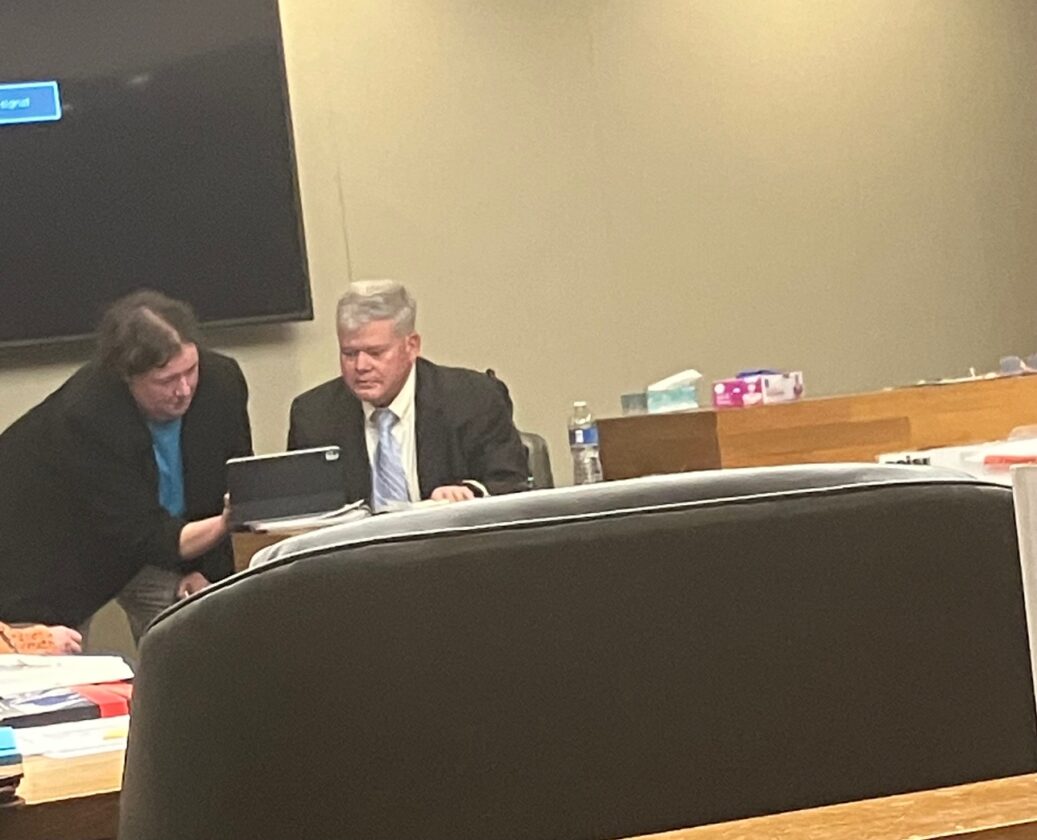
photo by: Kim Callahan/Journal-World
Defense attorney Jennifer Amyx plays video for Detective M.T. Brown on Wednesday, May 13, 2026, at Rodney Marshall’s murder trial in Douglas County District Court.
The defense on Wednesday also recalled Detective M.T. Brown, who conducted the interviews with Marshall. Amyx questioned Brown about a more than hourlong period in which Marshall was alone in the interview room and mentioned to police that he was cold and had hallucinated. He also reportedly — the video itself was not played in court — stood in the corner of the room at one point and said “hello.” Amyx was apparently suggesting that these were signs of Marshall being heavily under the influence of drugs, but, on cross-examination by prosecutor David Melton, Brown dismissed the behaviors as “theater” performed by someone who may have been conjuring a possible defense after having regrettably confessed.
Marshall has been charged with two murders in the first degree, four counts of attempted capital murder, two counts of aggravated assault and one count of fleeing and eluding law enforcement. He has been held on a bond of $1.5 million since his arrest in 2022.
Closing arguments in the trial are expected to begin Thursday afternoon, after which the case will go to the jury.
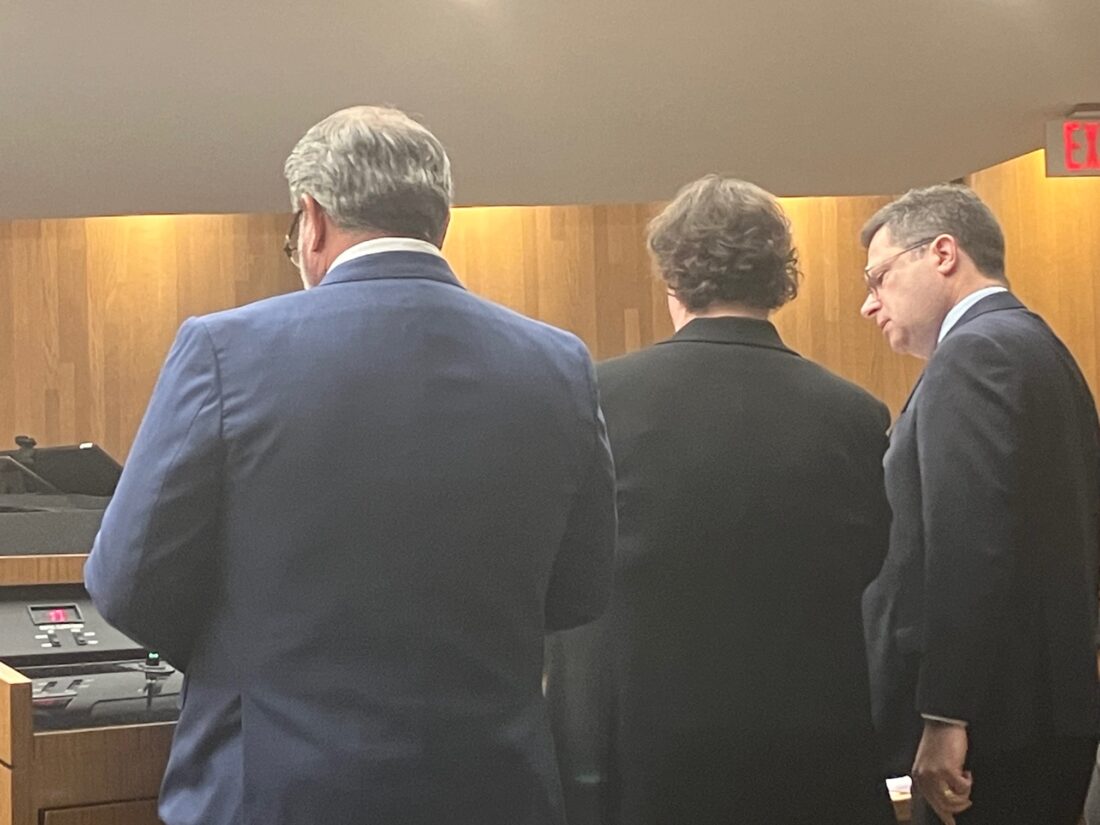
photo by: Kim Callahan/Journal-World
Prosecutor David Melton, right, talks with defense attorneys Branden Bell, left, and Jennifer Amyx on Wednesday, May 13, 2026, at the murder trial of Rodney Marshall in Douglas County District Court.
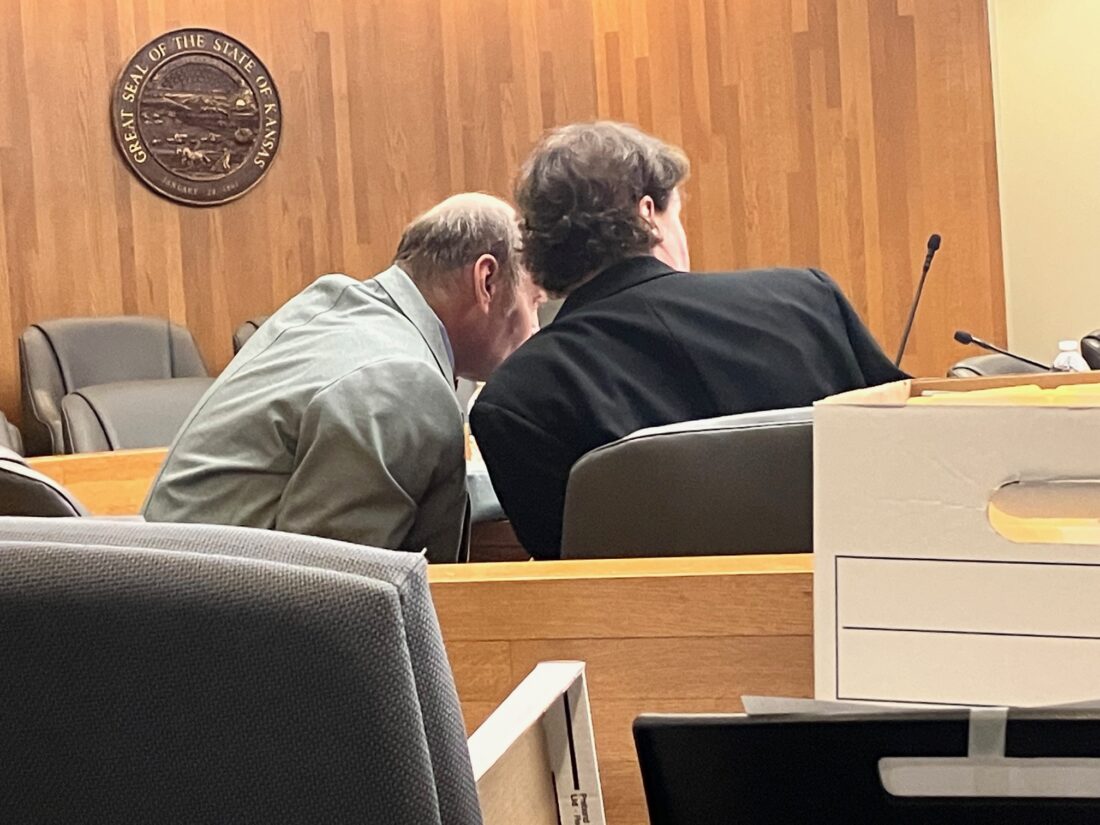
photo by: Kim Callahan/Journal-World
Rodney Marshall, left, is pictured Wednesday, May 13, 2026, at his murder trial in Douglas County District Court. At right is defense attorney Jennifer Amyx.
Public Safety
Man accused of selling wristbands to enable minors to drink at time of Hawk shootings is sentenced to probation

36-year-old Lawrence man confessed to raping 13-year-old girl, affidavit says
Evacuation drill planned Tuesday at Lawrence City Hall
Douglas County’s newest pro tem judge sworn in

Woman has renewed hope for justice 17 years after reporting rape in Lawrence