Cellmate of alleged Hawk shooter hoped for probation after reporting inmates with contraband; judge gives him prison
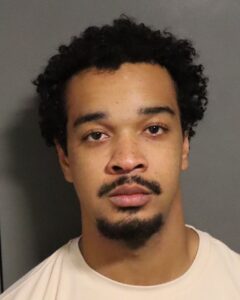
photo by: Douglas County Sheriff's Office
Joshua Mayo
Joshua Mayo thought that telling on fellow inmates for possessing contraband in the jail might be a substantial and compelling reason to get a lighter sentence for himself — probation instead of prison — but a Douglas County judge on Monday disagreed and ordered Mayo to 15 months in prison.
As the Journal-World reported, Mayo was listed as a witness in the cases of two inmates who’ve been charged with trafficking contraband in the Douglas County Jail. Their charging documents do not say what the contraband was, but Mayo told the court it was K2, a synthetic drug that mimics the effects of THC, the active ingredient in marijuana.
Mayo took the stand at his sentencing Monday and told Judge Stacey Donovan that he was cellmates with Caiden Clem, 18, who has been charged with four counts of aggravated assault and one count of criminal possession of a weapon by a felon in connection with The Hawk shooting in January.

photo by: Kansas Department of Corrections
Caiden Carl Ralph Clem
Mayo said that Clem and another inmate, Temujin Jernigan, who has been charged with attempted first-degree murder in a Jan. 23 shooting at the Hawks Pointe apartment complex, asked him to break a computer tablet to get the battery out. He said they offered him K2 in exchange, but he declined to do it and told on them instead. He was then moved to the jail in Bourbon County for his own protection after turning in fellow inmates, he said.
Mayo’s attorney, Michael Clarke, told Judge Donovan that it would be appropriate to reward Mayo with a probation sentence.
“He did the right thing and put himself in jeopardy by doing so,” said Clarke, who noted that Clem and Jernigan were both in jail on charges involving violent offenses.
Prosecutor Cody Smith told Donovan that the state objected to probation for Mayo, calling him a threat to public safety and to himself. Smith allowed that it was “admirable” that Mayo did the right thing and reported the contraband, but he said that it was expected that an inmate would report such activity and that, absent an agreement with the state to cooperate, it didn’t merit any special consideration at sentencing.
Mayo faced sentencing Monday for three crimes: felony criminal threat in a 2025 case, misdemeanor second DUI in a 2024 case and misdemeanor criminal damage to property in a 2023 case. In the most recent case, his criminal history score was determined to be an “A,” the worst score possible for purposes of the Kansas Sentencing Guidelines.
Donovan sentenced him to 15 months in prison for the felony and to six months for each misdemeanor. She found that he committed the criminal threat while on bond for the second DUI, meaning a special rule applies that requires consecutive sentencing. He had been on diversion in the criminal damage case, but the diversion was revoked because he violated its terms by committing another crime.
Mayo has been in jail for nearly a year and will have 325 days of jail credit toward his sentence.
Donovan told Mayo that she appreciated his “bringing some things to light at the jail,” but she didn’t believe that was a substantial and compelling reason to depart from the sentencing guidelines and give him probation. She did give him the mitigated term of 15 months, though, when she could have opted for 17.
She and both attorneys noted that he has a severe drinking problem, and she had deferred his sentencing so that he could get treatment. Clarke said he had successfully completed treatment before and that community supervision would be better than prison for continued success, but Smith said that treatment has proved inadequate.
“The only thing that has kept him away from alcohol is imprisonment,” Smith said.
Court records indicate that in addition to his adult crimes, Mayo, 21, has juvenile adjudications on his record related to theft, battery, sexual battery, criminal threat, criminal use of a financial card, trespass, assault on a law enforcement officer and various drug and liquor offenses.
At a hearing last December, Clarke argued that the best place for Mayo was the U.S. Marine Corps. Clarke — who blamed Mayo’s convictions on alcohol and on a “lack of structure” in his life that he argued the military could provide — said that Mayo could become a Marine, based on his understanding of what a recruiter for the Corps had told him. Clarke made the comment as part of his bid to persuade Donovan to depart from the presumptive prison term Mayo was facing for his most recent conviction of criminal threat and to grant him probation instead.
Smith said then that prison was the proper place for Mayo, not the nation’s armed forces.
Public Safety

Man accused of selling wristbands to enable minors to drink at time of Hawk shootings is sentenced to probation

36-year-old Lawrence man confessed to raping 13-year-old girl, affidavit says

Evacuation drill planned Tuesday at Lawrence City Hall

Douglas County’s newest pro tem judge sworn in

Woman has renewed hope for justice 17 years after reporting rape in Lawrence