At trial, ex-cop fired for untruthfulness suggests police were out to get Lawrence YouTuber
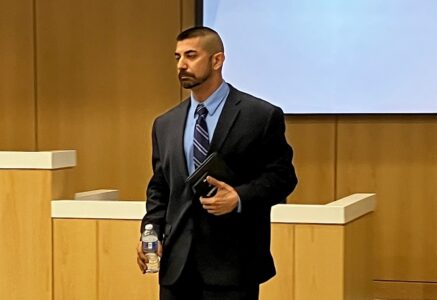
photo by: Kim Callahan/Journal-World
Ex-Lawrence Police Officer Shawn Gross is pictured at the trial of Phillip Michael Eravi on Wednesday, Aug. 26, 2026, in Douglas County District Court.
An ex-cop who was fired for untruthfulness and conduct unbecoming an officer took the stand Wednesday as a defense witness for a Lawrence man accused of felony interference.
Ex-Officer Shawn Gross’ appearance as a witness for YouTuber Phillip Michael Eravi was striking because Eravi has spent years vociferously accusing police of being untruthful, including screaming “Liar!” at Lawrence’s police chief during public meetings. Yet on Wednesday Eravi’s attorney, Angela Keck, put Gross in front of jurors to cast doubt on the state’s position that Eravi was legitimately arrested and charged.
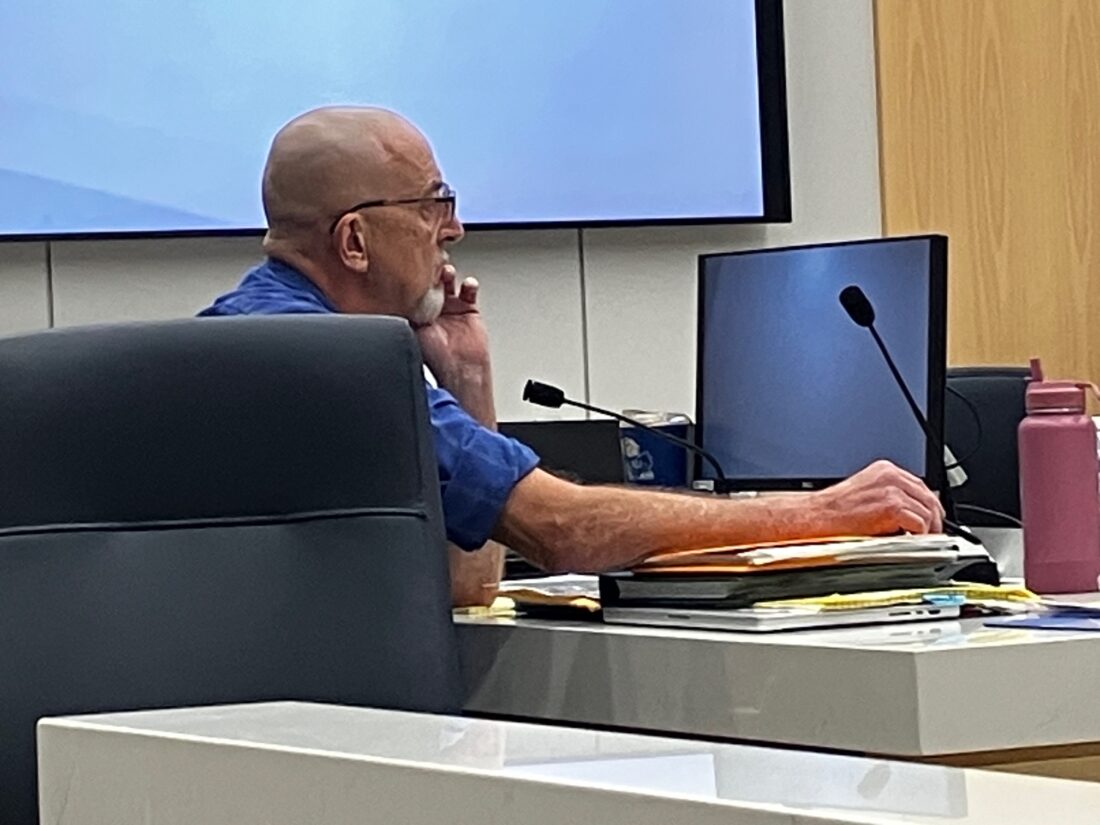
photo by: Kim Callahan/Journal-World
Phillip Michael Eravi is pictured at his trial on Wednesday, Aug. 26, 2026, in Douglas County District Court.
Gross was at the scene in May 2023 when Eravi was arrested for interfering with police during an armed standoff with a man on Heatherwood Drive. Multiple police officers testified this week that Eravi was arrested after he refused to leave an area that they considered to be in the line of fire and that put him and several officers at risk.
Gross testified that before that incident, when he was on light duty for six months due to an injury, he was tasked by higher-ups with compiling a spreadsheet on Eravi and his interactions with police. He testified that the purpose of the project was to review videos of Eravi for potential criminal charges. The project, he said, was secretive in that it existed in a special file with restricted access and did not include Eravi’s name in order to evade requests under open records laws. Gross said he never found any chargeable offenses or evidence of Eravi ever being in places he was not supposed to be.
No secret file was admitted into evidence, but the implication of Gross’ testimony was apparently that police were out to get Eravi for his actions as a “citizen journalist.”
On cross-examination, prosecutor Eve Kemple asked Gross if it was the duty of officers to investigate whether crimes had been committed, and he said yes. She then asked him about being fired from the Johnson County Sheriff’s Office back in January for untruthfulness and conduct unbecoming an officer. While he said he was appealing that decision, he admitted that that was the reason he was given for losing his job. Wednesday’s exchange did not include the nature of the conduct and untruthfulness.
Gross had gone to work in Johnson County after he quit the Lawrence Police Department in 2023 after failing to receive a desired promotion, as he testified at an earlier hearing. A few years later, after being fired from Johnson County, he came back to Lawrence and requested to be rehired by the police department here, but was rejected.
“They were not willing to accept you back?” Kemple asked, “and that’s when you made contact with (Eravi’s) attorney to testify in this case?”
“Yes,” Gross said.
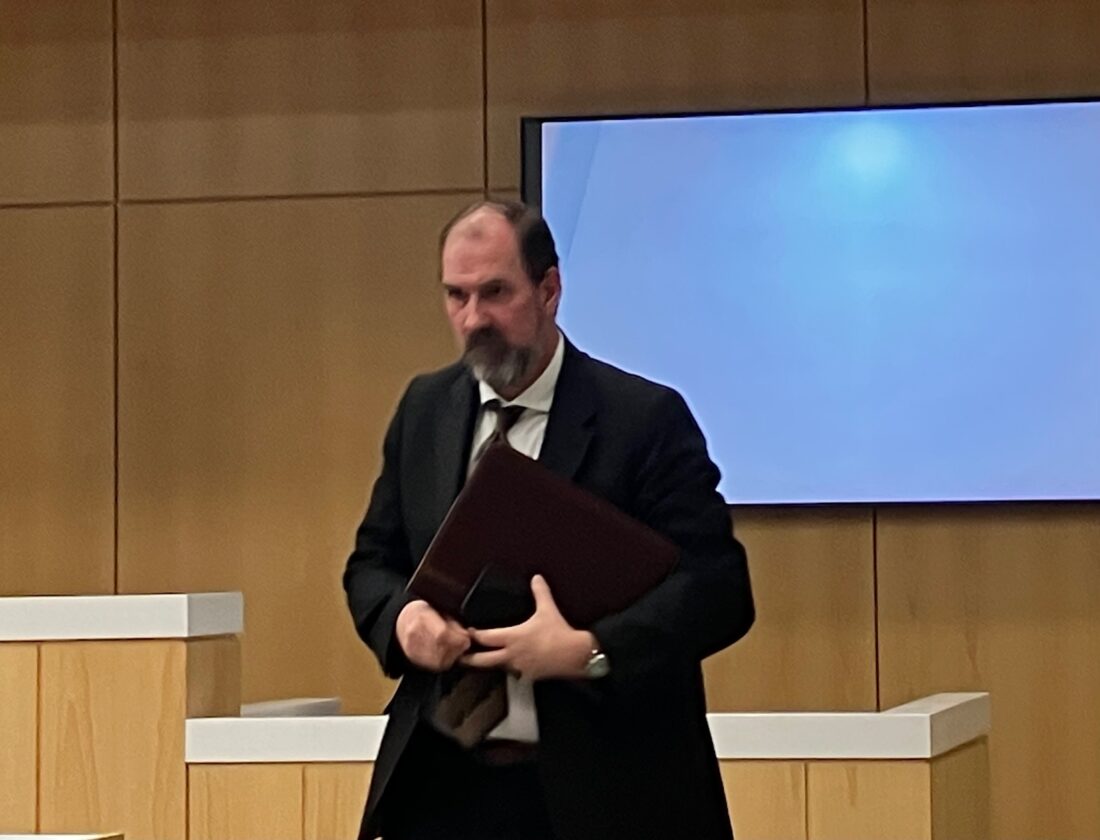
photo by: Kim Callahan/Journal-World
Brent Turvey is pictured at Phillip Michael Eravi’s trial on Wednesday, Aug. 26, 2026, in Douglas County District Court.
In addition to Gross, Keck also called a paid forensic criminologist, Brent Turvey, to the stand to critique the work of Lawrence police on the night of Eravi’s arrest. Turvey was not at the scene that night and based his analysis entirely on police reports, camera footage and other materials that were provided to him.
Turvey was particularly critical of what officers had indicated was the perimeter around the standoff. Keck showed him several aerial maps on which various officers had delineated what they understood to be the perimeter, zone of danger and line of fire, and Turvey was dismissive of all them, insisting that no “security perimeter was established at the scene.” He said that this lack allowed Eravi to move into a zone of danger.
Multiple times during his testimony, Turvey resisted prosecutor Adam Carey’s directive to answer questions with a simple “yes” or “no” and at one point simply dismissed a question as “weird.” Judge Amy Hanley sustained numerous objections by the state to Keck’s direct examination of Turvey.
In earlier testimony, multiple Lawrence police officers who were on the scene that night testified that it was an intense, dynamic, evolving situation because they were responding to an armed, barricaded subject who could possibly fire out of windows or doors and maybe escape. Officers went to surrounding residences and apartment buildings and told people they could evacuate or shelter in place. They testified that although no reflective police tape was stretched throughout the neighborhood there were many indicators that civilians should not enter the area, including an armored police truck, lights, sirens, patrol cars, a heavy police presence and a loud speaker calling for the barricaded subject to surrender.
On Tuesday, a girl who lived in the area, testified that it was “obvious” to her — a 13-year-old — not to go into the area.
Keck has focused heavily on the lack of a physical perimeter such as tape, even though officers have repeatedly testified that it wasn’t Eravi’s entering the area that led to his arrest but his refusal to leave once he was lawfully ordered to do so.
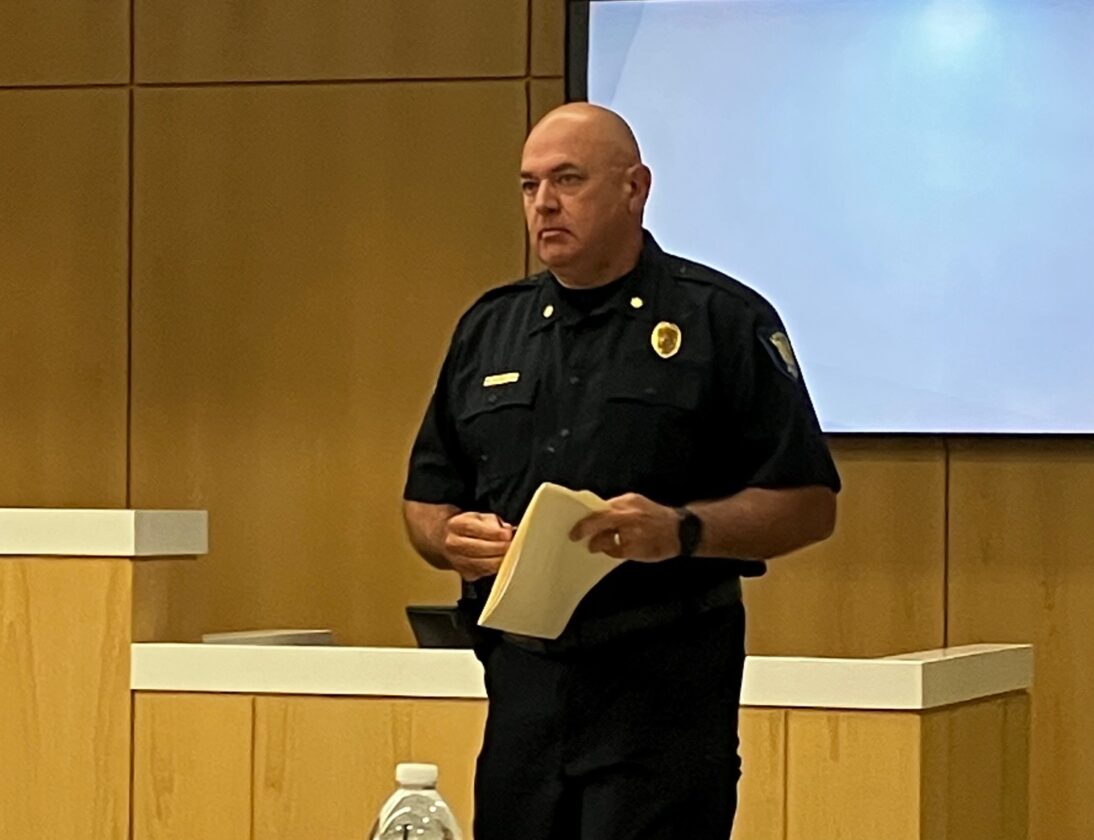
photo by: Kim Callahan/Journal-World
Lawrence Police Major Hayden Fowler is pictured at Phillip Michael Eravi’s trial on Wednesday, Aug. 26, 2026, in Douglas County District Court.
Major Hayden Fowler on Wednesday told Keck that regardless of a physical barrier like tape, police officers could always use their own eyes to spot and keep out civilians who were entering, knowingly or not, a working police scene.
“We have latitude to go and confront people and tell them to leave,” he said, adding that being in a perimeter is “not illegal until you’re told it’s illegal,” which is what he said happened with Eravi.
Officers testified that Eravi’s being that close to the action jeopardized his safety and their own, in addition to distracting them from the standoff situation.
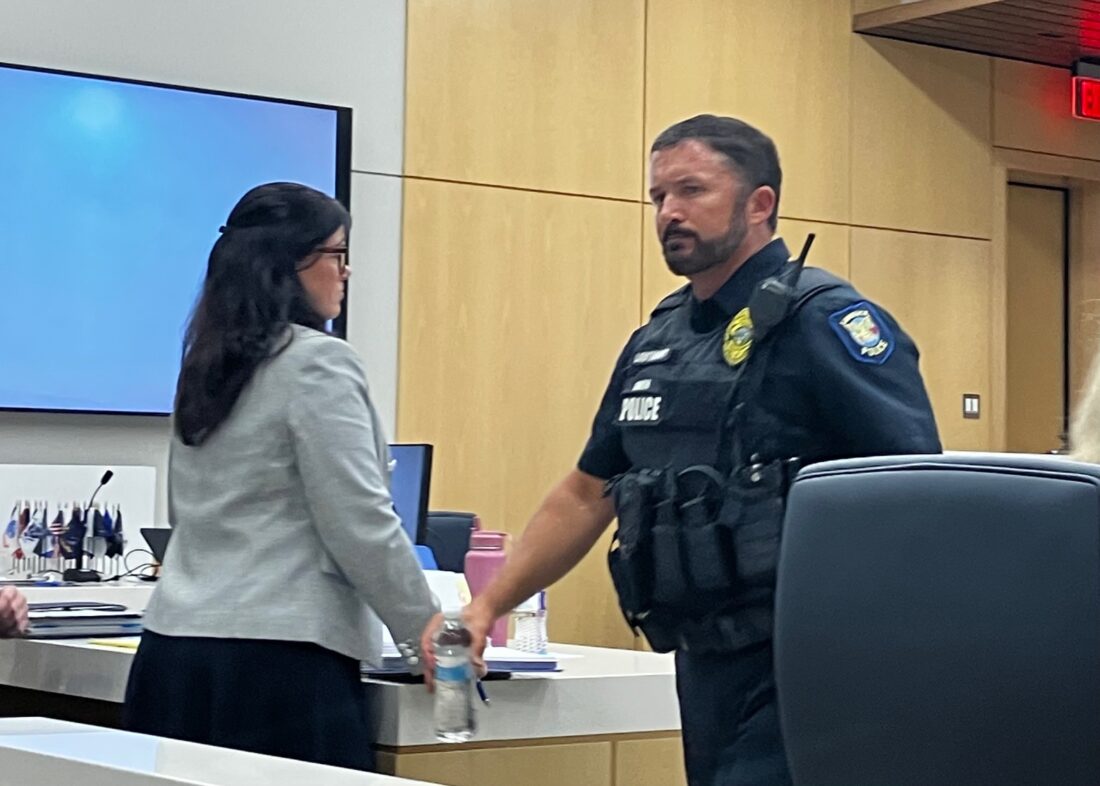
photo by: Kim Callahan/Journal-World
Lawrence Police Lt. Mark Unruh is pictured at Phillip Michael Eravi’s trial on Wednesday, Aug. 26, 2026, in Douglas County District Court. Attorney Angela Keck is at left.
“He was in direct line of the house,” Lt. Mark Unruh testified Wednesday.
Officers also testified that other people who had entered a zone that they considered dangerous were asked to leave – and willingly complied, except for Eravi, who they said refused to move from the area and then resisted arrest, exacerbating what Unruh called an already dangerous and “high-risk situation.”
Eravi indicated on Wednesday that he would not take the stand in his own defense. Closing arguments are expected to occur Thursday. Kemple asked Judge Hanley to specifically order that Eravi have no contact of any kind with endorsed witnesses for the remainder of the case, and Hanley so ordered.
Related to the current case, Eravi filed a lawsuit claiming that Lawrence police violated his civil rights when they arrested him at the scene, but a federal judge tossed that lawsuit last year. Judge Daniel Crabtree ruled that officers acted reasonably and with reasonable force when they removed Eravi from the scene.
Crabtree did not order Eravi to pay attorney fees in that case, but such fees were ordered in an Elk County case, where a judge ruled that Eravi will have to pay the cost of litigation and reasonable attorney’s fees after his suit against a public official there was thrown out. Eravi is appealing that decision.
In addition to the current matter, Eravi has other criminal cases pending in Douglas County, including battery on a law enforcement officer and various instances of alleged trespassing.
He has been a frequent public commenter at local government meetings for years, during which at various times he has been banned from attending school board and City Commission meetings in person, as well as being banned from the Lawrence Public Library. His public commenting has included yelling obscene names and the N-word at officials, including the police chief and elected office holders.
Eravi has also sued numerous local governments, claiming they violated his civil rights. Some of those suits, filed by the same attorney who represents frequent public commenter Justin Spiehs, who also “audits” government activity with his phone’s video camera, are still pending, while others have been thrown out.
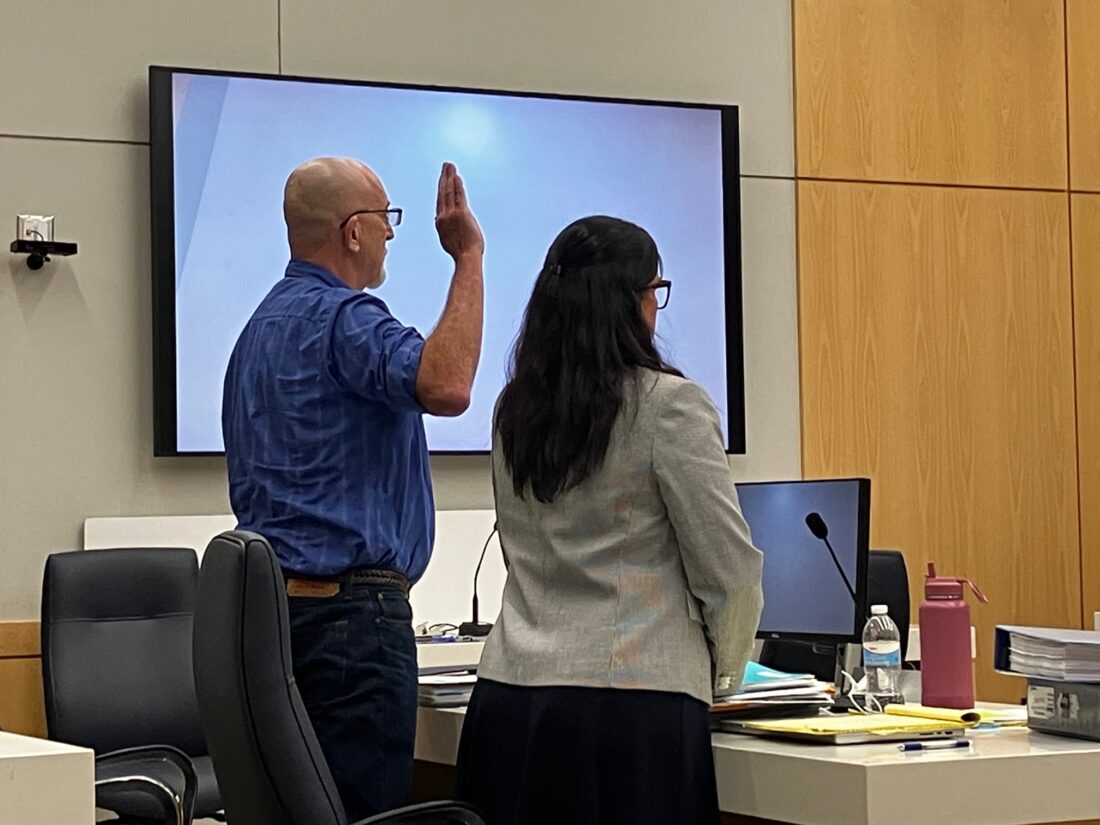
photo by: Kim Callahan/Journal-World
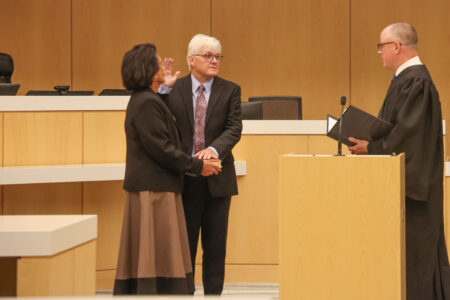
Phillip Michael Eravi raises his right hand at his trial on Wednesday, Aug. 26, 2026, in Douglas County District Court. The judge was swearing him in to ask about his decision to not testify. Attorney Angela Keck is at right.
Public Safety
Man accused of selling wristbands to enable minors to drink at time of Hawk shootings is sentenced to probation

36-year-old Lawrence man confessed to raping 13-year-old girl, affidavit says
Evacuation drill planned Tuesday at Lawrence City Hall
Douglas County’s newest pro tem judge sworn in

Woman has renewed hope for justice 17 years after reporting rape in Lawrence