

Lawrence filmmaker explores program uniting incarcerated mothers and their children in new documentary
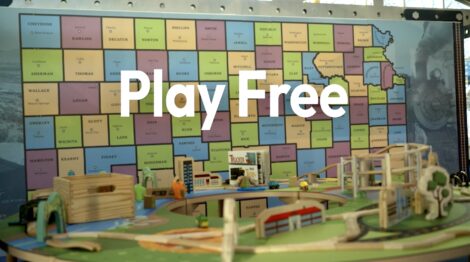
photo by: Steve Lerner
Screenshot from the trailer of the "Play Free" documentary.
Incarcerated mothers and their children come together in an unsupervised room. There are no guards — just play, and a whole a lot of love.
That’s the subject of a new documentary by Steve Lerner, a Lawrence filmmaker and psychologist, that will have its first public screening next month.
“Play Free” will be screened at 7 p.m. Nov. 12 at the Lawrence Arts Center. Admission is free.
The 22-minute documentary explores a program by the same name that started at the Kansas Children’s Discovery Center, a children’s museum in Topeka, to bring together incarcerated mothers and their children for full days of play several times a year.
The program started in 2018, when the children’s center approached the Topeka Correctional Facility to bring this effort forward. Now, eight years later, the program includes over 3,800 participants and is being modeled by other states, said Dené Mosier, president and CEO of the children’s center and founder of the program.
“It’s a fantastic program designed to help children and their incarcerated parents deal with the impact of incarceration,” Lerner told the Journal-World on Thursday.
About six or eight times each year, the mothers are brought to Gage Park in Topeka where they are left alone with their children with no guards present. There, they eat and spend time being mother and child.
Participating mothers must meet certain criteria to take part in the program: They must be minimum security, have minimum custody, have completed parenting courses, and have no behavioral write-ups in the six months preceding the event.
“The program is a win-win for everybody,” Lerner said.
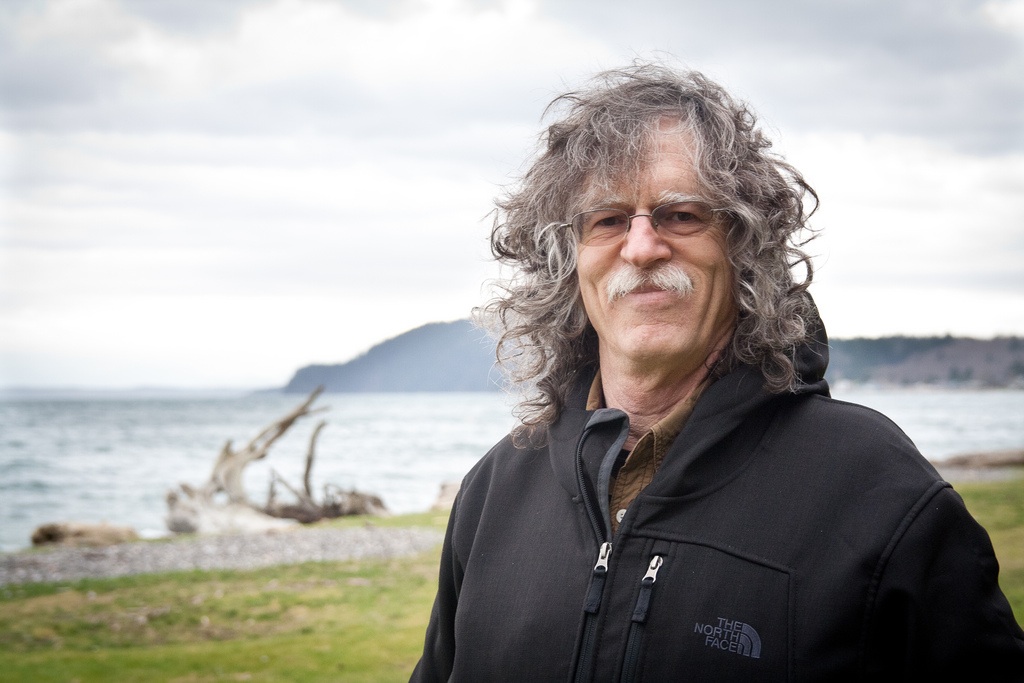
photo by: Steve Lerner
Steve Lerner, a Lawrence-based documentary filmmaker. His new film, “Play Free,” premiers Nov. 12 at the Lawrence Arts Center.
Originally from Washington D.C., Lerner moved to Lawrence in 2002 and has been making films since the early 1970s. He said he was led to this project after one of the board members at the children’s discovery center, also a psychologist, reached out to him and asked whether he was still directing films. She said she had an idea for one.
“One thing led to another,” Lerner said. “They had raised some money, and so the funding was taken care of.”
Lerner then met Mosier and things progressed from there, he said.
The program is gaining national attention. A closed screening of “Play Free” took place in Topeka earlier this week, and correctional facilities representatives from other states were present. Currently, 10 other states are pursuing their own pilot programs, including Colorado, Arizona, Louisiana and Maine.
Mosier on Thursday said that each program will be slightly different than the other to match the needs of that particular community and represent the population that is being served.
“The core principle of it is being child-centered,” Mosier said. “And making sure that as states, as systems, we are making our decisions as close to the children as possible.”
Most of the 10 states will be doing at least two pilot programs where they bring incarcerated mothers to nearby children’s museums, Mosier said, while others will put more focus on visitation rooms inside the correctional facilities.
“It’s a really special project,” Mosier said.
Public Safety

Man accused of selling wristbands to enable minors to drink at time of Hawk shootings is sentenced to probation

36-year-old Lawrence man confessed to raping 13-year-old girl, affidavit says
Evacuation drill planned Tuesday at Lawrence City Hall
Douglas County’s newest pro tem judge sworn in

Woman has renewed hope for justice 17 years after reporting rape in Lawrence