Ex-officer and current deputy chief give differing accounts of police file on ‘citizen journalist’; judge quashes subpoena
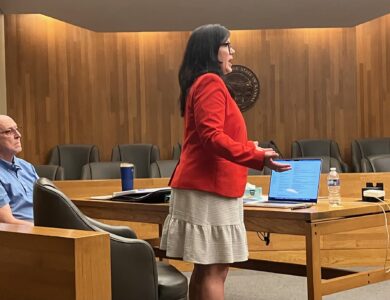
photo by: Kim Callahan/Journal-World
Attorney Angela Keck argues the case of Phillip Michael Eravi, left, Monday, June 29, 2026, in Douglas County District Court.
A defendant accused of interfering with law enforcement will be allowed to argue at trial that police bias played a role in his arrest, but he will not be allowed to subpoena a file that he claims was compiled by Lawrence police to vilify him and to interfere with his rights under the First Amendment.
Douglas County Judge Amy Hanley made that ruling Monday after hearing conflicting testimony from an ex-corporal in the Lawrence Police Department who testified about the existence of the file and a current deputy chief who professed to know little about it though he had allegedly supervised it.
The ruling came in the case of defendant Phillip Michael Eravi, a self-styled “citizen journalist” who is facing one count of felony interference with law enforcement in connection with a May 19, 2023, armed standoff between police and a shooting suspect.
Police maintain that Eravi walked into a perimeter area that they were trying to keep clear because it was in the line of fire from the suspected shooter’s residence. Eravi has denied the charge, saying that he had a right to be where he was and that police were simply out to get him because of his past interactions with — and virulent public criticism of — them.
The arrest, he continued to claim Monday, was retaliatory, despite multiple previous findings, including Eravi’s own hearing waiver, that probable cause existed to believe he had committed a crime on May 19, 2023. Randall Larkin, an attorney for the City of Lawrence who was at Monday’s hearing, noted that arrests cannot legally be deemed retaliatory if they are supported by probable cause.
Eravi’s attorney, Angela Keck, on Monday called a former LPD corporal, Shawn Gross, to the stand. He testified that he had been assigned several years ago to create a file of body camera footage of police interactions with Eravi. Gross said on the stand that he believed the purpose of the file was to find something for which Eravi could be charged, though in a text message with another officer, which was read in court, Gross described the project as simply compiling evidence that Eravi had behaved hostilely toward police.
The distinction is important because the latter explanation is more in line with the state’s and city’s explanation for the file: to turn over to the city attorney in contemplation of getting a protection from abuse order against Eravi, who allegedly had been aggressively stalking a particular police officer.
Larkin told the court that he had never actually seen a file by Gross concerning Eravi.
The existence of the purported file was evidently brought to light by Gross, who worked for the Lawrence Police Department for 15 years before quitting a few years ago after being denied a promotion to sergeant. Gross said that the file was not a secret but that he was told not to associate Eravi’s name with it in order to prevent public information requests.
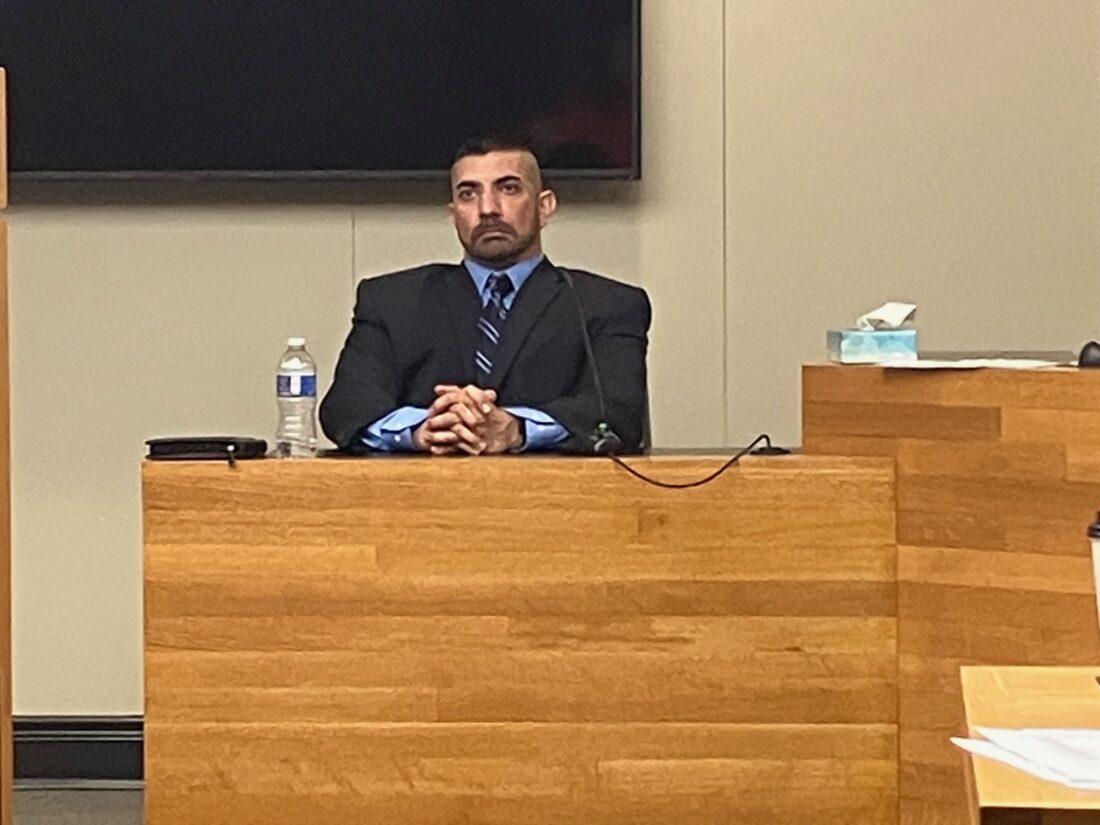
photo by: Kim Callahan/Journal-World
Ex-Lawrence police officer Shawn Gross testifies Monday, June 29, 2026, in Douglas County District Court.
Gross said he was given little direction in how to compile the file but generally reached out to officers who had interactions with Eravi and “reverse engineered” videos that Eravi made for his YouTube channel. He said he compiled a spreadsheet with dates and links to body-camera footage involving Eravi. Though he couldn’t answer how many entries were in the file, Gross said it was “exhaustive” and that supervisors had said he had exceeded their expectations, though he never attended any of the meetings where he alleged that the file was discussed.
Gross said he was given the assignment in the summer of 2022 by deputy police chiefs Anthony Brixius and Adam Heffley — specifically to find criminal conduct that Eravi could be charged with. He testified that he gave regular updates to Heffley and that he could not find any criminal behavior in the footage he had reviewed. He said he was eventually told that the project had been “shelved,” and he did not know what became of it.
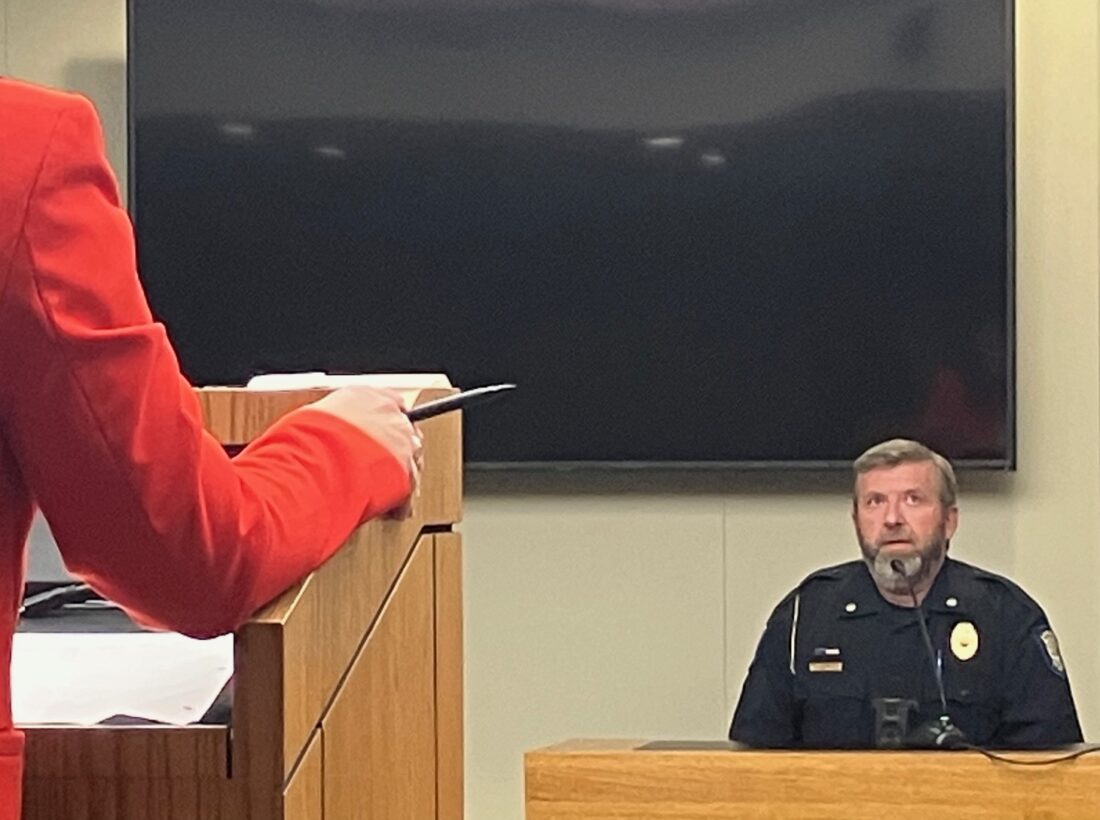
photo by: Kim Callahan/Journal-World
Lawrence Deputy Police Chief Adam Heffley testifies Monday, June 29, 2026, in Douglas County District Court.
Brixius was not at Monday’s hearing, but Heffley took the stand and denied most of Gross’ account, saying that the file, such as it was, was for the sole purpose of exploring a protection from abuse order against Eravi with regard to one particular officer. There was no other intention, he said, adding that he did not order the assignment, receive updates on it or do check-ins with Gross about it. He testified that he did not know what the file contained or whether it was ever actually given to a city attorney.
“A file exists,” he testified. “What’s on it I don’t know.”
In his cross-examination of Gross, prosecutor Adam Carey sought to bring out Gross’ dissatisfaction with the police department for not promoting him to sergeant and dissatisfaction with what Gross considered “leadership” issues at LPD, where he sought to be the “change” he desired in management. Carey also got Gross to admit that he was fired from his next job at the Johnson County Sheriff’s Office over what Gross termed a “false report” by his wife, whom he is currently divorcing. Gross stated that when he left the Lawrence Police Department he was told he could come back but that when he attempted to do that he was not allowed to return.
Gross also said that he couldn’t recall whether he had reached out to Eravi’s attorney with information about the file or whether her team had reached out to him.
During a recess in the hearing Monday, Gross remained seated at the witness stand and conversed with Eravi, who was alone at the defense table.
Eravi, who has repeatedly shouted expletives at Lawrence Police Chief Rich Lockhart at public meetings, said to Gross, “Thank you for honoring your oath, Shawn.”
From the stand Gross told Eravi that a police officer who left the courtroom during the recess was likely going out in the hall to tell sequestered witnesses what he, Gross, had said on the stand so that they could all get their stories “straight.”
At the conclusion of Monday’s testimony, Hanley found that the file discussed by Gross simply was not relevant to what Eravi was accused of doing during the standoff three years ago. She said it was not material to the case for which probable cause has already repeatedly been found and that it was not exculpatory in nature — that is, that it would not be evidence that he was not guilty of the crime currently charged.
“We are getting so far afield from the allegations in this case,” she said, that it would be “confusing and misleading to a jury” to allow the file to be subpoenaed.
However, she said that Eravi was still free to try to convince a jury — through testimony by Gross, for example — that police were biased in arresting him for interference.
After years of legal wrangling and various delays, Eravi’s case is set to go before a jury on Aug. 24. Hanley noted again on Monday, with evident frustration, that the case — a low-level felony — has taken up more time and resources than some murder cases.
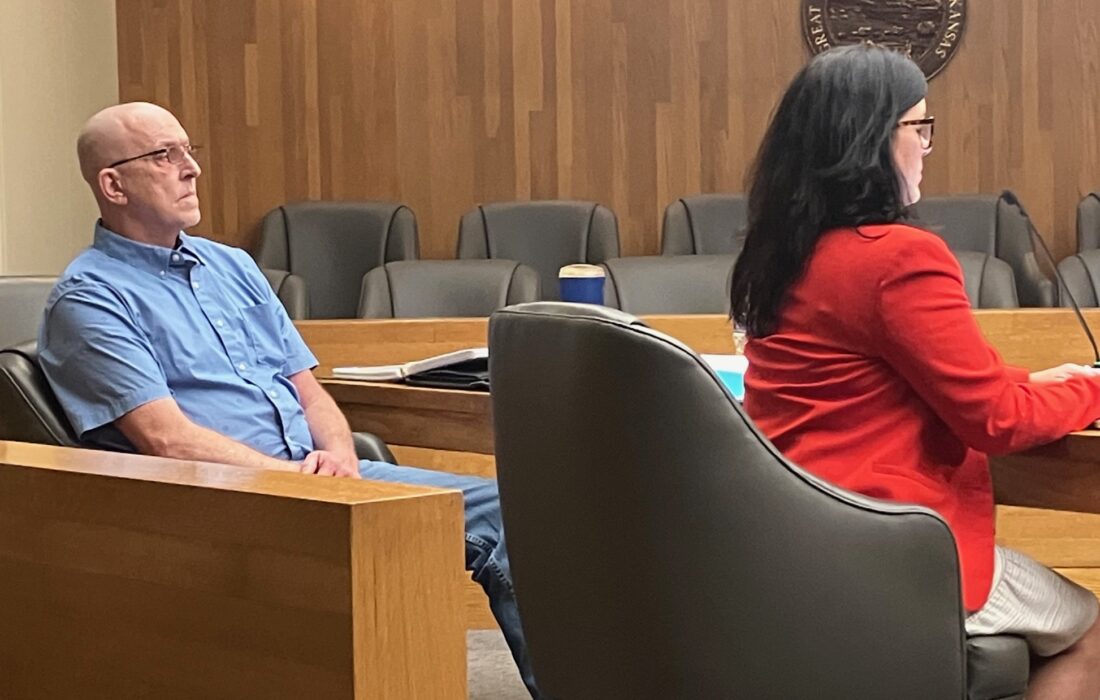
photo by: Kim Callahan/Journal-World
Phillip Michael Eravi appears Monday, June 29, 2026, with his attorney, Angela Keck, in Douglas County District Court.
Public Safety
Man accused of selling wristbands to enable minors to drink at time of Hawk shootings is sentenced to probation

36-year-old Lawrence man confessed to raping 13-year-old girl, affidavit says
Evacuation drill planned Tuesday at Lawrence City Hall
Douglas County’s newest pro tem judge sworn in

Woman has renewed hope for justice 17 years after reporting rape in Lawrence