

Fighting fires in the cold and jumping into icy lakes: How Douglas County emergency crews deal with winter’s challenges

photo by: Chris Conde/Journal-World
Members of the Lawrence-Douglas County Fire Medical department practice rescue techniques on a frozen lake on Jan. 17, 2024, north of Lawrence.
When you think of a firefighter, you might think of someone rushing into a burning building, braving the smoke and flames to save lives. But during the winter months, you might also find them cutting holes in icy lakes and jumping into frigid water.
Members of the Lawrence-Douglas County Fire Medical department spent some time on Wednesday training on a frozen lake north of Lawrence. It was a “warm” day — temperatures in Lawrence were just above freezing after nearly a week of ice-cold weather — and Lt. Tyler Tuckness took a few minutes out of his training to talk with the Journal-World about what it’s like to fight fires in the cold and rescue people who’ve fallen through the ice.
Firefighting in frigid weather
When a fire breaks out in wintertime, firefighters have one thing going for them immediately: the insulated gear they would already be wearing.
“Luckily, our bunker gear does give us a good amount of thermal protection,” Tuckness said. “It works two ways: It protects us from the heat of the fire, but it also helps us retain some body heat.”
Some firefighters might wear extra socks or undergarments, he said, but by and large the regular gear keeps them pretty warm — though you may see one firefighter patting another on the back to knock off some ice now and then.
The main time the cold becomes a real factor is when an emergency call takes longer than expected and firefighters need a place to take a break and get warm.
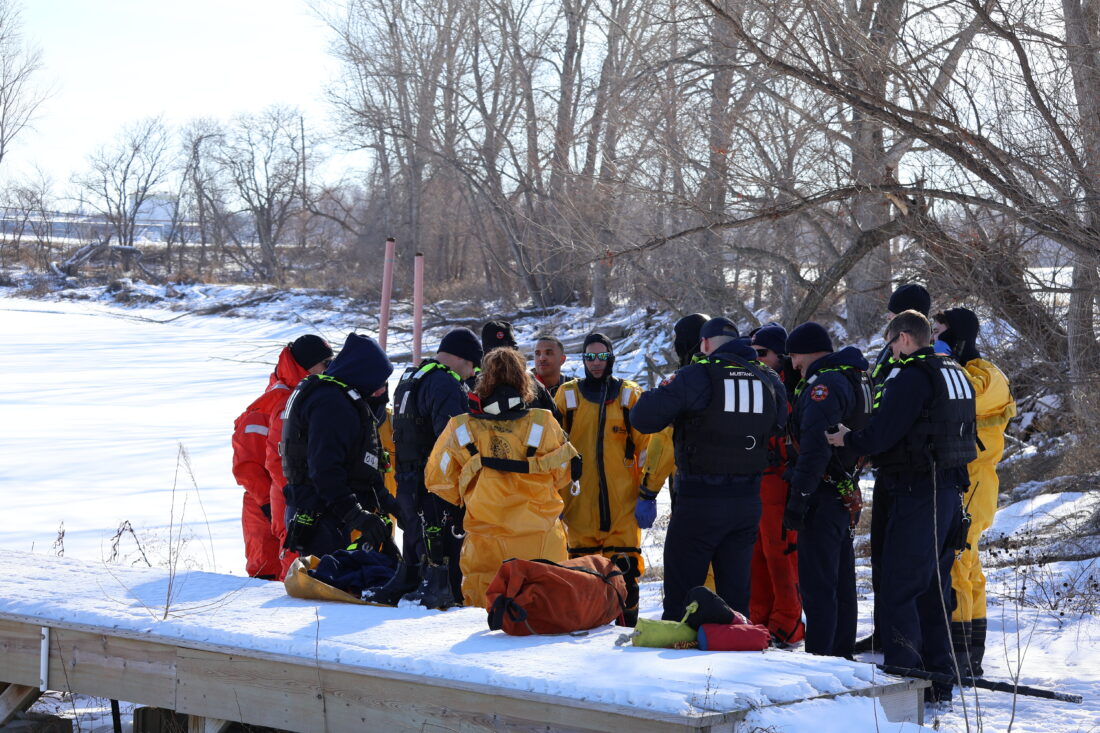
photo by: Chris Conde/Journal-World
Members of the Lawrence-Douglas County Fire Medical department prepare for training on a frozen lake on Jan. 17, 2024, north of Lawrence.
“We’ve had big fires in the past during this kind of temperature where we’ve had the city buses come as kind of like a warming station for us,” Tuckness said. “So, we’ll go, warm back up and thaw out a little bit in the heated buses, and then go back out.”
The firefighters’ trucks get cold, too, which is important to mitigate when you’re carrying a tank of water around. Tuckness said that the fire engines, which firefighters call “apparatuses,” have pumps that circulate the hundreds of gallons of water inside the tank. That helps prevent the water from freezing, but it still only takes a little bit of ice left in a hose to render a truck useless. In an effort to prevent that, the hoses are treated with an anti-freezing agent.
“We had a situation where they sent a truck from Olathe (to help with a fire in Douglas County) and in the process of coming down the highway, there was water in one of the pipelines that froze up, and we weren’t able to use that truck as a fire apparatus,” Tuckness said.
Crews also have to worry about the hydrants. While the valves of the hydrants are a few feet under the ground, it isn’t always a sure bet that a hydrant won’t be frozen if there happens to be a leak, Tuckness said.
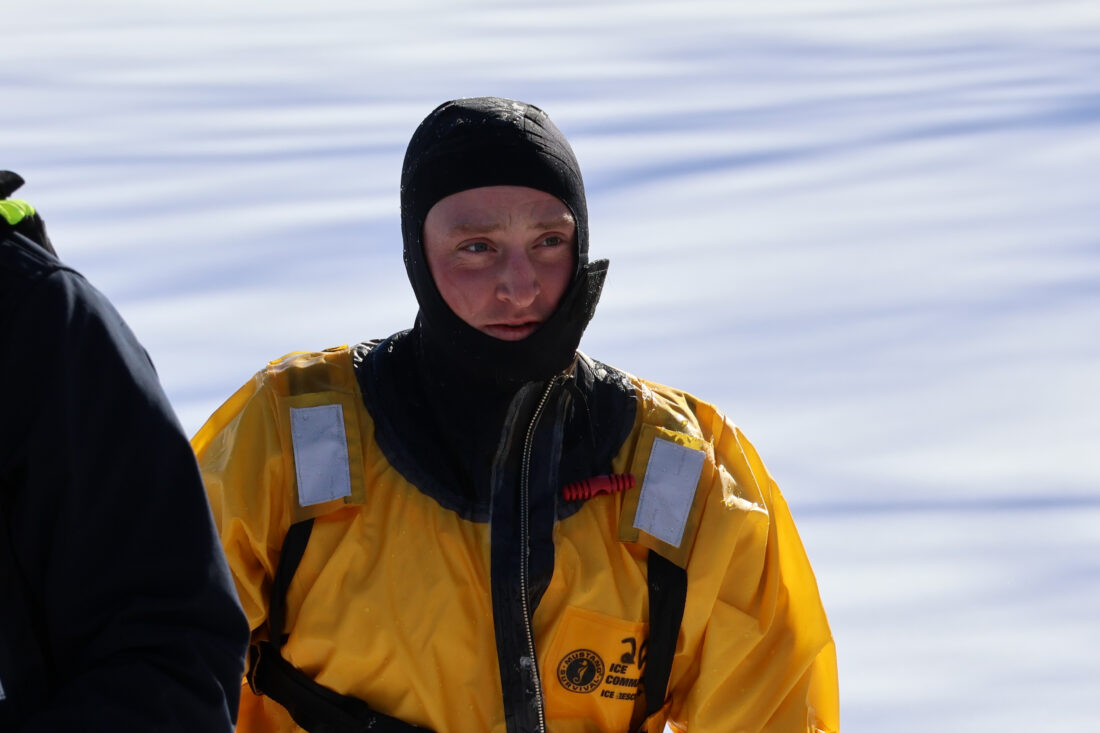
photo by: Chris Conde/Journal-World
LDCFM firefighter and paramedic Dakota Nehl, moments after getting out of the freezing water during ice rescue training, on Wednesday, Jan. 17, 2023, in rural Douglas County.
“We go to the next hydrant down … or the next truck in will catch a hydrant on its way in,” Tuckness said. “There’s a lot of game plans that we’ve sat down and worked through worst-case scenarios and what we would do in a situation. That’s just kind of our business, is to play out the worst-case scenario and ask ‘how are we going to handle this if this happened in real life?'”
In icy waters
In planning for worst-case scenarios, LDCFM crews spent some time Wednesday training for what might be some people’s worst nightmare: falling into a frozen pond. The crews from Fire Station 1 took turns doing just that, jumping into a hole in the ice made using a chainsaw.
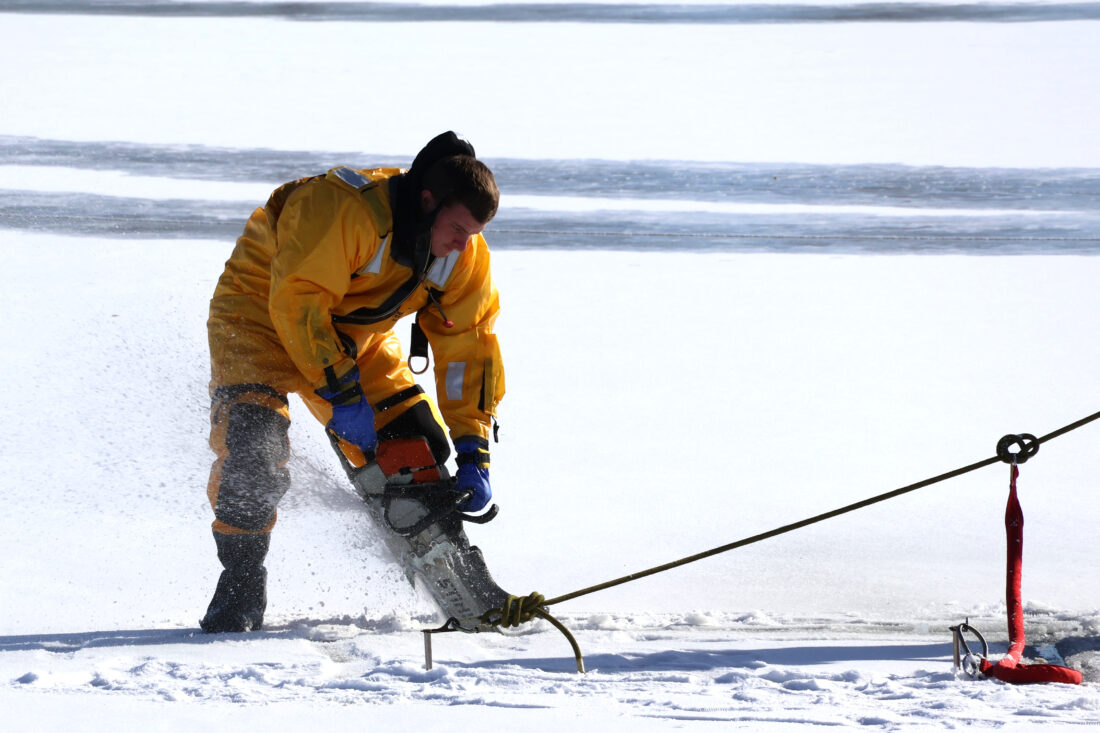
photo by: Chris Conde/Journal-World
LCDFM firefighter and paramedic Adam Eudaly uses a chainsaw to cut a large hole in a frozen pond for ice rescue training on Wednesday, Jan. 17, 2024, in rural Douglas County.
“The ice was about 8 inches thick,” Tuckness said. “We had to use a chainsaw just to cut it open to be able to get into it.”
And, once you’re inside, you’ll need special gear to protect you.
“If you see the yellow suits here, there are thermal protected water suits for going in the water,” Tuckness said. The yellow suits used by the department look like something used for a virus outbreak. Tuckness said they kind of make people look like the creatures from the kids’ movie “Minions.”
“The yellow suits are actually encapsulated. So they won’t let any water in once you’re sealed up and zipped,” Tuckness said.
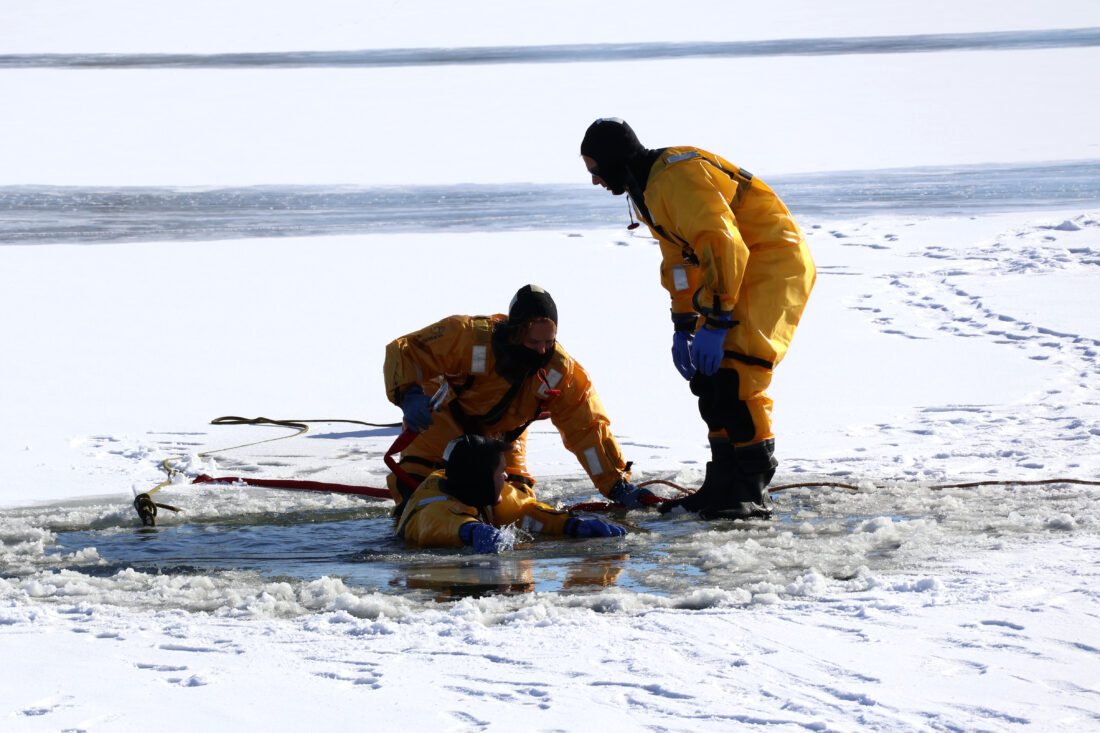
photo by: Chris Conde/Journal-World
Members of the Lawrence-Douglas County Fire Medical department practice rescue techniques on a frozen lake on Jan. 17, 2024, north of Lawrence.
Other crew members wore orange suits that are designed to prevent cold exposure and, if necessary, have a natural buoyancy.
The training involved two crew members approaching the hole about 30 yards from the shoreline and one of them jumping into the hole, plunging into freezing water. Two more members of the team then approach the person in the water, slowly walking around them. One of them jumps in behind the person being rescued; hugs them from behind with a rescue line; and crews on the shore then pull the line out, dragging both people out of the water.
Some firefighters were in high spirits, laughing as they jumped into the water. Tuckness said it was important to maintain a good attitude during this type of training, and that some of the participants were genuinely having fun.
Communication on the water is not easy. Firefighters can’t carry their radios with them, and crews have to rely on hand signals to relay messages back to shore, Tuckness said. And for people in the water, it is crucial that the rescuing firefighter say aloud what they are doing to the person the whole time; otherwise, the person being rescued might panic and put the rescuer at risk of drowning, too. It’s also important for rescuers not to put themselves in harm’s way if they don’t have to; jumping in is the last resort.
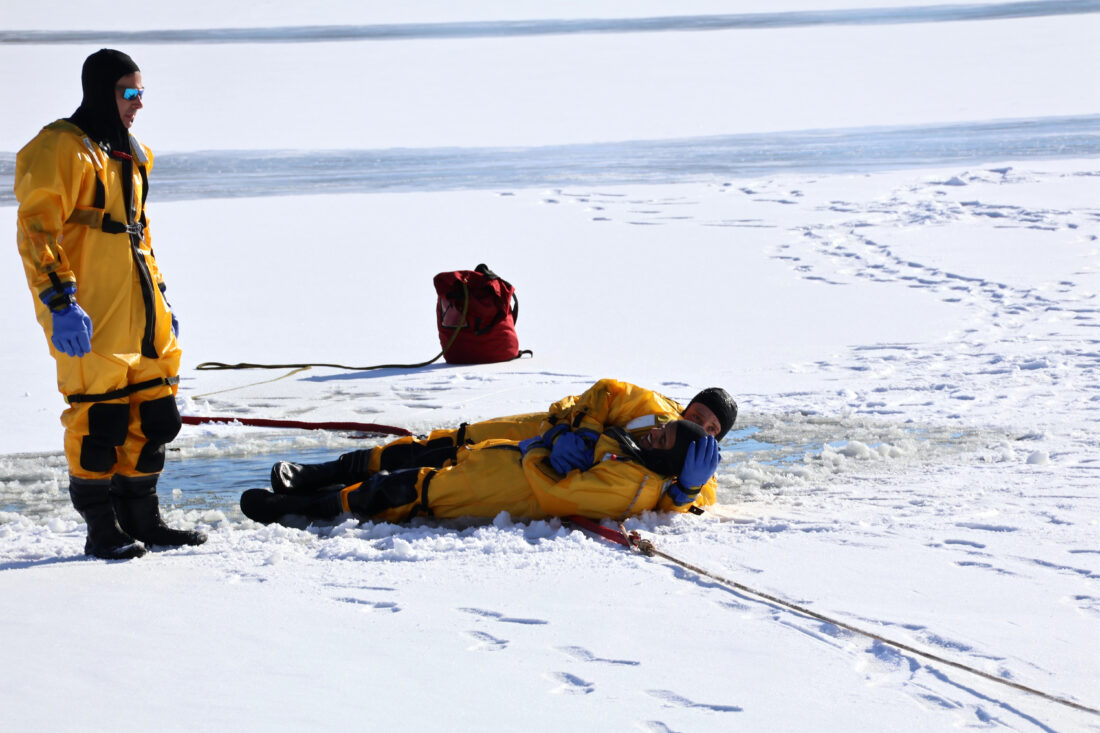
photo by: Chris Conde/Journal-World
LDCFM engineer John Dines, left, observes as firefighter Plan Ekpo rescues firefighter Sam Nehl during ice rescue training on a frozen lake on Jan. 17, 2024, north of Lawrence.
“We have a process called ‘reach-throw-row-go,'” Tuckness said. It’s a mnemonic that helps firefighters remember what to do before trying to jump in after someone.
A rescuer should first reach out to the person in the water with whatever is handy, like a ladder or pole; if that doesn’t work, they should look for something to throw, like a rope or a flotation device. If possible, they should then row a boat out to the person. Only if all other methods fail should someone with rescue training go into the water, Tuckness said.
“Even with all the equipment we have, stuff can still go wrong, and we can become a victim as well,” Tuckness said.
In icy water, even if a person has been under for a while, firefighters are still in rescue mode. Tuckness said that if a person has been in the water for a long time when it isn’t freezing, that often turns into a recovery mission instead of a rescue, because the person has likely drowned. However, in frigid waters, he said a person’s body can enter into a sort of biological stasis. Someone who would have already drowned in warmer water might still be revived after being pulled from icy water.
“They’re not dead until they are warm and dead,” Tuckness said.
Keep yourself safe
All in all, fire and medical crews are always preparing for the worst, and Tuckness said the average person should be prepared for the dangers of cold weather, too.
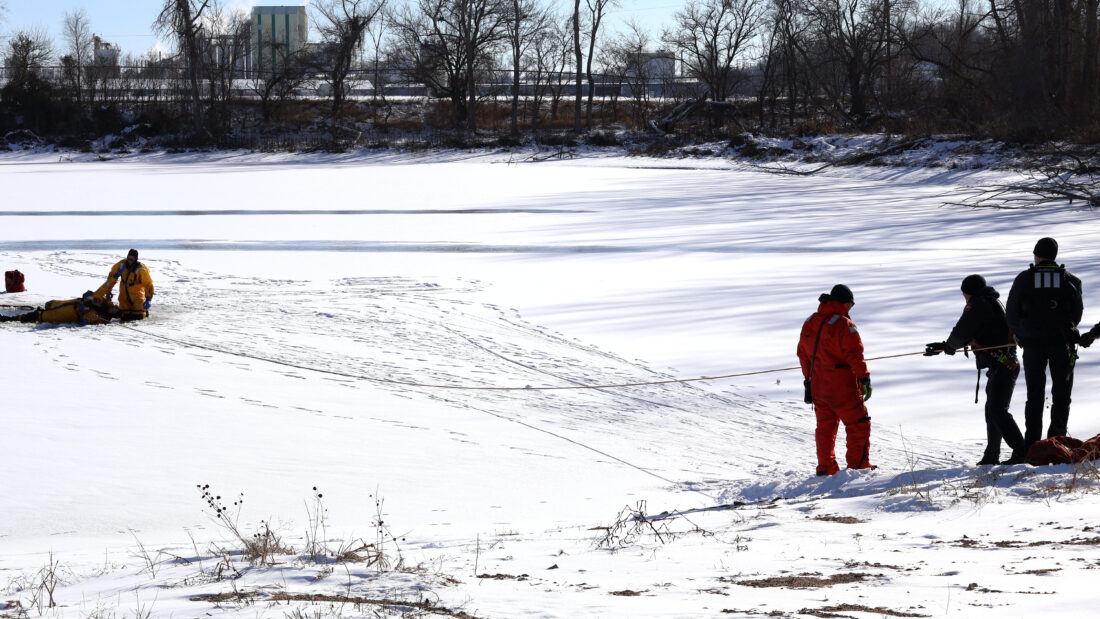
photo by: Chris Conde/Journal-World
Members of the Lawrence-Douglas County Fire Medical department practice water rescue techniques on a frozen lake on Jan. 17, 2024, north of Lawrence.
“Some people are more resilient, and some are less resilient,” he said. “You could be out in this temperature unprotected for five minutes and have a major medical issue. Or you could be out for hours with appropriate clothing on before you ever start getting any symptoms.”
Tuckness said it’s wise to keep an emergency kit in your car with cold-weather clothing or blankets and some food and water in case you get stranded after an accident. “You often will see people that are used to getting into a vehicle in a garage and getting out in the garage, and (they) maybe don’t wear the most appropriate clothing if they were to either get in an accident or have mechanical issues,” he said.
Winter is also a time to be vigilant about house fires, such as those caused by a space heater being used inappropriately. A heater plugged into the wrong type of outlet or being used too close to furniture can be dangerous, Tuckness said. He said the department has been fortunate that there haven’t been many of those types of calls this winter.
Fire isn’t the only threat from using heating devices improperly.
“Some people in desperation will use a propane-powered device indoors, which is highly lethal,” Tuckness said. “And, unfortunately, some people will succumb to CO poisoning from that.”
And, because many of the dangers of cold weather are more mundane, making sure that you are wearing warm clothing can go a long way.
“The colder it gets, the less amount of time bare skin can be out in the open, and that’s where you start getting frostbite. The more that you can cover everything and the more layers that you can put on, the safer you’ll be out in the cold weather,” Tuckness said.
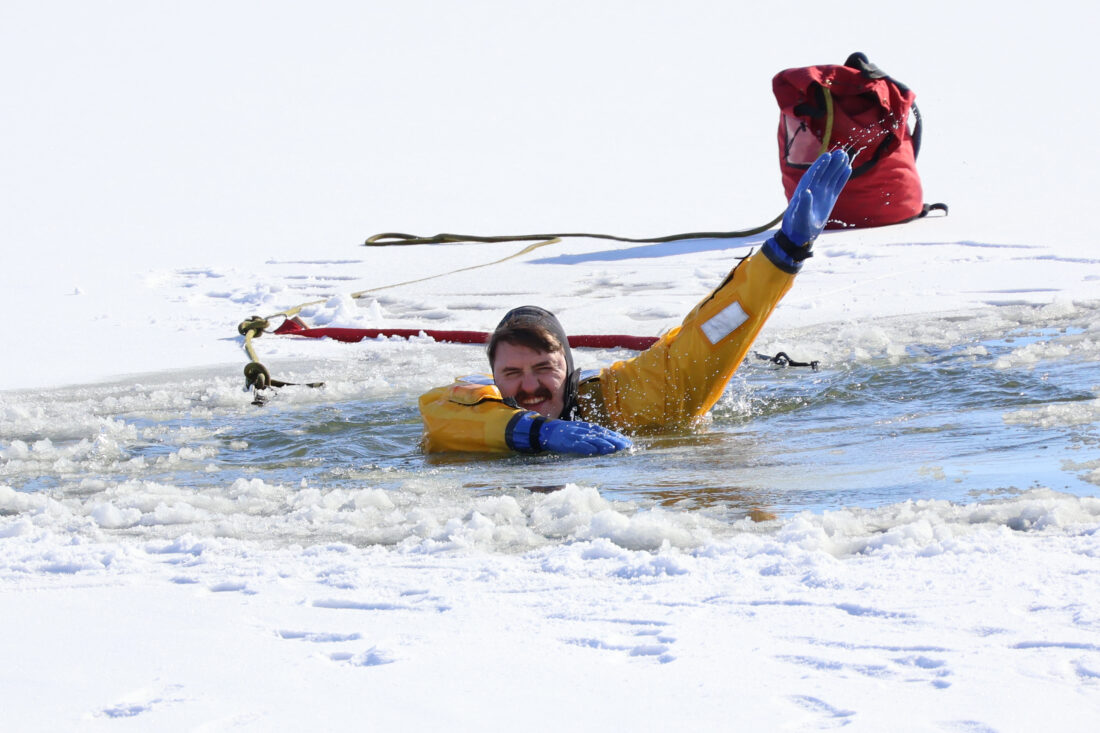
photo by: Chris Conde/Journal-World
LDCFM firefighter and paramedic Sam Goodwin waits for a teammate to rescue him during ice rescue training on a frozen lake on Jan. 17, 2024, north of Lawrence.
Public Safety

Former LHS teacher admitted having sex with a sophomore 26 years ago, but a lot turns on whether she was 15 or 16 at the time

23-year-old man charged with second-degree murder in downtown Lawrence homicide
Lawrence Police Department receives KDOT’s top traffic safety award for second straight year

Police arrest 23-year-old on suspicion of first-degree murder in downtown Lawrence homicide

At domestic violence trial, Douglas County jurors will decide whether woman was the abuser or the victim