Lawrence city leaders voice support for proposed Fire Medical funding formula, say it will lead to more stability

photo by: Chad Lawhorn/Journal-World
A Lawrence-Douglas County Fire & Medical ambulance is pictured on July 5, 2023.
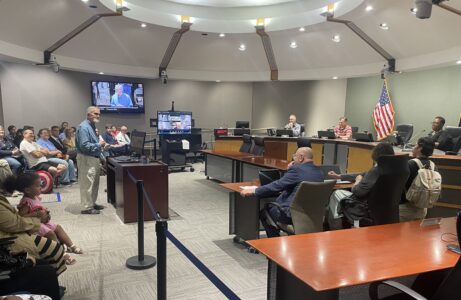
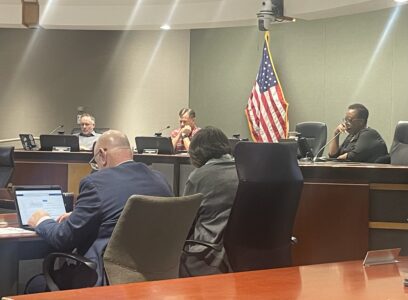
Lawrence city leaders voiced support on Tuesday for a proposed fire and medical funding formula that’s intended to result in a more stable split between the city and the county.
The City Commission heard a presentation from Lawrence-Douglas County Fire Medical about its proposed new funding formula. The two governments have historically split the costs of the joint department based on levels of fire vs. EMS staffing. But last year, it was discovered that this would result in cost swings between the city and county if the department added more fire positions than EMS positions, or vice versa.
In the 2026, budget, the two governments agreed to split the costs of LDCFM roughly 60% city, 40% county as a stopgap, and the formula proposed for their new funding agreement would result in a split of 59.7% city, 40.3% county.
It would also be designed so that “minor changes no longer result in major swings in costs to one or both sides,” division chief John Darling told the City Commission on Tuesday night.
The new formula would do that by using six factors. In addition to the staffing levels, it would also factor in two kinds of population stats, the locations of incidents the department responds to and the total number of runs that fire units vs. EMS units go on. It would also involve an estimate of how much demand the Lawrence Fire Department and Douglas County Ambulance Service would each see today if they hadn’t merged in the 1990s.
Weighing all of these things would make the split more stable over time and prevent money from swinging suddenly between the city and county as staffing changes, Darling said.
“We wanted to go from big swings to modulated swings,” Darling told the commission. “The fewer things we put in there, the less modulated it becomes.”
Acting City Manager Casey Toomay said she’d been working in city government for more than two decades, and historically, “there’s been a problem” with the funding split.
“When we only had the one factor, there was a winner and there was a loser, and that was very challenging,” Toomay said.
Mayor Brad Finkeldei agreed with her that the proposed formula would help the city and county work together better. He and Toomay said the problems were compounded by the fact that the county and the city did different parts of their budget process at different times.
“I’ve seen how the single-variable formula causes consternation between the two bodies, especially when, as Casey said, we don’t have the same budget cycle,” he said.
Vice Mayor Mike Courtney and Commissioner Kristine Polian both expressed interest in locking in the next city-county agreement for three to five years, and Polian suggested even codifying the formula in a separate resolution.
And Commissioner Mike Dever was happy that the formula would keep the split roughly the same in the near term, even if the way it was derived had changed.
“I love to see us using lots of variables and seeing how it all ends up close to the same place,” he said. And, in terms of cooperating with the county, he said, “It’s going to allow us to kind of ride out some of the ups and downs of our budgets.”
Up next, the Douglas County Commission will give feedback on the proposed formula at its meeting on Wednesday.
City Government
Lawrence City Commission to weigh whether Costco should be included in STAR bond district
As they approve bikes plan, Lawrence city leaders ask about data collection, Kentucky and Tennessee streets
Lawrence city leaders want to toughen tobacco licensing rules ‘sooner than later’
Algerian government invites Mayor Brad Finkeldei, Lawrence delegation for a visit
Construction on Wakarusa Drive to resume; city manager says KDOT’s secretary has apologized for delay