Lawrence rapist denied parole again; his victim from 1981 and law enforcement officials fought against his release
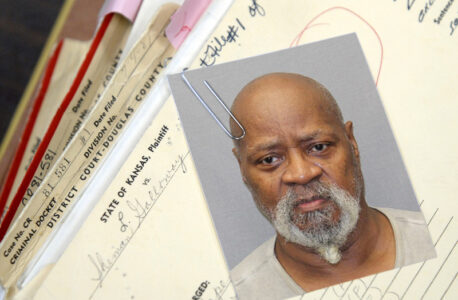
photo by: Journal-World Photo Illustration
Sherman L. Galloway, pictured in this photo in 2022, was convicted of sodomizing and raping two University of Kansas students in 1981.
A man who brutally raped two University of Kansas students in 1981 has been denied parole again, after one of his victims and the Douglas County district attorney vehemently fought against his release.
Jean Rhea, who was attacked in summer 1981 by Sherman L. Galloway while jogging on the KU campus, told the Journal-World this week that the Galloway’s parole had been denied. She was notified of this by the state Office of Victim Services, she said.
This is the eighth time that Galloway has been denied parole: he was previously denied it in 1996, 1999, 2004, 2005, 2007, 2012 and 2019. Each time he has come up for parole, Rhea has advocated against his release.
Rhea’s attack happened when she was 25 years old, and she has described it as “life-transforming.” Galloway ran up behind her with a knife while she was jogging and threatened to slit her throat if she screamed. He proceeded to rape, sodomize, beat and bite her as she fought for her life. Eventually she was able to break free and get into the car of a passing motorist, naked and bleeding.
In Galloway’s other 1981 attack, a KU student was walking home from campus in the 900 block of Alabama Street, when Galloway forced her into a car at knifepoint, drove her to Clinton Park near Pinckney Elementary School and raped her.
Rhea also has said that in 1981, law enforcement had told her that at least a dozen other women had “probably” been raped by Galloway but were too frightened or felt too stigmatized to come forward.
In Rhea’s case, Galloway was sentenced in 1981 to 30 years to life in prison, with the possibility of parole after 15 years. Three years later, the same judge ordered another 30-to-life sentence in the other woman’s rape, with Galloway still being eligible for parole 15 years after his first conviction. At the time of the rapes, Galloway was on parole for a violent aggravated battery committed in 1979.
During the most recent parole hearing, in April, multiple people who were involved in Rhea’s case urged the parole board not to release Galloway. They included Paula Kissinger, the officer who responded to Rhea’s attack, and Shelley Diehl, a former Douglas County prosecutor who reviewed the case years later as Galloway sought DNA testing. Diehl said that Galloway “simply doesn’t live in a world of rules” — “I think that he should never walk amongst us again. He is a risk to the public.”
Current Douglas County District Attorney Dakota Loomis also fought against Galloway’s release. Before the hearing, he told the Journal-World that his office was submitting a written request to keep Galloway incarcerated, “based upon the nature of the crimes, their level of violence and planning, and Mr. Sherman’s lack of acceptance of responsibility.”
The ordeal for Rhea is not yet over, because Galloway, now in his 60s, will be up for parole again in May 2029. He is incarcerated at the Ellsworth Correctional Facility.
Public Safety
Man accused of selling wristbands to enable minors to drink at time of Hawk shootings is sentenced to probation

36-year-old Lawrence man confessed to raping 13-year-old girl, affidavit says
Evacuation drill planned Tuesday at Lawrence City Hall
Douglas County’s newest pro tem judge sworn in

Woman has renewed hope for justice 17 years after reporting rape in Lawrence