

Douglas County budget hearings open with requests to fund youth crisis center, naloxone distribution
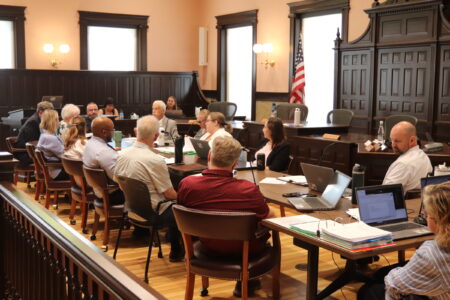
photo by: Josie Heimsoth/Journal-World
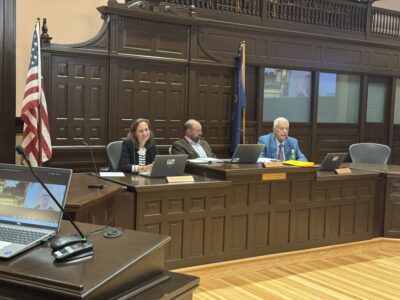
Douglas County commissioners meet with behavioral health community partners during 2027 budget hearings on Monday, July 6, 2026.
As they opened budget hearings on Monday, Douglas County commissioners were asked for $1.5 million to help close a gap in local mental health services — specifically for youth crisis care.
The request from Bert Nash Community Mental Health Center is for its youth treatment center project, the Judge Jean Shepherd Youth Recovery Center, set to be located at 3500 Clinton Place. Bert Nash has said that the center, when complete, will offer 24/7 care, short-term stabilization and outpatient services for children and teens under the age of 18 in a single facility. As the Journal-World reported, Bert Nash expects the center will serve more than 2,000 youth in its first year once it’s complete.
The $1.5 million request is just for expenses related to the construction of the center, but Commissioner Patrick Kelly asked Bert Nash CEO Kirsten Watkins about how much it would cost to operate the facility, because the county already provides funding each year to support operations at the Treatment & Recovery Center for adults.
Watkins said that Bert Nash had three years of operating the TRC under its belt, and that the Youth Recovery Center was likely to make enough money from its services to sustain its operations. She noted that children who are eligible for Medicaid are more likely to actually have that coverage than adults are. Lower-than-expected revenue from Medicaid has been a consistent problem for the TRC and has led Bert Nash to ask for additional funding from the county before.
“The funding model is sound for a (youth crisis center), for us to operate that independently,” Watkins said. She said that the center would also house other services that Bert Nash already provides for youth at its 200 Maine St. facility, but that the crisis care component would be new for the organization.
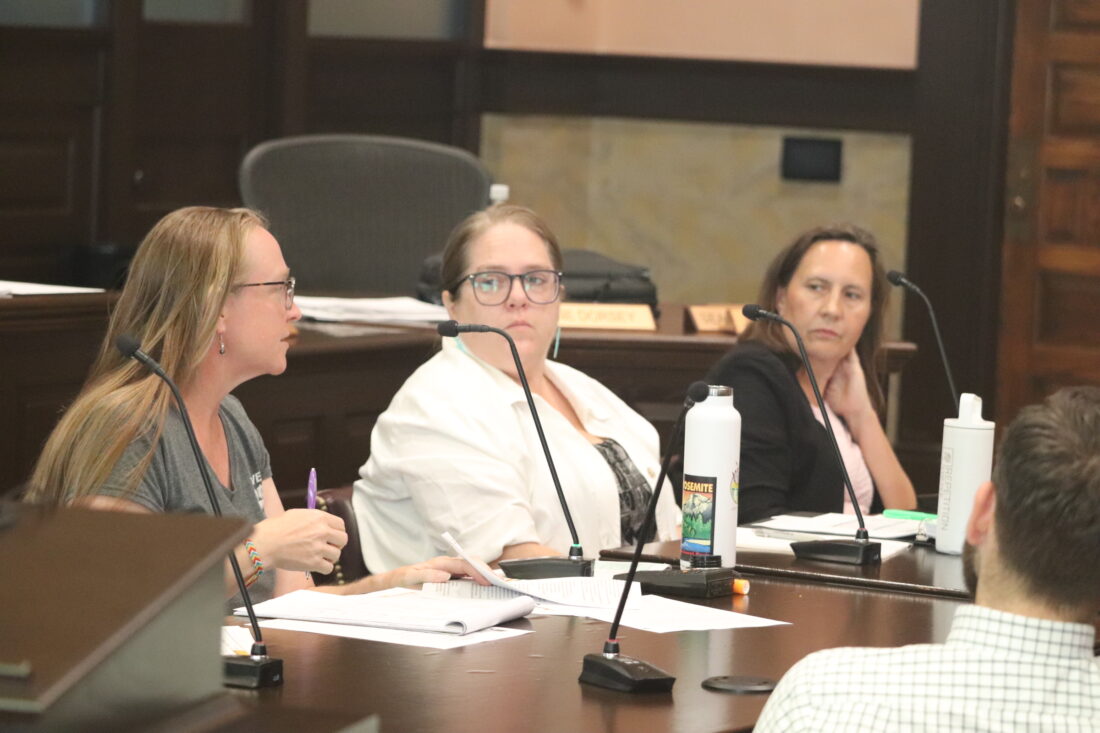
photo by: Josie Heimsoth/Journal-World
Commissioners Karen Willey, Shannon Reid and Erica Anderson meet with community partners for 2027 budget hearings on Monday, July 6, 2026.
As of May 6, 2026, Bert Nash had secured $6,576,039 in private donations, state grants and other commitments toward the project, and its goal is to reach $12 million. If commissioners decide to fund the request, they could use funding from the behavioral health sales tax fund.
“We are making great strides,” Watkins said. “I think part of the reasoning for us submitting this supplemental request was to ensure that these critical resources for youth in our community happen as soon as possible.”
“We need these now. We needed them yesterday,” Watkins said. “We would like to open this as soon as possible.”
County commissioners also heard supplemental funding requests from other behavioral health organizations on Monday. One of those discussions was about DCCCA’s efforts to distribute naloxone, a lifesaving medication that can rapidly reverse an opioid overdose.
DCCCA has operated the Kansas Naloxone Program since August 2020, providing more than 130,000 naloxone kits to individuals and organizations throughout the state. But a federal grant providing funding is anticipated to end in September, and DCCCA has asked the county for $90,000 in additional funding to distribute approximately 3,800 naloxone kits in Douglas County next year.
Beyond just Douglas County, DCCCA provides services across Kansas, Missouri and Oklahoma, and CEO Lori Alvarado said the federal grant funding supported the organization’s service area, not just Douglas County.
“Douglas County has a lot of requests for naloxone,” Alvarado said. “They’re one of our highest requesters. We have state money, but it has to be distributed across the state, and so we can’t give higher representation to Douglas County … so Douglas County will lose some naloxone distribution.”
In addition to distributing naloxone, Alvarado said DCCCA is trying to inform the community of a new Kansas law, House Bill 2250, which allows any naloxone kit to be used for up to 10 years past the expiration date.
“We’ve been doing a ton of education about that,” Alvarado said. ” … That is one of our remedies, is that we hope that people will not throw naloxone away just because it has an expiration date of 2026.”
HeadQuarters Kansas, which provides 988 crisis line services for most of the state, is also seeking a one-time allocation of $180,000 to help stabilize its budget and continue participation in regional crisis response efforts. HeadQuarters said that lower-than-expected 988 funding from the Kansas Department for Aging and Disability Services reduced its projected revenues by over $400,000, significantly shrinking its year-end fund balance and forcing staff cuts and outsourcing of administrative functions.
Commissioners awarded $300,000 earlier this year to fill a projected shortfall for HeadQuarters in 2026. During the 2026 budget discussions, commissioners reserved the funds for solvency support, but it was only considered after they saw the organization’s audits for fiscal years 2022, 2023 and 2024.
Dan Watkins, interim executive director of HeadQuarters Kansas, updated the commissioners on the organization’s progress on establishing a new board of directors and future leadership.
“I plan to serve (on the board) if the court will approve that,” Watkins said, adding that Walter Way, former interim executive director, also has plans to serve. ” … We have a new operations director that started today, and we plan to announce an executive director soon, and then, hopefully I can step back.”
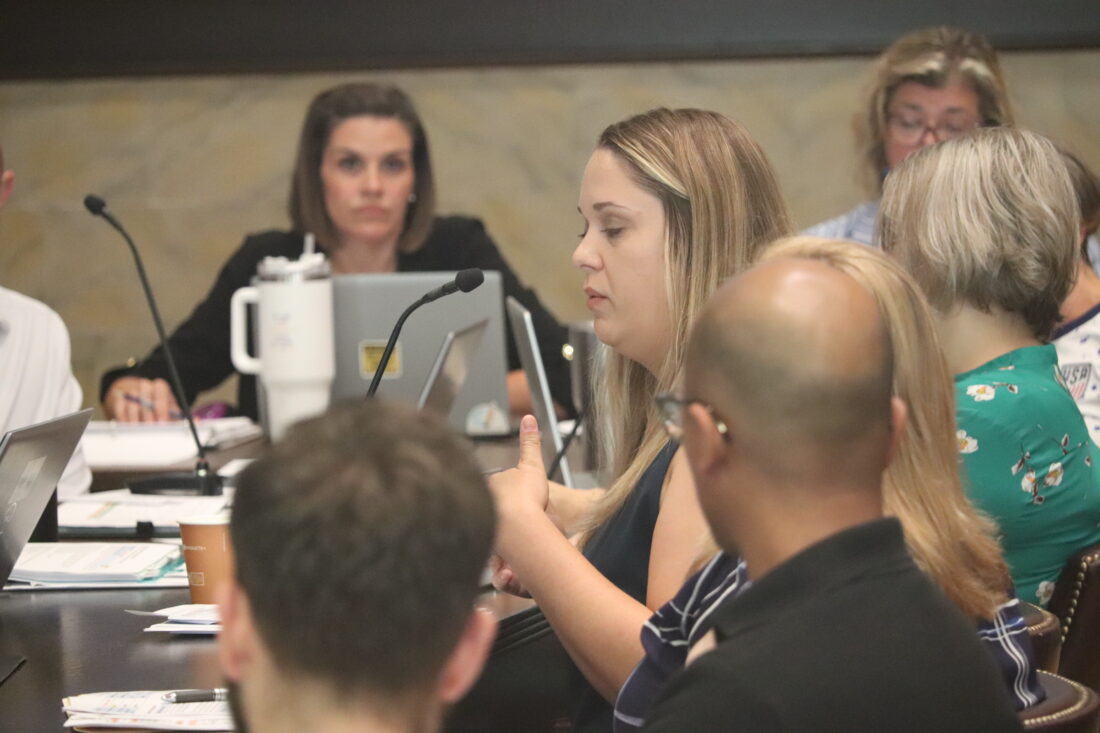
photo by: Josie Heimsoth/Journal-World
Hannah Bolton, founder of the Cardinal Housing Network, speaks with county commissioners on Monday, July 6, 2026.
SUPPORTIVE HOUSING
County commissioners also saw how close the City of Lawrence and Douglas County were to meeting supportive housing goals outlined in their joint plan to end chronic homelessness, “A Place for Everyone.”
When the plan went into effect in 2024, it set targets for how much supportive housing should be created by 2027. Those targets included 30 new units for chronically homeless individuals, two for chronically homeless families, 50 for adults age 55 and older, 20 for people involved in the criminal justice system, 10 for families involved with the child welfare system, and eight for homeless youth ages 17 to 23. There was also a goal to add 15 transitional housing units for individuals experiencing homelessness who have substance use disorders or mental illness.
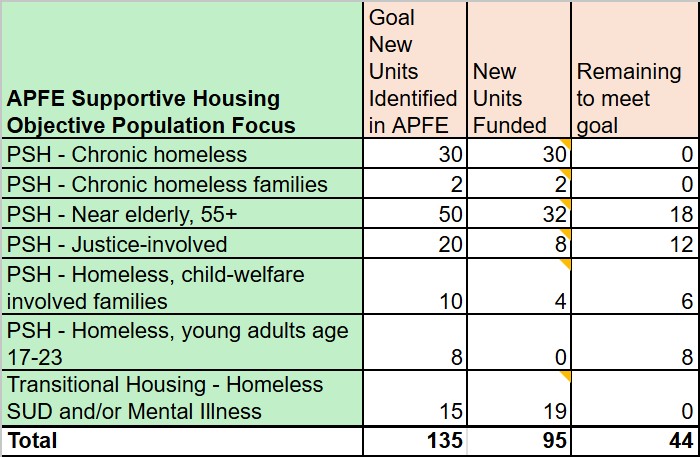
photo by: Contributed
This table demonstrates the need of supportive housing units in Douglas County identified in the ‘A Place for Everyone’ plan, how many units have been funded and the remaining need to meet the goals.
Since then, the county has funded supportive housing projects from a variety of organizations, including Artists Helping the Homeless, Bert Nash, Cardinal Housing Network, DCCCA, Family Promise of Lawrence, Lawrence-Douglas County Housing Authority, Mental Health America of the Heartland, Ninth Street Missionary Baptist Church and Tenants to Homeowners. You can find a list of such projects at https://experience.arcgis.com/experience/fffe3f26c95746a28cd12c61835c6662
Forty-four supportive housing units are still needed to meet the 135-unit goal in the plan. However, commissioners did not receive any supplemental funding requests for new supportive housing projects in the 2027 budget process.
The commission did receive a request from Cardinal Housing Network for $349,500 in ongoing funding to help stabilize operations, as the Journal-World reported. This request would fund staff salaries, employee benefits, insurance, resident transportation and vehicle maintenance and utilities and building maintenance, and it could use funding from the behavioral health sales tax fund.
Hannah Bolton, founder of Cardinal Housing Network, said that as for future projects, her next focus is to find a property within the next six to eight months in Baldwin City to offer supportive housing units to women and their families.
WHAT’S NEXT?
Douglas County staff has proposed a $201.5 million budget, holding the property tax rate flat at 40.669 mills, as the Journal-World reported. One mill is equal to one dollar per $1,000 of a property’s assessed value. With the proposed budget, a homeowner with a $600,000 home would pay $2,805 in property taxes to the county under the proposed mill levy. A $300,000 home would have a bill of $1,405 and a $200,000 home would incur $935 in taxes.
The tax a property owner pays is determined by both the mill levy and the property’s assessed value, so even if tax rates stay steady or are lowered, rising property values might still cause tax bills to go up for many residents. The total assessed property valuation increased by 4.9% in 2026, compared to a 5.7% increase the previous year.
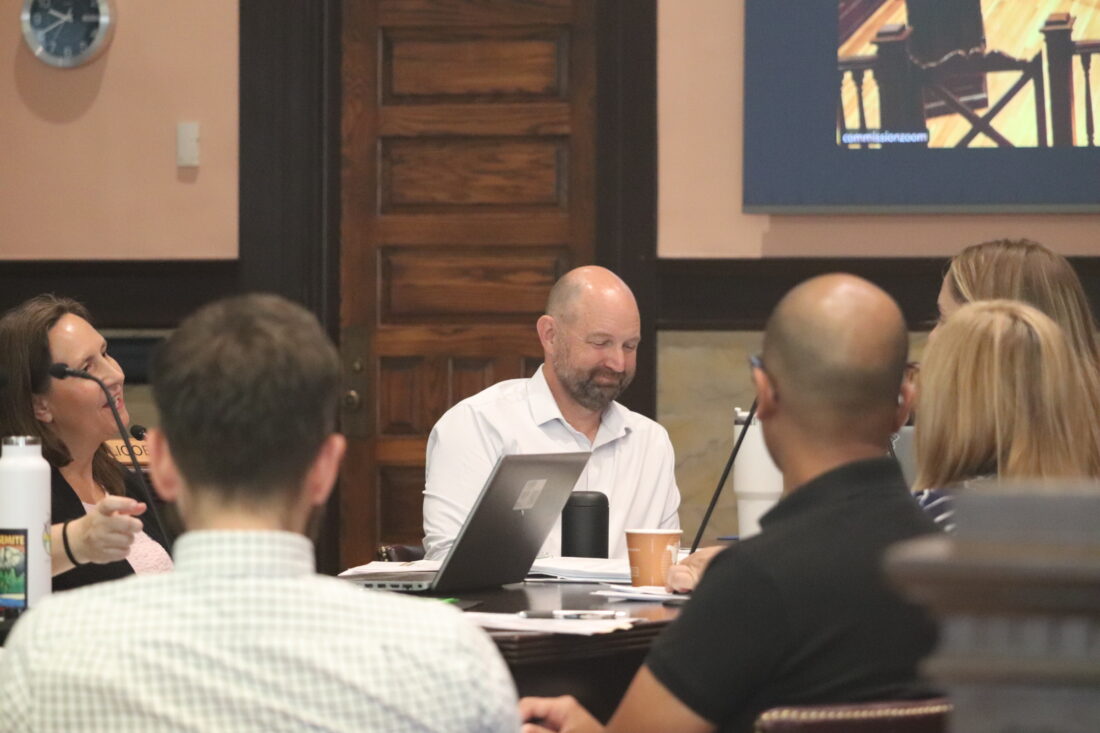
photo by: Josie Heimsoth/Journal-World
County Commissioner Patrick Kelly meets with community partners on Monday, July 6, 2026.
On Tuesday, county commissioners will continue budget hearings with local agencies and county departments from 9 a.m. to noon in the Douglas County Commission meeting room at 1100 Massachusetts St. The Journal-World previously reported the full schedule of 2027 budget hearings and deliberations.
Commissioners will hear from the Douglas County Sheriff’s Office, Douglas County District Court, Kansas Holistic Defenders, Douglas County Extension Council and Douglas County’s historical societies. Each of these partners is requesting additional funding from the county.
The public is welcome to attend in person or join virtually on Zoom, and there is no opportunity for public comments during hearings or deliberations. The details from the meeting and recordings will be available on the county’s YouTube page.
The full 2027 proposed budget can be accessed on the county’s website at dgcoks.gov/administration/budget.
Other News
‘One of a kind’: Sale at the Lawrence Arts Center will find new homes for late musician’s unique custom guitars

Go, See, Do: KU homecoming, Halloween happenings and other events
Student-run coffee shop opens at Community Connections at Pinckney, teacher receives surprise $1,000 award
‘This is for all of us’: Midco Prairie, an oasis of native plants in downtown Lawrence, opens to the public
Douglas County commissioners express interest in fireworks sales dates that include a weekend
