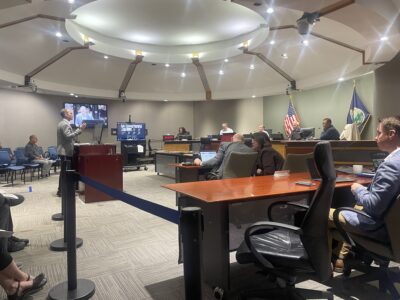

Lawrence City Commission continuing its conversation about directly elected mayor, term lengths
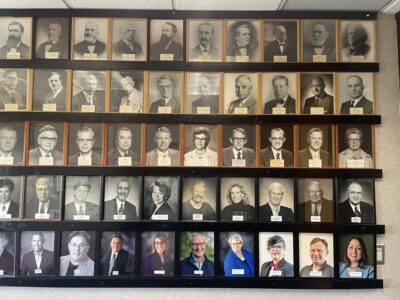
photo by: Sylas May/Journal-World
The wall of mayors in Lawrence City Hall is pictured on April 27, 2026.
Months ago, Lawrence city leaders said they wanted a more thorough conversation about whether voters should directly choose the city’s mayor, and now they’re about to pick that topic back up.
At a special meeting on Tuesday, the Lawrence City Commission is scheduled to hear a report about amending the city’s current form of government. While the commission is not expected to take any action on this item, this meeting will be continuing a discussion which has been going on for more than five years, and which has already led to one referendum that didn’t pass and some changes to commissioners’ terms.
In Lawrence’s current government structure, the mayor is not directly chosen by voters. Instead, the commission annually chooses one of its own members to serve a one-year term as mayor and another to serve as vice mayor. These choices have traditionally been made according to the vote totals each commissioner received in the most recent election.
Since the early 2020s, however, the commission has been discussing whether voters should have more of a say.
Any change to a directly elected mayor would require voters’ approval on a ballot question in a future election. In a memo to the City Commission, city legal staff wrote the earliest that could happen would be in 2027, and the earliest the change to a directly elected mayor could go into effect would be after the 2029 election.
Voters have narrowly rejected a referendum to change the city’s form of government once before, in 2024, but that referendum wasn’t just about directly electing the mayor. It was also about a new structure for the commission in which there would be six members and some would represent specific geographic districts. In 2024, 50.86% of the votes were against this proposal and 49.14% were for it.
Since then, as the Journal-World has reported, the Lawrence Chamber has been researching the elected mayor idea without the districts, and its leaders say they’ve seen support for it in the community. The Chamber brought the issue to the commission for a discussion earlier this year, but its leadership and city leaders said then that they didn’t want to put the question on the November 2026 ballot, because they thought it merited a more thorough discussion.
In addition to the mayor question, the commission will hear more about the possibility of changing how its terms work.
In the past, the Lawrence City Commission had two types of terms – a four-year term for the top two vote-getters in each election, and a two-year term for the third-highest vote-getter. But, in 2023, the commission changed the terms so that all of them were four years.
Since then, the commission has been divided on the question of whether to keep the terms as is, or change them back.
Some commissioners, including Mike Dever, have said that the staggered terms were good because they allowed the public to elect a majority of seats each year. (The most recent election, in 2025, was the first time that the public was only electing two commissioners instead of three.) Others, including Amber Sellers and Vice Mayor Mike Courtney, have said that the two-year term isn’t equitable or gives the commissioner who holds it less time to develop the skills of governance.
The commission is able to change term lengths o9n its own by passing an ordinance – it does not require a vote from the public. However, commissioners aren’t able to retroactively change the lengths of the terms they’re currently serving.
The commission’s special meeting will be at 5 p.m. Tuesday at City Hall, 6 E. Sixth St.
City Government
Lawrence City Commission continuing its conversation about directly elected mayor, term lengths

Six Lawrence first responders taken to hospitals as part of Friday night accident involving fire engine, ambulance
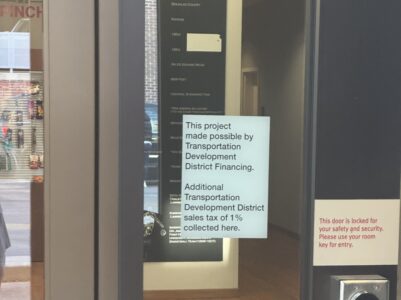
Opinion: Many Lawrence shops charge extra sales tax but don’t have a sign alerting customers, despite city policy
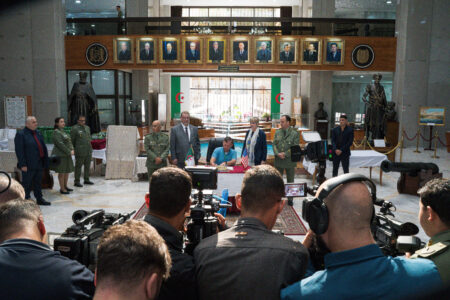
How Algeria ‘rolled out the red carpet’ for Lawrence leaders, and what that could mean for the future
Reconfiguration of southern Massachusetts Street set to begin soon; drivers should watch for utility work, city says