City leaders approve incentive for 131-unit housing development near Wakarusa and Queens
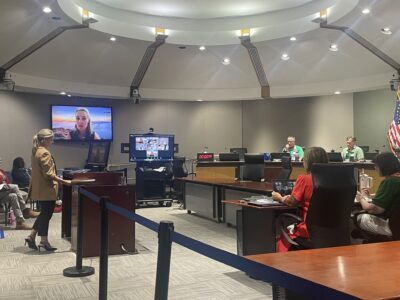
photo by: Sylas May/Journal-World
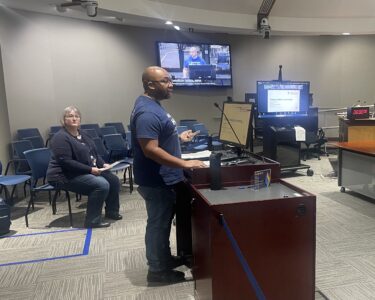
Kassie Inness, appearing via videoconference, addresses the Lawrence City Commission on Tuesday, June 16, 2026. Standing at left is Economic Development Director Susie Carson.
Lawrence city leaders have approved an incentive for a development of more than 100 units of housing on the city’s west side, although that housing won’t qualify as affordable.
The City Commission voted 3-1 on Tuesday to approve a request from Nebraska developer Metonic for $35.3 million of Industrial Revenue Bonds for a sales tax exemption on construction materials. Vice Mayor Mike Courtney was the lone dissenting vote, and Commissioner Kristine Polian was absent.
As the Journal-World reported, Metonic is planning a 131-unit townhome-style housing project on about 10 acres near Wakarusa Drive and Queens Road. Previously, the developer said it might include a pool, a clubhouse and smart home technology, and Susie Carson, the city’s director of economic development, said the plans right now called for a mix of unit sizes, ranging from studios to three-bedroom units.
The Industrial Revenue Bonds will not constitute a debt or financial liability for the city, and their impact on local sales tax revenues is estimated at about $80,000. Metonic was not requesting any property tax incentives.
Kassie Inness, president of Metonic, told the commission on Tuesday that the IRB request was “a critical step in moving forward with this project efficiently.” She also said that her company had tried to work together with the city.
“From the beginning of this project we have prioritized collaboration,” Inness said. “… Being a good neighbor isn’t just a talking point for us.”
City staff found that the project did not meet the affordable housing requirements for the city’s economic development policy, but Carson said Metonic had offered on its own to make 10% of the units affordable for people making 90% of area median income for five years.
“I appreciate them trying to come forward with this affordable component,” Commissioner Mike Dever said.
For Courtney, however, it wasn’t enough. He said that he would be voting against the incentive request because the development didn’t meet the affordability requirements.
Commissioner Amber Sellers asked whether the lower-priced units could be affordable at 80% of AMI instead of 90%. Inness said Metonic could look into that, but that it might have to “cherry-pick” only certain kinds of units for the lower price instead of offering a mix of units from each floor plan.
For Mayor Brad Finkeldei, the question the commission had to decide wasn’t about housing affordability – it was about how much benefit the city would get in exchange for the $80,000 it would forgo in sales tax revenue. Once the development was built, he said, it would generate $150,000 in property tax revenue for the city every year.
“I want to see this project built,” Finkeldei said. “I want to see it built quickly. I want to see it on the tax rolls.”
And Dever said there was a “hidden benefit” to an IRB: that it would “incentivize the use of local material suppliers” to whose products the exemption applied.
The commissioners also cited the city’s new housing study, which has shown the need for more housing stock of all price points, and said this would be a good way to grow that.
“If there is a pent-up demand, we need to get these going sooner than later,” Dever said.
City Government
Lawrence City Commission to weigh whether Costco should be included in STAR bond district
As they approve bikes plan, Lawrence city leaders ask about data collection, Kentucky and Tennessee streets
Lawrence city leaders want to toughen tobacco licensing rules ‘sooner than later’
Algerian government invites Mayor Brad Finkeldei, Lawrence delegation for a visit
Construction on Wakarusa Drive to resume; city manager says KDOT’s secretary has apologized for delay