City of Lawrence admits native prairie was sprayed with herbicide in error, announces plans to investigate
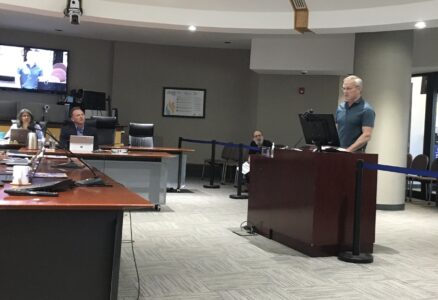
photo by: Rochelle Valverde/Journal-World
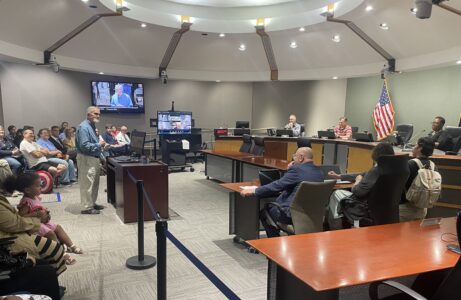
Parks and Recreation Director Derek Rogers addresses the City Commission on May 2, 2023.
Story updated at 9:18 p.m. Tuesday, May 2:
Lawrence Parks and Recreation Director Derek Rogers apologized on Tuesday for the city’s recent application of herbicide to a rare remnant of native prairie and said that the city would conduct a review to determine how the mistake happened.
During the public comment portion of the Lawrence City Commission’s meeting on Tuesday, the commission heard from representatives of the Prairie Park Neighborhood Association and other community members who expressed anger, sadness and deep concern about the city’s actions. Following the comments, Rogers briefly addressed the commission, admitting that a mistake had been made.
“I and my staff are also upset about the damage that was done at Prairie Park Nature area last week with the spraying of the herbicides,” Rogers said. “This was a departmental error and we will conduct a thorough review of what happened.”
Rogers said the city would determine why the herbicide was applied in the manner it was and would hold staff accountable if there was any sort of intentional violation of policy. He said the city would also determine whether there was a need for additional training and education and/or any policy revisions to properly address native prairie management so such a mistake does not recur. He said the city was reaching out to accredited regional experts for assistance in developing more stringent and clear policies regarding management of native prairies and parks, as well as to work to restore the prairie.
“We will also do everything we can, to the best we can, to restore the plant species that were killed by the herbicides at last week’s spraying,” Rogers said. “As the director and for the department, I offer my sincere apology to the community for the damage we have done to this area, and we promise to do better.”
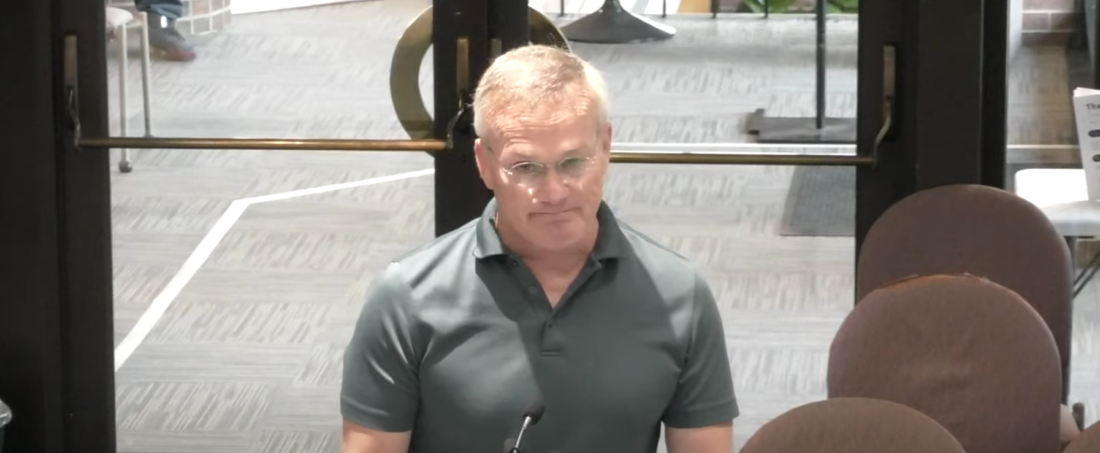
photo by: City of Lawrence screenshot
Parks and Recreation Director Derek Rogers apologizes for the damage done to the native prairie behind the Prairie Park Nature Center by a broad application of herbicide last Thursday.
On Thursday, the city applied an herbicide that is designed to treat hay fields and kill all broadleaf plants to the entirety of the 5-acre remnant prairie, which is located behind the Prairie Park Nature Center. Within a few days, the myriad species of wildflowers and other leafy plants that together with native grasses make up the prairie ecosystem were beginning to wilt and brown. Two local ecologists who specialize in native plants told the Journal-World on Monday that herbicide should never be broadly applied to native prairie, and that treatment of invasive species should only ever be spot-sprayed in order to protect native species. The wildflowers and plants sprayed will die or be damaged, and the seeds that remain in the soil, which are not affected by the spray, will need to be supplemented in an attempt to try to restore the prairie after the damage.
The city initially stated that the herbicide application was done as part of the parks’ ongoing management plan to control noxious and other invasive broadleaf weeds and woody plants, and that the city would return to spot spraying and other management methods in the future. As part of Tuesday’s meeting, the city heard comments or received written correspondence from about a dozen residents. A few people took issue with the city’s initial response, saying that the city downplayed the severity of what was done and didn’t acknowledge making a mistake.
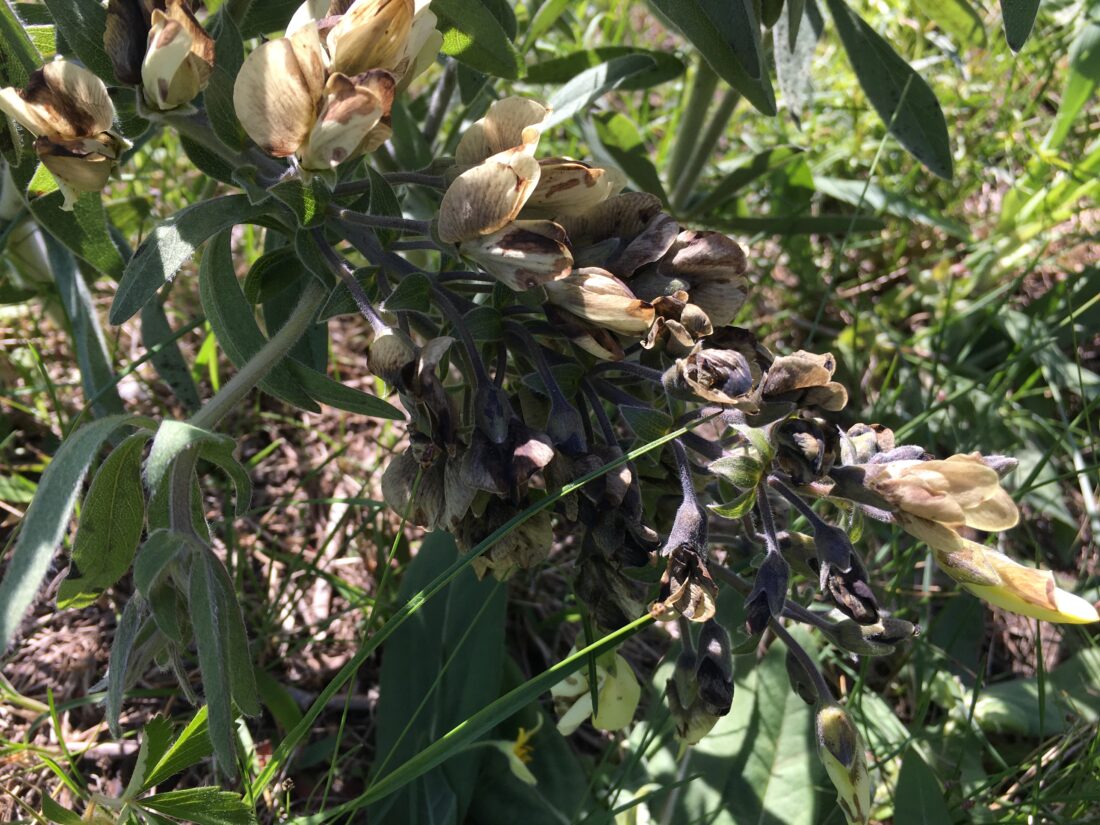
photo by: Rochelle Valverde/Journal-World
A cream wild indigo plant with browning leaves is pictured in the prairie behind the Prairie Park Nature Center on May 1, 2023.
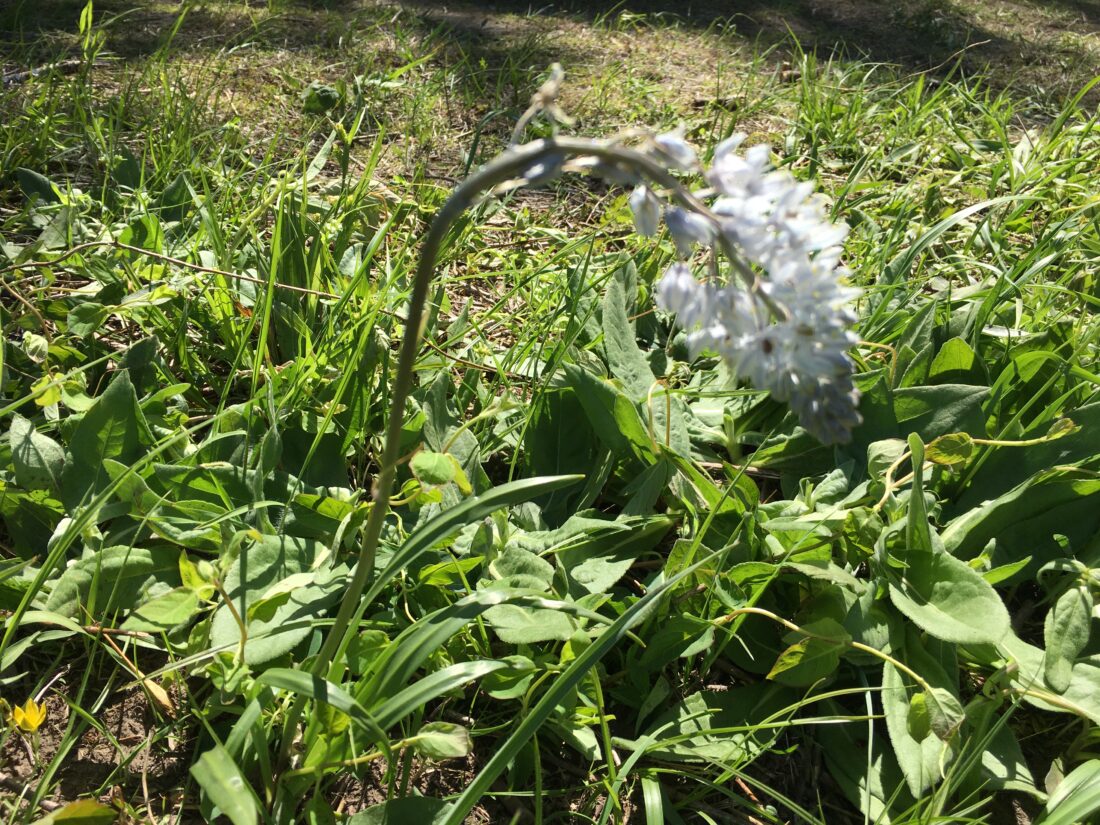
photo by: Rochelle Valverde/Journal-World
A Prairie hyacinth is pictured in the prairie behind the Prairie Park Nature Center on May 1, 2023.
Longtime Prairie Park resident and neighborhood association secretary Linda Wheeler said she was infuriated with what had occurred, and expressed concern that irreparable harm had been done.
“I’ve been a resident of Lawrence since 1976 and most of those I’ve lived in the Prairie Park neighborhood,” Wheeler said. “I am infuriated and heartbroken over the destruction and mismanagement of such a valuable resource as the ancient prairie that was sprayed with herbicide, causing irreparable harm.”
Wheeler said it made her question the sincerity of the city’s efforts to support the Nature Center, which city leaders decided to keep open after a recommendation from the city manager last year to close it.
Neighborhood association vice president Lori Greenfield also expressed disappointment and concern. Greenfield said it was very sad that days after Earth Day, the city had sprayed the prairie. She asked for an explanation from the city.
“Last week you had a proclamation on Earth Day, and we taught in our schools (about) preserving the earth,” said Greenfield, who is a teacher in the Lawrence district.
Melinda Ball said she wanted to express her rage, frustration and disappointment with the city regarding the damage done to hundreds of native plants. Ball said the beauty of the plants was unmatched and that they also supported local insects and wildlife.
“Hundreds of native plants are now dead because of this devastating action,” Ball said. “To our further damage, these plants, just days prior, were attracting bees and other pollinators.”
Shelley Page, minister of the Unitarian Universalist Congregation of Lawrence and a Prairie Park resident, said she goes to the prairie almost every day. She said it was a sacred space not only for her but for so many in the neighborhood and across the city.
“This is a loss that is incalculable for this neighborhood and for our city, let alone for the actual prairie itself, the sacred remnant prairie,” Page said. “In my faith we believe in interdependence, and this is a violation of that interdependence and of sacred space, quite frankly.”
Lawrence residents Shannon Hodges, Chris Flowers and a man who only gave his first name, Joseph, criticized the city’s initial response to what happened, saying it lacked accountability and downplayed what happened. Hodges, who helped start the Friends of Oak Hill Cemetery group (city cemeteries are also managed by the Parks and Rec department), expressed concern about the department’s initial response and its management of “sacred spaces.”
“Worst yet, the public response from the Parks and Recreation Department has been to double down on their actions and in doing so making very clear that this action was done with both hubris and intent,” Hodges said. “I’m deeply concerned about the responsibilities entrusted to the Parks and Recreation Department caring for sacred places in our community.”
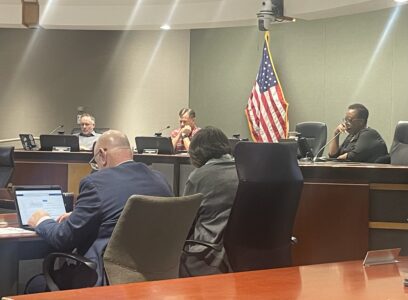
Toward the end of the meeting, Mayor Lisa Larsen said she would like the city to address the questions and concerns raised by Prairie Park residents. After the meeting, when asked if she had any further reaction to the herbicide application and the city’s plans to investigate, Larsen said that follow-up would be key. Larsen, who is a master gardener and as a licensed geologist previously ran her own environmental consulting firm, said the city needed an after-action type report to determine what really happened.
“We need to make sure we fully vet what actually happened out there and what we’re going to do to prevent it in the future,” Larsen said. “And I know that we are seeking some outside experts on this, which is really important.”
Some Prairie Park residents also brought up other concerns, including what they said was a lack of follow-up from the city after meetings last year to brainstorm how to make the Nature Center more financially sustainable; the recent removal of the center’s gift shop and cash donation box; and the removal of the center’s designation as a drop-off location for injured wildlife. Larsen said that was the first she’d heard about some of those changes, and she also wanted staff to address those questions.
• In other business, the commission received a presentation from city staff regarding a project to update the Kansas River Wastewater Treatment Plant to improve the removal of nitrogen and phosphorus and make other updates. Work packages for the project, which is estimated to cost $71 million, are currently being advertised. The city anticipates the final guaranteed maximum price for the project will be known in July.
City Government
Lawrence City Commission to weigh whether Costco should be included in STAR bond district
As they approve bikes plan, Lawrence city leaders ask about data collection, Kentucky and Tennessee streets
Lawrence city leaders want to toughen tobacco licensing rules ‘sooner than later’
Algerian government invites Mayor Brad Finkeldei, Lawrence delegation for a visit
Construction on Wakarusa Drive to resume; city manager says KDOT’s secretary has apologized for delay