City of Lawrence sprays never-plowed remnant prairie with herbicide; ‘We will see some pretty devastating losses,’ ecologist says
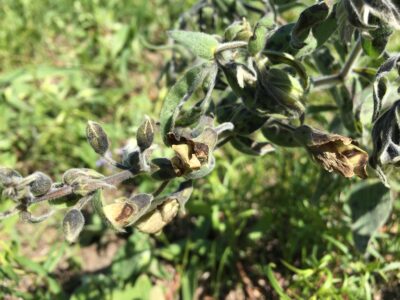
photo by: Rochelle Valverde/Journal-World
A cream wild indigo wildflower with buds closed and browning leaves is pictured in the prairie behind the Prairie Park Nature Center on May 1, 2023.
Updated at 5:40 p.m. Monday, May 1
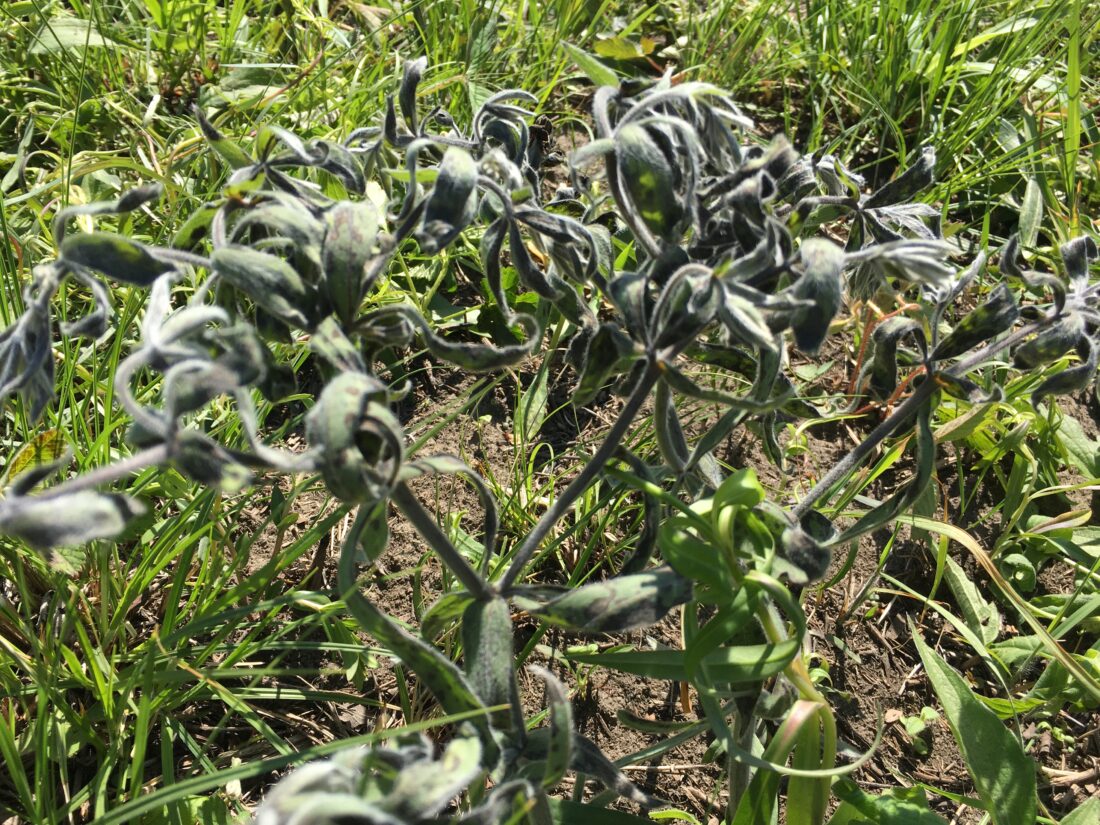
The sun was shining Monday on the five-acre stretch of native prairie behind the Prairie Park Nature Center, but instead of the skyward stretch of spring, many of the plants were doubled over, wildflower buds were closed, and leaves were browning. The wildflowers and other leafy plants that make up the prairie are all dying from a broad application of herbicide sprayed by city employees.
A woman on the edge of the prairie, who usually collected wildflowers, was crying instead, moving mournfully among the plants.
“This is devastating,” she said.
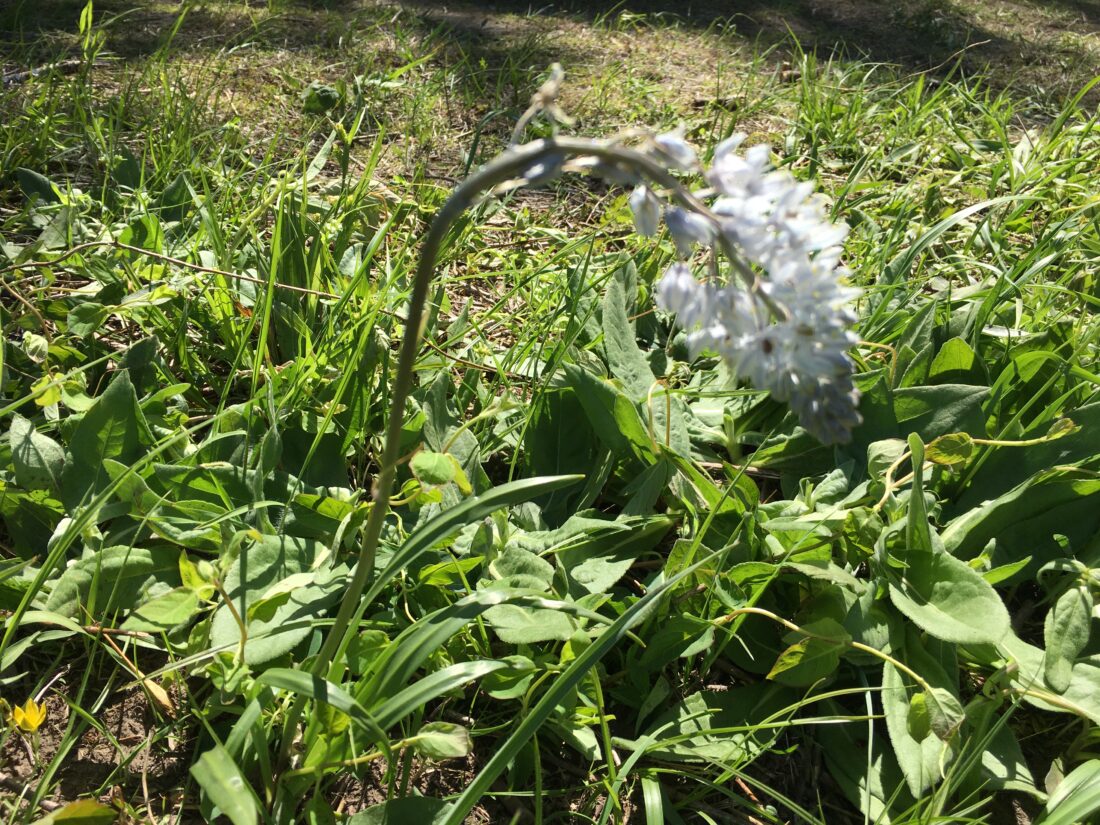
photo by: Rochelle Valverde/Journal-World
A Prairie hyacinth is pictured in the prairie behind the Prairie Park Nature Center on May 1, 2023.
Another Lawrence resident, Ken Lassman, who makes weekly visits to the prairie for the Kaw Valley Almanac said he recognized the tell-tale signs of a broad-leaf herbicide application on Sunday. He started snapping photos upon his arrival, the wilting plants a sharp contrast to the photos he took the week before.
“It’s five acres of remnant prairie, and it was all dying,” Lassman said.
Lassman, author of the book “Wild Douglas County,” said he confirmed with a city employee that PastureGard, an herbicide usually used to treat hay pastures, had been used on the prairie to treat an invasive species, Chinese bushclover. Lassman said from his observation, the herbicide had been applied across almost the entire expanse of the prairie, rather than just spot-sprayed.
Ecologist Courtney Masterson, alerted by Lassman to the damage, also went out to the prairie on Sunday. She said the herbicide would affect every plant and wildflower that has emerged, other than the grasses, and that at this point in the year most everything has emerged. She said that seeds stored in the ground aren’t affected and she is hopeful some of the plants will be able to recover; the prairie, though, will be impacted.
“So we will see some pretty devastating losses across the wildflower species there,” Masterson said. “And it’s one of the more diverse prairies I’ve ever been on.”
Masterson said not only should an herbicide never be applied broadly in a remnant prairie, and instead should only be spot-sprayed on particular plants, but that the chemical was also applied at the wrong time if meant to treat Chinese bushclover. She said Chinese bushclover does not emerge for another month, so it will not be affected by the herbicide.
“These are tools of destruction and they are really powerful tools, and we need them for invasive species management, but this was very poorly, poorly done, poorly informed work,” Masterson said.
She observed that there was no bushclover yet emerged on Sunday, meaning that the application of herbicide will not affect the bushclover and instead only provide more room for it to spread out by wiping out the other species.

photo by: Journal-World File
Kelly Kindscher, professor of environmental studies at the University of Kansas
Kelly Kindscher, professor of environmental studies at the University of Kansas, also said that broadly spraying herbicide to manage weeds in a remnant prairie was “totally out of bounds,” noting that it would affect all the flowering native plants present. Kindscher said the herbicide worked hormonally to kill the plant, and it will take a couple weeks to see the impact on the rare species present, some of which can only be found in other remnant prairie.
“There are very unusual things out there that shouldn’t be sprayed,” he said. “…It will be awhile to know what the true damage is, but it’s clearly not a good thing.”
Remnant prairies are areas of native prairie that, though they have existed for thousands of years, have not been plowed or otherwise significantly altered by humans. Kindscher said originally Douglas County was 85% prairie, but now there is very little left, only about 70 high quality prairie remnants. He said the one at the nature center is the only one left within city limits, contributing to biodiversity and supporting pollinators and wildlife.
“We even have an endangered insect that is only found on one of the prairie species that also occurs at Prairie Park,” Kindscher said. “So they are really an important part of our biodiversity.”
Masterson said the herbicide was applied on Thursday, and at this point it was too late to save the plants and wildflowers that have already emerged. She said since the seeds that remain in the soil, known as the seed bank, are not affected by the herbicide, there is hope that some of the broad-leaf plants and flowers will be able to recover. She said she also plans to work with the city to replant seeds from other remnant prairie in the area, to help address the damage done by the herbicide application.
“Let the prairie rest and recover as best as it can, and then go back in this winter with seeds from other local remnants in Douglas County to try to put some of that genetic material back, put some of those seeds back, and hope for the best,” Masterson said. “Essentially just learning from our mistakes, right, and stepping forward and working collaboratively with folks who know what they’re doing.”
However, she said replanting seeds from other remnant prairie doesn’t guarantee that those seeds will germinate, and she hoped what happened served as a catalyst to ensure there is more education of city staff and checks in place to ensure an herbicide misapplication like this does not happen again.
The Journal-World reached out to the employee that Lassman said was involved in the application of the herbicide, who referred the newspaper to a city spokesperson. The newspaper has asked the city what herbicide was applied, how it was applied, how much was applied, whether the city has ever broadly applied herbicide to the prairie before, and whether the employee who sprayed the prairie checked with those at the Prairie Park Nature Center or other supervisor to determine whether the herbicide/application type was recommended for a prairie ecosystem. The city responded to some of those questions but not all.
Parks and Recreation Director Derek Rogers said in an email that the herbicide application was done as part of the parks’ ongoing management plan to control noxious and other invasive broadleaf weeds and woody plants, not just Chinese Bushclover. Rogers said the city did not consult with anyone ahead of Thursday’s application, but has in the past and will seek additional opportunities to do so.
“While we did not consult with anyone in this particular instance, we have worked with restoration professionals in the past and will continue doing so,” Rogers said. “Staff will seek additional educational opportunities from land managers that are more familiar with these specific management practice.”
The city also put out a news release on Monday, which acknowledged some native plants had been affected by the herbicide.
“Some early-growing, native plants have been affected; however, some of the established plants that have not yet emerged will not be affected,” the release states.
The release goes on to say that the city plans to return to a rotational management plan that includes mowing, burning and spot spraying to control invasive, woody plant materials and noxious weeds. The city states that Parks and Recreation will work with local suppliers of native plant seeds to reestablish and replenish the prairie plant species that may have been impacted by the herbicide spray.
Lassman, Masterson and Kindscher all spoke to the need for the city to have a management plan for the remnant prairie, with Masterson and Kindscher also mentioning that they hope to see remnant prairies included in the open space plan currently under development by Douglas County. Masterson encouraged the community to express their desires to see remnant prairie and other natural resources preserved.
“We need to have a plan to protect prairie, old growth forests and wetlands into the future, because we’re losing spaces like this all the time,” she said.
A cream wild indigo plant with browning leaves is pictured in the prairie behind the Prairie Park Nature Center on May 1, 2023.
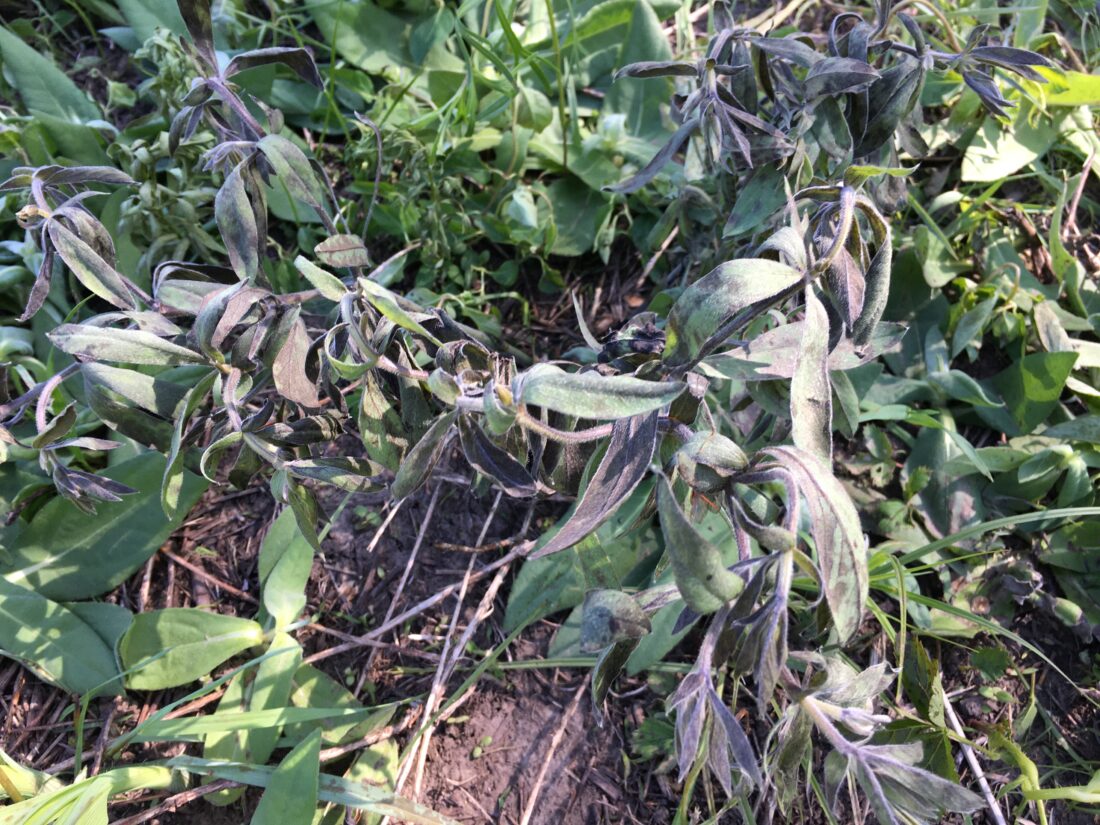
photo by: Rochelle Valverde/Journal-World
A cream wild indigo plant with browning leaves is pictured in the prairie behind the Prairie Park Nature Center on May 1, 2023.
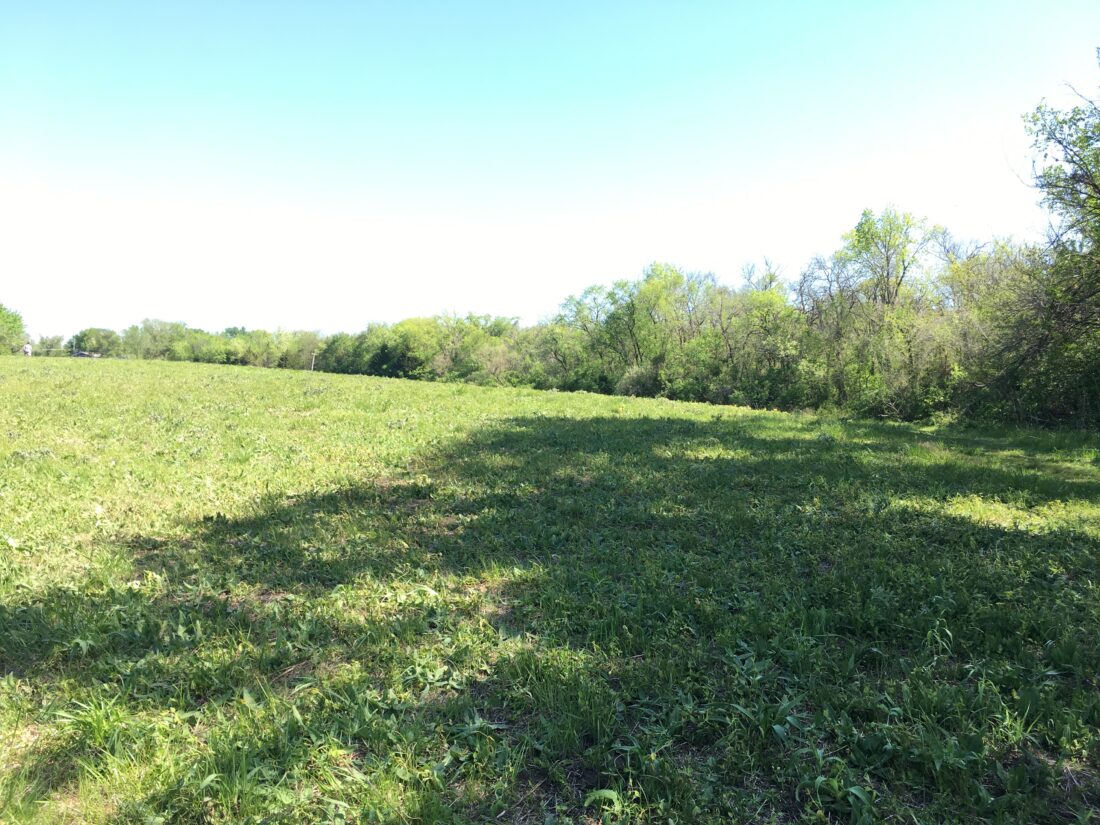
photo by: Rochelle Valverde/Journal-World
The prairie behind the Prairie Park Nature Center is pictured on May 1, 2023, a few days after an herbicide application.
City Government
Lawrence City Commission to weigh whether Costco should be included in STAR bond district
As they approve bikes plan, Lawrence city leaders ask about data collection, Kentucky and Tennessee streets
Lawrence city leaders want to toughen tobacco licensing rules ‘sooner than later’
Algerian government invites Mayor Brad Finkeldei, Lawrence delegation for a visit
Construction on Wakarusa Drive to resume; city manager says KDOT’s secretary has apologized for delay