KU prof touts hand washing to prevent infectious diseases
Survey shows 33% of men, 12% of women don't wash their hands after using bathroom
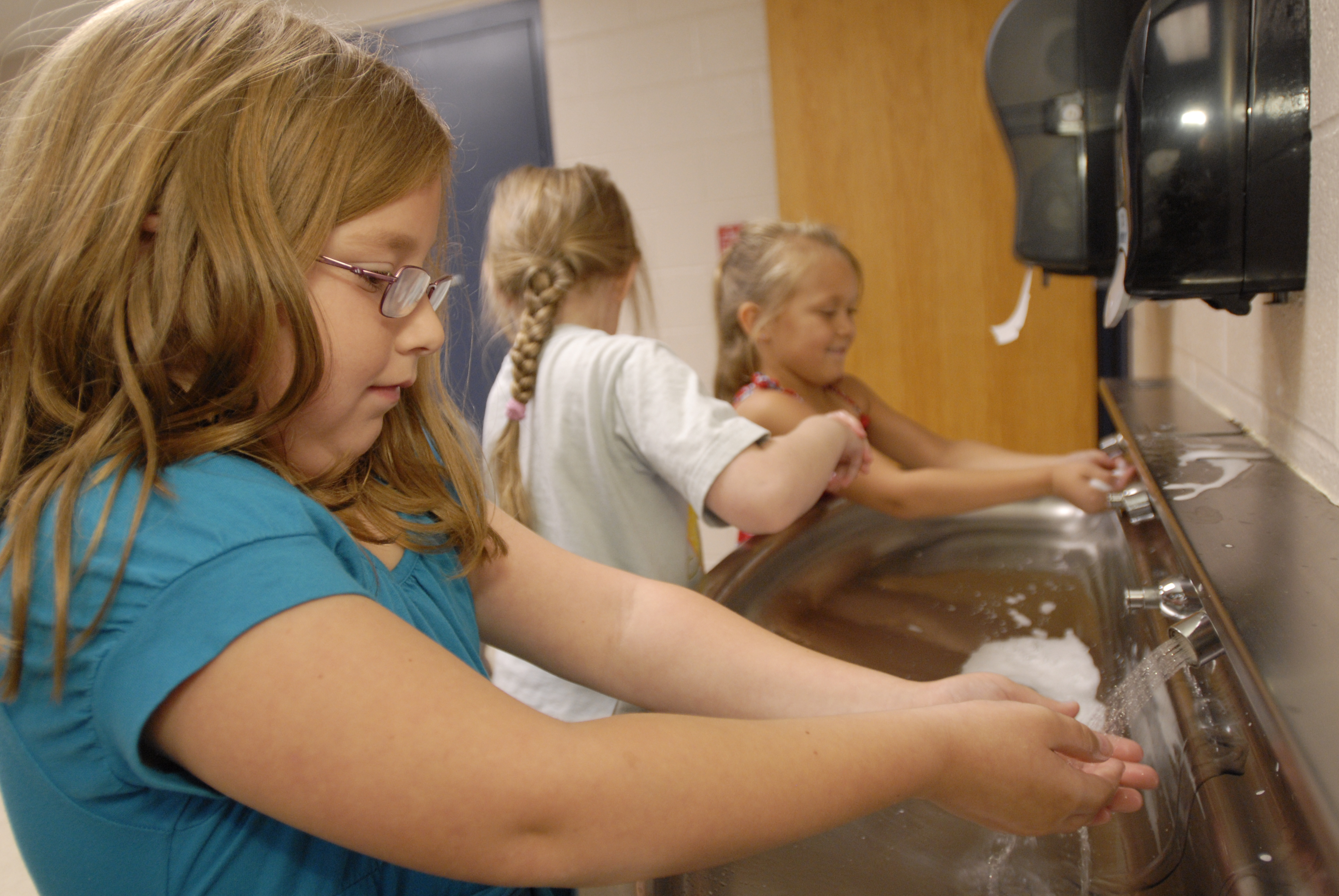
Second-graders at Prairie Park School, from left, Sydney White, Kyla Howard and Ariana Cox wash their hands before lunch Monday. According to a recent national survey, 33 percent of men and 12 percent of women don't wash their hands after using a public bathroom.
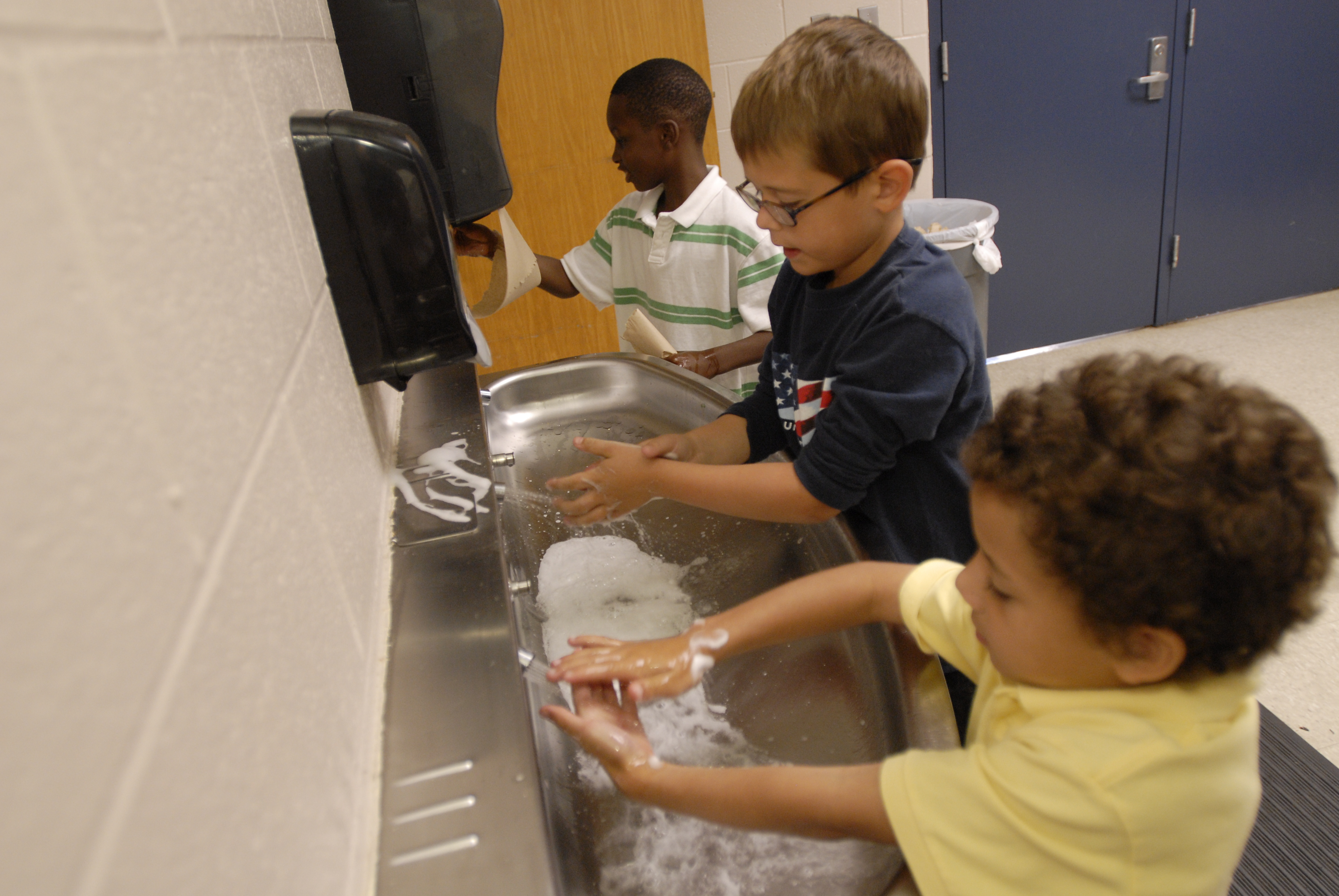
Second-graders at Prairie Park school wash their hands before lunch Monday, Sept. 24, 2007. From left are Jayden Douglas, Blair Whaley and Matthew Pitts.
Jack Brown saw it. The problem is, you didn’t.
Brown, a professor of molecular biosciences at Kansas University, was in line at a Lawrence bank the other day. The man in front of him picked up one of the pens on the counter for public use. Then, for some reason, he put it in his mouth, twirled it around a bit, and then put it back down.
“Well, I didn’t want to use that one,” Brown said with a laugh.
But you can bet that somebody else used it. And according to a new national survey, chances are good the person who used the pen didn’t wash his hands much that day.
That’s too bad, Brown said, because if they would have washed their hands, the pen incident just would have been, well, odd. But without the hand washing, it becomes a potential health problem by allowing germs an easy entry into the body.
“You really can’t do anything about the guy who puts the pen in his mouth,” Brown said. “But you can do something to protect yourself.”
Hand washing, though, is a little piece of science that Americans seem to be having a tougher and tougher time grasping, according to the latest survey by the American Society for Microbiology.
The survey – which employs researchers to secretly observe whether people wash their hands after using a public bathroom – found that 33 percent of men didn’t bother washing. That’s up from 25 percent in 2005, when the study was last done. Women fared better, with 12 percent failing to wash, although that was up from 10 percent.
There’s no debate in either the scientific or medical community that the news is disturbing.
“It is the No. 1 way that infections are passed on to people,” said Dr. Christopher Penn, the chief of staff at Lawrence Memorial Hospital. “We constantly stress that here.”
The practice could become even more important if – as many experts predict – the world is struck with a flu pandemic.
“It already is important, but under circumstances like that, it would become very important,” Brown said.
Brown said the common cold is the most-thought-of ailment that is passed along by a lack of hand washing, but the flu, strep throat, ear infections or just about any other type of infection can just as easily take a trip on a pair of dirty hands that then enter your mouth, nose, ears or other orifices.
The good news, though, is that Brown said none of this is rocket science.
“Just use standard, common hygiene,” Brown said. “There’s no need to blast yourself with a blow torch. We’re just talking about simple scrubbing.”
Here are some other pointers from Brown, who actually wrote a book on the subject – “Don’t Touch that Doorknob” – in 2001:
¢ Really, don’t touch that doorknob. Brown highly recommends against just grabbing the doorknobs of public restrooms anyway. He said his practice is to wash his hands, then to take one of the paper towels and use it to open the door. After all, he said, it doesn’t do you much good to wash your hands if lots of people are using their dirty hands to grab the doorknob.
¢ Sing a little song. Brown says he sings – presumably just in his head – “Happy Birthday” two times through as he washes his hands. He said that equates to about 20 seconds, which is the amount of time experts say a good hand washing should take.
¢ The soap debate. Just plain, regular soap is Brown’s choice. He said the more advanced anti-bacterial soaps – generally the liquid kind with special chemical additives – may not be good for the big picture of fighting germs. He said his opinion is that using the special soaps on a daily basis may help germs build up a resistance to certain chemicals that could be used in antibiotics.
“So when you really need them to be effective, they aren’t effective anymore,” Brown said of the soap issue, which is a matter of debate in the scientific community.
¢ Stop the scratching. Brown said he knows it is difficult, but he encourages people to avoid the urge to scratch or rub their eyes, nose, ears or mouth. He said that’s the main way the germs get from the hands to inside the body.
“The germs aren’t going to bore their way through your hands,” Brown said.
¢ Waterless washing. The variety of hand sanitizing lotions are good to have – well – on hand, Brown said. But he cautions against overusing them. He said the sanitizing lotions that are alcohol based could cause your skin to dry out, which could promote cracking of skin. That, in turn, would provides germs another open door to set up shop beneath your skin.
City Government

These officers play many roles on downtown patrol in Lawrence, and they don’t want to see it cut

Lawrence Transit’s sales tax is ‘critical,’ its director says, and an increase could be on the ballot in November

New question arises around Rock Chalk Park trails: Why are nearly 2 miles of them missing?

City of Lawrence enters negotiations with a city manager candidate; announcement could come next week

Lawrence Outdoor Aquatic Center’s opening delayed until June 1 as renovation work continues