KU to take biofuels on the road
Agriculture secretary optimistic about research efforts
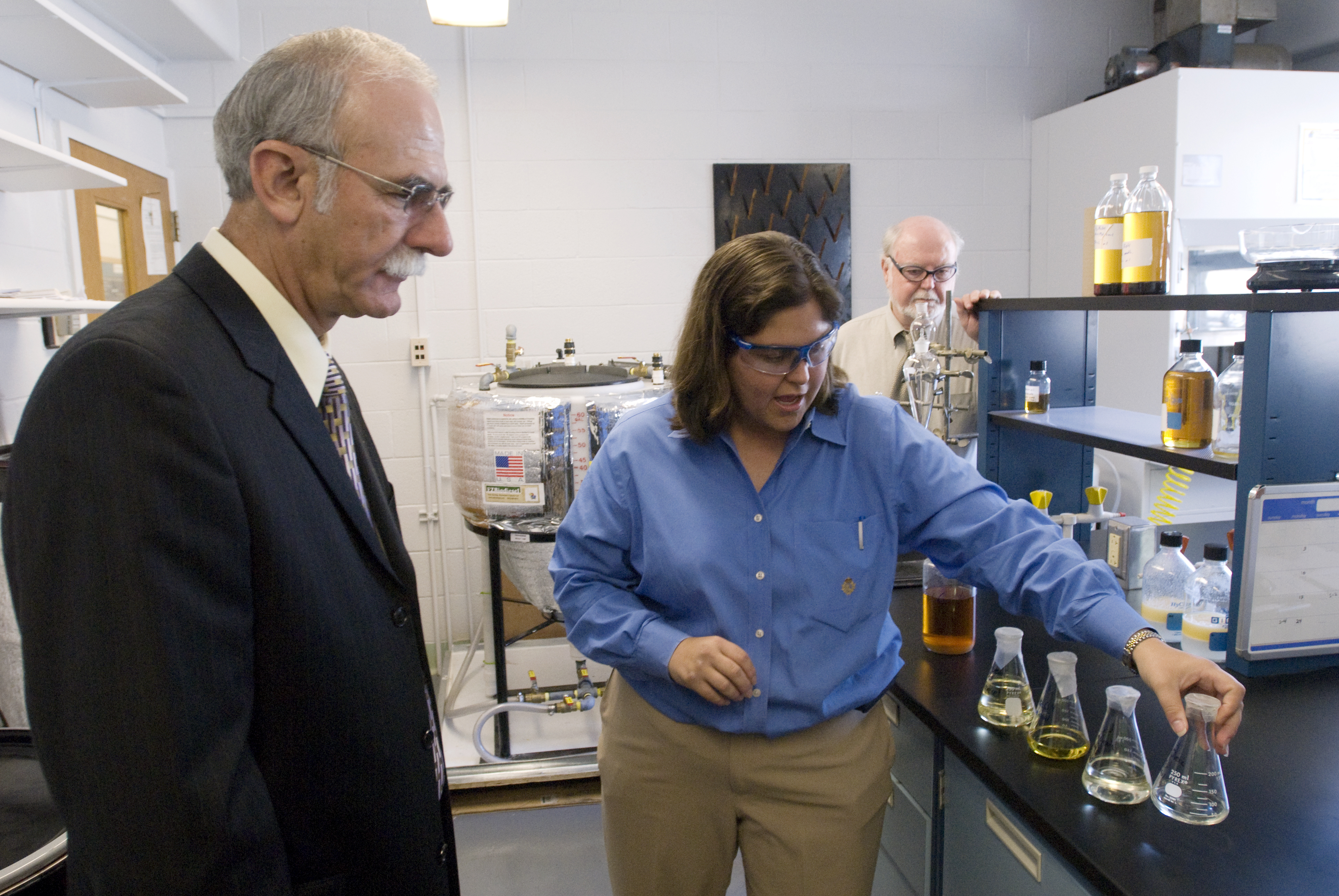
Kansas Secretary of Agriculture Adrian Polansky, left, listens to Susan Williams, associate professor of chemical and petroleum engineering at Kansas University, explain the process of producing biofuels, in a lab at Burt Hall on the KU campus. Polansky visited KU researchers Tuesday.
Dennis Lane is ready for a road test.
The engineer is preparing to take delivery of a preowned Volkswagen Jetta, then use it to burn biofuel brewed in a lab at Kansas University’s Burt Hall.
Lane’s testing will be designed to put a real-life spin on real-world questions posed by a growing fleet of alternative fuels – biodiesel, biofuels and other sources of energy that might one day help relieve the country’s reliance on petroleum.
Among the queries Lane intends to answer: Just how well do these fuels perform? And how much pollution do they spit out?
“I think we’ll have a lot of fun,” said Lane, N.T. Veatch Distinguished Professor of Civil Engineering and associate director for research operations and education at the KU Transportation Research Institute. “And the people on the street may actually benefit a great deal from it.”
Lane’s plan to buy and fuel a 2000-2003 Volkswagen Jetta diesel – appropriate for such research because its controlling computer can be calibrated to produce accurate research road data – was among several KU initiatives discussed Tuesday with Adrian Polansky, Kansas’ secretary of agriculture.
Polansky met with research teams, toured the lab at Burt Hall and had lunch with engineering leaders, all part of his effort to better understand the groundbreaking work that Kansas universities are conducting in the increasingly popular field of biofuels.
It’s no small matter, Polansky said, especially for areas of the state where row crops are plentiful and, therefore, prime candidates for attracting development of biofuel plants.
Imagine a farmer being able to sell not only the corn he grows, Polansky said, but also the stalks, leaves and other leftover organic matter for use in a biofuels plant.
“I could see a doubling of revenue per acre of land,” Polansky said. “It’s exciting. It’s a tremendous economic engine for states like Kansas.”
KU is working to become a Kansas Bioscience Center of Innovation in the field of biofuels. The Kansas Bioscience Authority is offering grants of up to $200,000 each to teams of scholars, researchers and others dedicated to establish such centers.
Applications are due Oct. 13, and KU wants to be part of an effort that includes Kansas State University and others to help affirm the area’s leadership role in the development, improvement and use of biofuels.
Lane knows there’s plenty of interest in such issues. Just on KU’s campus alone, he said, the university bought buses that no longer pump out exhaust at street level, following up on concerns that “nobody wants to end up in one of those black clouds.”
People often assume that the old buses would have been able to run as efficiently, and without much pollution, by burning biofuels instead of petroleum-based diesel, Lane said.
“But in reality, we don’t know that yet,” Lane said. “It’s sort of a foregone conclusion in some peoples’ state of mind, but from the engineering and science point of view, we’re not there yet.
“I think there’s a lot of different types of studies and research that need to be done to say, ‘Hey, yeah, this is probably the best way to go’ – from efficiency as well as the environmental point of view.”
City Government

Opinion: Local government made a small mistake. Taxpayers shouldn’t be on the hook to fix it

As club cancels ‘Beetlejuice’ screening at Oak Hill, city says there are no specific rules about events at cemeteries
Opinion: An $80 million Hail Mary that combines Costco and Lawrence’s love of trails
Lawrence Police Department receives KDOT’s top traffic safety award for second straight year
Lawrence City Commission approves extra layers of oversight for data centers, asks for patience on further regulations