Brownback signs budget; claims success in 2015 session
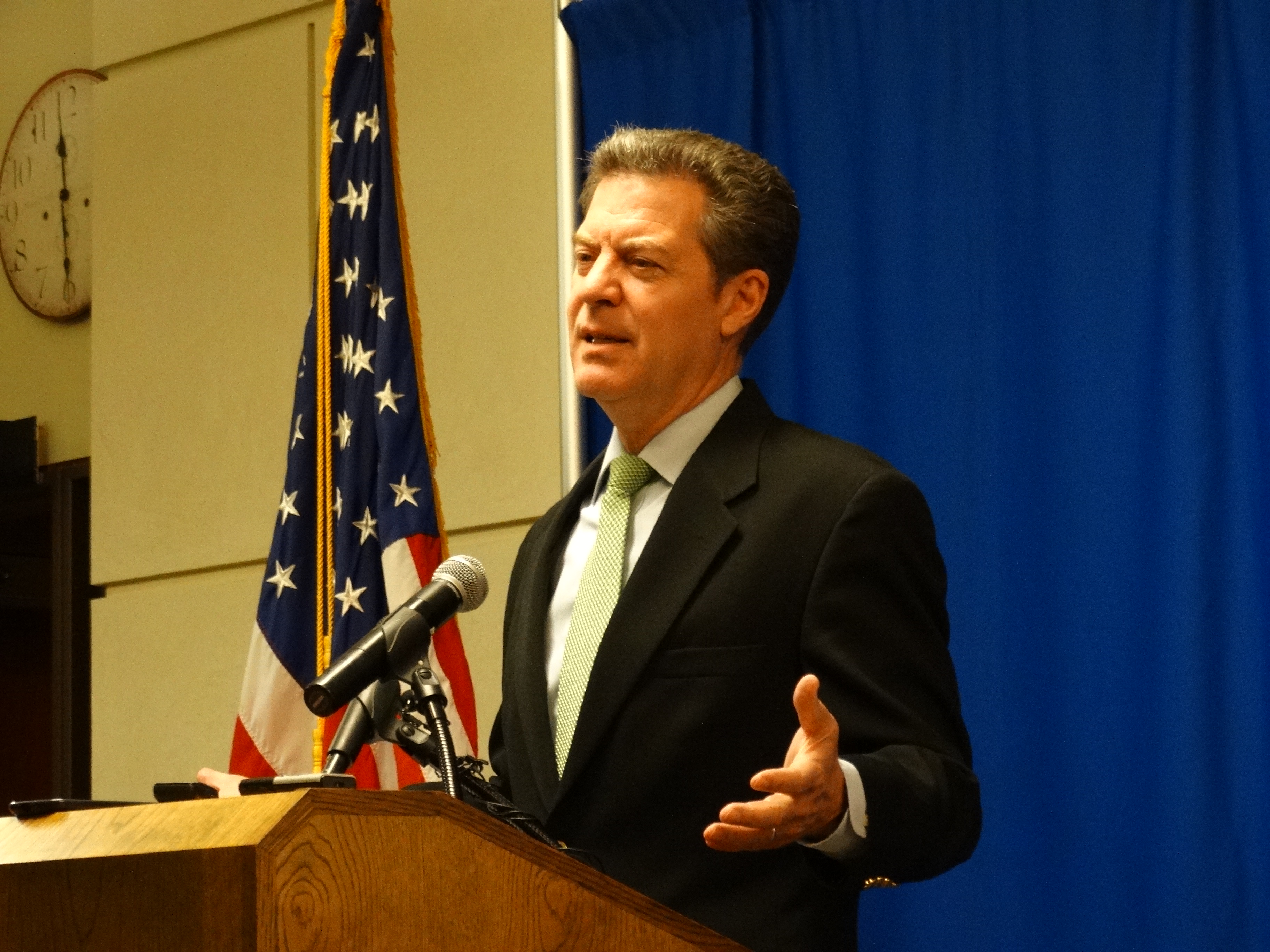
Gov. Sam Brownback says the 2015 legislative session was a success and that most Kansans will still see a net tax cut.
Topeka ? Republican Gov. Sam Brownback said Tuesday that he has signed the $6.4 billion budget that lawmakers approved this year and he looks forward to signing a pair of tax bills that raise the state’s sales and cigarette taxes to fund the budget.
He also denied that those tax bills — which are expected to raise $384 million in new revenue next year — constitute a tax increase. Instead, he argued that, overall, Kansans are paying less in state taxes than they did before passage of the sweeping income tax cuts in 2012, a statement that independent tax analysts rejected.
“Some would have you believe this bill represents a tax increase, and that is not accurate,” Brownback said during a Statehouse news conference. “When looked at in totality, from 2012 to 2015, as I stated at the outset, Kansans are paying less in taxes and continue to move off of income taxes to consumption-based taxes.”
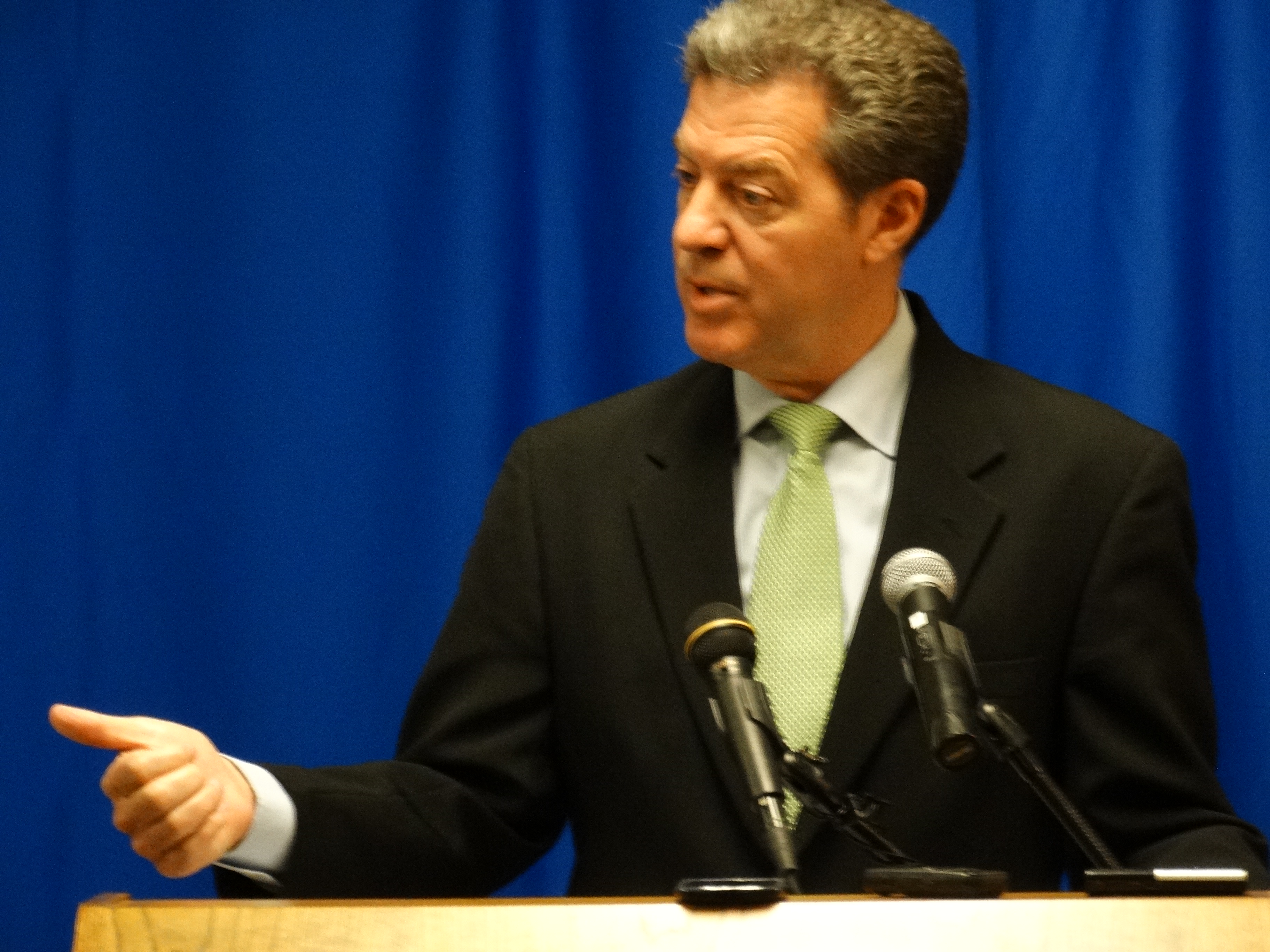
Gov. Sam Brownback says the 2015 legislative session was a success and that most Kansans will still see a net tax cut.
According to the administration, without the tax bills passed this year, Kansans would pay $1.06 billion less in income and sales taxes than they would have before the 2012 tax cuts were enacted. The legislation passed this year raises $338 million in sales and income taxes, leaving a net savings of $729 million.
But the Washington-based Institute on Taxation and Economic Policy issued a statement saying those savings are not spread evenly throughout the population, and, in fact, lower-income people will end up paying more in taxes while wealthier individuals will see big savings.
According to ITEP’s analysis, the poorest 20 percent of Kansans will pay an average of $197 more in taxes in 2015 than they would have without any of the changes enacted in the past three years, while the richest 1 percent will pay about $24,000 less.
“This tax package that just passed does nothing to reverse the fact that Kansas is paying for tax cuts for the rich by taxing the poor more,” said Kelly Davis, ITEP’s Midwest regional director of state policy.
Senate Democratic Leader Anthony Hensley, of Topeka, said Brownback’s claim that the budget package isn’t a tax increase was flatly wrong.
“Governor Brownback is incapable of telling the truth. Not only is this a tax increase, it is the largest tax increase in state history. His ‘glide path to zero’ is a complete failure and will further result in a self-inflicted budget crisis for years to come,” Hensley said.
Meanwhile, Brownback did not specify where he plans to make the $50 million in spending cuts required by the combined tax and budget bills.
“We’ll look at everything we can on efficiencies, on privatization, on a series of areas we’ll go at,” he said. “It was a long legislative session to get through, and I wanted people to get rested up before you take on those next sets of issues.”
Sustainability questions
Democrats and moderate Republicans in the Legislature who opposed the budget and tax plan argued that it is unsustainable because it relies on large transfers out of the state highway fund into the general fund in order to pay for ongoing state costs.
Because of that, they said, lawmakers are likely to face a similar budget crisis next year and in future years, especially if the Kansas Supreme Court rules in a school finance lawsuit that funding for K-12 education is unconstitutionally low.
Brownback, however, said he doesn’t think more tax hikes will be needed in the near future, but he said that will depend largely on how the national economy performs.
“It’d be nice if the national economy started picking up some,” he said. “Our position has improved. We’ve grown in our economic rankings as a state, but the national economy has been lethargic.”
Brownback specifically pointed to the state’s low unemployment rate and growth in private-sector jobs and personal income in Kansas as signs that his tax policies are working.
According to the Bureau of Labor Statistics, the Kansas unemployment rate in April was 4.3 percent, the 16th lowest in the nation.
But private-sector job growth and personal income growth in Kansas have lagged the national average, according to national labor reports.
From January 2012 through May 2015, the number of private-sector jobs in Kansas grew only 4.7 percent, compared with the national rate of 7.4 percent.
Meanwhile, personal income in Kansas has grown only about 7.7 percent since the first quarter of 2012, compared with the national growth rate of 9.6 percent.
K-12 school funding
Brownback also defended the level of public education funding in the budget, despite the fact that at least eight school districts were forced to shorten their school year due to cuts they received when the Legislature repealed the old per-pupil funding formula and replaced it with a system of block grants in the middle of a school year.
According to the Kansas Association of School boards, the Twin Valley, LeRoy-Gridley, Haven, Concordia, Smoky Valley, Skyline, Shawnee Heights and South Haven school districts all ended their 2014-2015 academic years early due to funding shortfalls. In addition, Skyline’s superintendent, Mike Sanders, resigned this year, leaving the district without a full-time superintendent, saying it was because the district could no longer afford his $81,000 annual salary.
Brownback, however, said many of those were the result of extraordinary situations in those districts, and they did not reflect overall trends in the state.
“I hope you look in depth at some of those situations in those school districts because the total amount of money has gone up substantially,” Brownback said. “From (2014) to (2015), $195.5 million increase to K-12.”
But officials at the Kansas Department of Education said that number only reflects the additional money being paid by the state, and it does not reflect increases in actual operating costs.
Deputy Education Commissioner Dale Dennis said more than half of it, about $100 million, was used to replace local property tax levies. That was the result of a Kansas Supreme Court decision last year that said lower-wealth districts were being treated unfairly, and thus had to levy higher property taxes, because the state was underfunding so-called “equalization aid” for those districts.
Another $38 million of that increase reflected higher state payments into the Kansas Public Employees Retirement System, Dennis said, and $17 million of it was for increased aid for districts’ bond and interest payments.
Dennis said only the remaining $40.5 million went for increased operating expenditures of the state’s 286 school districts.
City Government
Opinion: Local government made a small mistake. Taxpayers shouldn’t be on the hook to fix it

As club cancels ‘Beetlejuice’ screening at Oak Hill, city says there are no specific rules about events at cemeteries
Opinion: An $80 million Hail Mary that combines Costco and Lawrence’s love of trails
Lawrence Police Department receives KDOT’s top traffic safety award for second straight year
Lawrence City Commission approves extra layers of oversight for data centers, asks for patience on further regulations