City Commission candidate profile: David Crawford
It was 1969 and David Crawford came to Kansas University to make beautiful things as an artist. The summer job he took as a welder in North Kansas City was just supposed to help pay for college.
“But I ended up making too much money to go back to school,” said Crawford, who is one of 14 candidates for the Lawrence City Commission.
He never did return to KU for the art degree, but he learned there was beauty in what he was doing too. A weld that builds an airplane can be beautiful. So too can a weld that keeps a power plant safe. But some of the best beauty came when Crawford tweaked his career from a welder to a teacher of welding. Eventually, he became an instructor for the International Brotherhood of Boilermakers, and taught people from across the country how to do the sometimes dangerous but often lucrative profession of boilermaking.
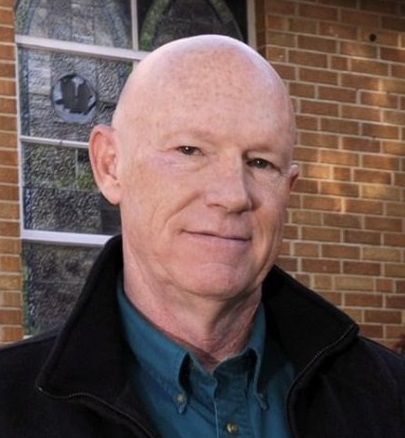
David Crawford
David Crawford
Address: 715 Illinois St.
Age: 64
Occupation: Retired instructor for the International Brotherhood of Boilermakers
Education: Business degree from Park University
Family: Wife, Pamela; two grown daughters
“I would get to see young people from pretty desolate parts of a community come and get training, and then have an opportunity for a very good-paying job that could support a large family,” Crawford said. “A boilermaker makes a six-figure income. For so many of the people I taught, it was a dream come true.”
But all those opportunities happened because there was a job available for the people he trained. Crawford is concerned about whether there are enough opportunities in Lawrence. Back in 1969, Crawford didn’t want to go to Kansas City to get a job, but Lawrence didn’t offer many good opportunities. He’s not sure the environment has changed much today.
“For people to stay in Lawrence, a lot of times they have to make sacrifices, and many times those sacrifices cut real deep,” Crawford said. “I think Lawrence can be a better town than that. I think Lawrence owes it to the people who grow up here and want a good-paying job here that we’re able to provide them one. I think it is a little disgraceful that often times we can’t.”
A neighborhood grocery
Lawrence voters may be most familiar with Crawford as one of the leaders of a grassroots organization trying to lure a grocery company to locate in downtown Lawrence. Crawford, who is now retired, moved back to Lawrence full-time about four years ago. In retirement he had become keenly interested in community building and community organizing, even taking classes in national programs in Chicago and San Francisco.
In Lawrence, it became obvious there was a topic to tackle. The area around downtown is a food desert. Residents there don’t have easy access to healthy and affordable food. Crawford and other saw the vacant former Borders bookstore building at Seventh and New Hampshire streets as an opportunity to change that. The group contacted the building’s out-of-state owners and began lobbying grocery store companies.
The Lawrence-based grocery store Checkers last year announced it was working on a deal to locate in the space, but that deal proved elusive. Checkers now is working on a deal to locate in a proposed multistory building at 11th and Massachusetts streets at the Allen Press property. Crawford and his group haven’t yet endorsed that project and are still working on efforts to redevelop the Borders site.
Crawford said the issue has reinforced the idea that the age-old concept of neighborhood businesses is one that needs to make a comeback.
“I’ve learned that there needs to be an authentic connection between neighborhoods and small businesses,” Crawford said. “Small businesses can’t live without the neighborhoods and neighborhoods can’t live without the small businesses. A lot of times we forget that. A lot of times there is a disconnect, and the neighborhoods have suffered from it.”
Crawford said he thinks there’s a real chance for the idea of neighborhood businesses to take hold in Lawrence again. He said he hears from many people who “want to walk or get on their bicycle, instead of hunting for a parking spot.”
“I think City Commission meetings have become too much about parking spaces,” Crawford said. “We can’t let the car become more valuable than the human being. When you start thinking in terms of people, you realize we need a grocery store in downtown. We need a pharmacy in downtown. Wouldn’t it be a healthier community if you didn’t have to get in a car to go to all of those places.”
Issues
Crawford said he wants to explore using city-owned land near the Douglas County Jail as a site for a new police headquarters. But he said there will be a lot of work to do in building a community consensus on how the project should be paid for and how it should proceed. He said he was disappointed in how city commissioners previously planned for the project.
“I look at the wastewater plant that we’re constructing, and the amount of time that went into planning that and the saving that happened to pay for that project,” Crawford said. “I wonder why that didn’t happen for the police department. We’ve always had a police department. Why wasn’t there a plan for expansion? I think it was just handled totally wrong.”
On other issues, Crawford said:
• He can see value in using tax incentives for projects that benefit the core part of the city or neighborhoods in true need of revitalization. But he said too many of the recent projects have been “welfare for the rich.”
“I think that is one of the things the city really has done to hurt itself,” Crawford said.
More 2015 City Commission primary election coverage
City Government
Recent storms and North Lawrence tornado have kept the city’s forestry staff busy day and night
Contamination in Lawrence’s recycling has risen to 17.5%, audit finds; that means city will continue paying more for processing
STAR Bond project is proposing $1.3B of development in Lawrence, including an arena geared toward ‘international cycling competitions’
City of Lawrence seeking public feedback on its bike infrastructure plan

City to keep Community Building open through end of 2026; leaders want more data before deciding on 2027