Teens warn of drinking risks
Police step up enforcement as spring break near
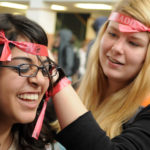
Free State junior Priya Alvee laughs as sophomore Joselyn Underwood ties a red-ribbon bandanna around her head Wednesday in the school cafeteria. Eighty-five students handed out the ribbons to discourage drinking and driving among their classmates and also bring attention to alcohol-related car crash fatalities that occur nationwide - 85 on an average day.
It’s party season.
Lawrence public schools and Kansas and Haskell Indian Nations universities have spring break this week. Prom night and graduation are ahead.
And at some of the parties, there will be alcohol.
“For seniors, it’s the last time we’ll be together,” Free State High School senior Tristan Willits said. “During spring break, everyone expects you to have a good time.”
Willits doesn’t drink. In fact, one day last week he and 84 other Free State students participated in a demonstration intended to drive home the danger of drinking and driving. They spent the day wearing black T-shirts, which symbolically marked them as “victims” of fatal drinking and driving accidents. To give the demonstration an eerie, ghostly effect, they were not to talk to other students.
Taped to a wall in the Free State commons area were 85 paper tombstones with the students’ names printed on them. They signified the 85 people who die each day in the United States in alcohol-related traffic accidents.
Free State senior Lora Bruce thinks the demonstration was effective – “at least well enough to get the students to see it is a serious problem,” said Bruce, who also portrayed a fatality victim.
The legal drinking age is 21. That’s older than high school students and many college students. But it doesn’t stop a number of them from drinking. For decades, college students have been identified with wild parties in places like South Padre Island, Texas, and Florida beach towns. Media images of those party scenes have an effect on some high school students, Free State social worker Cindy Trarbach said.
“They aspire to be like the college kids,” she said.
Lawrence Police Department is stepping up its enforcement of underage drinking laws. A team of officers will be checking on noise complaints, bars and parties to see whether minors are drinking, Sgt. Dan Ward said. This enforcement effort will continue through May.
Last weekend, officers cited eight minors found drinking in bars, Ward said. Information about the incidents and the bars was forwarded to the Kansas Alcoholic Beverage Control office for review, he said.
Officers are doing homework in advance of checking weekend parties.
“They are searching the Web to try to find where the parties are, and they are getting information from students about the parties,” Ward said.
Officers monitor Web sites frequented by teens, such as MySpace and Facebook to find out where the parties will be. They are trained to create their own online identities to work undercover on the sites, posing as teenagers and “chatting” with other students, Ward said.
Staying out of trouble
One of the keys for staying out of trouble as a high school student is to be careful about who you hang out with, said Bruce and Willits, the Free State seniors.
“We both have friends who do drink; we aren’t going to discriminate,” Bruce said. “But we don’t have to always go with them.”
Parents also should know who their children’s friends are, Trarbach said.
“They need to be involved with their kids’ lives,” she said.
Some parents are using high-tech equipment to monitor their teenagers’ activities. They buy personal alcohol Breathalyzers similar to those used by police. They also buy drug screening kits that test for the presence of a variety of drugs, including methamphetamine, marijuana, ecstasy and cocaine. They work similar to blood-testing devices used by diabetics. Most can be purchased for less than $50.
“I’ve seen several parents buy them,” Margaret Cameron, senior pharmacy technician at Walgreen Drug Store, 3421 W. Sixth St.
Interested parents also have asked police about the testing kits, Ward said. The technology is getting better, faster and more convenient, he said. When parents tell police they are worried that their children are taking drugs, officers suggest using the kits, Ward said.
The kits open up an avenue of communication that makes it easier for parents to talk to their children about drugs, he said. The tests also can be used to offer rewards for good behavior.
“You put this on the table and say, ‘Hey, I want you to do a drug test and show me that you are not consuming drugs,'” Ward said. “If you pass it, you get to stay out later. You’re showing us that you are making good decisions.'”
City Government
Opinion: Environmentally conscious Lawrence is not focused on the biggest problem with electric vehicles

Locust Street apartments, Holcom housing development among this year’s applicants for $700K in Affordable Housing Trust Fund money
Business owners hurting from Wakarusa Drive closure say they’re getting no answers, no signs, no accountability
Planning Commission recommends adding more layers to approval process for data centers in Lawrence
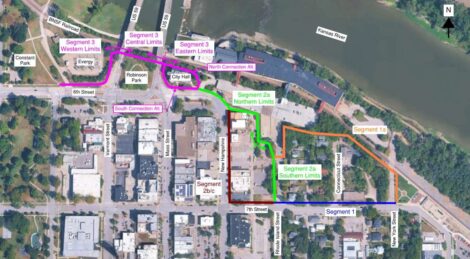
Lawrence Loop trail may go along busy downtown street; city wants to steer clear of Riverfront for development reasons