

Kan. teaching pool can’t stanch leaks
Poor retention rates a major factor in statewide shortages
Fighting the looming teacher shortage in Kansas is a bit like taking a swing at a shadow.
You can take potshots into the dark and hope something lands, but until you know the enemy in front of you, there’s no way to mount a good defense. And therein lies the problem, said Kansas University School of Education Dean Rick Ginsberg.
“The numbers are so vague in this state,” he said. “We don’t know how many teachers are truly needed everywhere.”
What they do know is that record numbers of teachers are nearing retirement age, there is a rising number of long-term vacancies in rural and inner-city school districts, and fewer college students are training to become teachers.
Ginsberg said Kansas universities were faced with the mammoth task of solving the problem.
According to the National Education Association, about 20 percent of new teaching hires in the United States leave the classroom within two years. The NEA said many teachers surveyed claimed they felt overwhelmed by unrealistic expectations and were underpaid.
Possible fixes
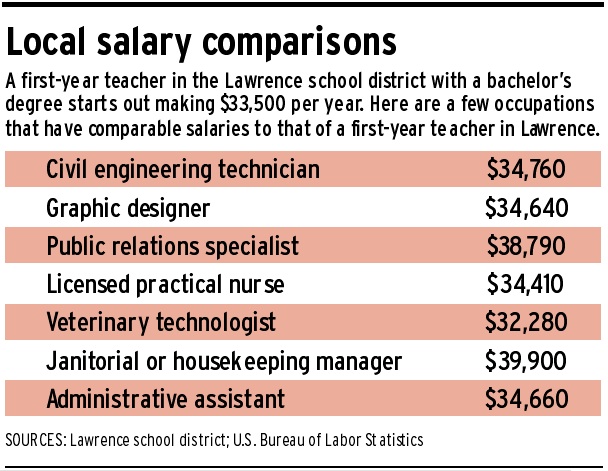
Ginsberg said there was a real shortage of high school math and science teachers. The pay – the average starting annual salary for a teacher in Kansas is about $29,202 – is a huge deterrent when the average salary for a chemical engineer in Kansas is around $80,000.
With a weak economy, Ginsberg said it had become harder to convince the younger generation to enter the teaching field. He did say the School of Education had accepted more students this past year than in recent years, but the situation was far from ideal.
KU recently launched a program called UKanTeach, a joint venture between the College of Liberal Arts and Sciences and the School of Education. Through the program, students receive a bachelor’s degree in either math or sciences, along with a teaching license. The program aims to lure more students into teaching math and science.
Other states are looking at ways of simply making it easier to work as a teacher.
Missouri lawmakers passed a bill this spring that would allow anyone with a bachelor’s degree to enter a program where they could receive a teaching license, providing they pass a test within a year showing they have an expert’s grasp on the subject.
Rusty Rosenkoetter, coordinator of educator certification for the Missouri Department of Elementary and Secondary Education, said it was too early to say how effective the bill might be, considering it doesn’t go into effect until August. Even then, she said, it would be up to three years before Missouri had any solid data.
The bill has proven controversial. Rosenkoetter said opponents of the bill worry that people without an education background won’t be well equipped to teach children.
“There are a lot of unanswered questions about what effect it will have on the classroom,” she said.
Nailing down the problem
Because it isn’t entirely known why the state has retention issues, officials say it’s difficult to find a solution. And it’s not as simple as saying there aren’t enough teachers, Ginsberg said.
“There’s something like 75,000 licensed teachers in the state of Kansas,” he said. “We only have around 33,000 actually teaching. That should tell you something.”
Ginsberg drew a comparison to a leaky bucket. No matter how much you fill it by recruiting new students, if you can’t retain them, it’s an exercise in futility.
And while rural Kansas school districts often have incentives, including offering financial help with continuing education and English as a second language certification, many districts remain strapped.
Bonnie Deiter, assistant superintendent for Ulysses public schools in southwest Kansas, said that while her district had done well filling positions this past year, the three remaining tended to be the hardest to fill: high school math, middle school math and high school art.
Kent McDonald, a science teacher and coach at Lawrence High School, was a geologist prior to becoming a science teacher. McDonald said he felt that money was a huge factor in turning people off to teaching science.
“I could make three to four times as much as I do now if I wanted to go back into, say, petroleum geology,” he said.
Alan Gleue, physics teacher at LHS and science department chairman, agreed with McDonald. Gleue said it wasn’t just the economics of teaching, but the paperwork and keeping track of student data for the No Child Left Behind act as well.
However, Gleue said it was the sense of duty that kept many teachers in their jobs.
“I still have the quixotic feeling that I make a difference,” he said. “Most teachers who stay with teaching have the feeling they’re contributing something to society outside of receiving a paycheck.”
State Government
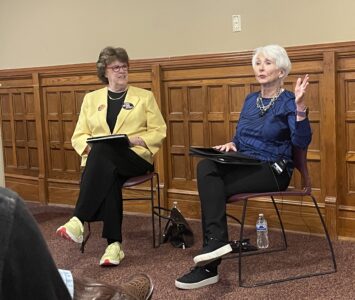
‘If it ain’t broke, don’t fix it’: Retired Judge Sally Pokorny tells residents why she opposes electing Supreme Court justices
KU professors would be limited in how they could present the idea of systemic racism in future classes
State legislators push back against federal energy regulators ending competitive bids
TOPEKA — Two Kansas legislators asked federal energy regulators to ensure competitive bidding occurs on ...
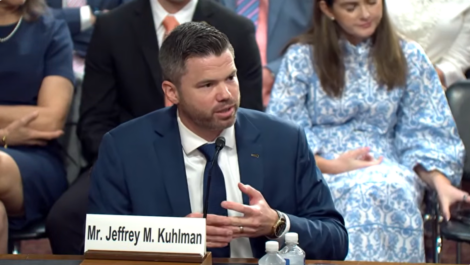
Senate confirms 1st of 3 Kansas nominees to U.S. District Court
Corporate income tax collections falling sharply in Kansas; Republican, Democratic leaders disagree on what it means
TOPEKA — Corporate income tax collections in Kansas have almost halved since last year, while other sources trend ...
Candidate’s campaign manager created website with documents used to attack rival
TOPEKA — Kansas U.S. Senate candidate Patrick Schmidt’s campaign manager left his digital footprint on ...