Brighten up yard with fall foliage
New Market, Va. ? Do yourself a good turn when leaf-watching season arrives this year by adding nursery centers to the tour. That could mean some of the best fall colors in the area eventually coming from trees growing in your own yard.
“Many people wait until spring to buy trees so they can see how they look when they flower,” says Charles Behnke, an extension educator with Ohio State University. “They don’t think of them for the fall colors they give. But select the right weekend to visit your local garden centers so you can see them at their peak.”
Climates differ, but spring and fall generally are the preferred seasons for planting trees. The weather is cool, moisture is ample and the soil is warm or warming, giving the roots time to get established, says Lois Berg Stack, an extension specialist in ornamental horticulture with the University of Maine.
“Nearly anything that can be planted here in Maine does well if spring-planted,” Stack says. “But many plants do equally well if fall-planted. The trick comes in knowing what ‘fall’ is.
“We often think of fall as late September and early October, but plants only develop roots until early November here in central Maine (Orono), and most plants benefit from a rooting-in process of six to eight weeks before winter. That puts ‘fall planting’ back to early September.
“The best solution is to plant after the heat of summer but before it’s too late for good root development.”
Visiting a nursery during the height of the fall color period also can demonstrate how certain non-native cultivatars will show in your area, says Ken Tilt, an Alabama Cooperative Extension System horticulturist at Auburn.
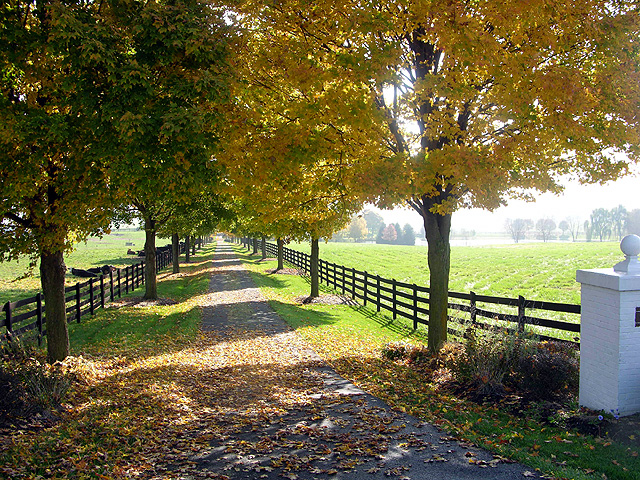
These trees offer a colorful autumn welcome along a Shenandoah Valley, Va., driveway. Now is a good time to see which trees offer the best fall foliage.
Another autumnal plus: Many nurseries are having end-of-season sales to clear their inventories. If you don’t mind a tree that may have been potted or bagged earlier in the year, then you can buy on the cheap.
“While spring is probably the best time for most planting, we all run out of time,” Stack says. “And plants are often available at very good prices in the fall. Distinguish between price and value. Quality must be factored in. I’ve fall-planted trees and shrubs with great success.”
Shopping for trees is a lot like picking out pets. Choose wisely because both are likely to be with you for a while. “I try to help gardeners think about what they want out of their landscapes long before they think about tree selection,” Stack says.
One challenge in moving any plant is matching the new site with the plant’s needs. “Many gardeners select a tree based on its appearance, and then try to change the site to accommodate the tree,” Stack says. “This is difficult, especially over the time frame of a tree’s life. It’s easy to amend a site for an annual plant, but much more difficult to change a site for a tree that will live many years.”
Some other things to consider when planting trees:
¢ Dig wide rather than deep – no deeper than the root ball. “Tree roots are shallow and they need oxygen,” Tilt says. “Most of the oxygen is in the upper layer of soil. You can slow the growth rate and even suffocate the roots by burying them too deep or covering them with the root ball.”
¢ Trees do better when the area is backfilled with dirt taken from the planting site. Remove air pockets by saturating the hole with water.
Home and Garden
10 top performing new plants for this season
Flower gardens endure hot, dry summers better if you choose these plants
Debunking common garden hacks, quick fixes and myths

Douglas County Master Gardeners invites public to annual native plant sale
How to mulch your garden beds without harming plants