Geranium imposter still lovely to grow
How’s this for a case of identity theft? I went shopping for some geraniums recently and came home with an assortment of pelargoniums.
The labels read “geraniums.” The nurseryman called them “geraniums.” But an illustrated guide about the geraniaceae botanical family identified them as “pelargoniums.” So what’s with the name game?
This isn’t an instance of 21st-century cyberhacking; it’s more a case of motivation lacking. It’s a reluctance to drop old habits, to exchange the popular but incorrect name “geraniums” for that of “pelargoniums,” says Faye Brawner, author of “Geraniums: The Complete Encyclopedia,” and president of the International Geranium Society.
“It is safe to say that the vast majority of plants seen and called geraniums in the U.S. are actually pelargoniums,” she said.
Botany wasn’t an exact science when the first geraniums and pelargoniums were introduced en masse into Europe from South Africa in the 17th century. “The plant collectors lumped everything in as geraniums,” Brawner said. A few years down the road, a French botanist decided there was a difference. Half were geraniums, and half were pelargoniums. But geraniums had been called that for so long, people shrugged their shoulders and went along with it. “Many of them still do,” she said.
Brawner, from Beverly, Ohio, has spent much of her adult life trying to correct the record. So why does accurate naming matter in this case?
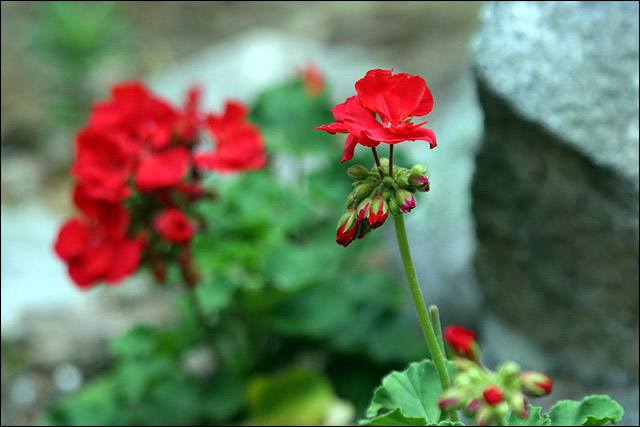
A geranium by another other name is probably a pelargonium. It's been a case of mistaken identity for centuries. Chances are, that geranium in your garden actually is a pelargonium, like this common red pelargonium varietal.
It matters plenty if you’re looking for a plant capable of thriving in sun or partial shade; a woodland flower with smallish blooms, carried singly, and ranging in color from white to pink to purple; a mounded plant that will spread into an attractive ground cover, a plant hardy enough to flower through several frosts. That’s a true geranium.
But the pelargonium has a lot going for it, too. If you bought what you thought was a geranium and its leaves give off an attractive scent, then it’s probably a pelargonium. If you have a plant displaying leaves as colorful as those on a coleus, chances are it’s a pelargonium. If it’s a stemmed plant, growing upright rather than horizontally, then it’s probably a pelargonium.
Pelargoniums come in a wide range of colors, ranging from red and white to salmon and pink, shades of purple to orange and many combinations.
Use true geraniums for rock gardens or for shady spots, Brawner said. Think pelargoniums if you want a long-blooming plant on a porch or something prominent in flowerbeds, hanging baskets, containers or window boxes.
Home and Garden
10 top performing new plants for this season
Flower gardens endure hot, dry summers better if you choose these plants
Debunking common garden hacks, quick fixes and myths

Douglas County Master Gardeners invites public to annual native plant sale
How to mulch your garden beds without harming plants