Tried and true plants withstand Kansas conditions
Every year gardeners search for new and unique plants to add to their landscape. Unfortunately, many of these plants are not tried and true and can succumb to harsh Kansas conditions.
With this in mind, the Kansas Nursery and Landscape Assn., along with K-State Research and Extension, have worked together since 2002 to select trees, shrubs, and annual and perennial flowers that perform well across the state in the plant selection program Pride of Kansas.
Following are the Pride of Kansas plants for 2005:
Tree of the year
Bur oak: It is one of the largest native Kansas oaks. Bur oaks are adaptable to most soils including limestone and dry clay. They can grow as much as 80 feet tall and wide and are hardy in zones 2-8. The large leaves are round at the ends with deep lobes. Fall foliage is yellowish brown and the bark is grayish brown with deep ridges that furrow with age. The tree is notably stout with a massive trunk and strong, broad limbs. This is not an average tree for a small back yard. Bur oaks need a rather large space to grow.
Shrub of the year
Dwarf Oregon grapeholly: This spectacular mound-shaped shrub grows 3 feet tall by 4 feet wide and is extremely tolerant of cold. The foliage ranges from light green on new growth to dark green with age and a glossy glow of orange and bronze in the fall and winter. This shrub is considered a broadleaf evergreen adorned with blue grape-like clusters that ripen over the summer. The grapehollies bloom in March and April with 2-inch to 3-inch yellow flowers creating the berries for fall. Dwarf Oregon grapeholly prefers a shady environment, protected from sun and wind. It prefers a well drained, moist and acid soil. This plant makes a perfect specimen plant around house foundations or can be used in grouping for unique texture and color.
Perennial flower of the year
Hibiscus: It produces a dramatic show in the landscape during midsummer. Varieties can range from 6 inches to 5 feet tall and can be propagated by seed or vegetatively. The taller varieties can have blooms as large as 10 inches across in a wide variety of colors. The flowers only last one day, but deadheading spent flowers encourages new flower formation for a full season of color. Their strong stems do not require staking, and the plant can be cut back by one half in early June to produce a shorter, stockier plant with an abundance of blooms. This process will delay flowering by two weeks but is worth it. Hibiscus prefers rich moist soil and is perfect for wet sites. The plants are late to emerge in the spring, so care must be taken not to disturb the area during spring clean-up. Hibiscuses are heavy feeders, so an annual spring feeding is recommended.
Annual flower of the year
Easy wave petunia: The petunias are named because they are easy to grow and care for. They have the same spectacular blooms as other wave petunias with one improvement: They are more mounded and compact. The blooms on these plants are tough. They last late into the season. They recover quickly from rain and tolerate extreme temperatures of heat and cold. The plants are resistant to disease and work well in beds, landscapes, containers and baskets. Individual plants grow taller in the center and easily spread to 2 feet to 3 feet across. The easy waves come in hot pink, shell pink, white and salmon. They are a great compact plant for pots and are a wonderful addition to any full sun garden in Kansas.
Home and Garden
10 top performing new plants for this season
Flower gardens endure hot, dry summers better if you choose these plants
Debunking common garden hacks, quick fixes and myths

Douglas County Master Gardeners invites public to annual native plant sale
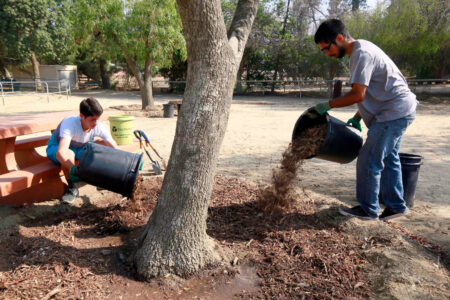
How to mulch your garden beds without harming plants