Convicted rapist who claimed ‘sexsomnia’ gets more than 12 years in prison; no new trial, no appeal bond
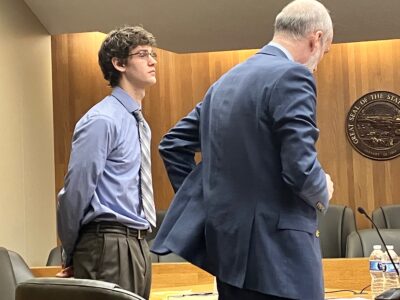
photo by: Kim Callahan/Journal-World
Reston K. Phillips appears with defense attorney Cooper Overstreet for his sentencing in a rape case Thursday, Jan. 22, 2026, in Douglas County District Court.
Updated at 6:38 p.m. Thursday, Jan. 22
A Douglas County judge on Thursday sentenced a man to 12 years and three months in prison for rape after a jury last year rejected his claim that the sexual violation had innocently occurred while he was asleep.
The victim in the case, a 30-year-old woman who now lives out of state, asked the court for “the most severe sentence under the law,” or nearly 14 years, which Judge Amy Hanley did not grant. But neither did she grant the defendant’s request to serve only six and a half years. Hanley also denied the defendant’s request for a new trial based on a claim of ineffective assistance of counsel and his request to remain out of prison pending his appeal.
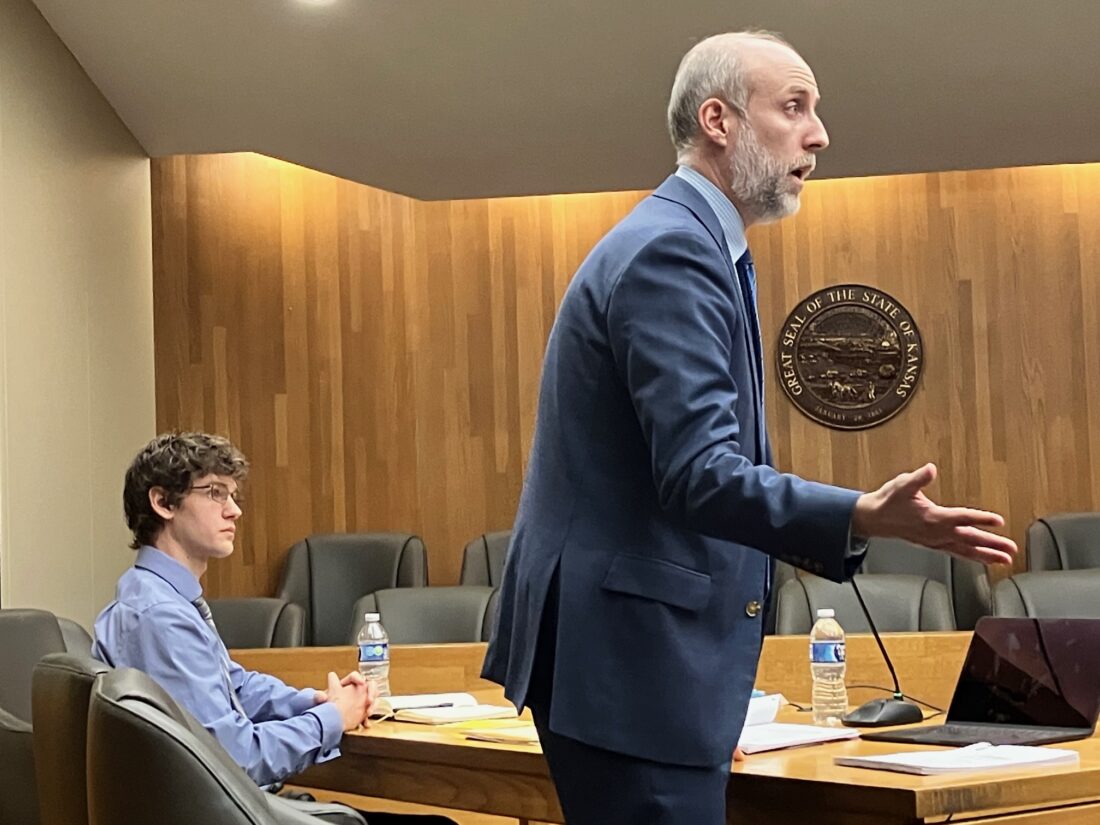
photo by: Kim Callahan/Journal-World
Reston K. Phillips appears with defense attorney Cooper Overstreet, standing, for his sentencing in a rape case Thursday, Jan. 22, 2026, in Douglas County District Court.
The defendant, Reston K. Phillips, argued at his trial last spring that “sexsomnia” made him do it. Sexsomnia refers to sexual activity that occurs during sleep without the person’s knowledge. But the victim testified — and the jury believed — that Phillips had acted with full knowledge.
As the Journal-World reported, the two, then in their early 20s, had been spending the night at a mutual friend’s house on separate couches during KU’s graduation weekend more than eight years ago. Phillips said they had been chatting after a night on the town and ended up cuddling on one couch; the next thing he knew, he said, he woke up, his pants were down and he was being accused of rape. The woman, though, testified that she had zero interest in Phillips, had gone to sleep alone on the couch and had awakened to Phillips raping her from behind. She reported the incident immediately to police.
On Thursday she told Hanley that she didn’t want to be in the courtroom but that she was doing it for the 22-year-old woman she once was — a person who was “full of life” and on the exciting cusp of adulthood with plans to be married. After the rape, though, she felt broken and became “a stranger” to herself, overwhelmed by “fear, shame and confusion” and turning to drugs, alcohol and isolation.
“Healing has not come easy,” she said, noting the hundreds of hours and thousands of dollars she has spent in therapy.
The rape “has echoed through every aspect of my life,” she said, while Phillips ran from the consequences to Europe “with the help of his family and their money.”
Rather than taking responsibility for his actions, he has consistently portrayed himself as the victim, she said, with the sexsomnia excuse materializing only recently.
With the rape allegation looming, Phillips, as he had previously planned, did move to Europe, where he remained for the better part of a decade, avoiding prosecution. In 2023, though, he decided to join his family for a vacation in Mexico, where he was promptly arrested and sent back to the United States.
Though he was convicted eight months ago, Phillips — minus his passport — has been allowed to stay at his mother’s home in Topeka pending his sentencing, which was delayed three times before it finally occurred on Thursday. In that time, he has gotten married, according to court records in Shawnee County. His wife is from Germany, where Phillips had been living and working when he was arrested.
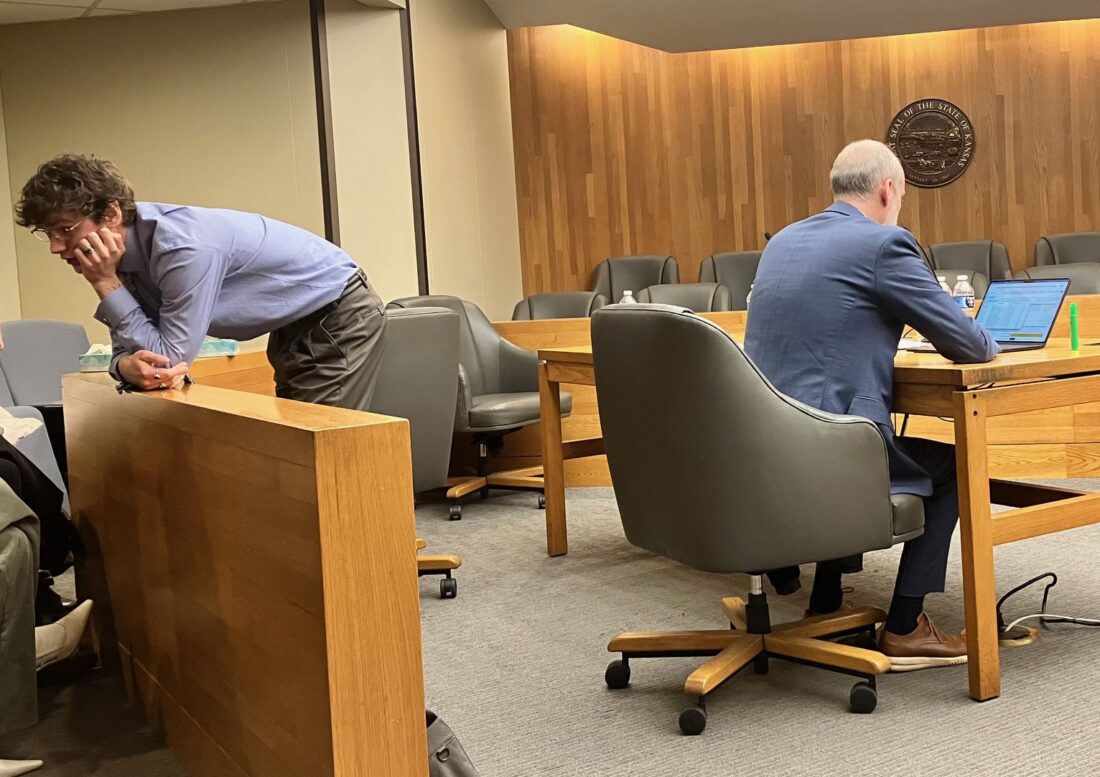
photo by: Kim Callahan/Journal-World
Reston K. Phillips speaks with his family during his sentencing hearing in a rape case Thursday, Jan. 22, 2026, in Douglas County District Court. Attorney Cooper Overstreet is at right.
Phillips had hoped that his living arrangement in Topeka with his new wife and GPS monitoring might stay the same after Judge Hanley sentenced him on Thursday. His attorney, Cooper Overstreet, asked Hanley for an appeal bond that would let him do just that — a request that prosecutor Eve Kemple objected to, calling Phillips a flight risk with ties to Germany and a family who had the financial means to potentially help him flee.
“He has had eight years of freedom,” Kemple said, while the victim has suffered since 2017 without justice.
Hanley balked at Overstreet’s request for an appeal bond, saying his motion fell far short of what would normally be required, namely a $250,000 bond with verified surety, along with other considerations. She noted that the request for an appeal bond could be filed later, but she denied Overstreet’s request as presented.
Phillips, when given the opportunity to speak at his sentencing Thursday, declined to do so — on the advice of Overstreet — because of an expected appeal.
Before Hanley handed down the sentence, she considered Phillips’ motion for a new trial based on ineffective assistance of counsel. Overstreet had argued that Phillips’ trial counsel, Joe Huerter, was ineffective because he did not request that an instruction be given to the jury that Phillips must have committed a “voluntary” act to be found guilty. The sexsomnia defense is that Phillips couldn’t have voluntarily had sex because he was asleep at the time.
Even though Huerter didn’t request that specific instruction — and hence didn’t preserve the issue for appeal — Overstreet argued in his motion that Hanley should have given the instruction of her own accord and erred in not doing so.
As the Journal-World reported, Hanley instructed the jury that it could find Phillips guilty of rape only if he had “knowingly” engaged in sexual intercourse with the woman. After about five hours of deliberation, jurors found that Phillips had knowingly engaged in sex, rejecting his sexsomnia defense.
On Thursday, Hanley found that Huerter’s representation of Phillips was “reasonable,” that the jury’s finding that Phillips had acted “knowingly” in this case encompassed, as the state had argued, the idea of “voluntarily” and that a specific instruction on voluntariness wouldn’t have made a difference in the verdict.
The case, she said, came down to “the credibility of the defendant” and the entirety of the evidence presented to the jury, including several witnesses who testified about Phillips’ behavior that night, as well as the defense expert’s testimony that the act “could have” been caused by sexsomnia, not that it specifically was.
In addition to his prison term, Phillips will also be required to register for life as a sex offender and will be subject to lifetime supervision when he is released. Hanley noted Phillips’ lack of criminal history and a psychological evaluation that determined he was at low risk of reoffending, leading her to give the mitigated term under state sentencing guidelines, or about eight months less than the state had requested.
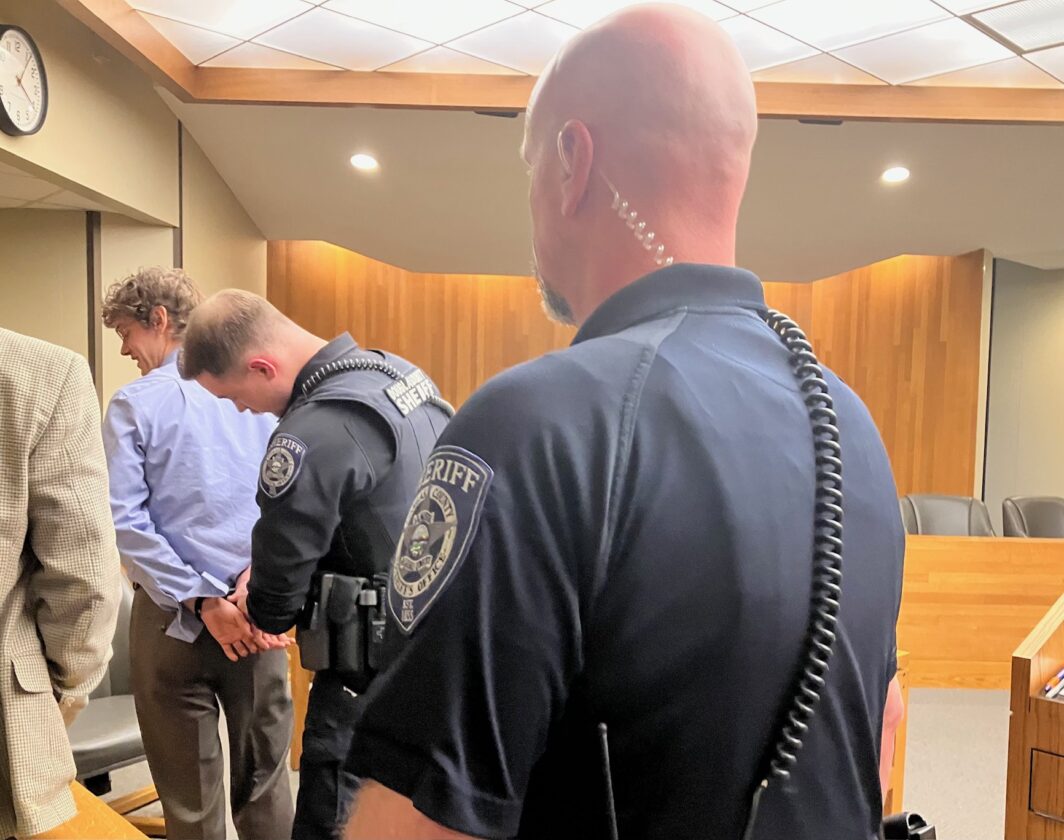
photo by: Kim Callahan/Journal-World
Reston K. Phillips is handcuffed and escorted from his sentencing hearing Thursday, Jan. 22, 2026, in Douglas County District Court.
Public Safety
Lawrence man among 19 arrested in joint operation targeting child sex crimes
A Lawrence man is among 19 people arrested on suspicion of child sex crimes. Forty-year-old Scott Bradley Hamill, ...
He won big at the K-9 Games, but the biggest thrill for Lawrence police dog Shadow is just doing his job
Frequent public commenter loses another federal lawsuit; county officials did not violate his civil rights, judge rules

Lawrence businessman sentenced to 18 months in prison for selling aviation technology to Russians
Defendant facing felony charge after allegedly bashing man in the head with a thermos outside Lawrence grocery store