KU’s Natural History Museum’s new exhibition features specimens representing countries coming to KC region for 2026 World Cup
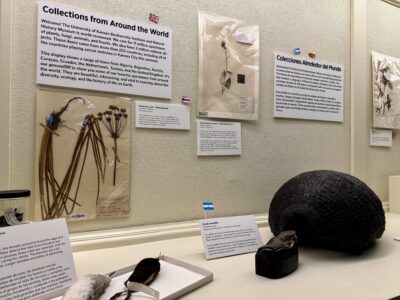
photo by: Contributed/Photo by Natalie Vondrak
Biological specimens from KU's Natural History Museum stand on display, with country flags nearby which indicate where they come from in the world.
The University of Kansas Natural History Museum is showcasing its international collections for global visitors with a special exhibition during the 2026 FIFA World Cup.
The museum announced an exhibition this month called “Collections from Around the World” which features dozens of research specimens from different countries, including at least one of its biological specimens from all eight countries that will play a match in Kansas City during the World Cup.
Lynn Ward, the visitor experience manager for the museum, told the Journal-World via email the goal of the exhibit is to “create a meaningful connection with international visitors” by showcasing some of its millions of specimens from the collection.
Ward said this special exhibition is designed like a “cabinet of curiosity,” a term from the 1500 to 1800s that described a room, cabinet or display or interesting artifacts or natural history specimens. The variety of specimens — like jarred fish preserved in alcohol, dried botanical specimens mounted on paper, pinned butterflies, fossils and prepared bird skins — brings together a “fascinating mix of specimens,” according to Ward, and some of them have never been on display before.
Like the wide array of specimens, the countries coming to Kansas City are also diverse, representing four different continents and ranging in size from Argentina, one of the top 10 largest countries in the world, to Curaçao, a small island in the Caribbean which is the smallest country to qualify for the World Cup. Each specimen will have a small flag next to it so visitors can learn at a glance where they come from, Ward said.
The museum also worked to ensure all visitors can learn more about the specimens. Ward said labels for the exhibit were translated into Arabic, French, German and Spanish by students at KU across multiple departments. The students also provided translated museum maps to “provide a welcoming, comfortable visit for our international friends,” Ward said.
The Biodiversity Institute’s collection is among the 30 largest globally with more than 13 million biological specimens and archaeological artifacts. Ward said this collection functions as research libraries and help scientists answer important questions about life on Earth. She hopes this special exhibit can showcase the importance of the collection to any visitor.
“The exhibit illustrates the breadth of the Biodiversity Institute’s global collections,” Ward said.
“Collections from Around the World” will remain on display at the KU Natural History Museum through July 27. The museum is open from Tuesday to Saturday from 9 a.m. to 5 p.m. and on Sunday from 12 to 4 p.m. More information can be found on its website.
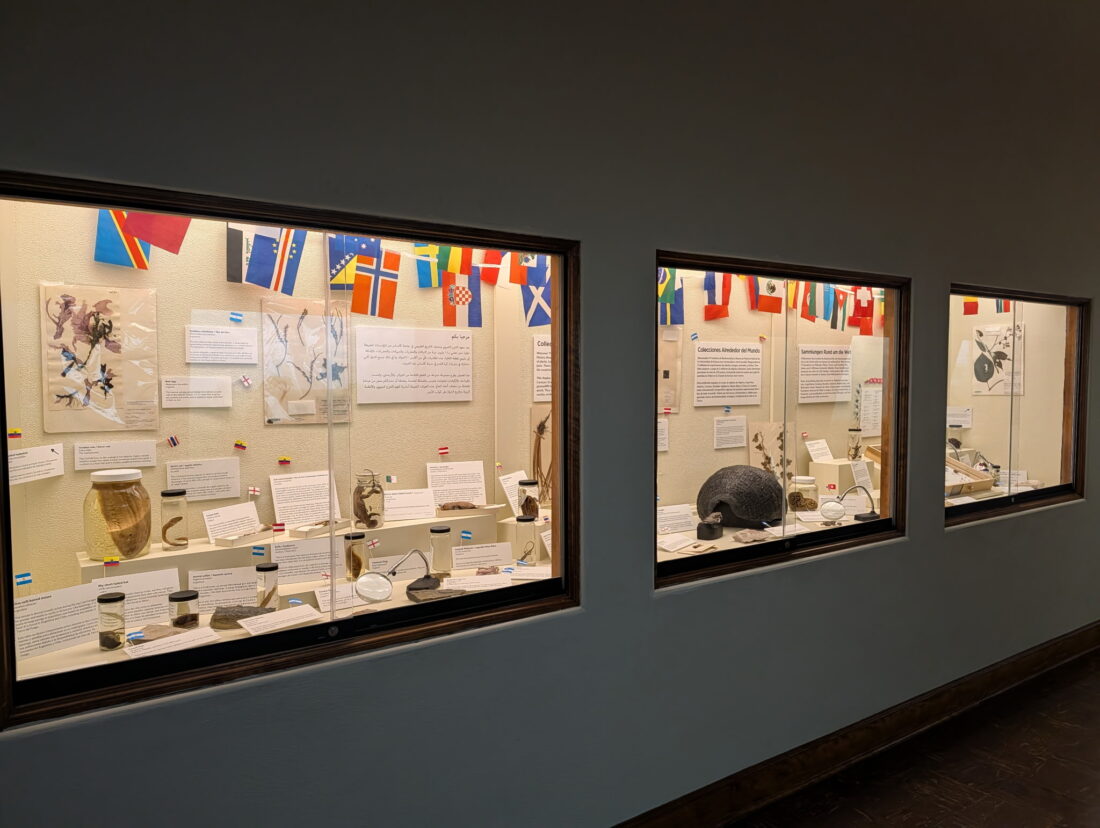
photo by: Contributed/Photo by Lynn Ward
Flags and biological specimens sit on display at the KU Natural History Museum’s special exhibition called “Collections from Around the World.”
KU
KU’s center for eating disorders invites public for open house
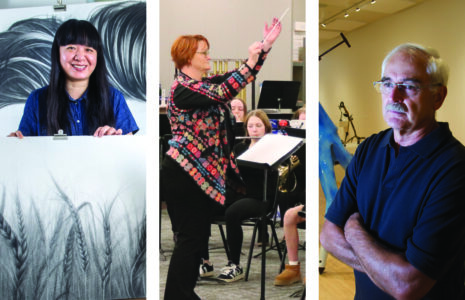
KU professors, middle school band director, radio personality among this year’s Phoenix Award honorees: ‘It’s a cool mix’

Hilltop childcare center has been losing money for at least two years, records show

Turnstile rocks KU campus as Day on the Hill returns after two-decade absence

UPDATE: Closure of Hilltop childcare center is final, but the building seems likely to stay