After earning prestigious fellowship, KU grad student aims to support tribal communities, inspire more Native scholars
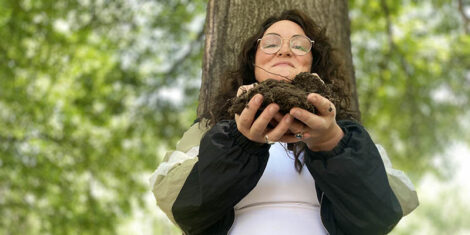
photo by: Contributed
Annalise Guthrie, a University of Kansas doctoral candidate in ecology and evolutionary biology, is seen here. Guthrie studies the factors that reshape deep soil structure and how changes to land use and climate affect its health.
Caring about the land has always felt natural to Annalise Guthrie.
Not only did she grow up on a farm about an hour south of Kansas City in Missouri, but Guthrie also said growing up as a Native woman — she is enrolled in the Cherokee Nation — made the concept of the land and the soil a huge part of who she was culturally.
“I’ve always just known it is my responsibility to learn about and take care of the land,” Guthrie said.
Her desire to be a good steward for the land led her down the path of environmental science, specifically in the study of soil. After earning her bachelor’s degree at Haskell Indian Nations University, she began working toward her PhD at the University of Kansas, with her research focused on how land use affects deep soil.
Guthrie has excelled at the work, earning a coveted National Science Foundation Graduate Research Fellowship, and she was one of 10 scholars who earned the Elouise Cobell Dissertation Writing-Year Fellowship for 2026-2027, a $30,000 award that supports American Indian and Alaska Native scholars in completing their doctoral dissertations.
Guthrie said earning the scholarship is “super special” because of the program’s background of supporting Native scholars, and she hopes to use the resources and skills she has learned to advocate for tribal nations.
“I hope I can live up to the theme of the fellowship, of activism and advocacy for tribal people,” Guthrie said.
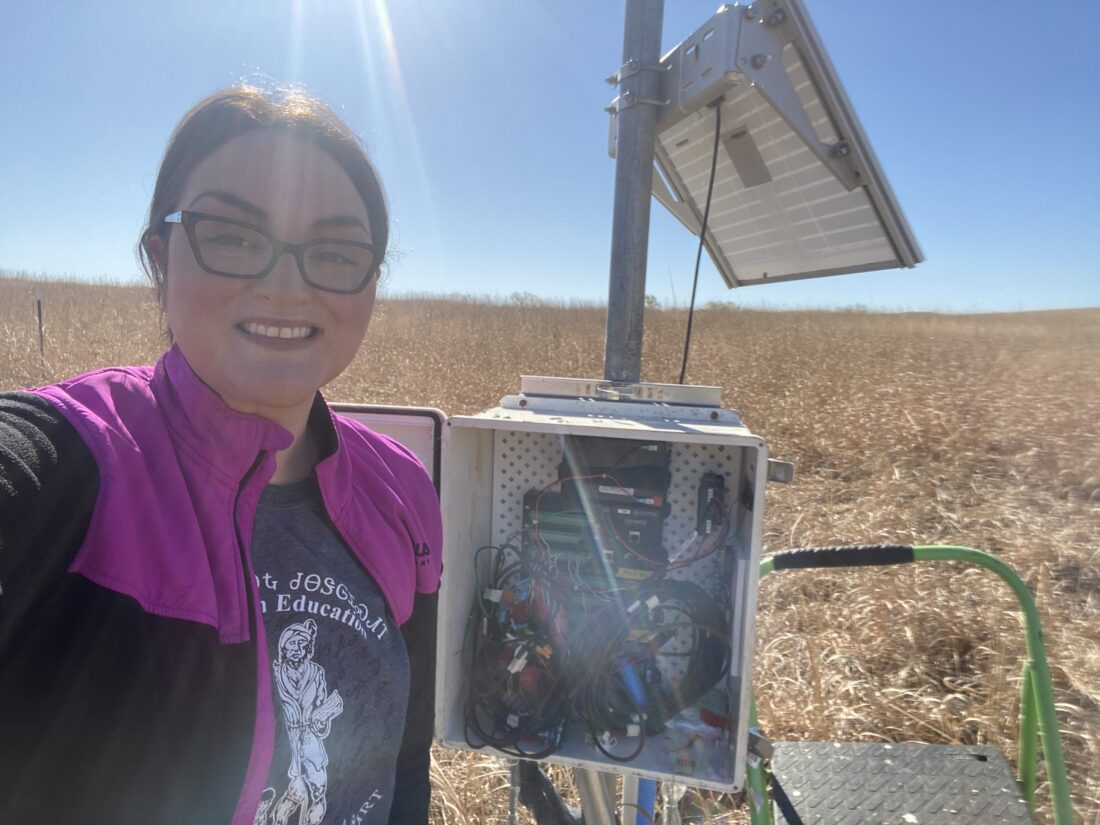
photo by: Contributed
Annalise Guthrie poses by a station where she conducts research on soil structure. As part of her research, Guthrie collected soil samples from three Kansas sites every two weeks for four years.
The fellowship is supporting her dissertation “Roots of change: Drivers of soil water availability and Critical Zone processes amidst climate and land use changes.” As part of the dissertation, Guthrie synthesized data from over 4,000 sites across the United States to see how soils have changed in places with different land use. That included collecting samples every two weeks from 2020 to 2024 from three sites in Kansas: at Konza Prairie Biological Station near Manhattan; at a site in Ottawa; and at the KU Field Station’s Anderson County Prairie Preserve near Welda.
Guthrie said her research focus on soil is based on the idea of “Critical Zone science.” She said the emphasis on this field of study is looking at the whole ecosystem “from the top of the trees to the groundwater.” In this field, the soil is kind of “the hub where everything happens.” Plants grow from the soil, and groundwater is filtered through it, with the water eventually feeding into rivers and even the ocean.
Guthrie said she was drawn to the ideas of Critical Zone science partly from her Native experience. As she was studying environmental science at Haskell and meeting students from all different tribes, Guthrie said it was clear there were two things that were common themes for each tribe: “(their) language and (their) land.” Another key similarity between tribes was how they viewed the environment. Most cultures viewed their role within the natural world as being “a part of the Earth not having dominion over it.” She appreciated how the critical zone approach felt like an Indigenous way of looking at the world.
“Critical zone science is this really holistic way of looking at the world at an ecosystem level and how everything interacts (that) parallels Indigenous values,” Guthrie said.
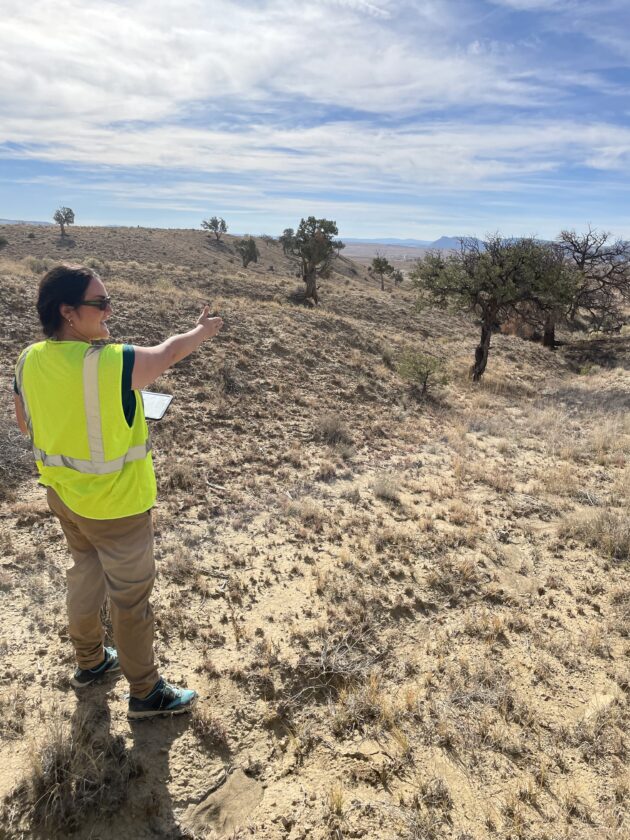
photo by: Contributed
Annalise Guthrie conducts research on deep soil structures at many sites across Kansas and the country. She plans to use her research to help Tribal communities better manage their land.
Much of her research has focused on how land uses and climate change impact the soil structure, and how those changes impact the groundwater quality and the ability of soil to store carbon. Guthrie said that as humans have tailored the land to allow for more agricultural space or for urban environments, the management has not always been sustainable for the soil. She has found that some changes at the surface have affected soil that sits even a meter deep.
“A lot of people don’t think soil can change very quickly because they don’t see it, but it can change relatively quickly,” Guthrie said.
Guthrie said she has appreciated being able to study “big concepts” like land use and climate change that will impact food systems and water systems, and she wants to take what she learned back to tribal communities to help them better manage their lands, which often have been the most impacted by climate change or land use changes.
Using the support of the Cobell Fellowship to do that makes it doubly meaningful for Guthrie. The program was founded by Elouise Cobell, a Blackfoot Native woman who became a banker and learned the U.S. Federal Government was mismanaging trust money supposedly set aside for tribal communities. She exposed the fraud and became a plaintiff in a lawsuit against the U.S. Government in 1996, eventually earning a settlement of $3.4 billion in 2010. As part of that, $60 million was devoted to higher education scholarships.
Because of that history, Guthrie said it was especially meaningful to be awarded the fellowship, and she aims to use the support to contextualize her research to take what she has learned and implement her findings in tribal nations. Guthrie said she has published other things before, but they were “very mechanistic” and technical. This dissertation “is her own,” so she said she plans to put in specific things to help advocate for Indigenous people.
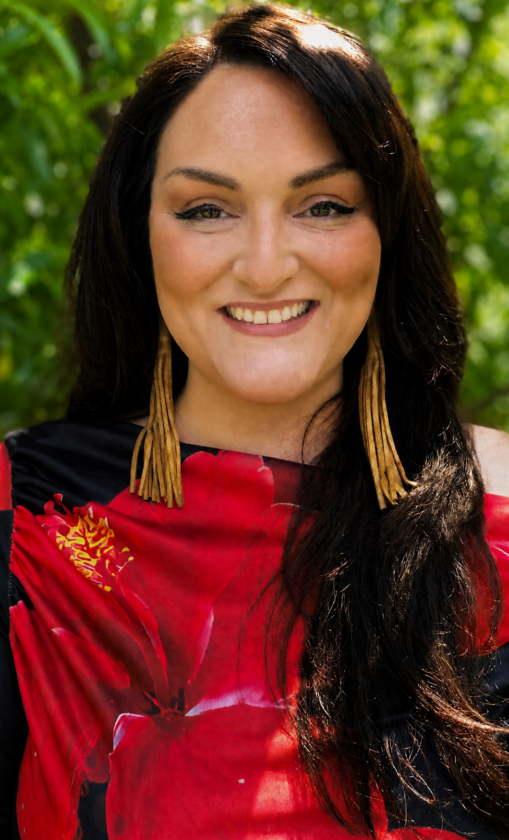
photo by: Contributed
Annalise Guthrie
One way Guthrie aims to make the dissertation her own is by using some Cherokee language in it. Guthrie said the word for soil in Cherokee is “ᎦᏚᎯ” — pronounced like “ga-DOE-hi” — and she plans to include at least a couple of Cherokee words in her dissertation.
“I don’t see anybody stopping me from doing that,” Guthrie said.
Guthrie said she hopes that along with giving back to her communities with her research, her story can highlight the importance of funding Native scholars. She said there are lots of ways to take care of the land, but her path was education. Guthrie said she was the first in her family to even graduate high school; now she is on track to earn a PhD.
But the degree is not the most important thing to Guthrie. It is more important to take the skills she learned back to their communities and “becoming a good steward of the land and community.” She hopes her journey can inspire others, and she urges Native students to do things that might not seem possible — like earning their PhDs.
“This is possible,” Guthrie said. “There are people who have your back and want to support you.”
KU
KU’s center for eating disorders invites public for open house
KU professors, middle school band director, radio personality among this year’s Phoenix Award honorees: ‘It’s a cool mix’
Hilltop childcare center has been losing money for at least two years, records show

Turnstile rocks KU campus as Day on the Hill returns after two-decade absence
UPDATE: Closure of Hilltop childcare center is final, but the building seems likely to stay