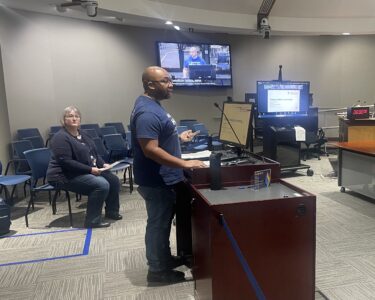
Business owners hurting from Wakarusa Drive closure say they’re getting no answers, no signs, no accountability
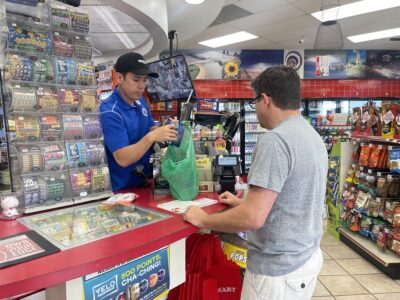
photo by: Sylas May/Journal-World
Miller Mart owner Sang Lee bags a customer's order on Wednesday, Sept. 24, 2026.
Miller Mart owner Sang Lee knows his regulars by name. He grabs what they want, like a specific brand of cigarettes, without them needing to ask for it.
“I’m at the point where I can count individual transactions on the computer and know which customer it was that made this one transaction by looking at it,” he says. “Every regular, they have a specific thing that they buy.”
He talks to one woman about her recent vacation. He asks a father if his kid is on the way to soccer practice, and says he’s seen his wife around town.
“They’ve always mattered,” Lee says.
They matter even more now, now that his convenience store has been impossible to access directly from the busy Clinton and Wakarusa intersection for more than a month.
It started in August, when the Kansas Department of Transportation, as part of its ongoing reconstruction of the South Lawrence Trafficway, closed a section of Wakarusa Drive right next to the entrance to the shopping center that houses Miller Mart and a handful of other businesses. Lee was notified about a year in advance and told that the closure would last 45 days.
But after construction began, as the Journal-World reported, that timeline got pushed back. KDOT said it encountered an unforeseen problem with utilities, and it had to redesign the project, delaying it for weeks.
In the meantime, Lee’s business is down by about 50%.
“Profit’s out the window,” he says. “My sales last month was half, about 50%, a little less than 50. With that, you can’t make no profits.”
Over at Auntie Em’s Deli, his friend Hazim Alexander says his business is down by about 70% since construction began. He doesn’t mince words. The closure, he says, is “murdering us.”
“This is the hardest year of my life,” he says. “And when I say that, I literally mean just these last two months is the most difficult portion of my work life that I’ve ever had. And that has nothing to do with me or my guests or my clients. It’s literally because of the access to town or access to business or whatever.”
These owners have questions – mostly unanswered – about how this situation happened, who’s responsible for it, and why it’s been handled differently than a recent project by a different government entity that impacted businesses, the City of Lawrence’s stormwater project on Ninth Street.
Ninth Street’s closure began in December 2025 and ended earlier this month. During that time, two restaurants there shuttered, and other businesses that didn’t close said they struggled, too. But the city also put up special signage and installed temporary parking in an attempt to make it easier to get to the businesses.
Lee is friends with some of those Ninth Street businesspeople. One of them is Rob Coleman, whose restaurant, Fork & Tumbler, didn’t survive. Another is the owner of Red Pepper, which is still open, but which Lee says had to cut staff.
Unlike Fork & Tumbler, “they at least had a parking lot,” he says. “That’s how they survived.
“And this is my turn now.”
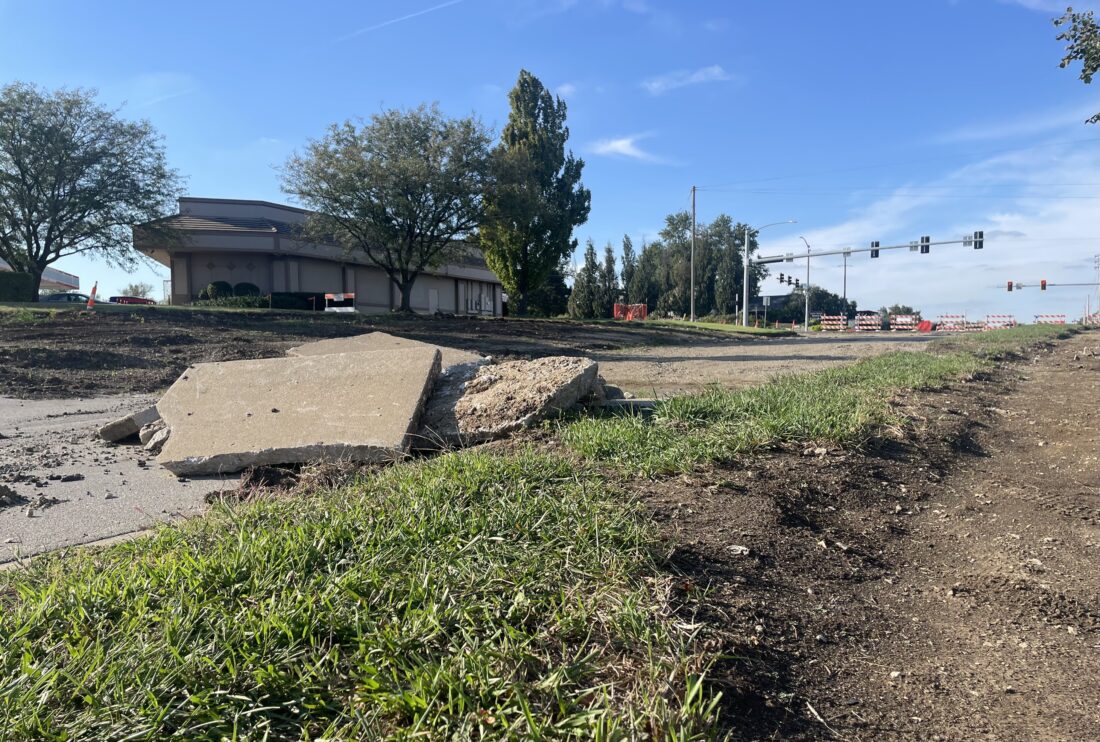
photo by: Sylas May/Journal-World
The torn-up section of Wakarusa Drive beside Miller Mart is shown on Wednesday, Sept. 23, 2026.
All torn up
When KDOT announced the closure on Wakarusa would be extended, it said the reason was “utility relocation conflicts.” But it didn’t provide any more details about what those were.
Lee, however, told the Journal-World this week that he had heard an explanation: Decades ago, the utility lines there were buried too close to the surface, and this was only discovered after the concrete was torn out and holes were dug to locate the utilities.
“They didn’t install it correctly back in the ’70s,” Lee said. “They should have been 6 feet under, but they said it’s only about 2 to 3 feet under, so there was a discrepancy in the construction documents and literally where the water main was.”
The Journal-World asked both KDOT and the City of Lawrence whether this description of the problem was accurate. The city had not responded as of Friday afternoon, and KDOT spokeswoman Kate Craft reiterated what the department had previously written in its press release: “There were unexpected utility conflicts found in the area between Clinton Parkway and Miller Mart’s entrance.”
Right now, the stretch of road is completely torn up. Craft said that the timeline for construction hadn’t changed since the first announcement. She said redesigning the project would take several weeks, and that two other closures on Wakarusa that were expected to take place this fall and winter would also be delayed.
Lee wonders if enough due diligence was done, or if the lines could have been located in a less disruptive way. He’s also upset that the torn-up road has been sitting there with no activity on it during the redesign process.
“You can’t dig up a whole road, especially a main road that a third of Lawrence uses, like Wakarusa, and not work on it for 1 1/2 to 2 months,” he says. “That just makes me sick.”
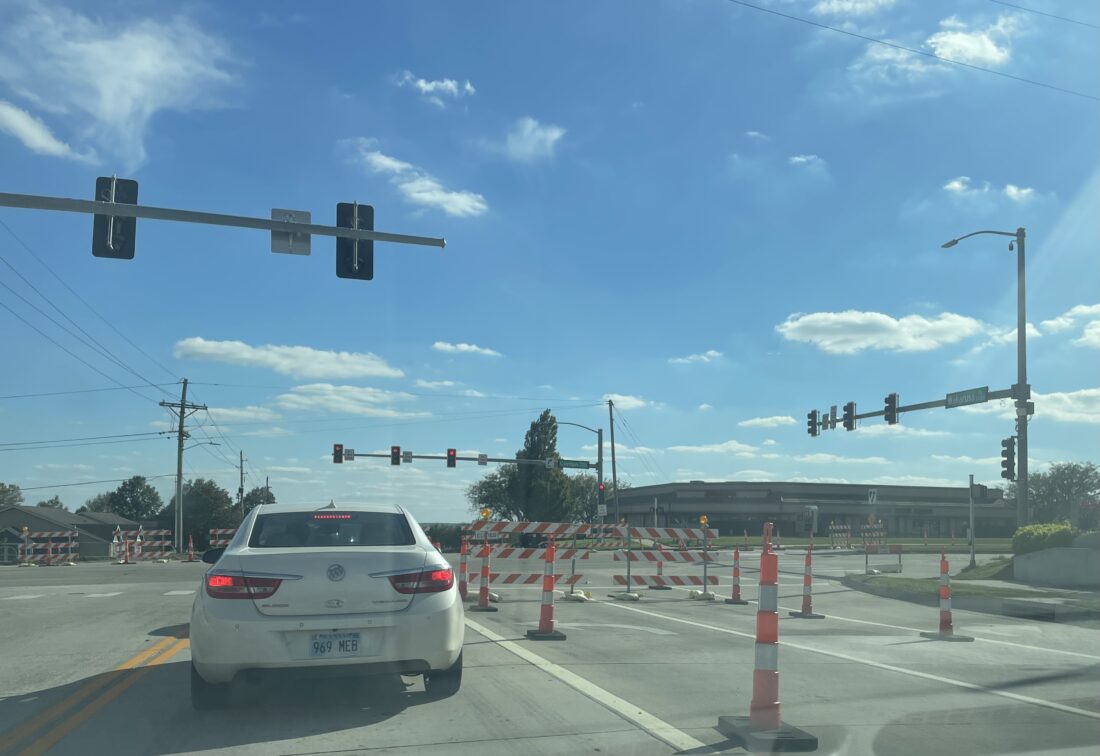
photo by: Sylas May/Journal-World
Miller Mart and the construction around it are seen from Clinton and Wakarusa on Sept. 23, 2026.
The long detour
As Jenny Parr checks out at Miller Mart, she and Lee chat a bit about the construction. She knows how big the problem is, because she was confused by it herself.
“People don’t know how to get to you,” Parr tells him.
Parr is someone who’s been shopping at Miller Mart for years. “This is, like, my go-to place,” she says. But, when the construction started, she had no idea if Miller Mart was even accessible anymore.
“I had to call him,” she says, “and I’m like, ‘Are you guys – like, do you have a back driveway, or how am I supposed to get to you?'”
They don’t have a back driveway or anything like that. The only way in or out of the shopping center is on Wakarusa.
From the intersection of Clinton Parkway and Wakarusa, where Miller Mart has a sign facing the street, it’s hard to tell how to get to that entrance. You have to drive east on Clinton to Inverness, then cut through the neighborhood. The detour is more than a mile, and KDOT hasn’t put up any signs showing that the businesses are open or where they are.
The Journal-World asked Craft if KDOT had done or planned to do anything to help the businesses in the shopping center, including putting up signs. Craft’s response was: “KDOT has not placed any custom signs for businesses in this area.”
KDOT has a “construction handbook” that does provide guidelines about signage for detours, but there is no specific direction on providing signage for affected businesses. However, another transportation agency has said that such signs can be helpful: the U.S. Department of Transportation.
In 2024, USDOT published a report called “Safe Access for Everyone Is Good for Business.” This report isn’t entirely about construction, but it does say that “the two main issues during construction are maintaining access to businesses for customers and deliveries and having sufficient signage and visibility so that customers know a business is open and understand how to enter and exit the site.”
It also lists some ways to keep businesses healthy during a road project that limits access. Among these are providing temporary parking; creating alternative, temporary business access points; and providing “clear signage from the roadway for business entrances.”
All of these are things that happened during the recent closure of Ninth Street. At least one business whose parking lot opened onto Ninth Street, Red Pepper, used a temporary access point, from Indiana Street, during the construction. The city also created a temporary parking lot in the middle of Ninth Street, just east of the closed section, and it put up signs on nearby streets that named the affected businesses and pointed the way to them.
Of course, Ninth Street and the SLT project are overseen by two separate entities, who may handle things differently. But Lee told the Journal-World that even though the SLT reconstruction is a KDOT project, City of Lawrence staff had also been in contact with him about the closure.
The Journal-World asked city staff whether the city had any role in the project and whether it had done or planned to do anything to help the businesses in the shopping center. As of Friday afternoon, staff with the city’s communications and Municipal Services and Operations departments had not responded to the Journal-World’s questions.
Alexander has been particularly frustrated by the lack of signs. He doesn’t understand why they could be put up for Ninth Street businesses but not here.
“The no signage thing, to me, is asinine,” he says. “I understand the work needs to be done. Please, at least, let people know how to get here.”
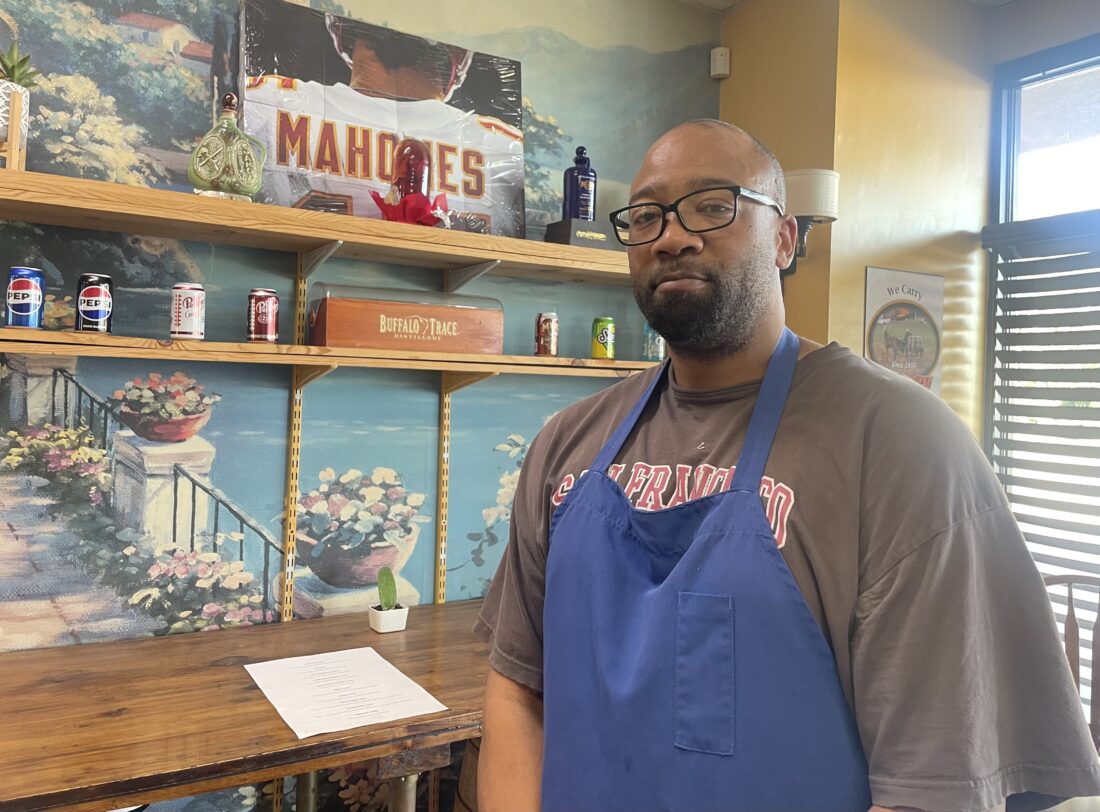
photo by: Sylas May/Journal-World
Hazim Alexander is pictured Wednesday, Sept. 23, 2026, at his restaurant, Auntie Em’s Deli.
A communication gap?
Lee doesn’t like the news he’s hearing, but he says he has been getting updates. Last he heard, KDOT was in the process of reviewing and approving the new design for Wakarusa, and work would most likely start at the beginning of next month.
But Alexander hasn’t heard a thing.
“Zero” he said. “I have not heard from the city, the state, KDOT, nobody. I have literally had not one single person talk to me about it.”
The Journal-World asked Craft whether KDOT was providing regular updates on construction to Miller Mart and other businesses in the shopping center. Craft responded: “Project staff provides weekly updates to Miller Mart.” She did not mention any other businesses.
To find out more about how KDOT communicates with the public during construction, the Journal-World consulted the construction handbook. It has a section with guidelines for speaking to property owners and other people who will be affected by a project.
“Before contract work starts on a project,” it reads, “the Field Engineer should try to advise abutting property owners of the planned construction and discuss with them the probable effect the contract work may have on their operations. They have an opportunity to arrange their operations before the work affects them seriously.”
This section of the handbook does not say anything about providing regular updates on construction work. It does, however, say that employees who observe “conditions that might develop into public controversy and misunderstandings” should “promptly transmit this information through channels so that early news releases can inform the public of the facts.”
Alexander has had to inform himself in other ways. With no communication directly from KDOT, he said, he’s forced to get his news about the construction from Facebook posts and from guests at his restaurant who have heard things.
“I don’t understand how I can lose thousands of dollars and not even get a phone call, an apology, a letter, not even one of them come in and patron[ize] my business,” he says. “… I’m allowed to lose 50%, 70% of my livelihood, but I’m not allowed to get a phone call.”
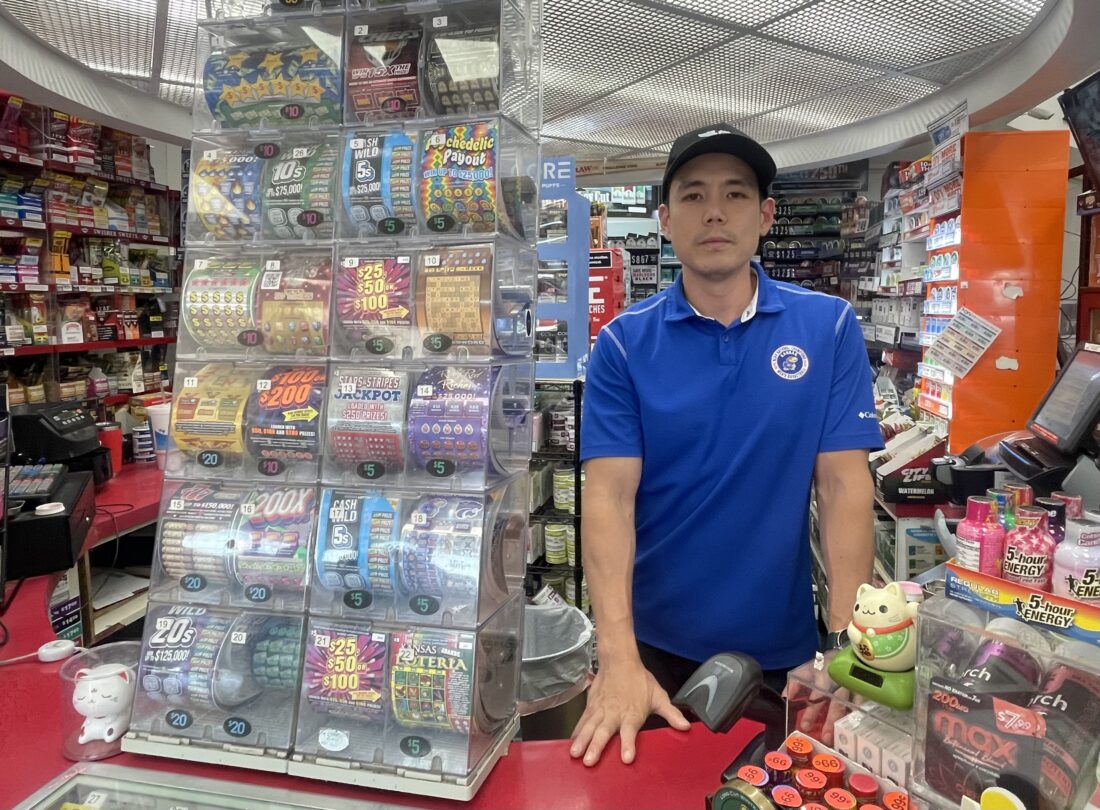
photo by: Sylas May/Journal-World
Miller Mart owner Sang Lee is pictured behind the counter of his store on Wednesday, Sept. 23, 2026.
‘There’s no repercussions’
That’s another thing both business owners believe: that ultimately, nobody is going to take responsibility for their losses.
“There’s no repercussions for them,” Lee says. “Who really gets in trouble if they make a mistake like this? Things would be a lot different if I had a contract with the city or KDOT or whoever is working on that road, where, every day that they’re late, they owe me money.”
His customers have thoughts like that, too. One tells him governments should have some kind of fund set up to compensate businesses in situations like this. “So many businesses in town, just because of construction, get hurt,” this customer says. “… They kind of just screw the hell out of you over here with no end date.”
Over at Auntie Em’s, Alexander thinks it would be meaningful if governments could make some kind of agreement to do business with those who were affected, or if the construction workers at least did something to support the businesses themselves. “The fact that they do nothing is the point,” he says.
“I don’t expect them to come and buy lunch from me or dinner every day. That would be selfish on my part,” he continues. “But the fact that they’re being not only selfish, but ignorant, is the point. They’re not doing a single thing to lift a finger.
“And that’s not just KDOT. The city hasn’t done anything or reached out, either. The state hasn’t done anything or reached out. It’s a black eye on all the powers that be. Nobody has put their foot forward.”
There’s also not much businesses can do on their own to insulate themselves against lost earnings.
There are insurance policies that pay when a business’ income is interrupted due to circumstances beyond the owner’s control. But according to a fact sheet from the Insurance Information Institute, the losses these policies typically cover are disasters that would completely stop the business from operating, such as a fire, storm damage or an explosion – not something that just slows the business down.
As for litigation, Lee says he’s been told that as long as the construction work leaves some way to access the business, “they’re not liable for anything else.”
Lee’s plan for keeping his business open involved selling a car before the closure began, just to have “a little bit of cushion.” He says that whatever happens, he’ll make his employees a priority. “My employees survive on the money, the wage that they make here, right? So I couldn’t cut their hours. I didn’t have the heart to cut their hours.”
Alexander’s plan might be finding a different place to live.
“It’s putting me out of house and home,” he says.
Alexander says he isn’t trying to be overly negative. But he also thinks the actions of those in government have sent a clear message: “We really don’t care what it does to you, and we’re going to do our job, and we don’t care what it does to your job or your personal life.”
“Excuses aren’t going to matter; answers aren’t going to matter,” he says. “Solutions are going to matter. If there’s no solutions, who cares about the explanation? I could care less about what they say.
“What they do is more important.”
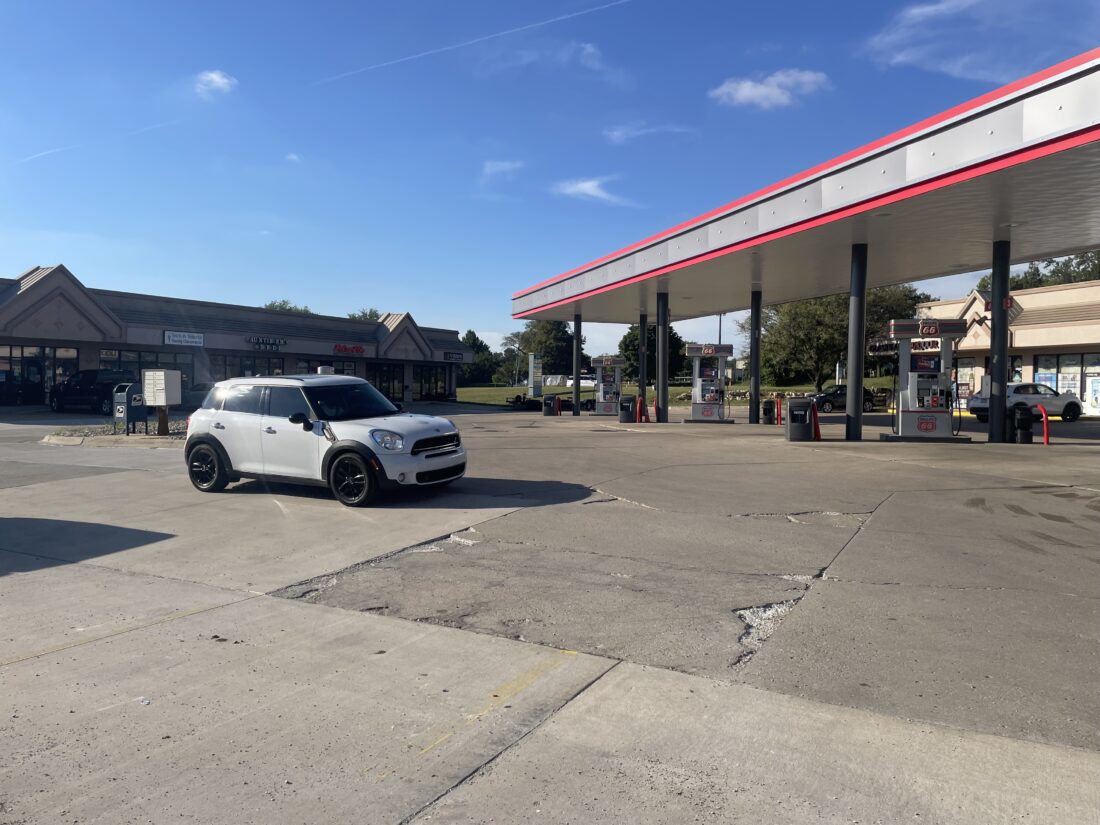
photo by: Sylas May/Journal-World
Miller Mart and other businesses in the same shopping center are pictured on Sept. 23, 2026.
City Government
On sister city visit, delegates from Hiratsuka, Japan, see Lawrence’s friendship firsthand
Voters Guide: Lawrence voters will decide whether to raise transit sales tax
Lawrence City Commission agrees that Costco shouldn’t be in STAR bond district
Lawrence City Commission to weigh whether Costco should be included in STAR bond district
As they approve bikes plan, Lawrence city leaders ask about data collection, Kentucky and Tennessee streets