For some businesses, Ninth Street construction has been ‘bittersweet’; for others, it’s been ‘a bombshell’
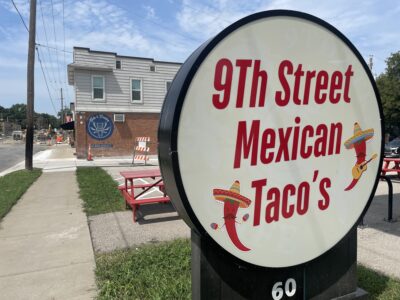
photo by: Sylas May/Journal-World
The former locations of Fork & Tumbler and 9th Street Mexican Tacos are pictured on Wednesday, Aug. 12, 2026.
There’s a block party planned on Ninth Street later this month, as the stormwater construction winds down and more of the street opens back up.
But for Rob Coleman, there’s not much left to celebrate.
City staff came to his restaurant, Fork & Tumbler, last October, talked him and other local business owners through what was going to happen and why. They said they needed to close down the street to replace the more than 100-year-old storm sewers and stop the neighborhood from flooding. They shut Ninth down in December, and the only way into his business was a single sidewalk out front. Regular customers and fans still came, but they weren’t enough.
By May 2026, Fork & Tumbler was gone.
Coleman was left wondering how he was going to pay off his debts, and wondering why the city didn’t do more to help him and the other businesses during the monthslong closure.
“We have Red Pepper, and Big Mill, and these local restaurants that these local people run,” Coleman said. “And it just seems like they just came in here and dropped a bombshell and just really screwed things up.”
How do Fork & Tumbler’s neighbors feel? There’s some sadness, some frustration, some resignation, some relief.
To the east is another shuttered restaurant, 9th Street Mexican Tacos, the first one to close. To the west is Owens Flower Shop, where owner Kristin Spacek and office manager Cris Bandle are planning for the reopening block party. It’s the shop’s 80th anniversary they’re celebrating, as well, and Spacek says it’s a time of mixed feelings for them.
“It kind of feels weird to celebrate, having lost a couple of the businesses,” she said. “But we’re also very grateful at the same time, so it’s a little bittersweet.”
•••
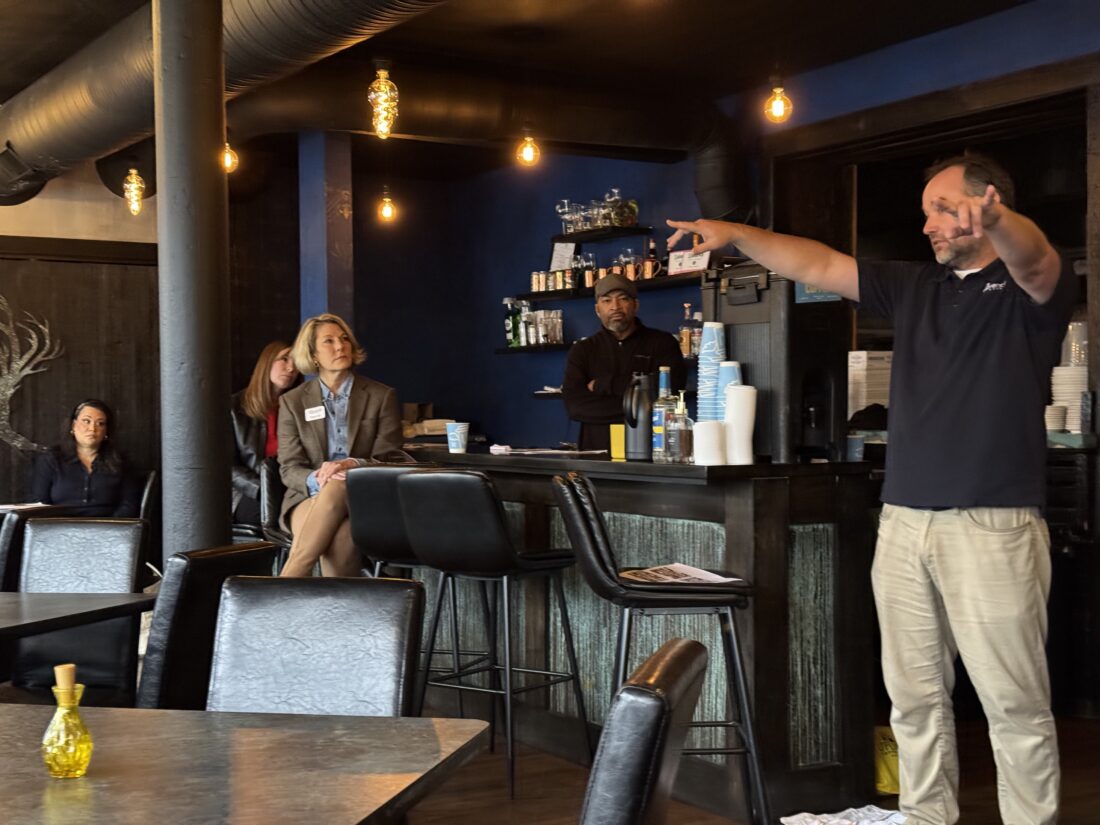
photo by: Chad Lawhorn/Journal-World
Nick Hoyt, engineering program manager for the City of Lawrence, points to a section of Ninth Street during a presentation at Fork & Tumbler on Oct. 30, 2025.
His day job is as a Realtor, but Coleman’s passion project was Fork & Tumbler. He’s been involved in other restaurant projects over the years, but this one was different – more personal.
“It was a place where my friends and family could come and hang out and just be,” he said.
But shortly after he opened it in 2024, he said, he first got the news about the Jayhawk Watershed project.
As the Journal-World has reported, the $20 million project has been replacing storm sewers in central Lawrence that were built more than a century ago. The city worried that without replacing the sewers, a heavy rainstorm could overload the outdated, crumbling infrastructure and flood homes, businesses and streets.
But when business owners heard about it, they thought the work would leave them underwater in a different way.
At that meeting before the project in October 2025, Coleman predicted what would eventually happen.
“You are going to kill the business,” he said at the time. “Not you personally, but this project will. We’ve got a lot of money in this thing, a lot of people, a lot of debt.”
When the closure began, people did come out and support Fork & Tumbler, Coleman said. He doesn’t fault the public at all. “The patrons are what saved us, I mean, for as long as we held on, it was definitely the people,” he told the Journal-World.
Instead, Coleman lays the blame on the city, the Lawrence Chamber, and other decision-makers and stakeholders.
Coleman, a native of Lawrence, says he’s seen a trend in these organizations that are supposed to help businesses out. To him, they seem to be more interested in giving incentives and tax breaks to attract new businesses than in supporting the home-grown small businesses, like his, that are already here.
“It’s just frustrating,” he said. “And especially being from here and watching this town grow as it has, you would think that the local government would take care of their local businesses before they bring in these other businesses.”
After 9th Street Mexican Tacos closed, Coleman said he tried to hold on, “but ultimately it was the same thing. And it was asking for help through, whether it was the city commissioners or the Chamber or whatever, it was like… I feel like there could have been some help.”
“We fought it as long as we could,” he said, but eventually they decided, “we wanted to do it, but we’re not going to fight this anymore.”
Although Fork & Tumbler is gone, the debt he took on to open it remains. He’s still not sure how he’ll pay his investors back, how he’ll recoup the money he’s lost, or if there’s anyone who will help.
“How do we get rid of all this debt?” he asked. “That’s the thing. I mean, do you guys know how much it costs to open a restaurant and actually do everything – taxes, payroll and everything else?
“And it’s just like, obviously they don’t, because the city said all they had to do was give us access, and that was just the sidewalk.”
•••
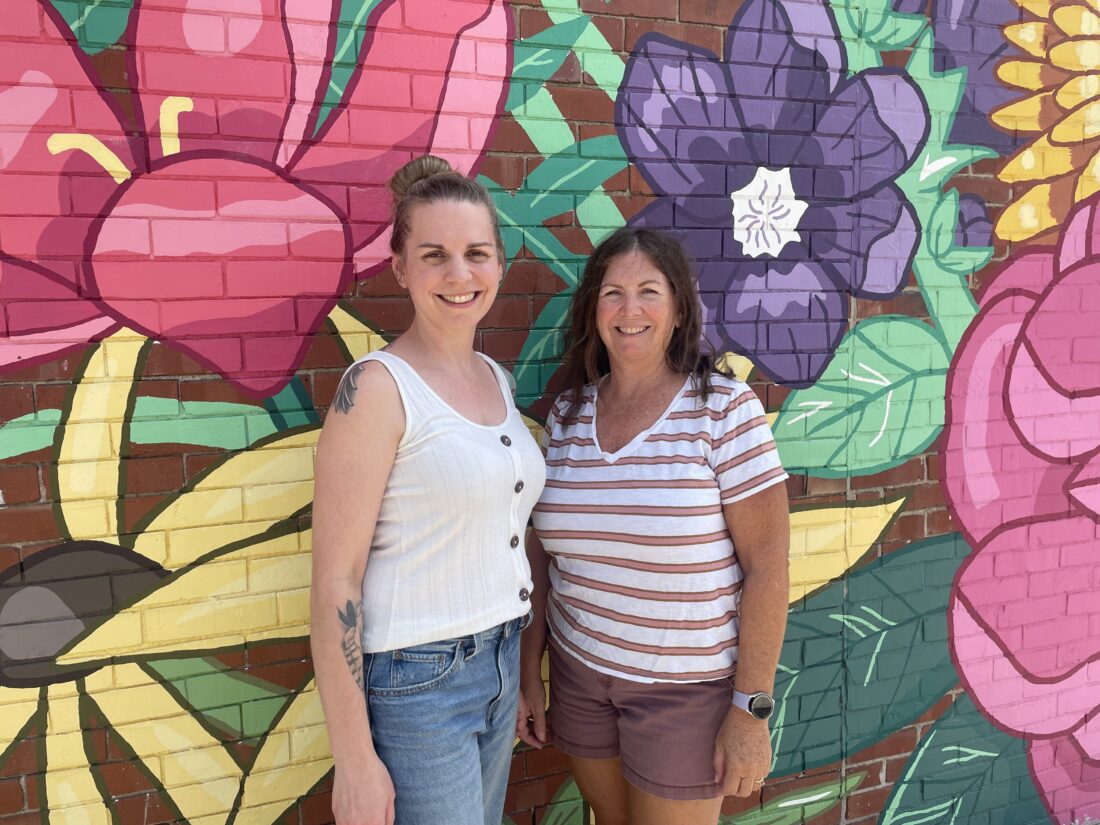
photo by: Sylas May/Journal-World
Owens Flower Shop owner Kristin Spacek, left, and office manager Cris Bandle, right, are pictured outside the shop on Wednesday, Aug. 12, 2026.
At Owens Flower Shop earlier this week, Bandle, the manager, said she sympathized.
“We feel really sad for the businesses that weren’t able to kind of weather the storms,” she told the Journal-World.
But she and Spacek also said things could have been even worse.
When the Jayhawk Watershed project was about to begin, the city was asking business owners what they thought about two possible timelines. One would do all the construction in one long stretch, and the other would close the street through April 2026, reopen it for the FIFA World Cup, then close it again through April 2027.
For the flower shop, the answer was easy: Just get it done all at once.
“Our two big holidays being Valentine’s Day and Mother’s Day, to potentially have two years of that affected if they had split it up, that could have been worse,” Spacek said. “So, for us, it was better, like, ‘Please just close everything, get it all done at one time and we’re only affected one time.'”
That was the feedback the city said it got from affected business owners up and down the corridor, and that’s what they ultimately went with.
The scope of the work has increased since then – back in December, the city was predicting Ninth Street would reopen in July. But city spokesman Michael Leos confirmed this week that Ninth should be reopened before the first University of Kansas home football game on Sept. 4. (He said some work will be continuing on Ninth this fall even after the street reopens, and the overall Jayhawk Watershed project will continue until the spring of 2027.)
Spacek and Bandle said they were happy with how the city communicated about the project. They even said the construction crews themselves have kept them apprised about what’s going to happen next, with the foreman stopping in and talking with them about it.
“I really have to say, they’ve been great to work with as far as communication goes,” Bandle said.
They also both knew that the project would have to happen sooner or later. Their building flooded pretty regularly after storms, they said; sometimes, they’d find as much as an inch of water in their basement.
“You just learn not to keep things on the floor,” Spacek said. “Everything’s on shelves.” The basement is where they store their seasonal items, rental glass, overstocked merchandise, and silks (“they’re all in buckets up on the wall,” she said).
The shop is not fully connected to the new stormwater system yet, but Bandle said they’re already seeing improvements.
“The last few heavy rains we’ve had, we had no water in the basement,” she said. “So it looks like it is going to work, like it is going to be sufficient to meet the need.”
The Ninth Street closures are part of what’s called the “middle reach” of the Jayhawk Watershed project, and the areas around KU are known as the “upper reach.” As the Journal-World reported, the work at Ninth and Mississippi wasn’t originally part of the scope of the Ninth Street improvements, but it was decided that it would be less disruptive to install the new storm sewer along with everything else. That way, when the upper reach begins, the street won’t have to be torn up again.
KU’s Gateway project near the stadium will actually help fund the stormwater work. The city’s agreements with KU said that about $14.5 million of the funds from the Gateway’s Tax Increment Financing district would be available for the city to use for infrastructure projects in the general area of the stadium.
But for Coleman, that number doesn’t mean much. “It’s their project, too,” he says of the university. He referenced the STAR Bonds that KU got for the Gateway, and wondered why he couldn’t get help like they could.
“You see all these big numbers that they’re handing out, all these bonds and everything else, STAR Bonds and everything else that these people are getting and giving,” he said, “and it’s like, ‘Hey, can’t you kick a little bit down to the little guys?’ But here we are, you know.”
Bandle sees it differently. She thinks that projects like this are things the whole community benefits from, not just KU.
“Things go well for KU, things go well for everyone else,” she said. “So, trying to get the infrastructure built up to support that, it has to be done.
“In the long run, it’s going to be good for everybody.”
•••
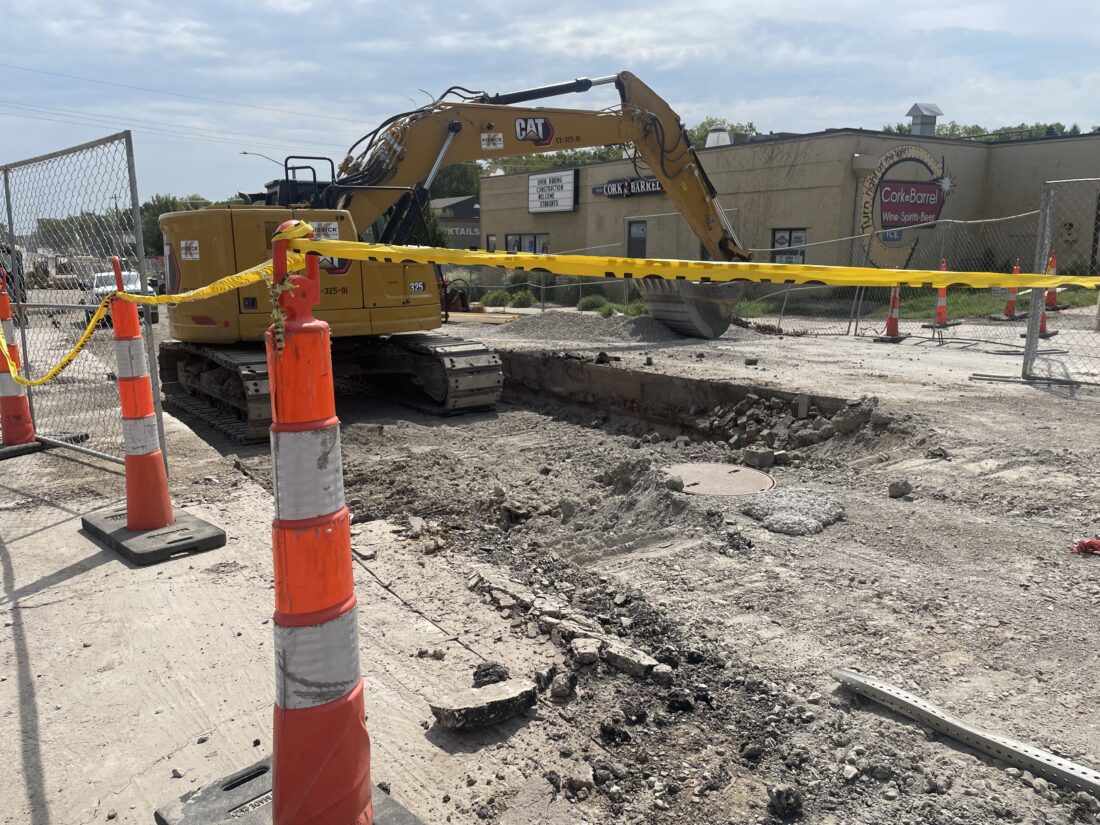
photo by: Sylas May/Journal-World
The intersection of Ninth and Mississippi streets in front of Cork & Barrel is under construction on Friday, Aug. 14, 2026.
At Ninth and Mississippi, the impact wasn’t as noticeable at the start.
But when the construction moved there in April, Cork & Barrel manager Giselle Marino said, “we felt it a lot more.”
Cork & Barrel has a parking lot, but it had to be partly torn up for stormwater work this spring, and so did the alley south of the store. That left Mississippi Street as the only way in or out. Semis needed to do complicated maneuvers to even get into the lot to deliver liquor, and that made it much tougher for everyone to park.
“You could only get here from one street,” Marino said. “And I feel bad with our trucks, too, because they couldn’t use the alley either. So they had to pull into our only entrance and then back up and kind of block the entrance.”
Now, the alley is back open, and Marino thinks the hardest part is over. The store has made it through the summer, which is normally the slowest time for business, and students are coming back to campus in a matter of days.
“It’s been a process,” Marino said. “But I do think we’re on the other side of it.”
It’s not just been hard for the businesses, Marino thinks. It’s been hard for the whole neighborhood, including many of Cork & Barrel’s regulars.
“We have a lot of people that are just in the neighborhood that have been struggling with all of this construction anyway for a really long time, longer than we have. But they still come in and they’re like, ‘We’re here to support you guys, we want to support you guys,'” Marino said.
But “we’ve also had a lot of regulars say they’re not going to come back until it’s done. And, like, you can’t blame them, because I would avoid it if I didn’t work here.”
Because they do work here, and they know how hard it’s been, the Cork & Barrel employees have made a point of supporting the other businesses in the area. Once a week, Marino said, they all get lunch at one of the restaurants on Ninth, such as their neighbors, Big Mill and Burrito King, to show they care.
“We really try to support everyone else down this road,” Marino said.
•••
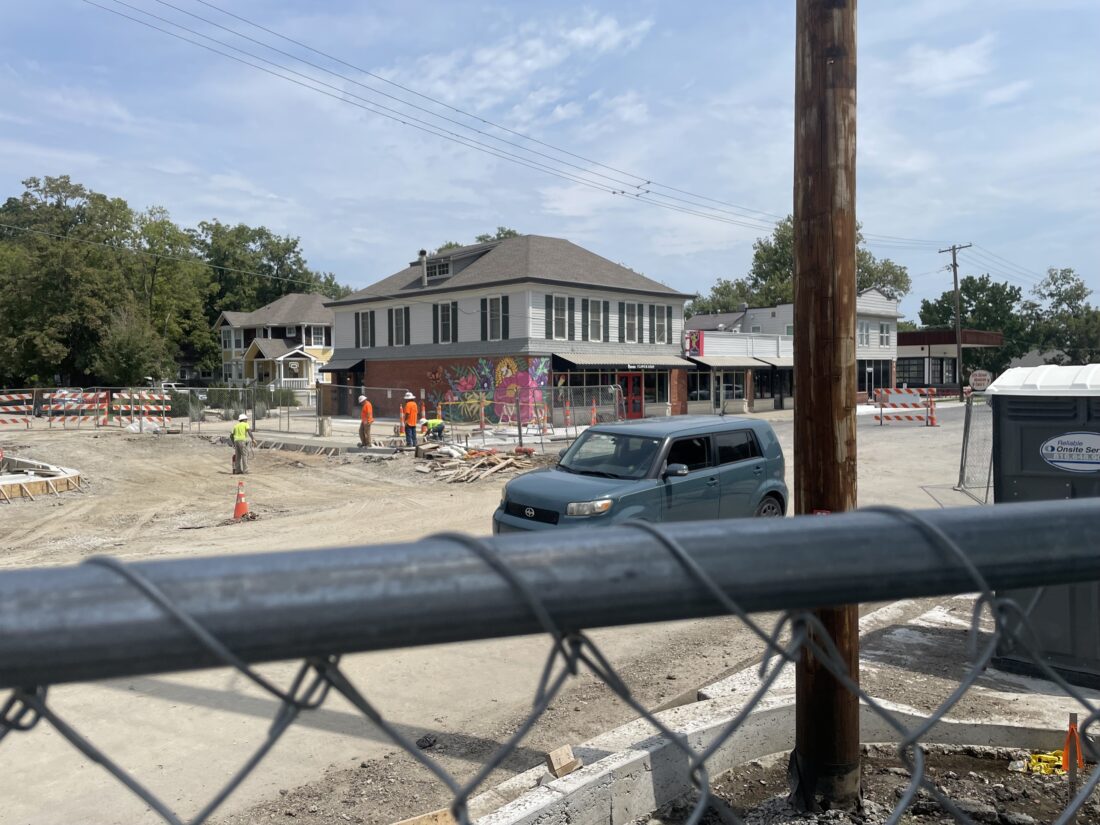
photo by: Sylas May/Journal-World
Construction continues on Ninth Street on Aug. 12, 2026, as part of the Jayhawk Watershed project.
Across the street at Big Mill, bartender and manager Margaret Kagdis said business has been slow – but that’s normal for a summer.
It’s hard to tell how much the drop in business is due to construction and how much is due to normal seasonal patterns, with students being gone. She thinks it’s more likely the latter, though. She points to Big Mill’s parking lot, something not all businesses around here have; unlike Cork & Barrel’s, this lot didn’t have to be torn up.
“It has not been as bad as other places have been feeling, I’m sure,” Kagdis said.
Still, she’s looking forward to the street reopening – and to the block party in a couple of weeks.
“We’re all hopeful that it’s going to be at least done by then, or moved up our way,” Kagdis said.
The block party is scheduled for 6 p.m. Saturday, Aug. 29, and Kagdis said it will have food trucks, live entertainment and an open container area for alcoholic beverages. Owens Flower Shop also will be helping guests make flower crowns, and there will be local vendors from The People’s Market arts and crafts hub selling their works.
“There should be a lot of fun stuff,” Kagdis said. “… It should be a bunch of businesses around here that are all kind of rallying together around it.”
Cork & Barrel isn’t involved in the party planning, but Marino definitely hopes the event will go off without a hitch. After many difficult months, she said, the neighborhood needs a chance to release the pressure.
“A lot of people have been like, ‘Oh, they’re closing the street after it opens for a party?'” she said. “And I’m like, ‘Give me a party. We need a party.'”
It’s also an opportunity to thank the customers for helping businesses during this hard time.
One thing that all the businesspeople the Journal-World spoke with had in common was their gratitude for the community’s support – especially their regular customers who turned out despite the hassle of navigating the construction zone.
“We’ve been really fortunate with the Lawrence community,” Kagdis said at Big Mill. “… The community has done a very good job of making sure they’re coming down here, giving us as much of their business as they can, and ensuring that we’re still making money and also still going to be around for a while.”
And Spacek said she wanted to tell her shop’s patrons, “Thank you, from the bottom of our little flower hearts.”
Even Coleman said that without the public’s support, “it would have been really, really bad instead of just bad.” He said the people deserve the credit for keeping Fork & Tumbler alive for as long as they did.
“Like I said, high-fives and hugs to everybody who came and helped us out while we were there; appreciate them,” he said.
“But there’s only so much the people of Lawrence can do.”
City Government
Opinion: Environmentally conscious Lawrence is not focused on the biggest problem with electric vehicles
Locust Street apartments, Holcom housing development among this year’s applicants for $700K in Affordable Housing Trust Fund money
Business owners hurting from Wakarusa Drive closure say they’re getting no answers, no signs, no accountability
Planning Commission recommends adding more layers to approval process for data centers in Lawrence
Lawrence Loop trail may go along busy downtown street; city wants to steer clear of Riverfront for development reasons