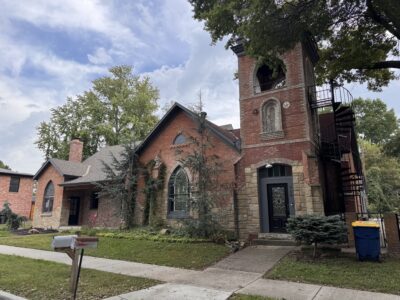
Limestone Community School students to cap off research project on deforestation with ‘pop-up shop’ raising funds for nonprofit
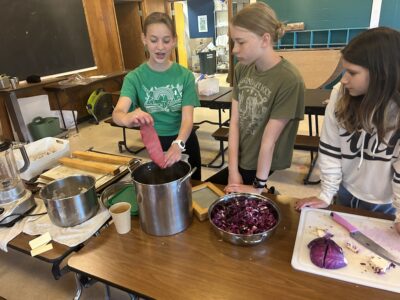
photo by: Bremen Keasey/Journal-World
From left, Harper Steinle, Naomi Haden and Ace Gunslemen — three Limestone Community School students — show off a cloth napkin hand-dyed with a mix of red cabbage and water. The napkins were made by the students for a pop-up shop that will raise funds for a deforestation nonprofit.
A group of middle school students will host an art-based “pop-up shop” this weekend to raise funds to prevent deforestation and drive reforestation efforts.
The pop-up shop, which is hosted by three students from Limestone Community School — a private, Lawrence-based alternative elementary school — will take place from 6 to 8 p.m. on Saturday, May 9, at Phoenix Gallery, 825 Massachusetts St.
The event is part of a capstone project by Naomi Haden, Harper Steinle and Ace Gunslemen based on the theme of “storytelling” around their chosen research topic of deforestation. Steinle said this project, which they have dubbed the HAN Deforestation project — a play on their initials — was an example of the school’s mission to teach students through project-based learning.
Madeline Herrera, the director and founder of the school, said the students had previously done research projects into the health of the ocean, prairies and wetlands, so “it felt natural” for the students to look into another ecosystem.
The students initially planned to create a small display about the dangers of deforestation, according to Gunslemen, but they pivoted to the pop-up shop idea thanks to feedback from other classmates. During a brainstorming session, a student suggested that the three students should make alternatives to everyday products that can cause deforestation. That sparked the idea that the students would make the handmade items and sell them, with the proceeds going to a nonprofit called Community Carbon Trees in Costa Rica that helps reforestation efforts in the rainforest.
The students made cloth napkins — an alternative to paper towels — that used homemade dyes out of natural products. The three students said they used a variety of products, including turmeric, red cabbage and black walnut, to make the dyes for the napkins.
They also worked to make homemade recycled paper. Herrera said the three students “raided all the classroom’s recycling bins” to gather enough materials. Once they had enough, they went step by step to make the paper: ripping it to small pieces, wetting it to get pulp, putting it in a blender with water to make slurry, putting that into a mold and press and finally hanging it to dry.
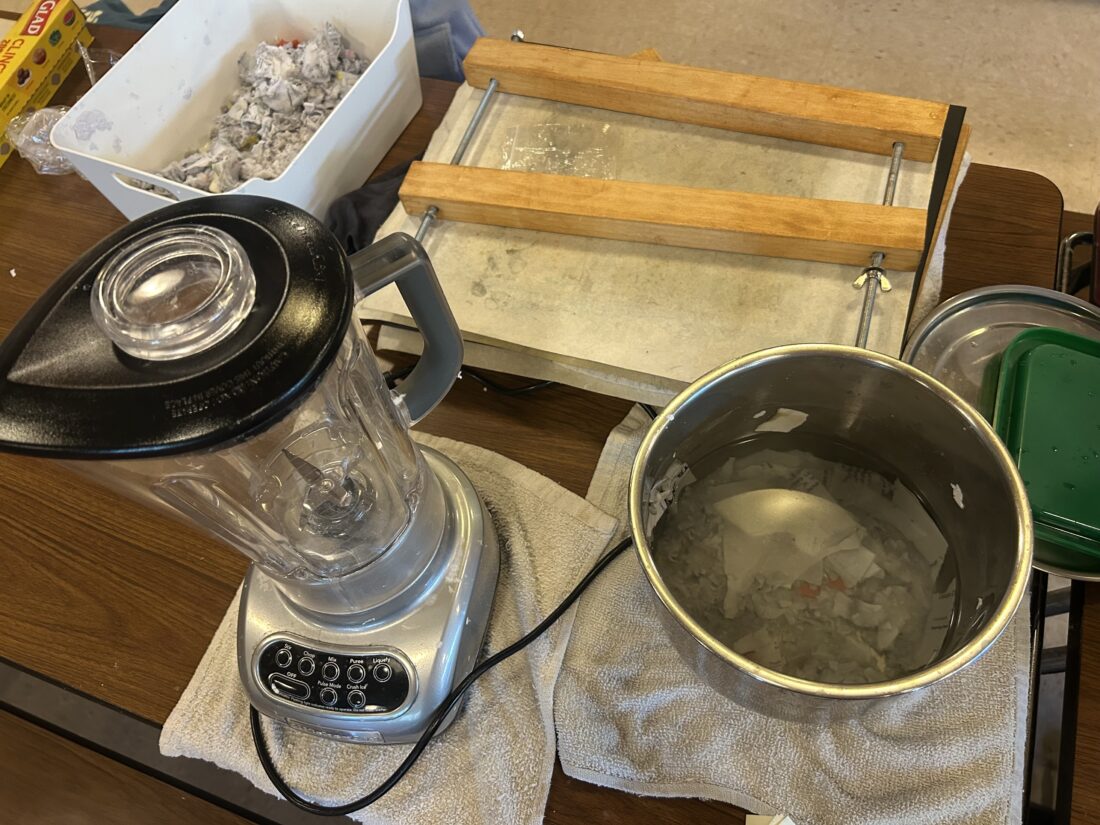
photo by: Bremen Keasey/Journal-World
Supplies including a blender, a container with paper pulp and molds used to create recycled paper sit on a table at Limestone Community School in Lawrence.
The students estimated it them took “about a week” to put together a small notebook made out of 10 recycled pages. They said they’ve chosen to work on the handmade products during extra periods to make sure they could have them ready to go for Saturday’s event.
Along with crafting the handmade works, the students researched the topic of deforestation and its causes. Haden and Steinle said they were most surprised the leading cause of deforestation was to clear land for pastures, not for making new paper products.
Through their research, they also found the Community Carbon Trees nonprofit run by Jennifer Leigh Smith, aka “Tree Jenny.” The students appreciated that her work is grounded in an area. Gunslemen said she hires local people to plant the trees and look after them “to make sure they aren’t cut down.” Haden said she appreciated how she doesn’t just plant the trees and leave, but also is focused on “how (the people) take care of them.”
Steinle said the three students hope to sell all their handmade crafts and the 15 to 20 pieces of art at the event. She also said the students plan to have pamphlets or zines made so people can learn more about the impact of deforestation on the climate.
Herrera said while helping her students work through this project, she was proud of them for the different skills they learned and their interest and commitment on learning about a dense and pressing global issue.
“(Deforestation) is all part of a complicated web of global systems” Herrera said. “It’s complicated, but (the students) having that knowledge is important.”
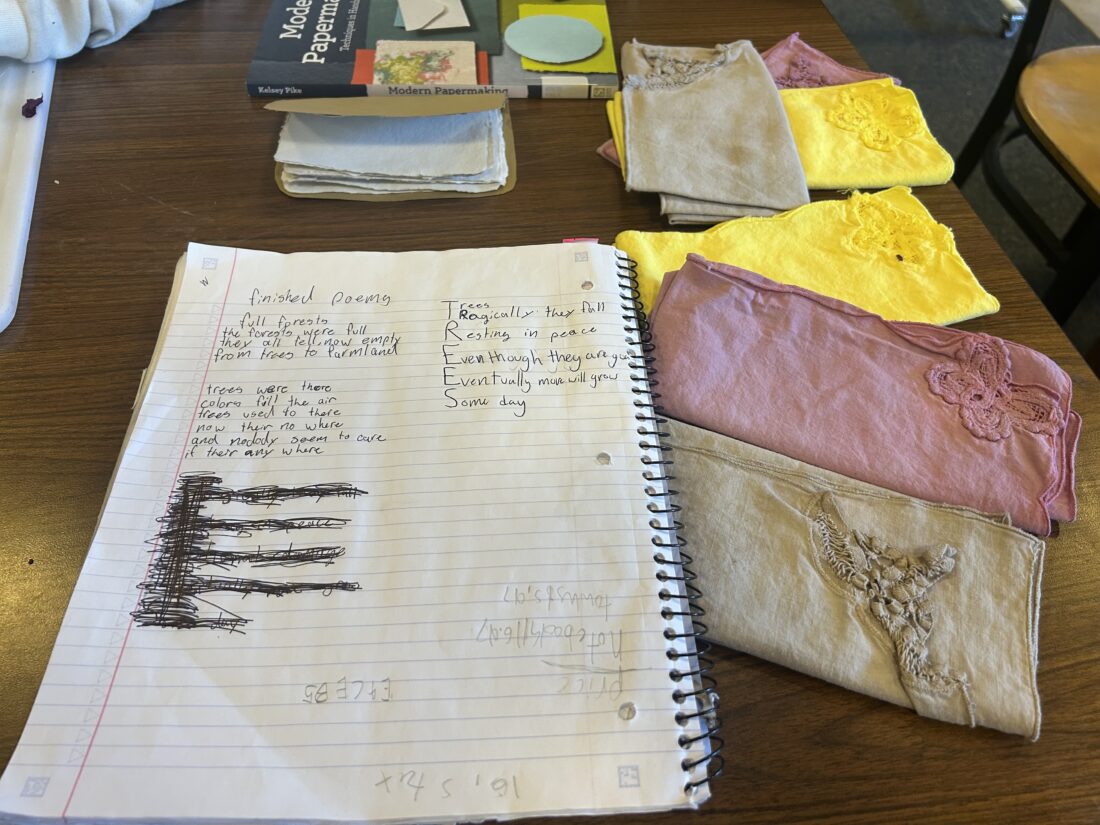
photo by: Bremen Keasey/Journal-World
Hand-dyed cloth napkins and a notebook made from handmade recycled paper, top, sit on a desk at Limestone Community School. They will be sold at a pop-up shop to raise funds for a deforestation nonprofit, and the students said they will have containers inscribed with poems they wrote.
Other News
Clinton State Park and other state parks will increase overnight camping, vehicle permit fees starting next month
‘No day is like the other here’: Students from Lawrence’s German sister city discover football, new foods and new friends on exchange
GCSAA celebrates 100 years with new plaza and statue honoring its founder and first president
Go, See, Do: Library book sale, candidate forum and more
Gas station at Lawrence’s new Costco will be open starting next Wednesday