DCCCA celebrates opening of $4M ‘Hope Rising’ housing project for women in recovery
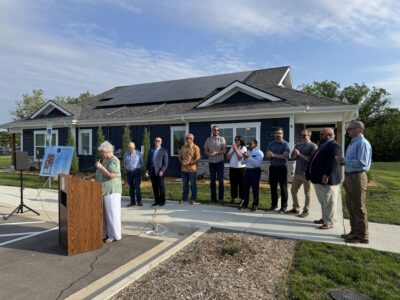
photo by: Josie Heimsoth/Journal-World
DCCCA's CEO Lori Alvarado speaks alongside the organization's board of directors and staff on Thursday, June 4, 2026.
DCCCA celebrated the opening of its new housing community on Thursday, designed to help women in recovery and their children build stability, access treatment and transition toward permanent housing.
At least 100 guests attended the open house event, which featured food trucks, a resource fair and property tours of DCCCA’s new transitional housing community called, “Hope Rising.” There was also a ribbon-cutting ceremony, and attendees donated household cleaning products as a housewarming gift for the families expected to arrive July 1.
The five duplexes, located at 3011 W. 31st St., offer 10 individual housing units for women and their children, and the development was built right next to the First Step treatment center at 3015 W. 31st St. The development cost for the housing project was around $4.2 million.
The duplexes were built by AU Construction, based in Lawrence. Within the new housing community, residents will have access to DCCCA services, including integrated treatment, educational pathways, employment support and childcare.
“This celebration marks the culmination of nearly 10 years of dreaming, and planning, and fundraising, and building, and preparing, and now celebrating the opening of what we are calling our community, ‘Hope Rising,'” DCCCA’s CEO Lori Alvarado said.
Alvarado said the incoming residents will stay in the transitional housing units for six months to a year – maybe even a little longer – to stabilize their recovery and build connections with the community.
“We will surround them with treatment,” Alvarado said. ” … They’ll be working on their education, and employment and connection to community resources, and that will be a pathway to permanent housing, independence and more hope,” Alvarado said.
Alvarado said this development is addressing a clear need in Douglas County. The project is in line with the joint city-county plan to end chronic homelessness in Douglas County, “A Place for Everyone.” The plan lists one of its priorities as transitional housing, and it mentions that Douglas County has a lack of transitional housing options.
“Women leaving substance use disorder treatment often need safe housing, where they can continue recovery while keeping their children close,” Alvarado said. “We’re keeping families together, and we’re working towards their recovery.”
Kim Freese, chief behavioral health officer at DCCCA, said as someone who is in long-term recovery and came to DCCCA for treatment in 1991, she wishes a resource like this was available for her.
“I’m not sure I’d ever leave, and I kind of haven’t,” Freese said. “I’ve come back to DCCCA. The mission just draws you back … This is a milestone. This is a big deal. It’s going to have an amazing impact for women and their children, for families in recovery to get to have a stable start.”
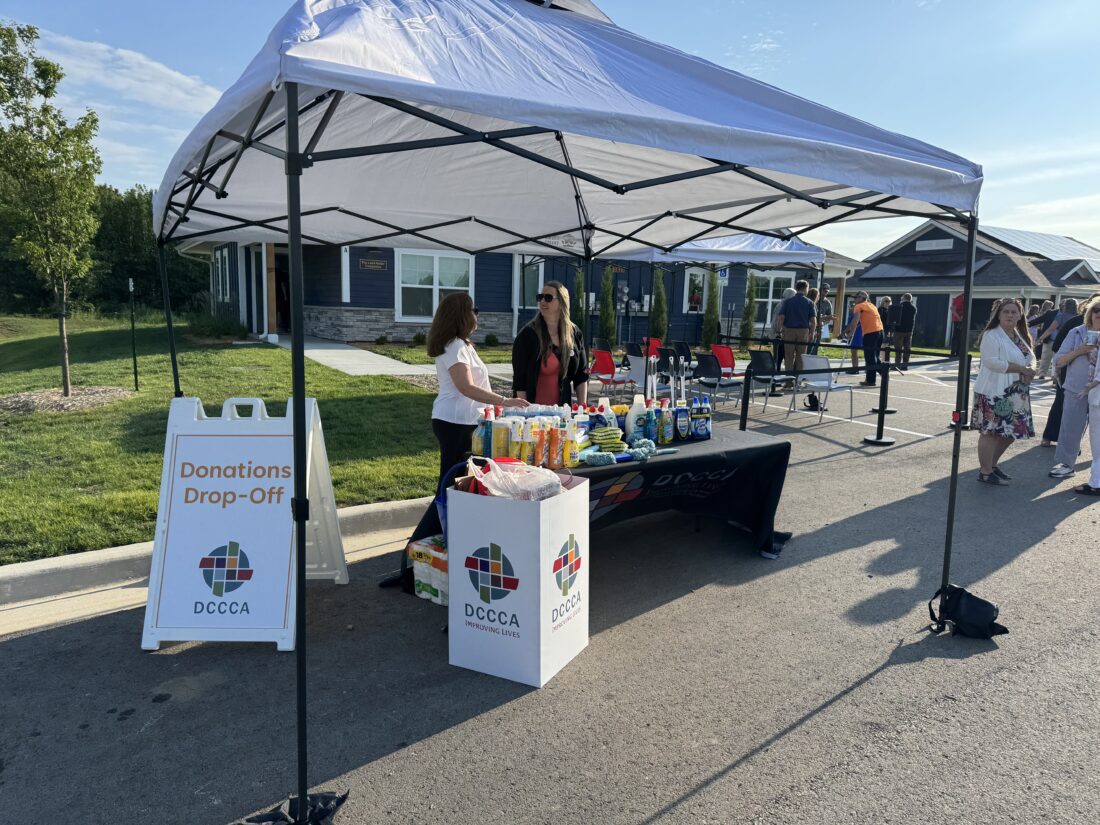
photo by: Josie Heimsoth/Journal-World
DCCCA accepts donations for the new transitional housing community on Thursday, June 4, 2026.
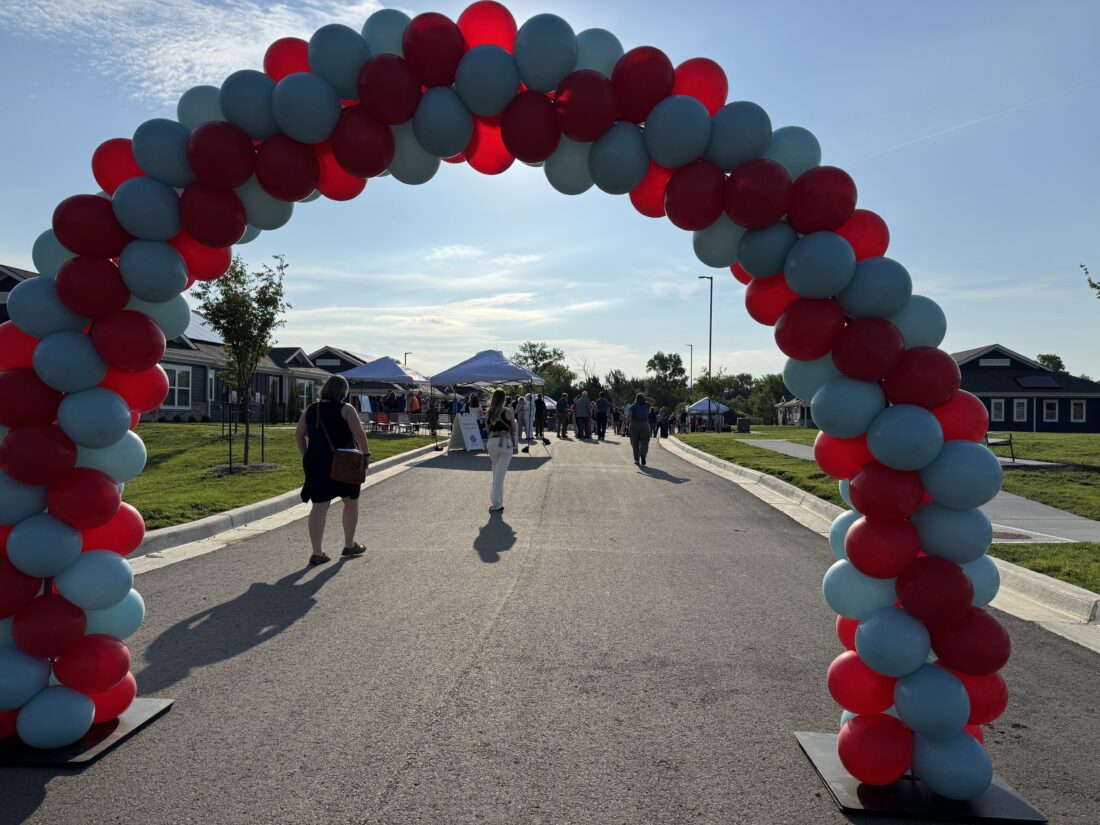
photo by: Josie Heimsoth/Journal-World
Community members attend an open house and ribbon cutting ceremony for DCCCA’s new transitional housing development on Thursday, June 4, 2026.
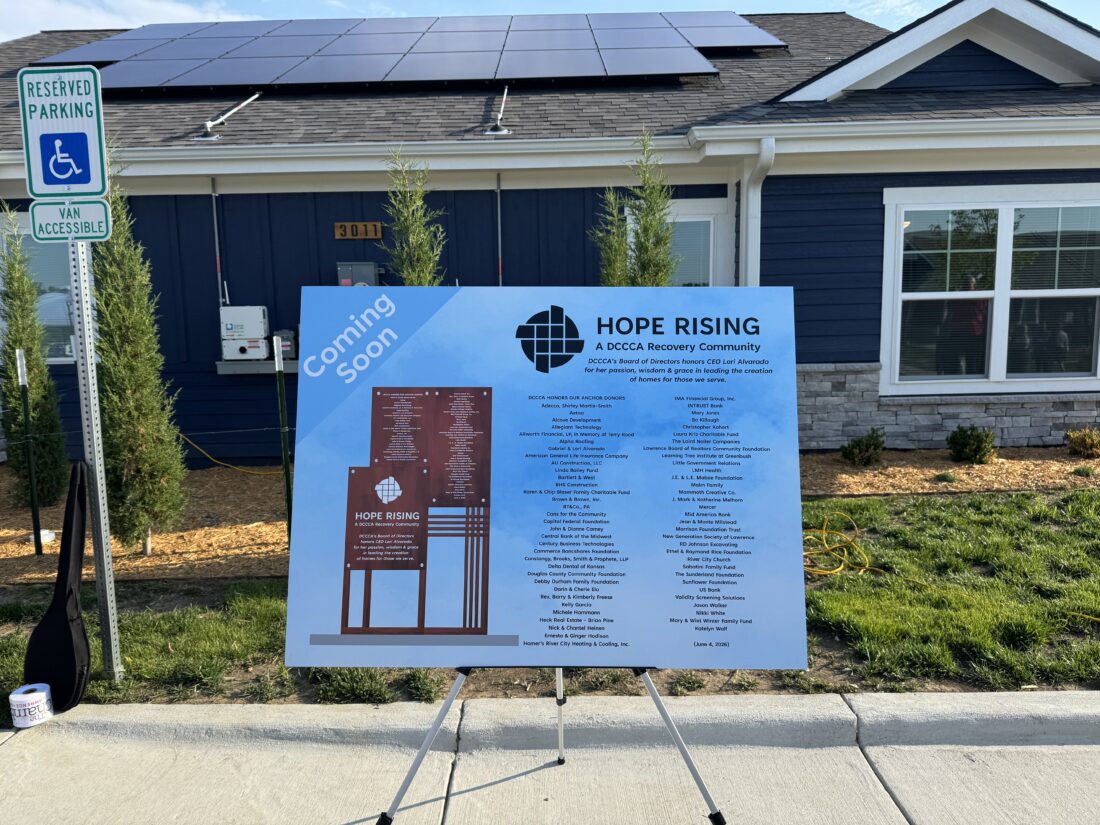
photo by: Josie Heimsoth/Journal-World
DCCCA holds an open house for the new “Hope Rising” transitional, recovery housing community on Thursday, June 4, 2026.

photo by: Josie Heimsoth/Journal-World
Cookies are offered at DCCCA’s open house on Thursday, June 4, 2026 for the new “Hope Rising” transitional housing community.
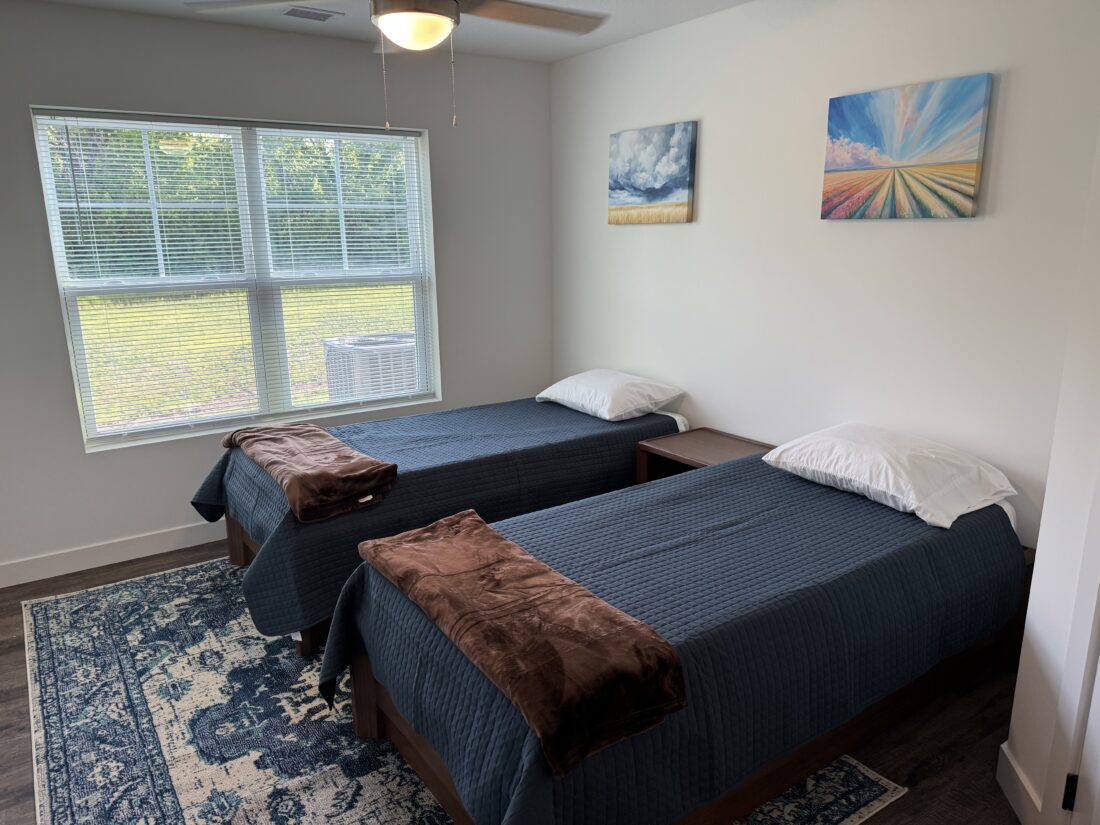
photo by: Josie Heimsoth/Journal-World
A bedroom inside one of the duplexes at DCCCA’s new transitional housing community is pictured on Thursday, June 4, 2026.
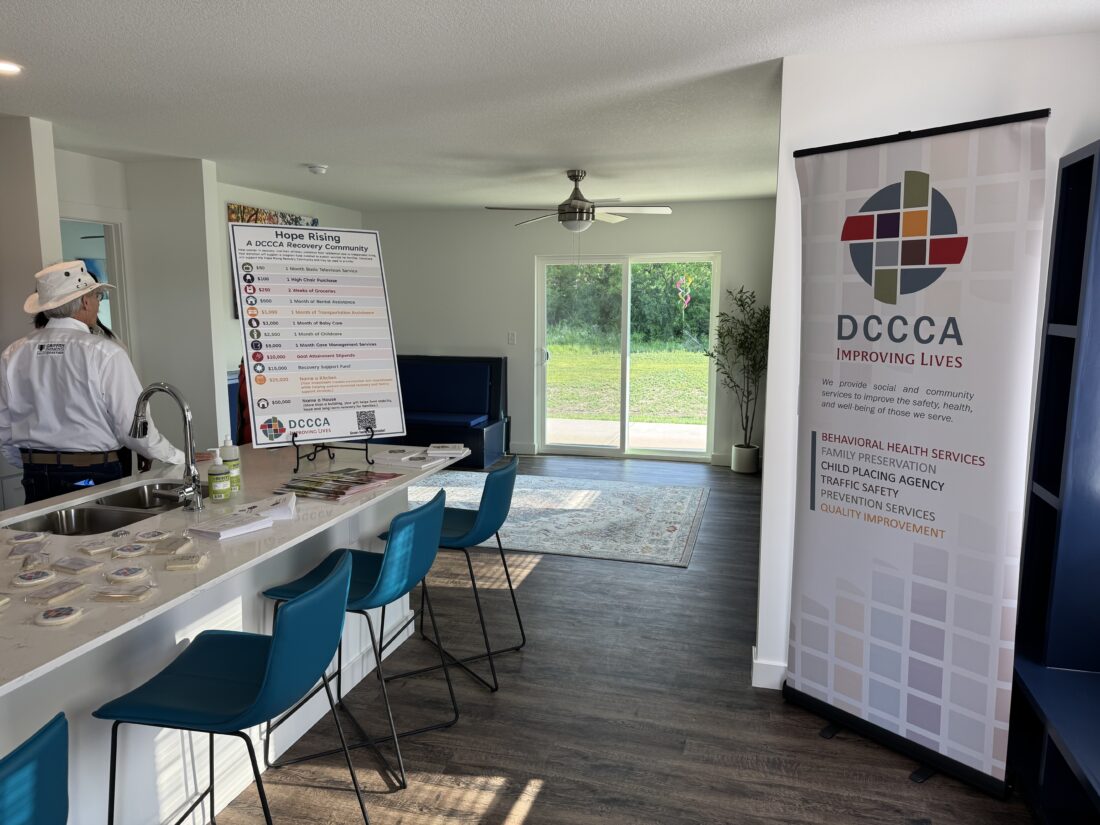
photo by: Josie Heimsoth/Journal-World
The inside of a duplex at DCCCA’s transitional housing community is pictured on Thursday, June 4, 2026.
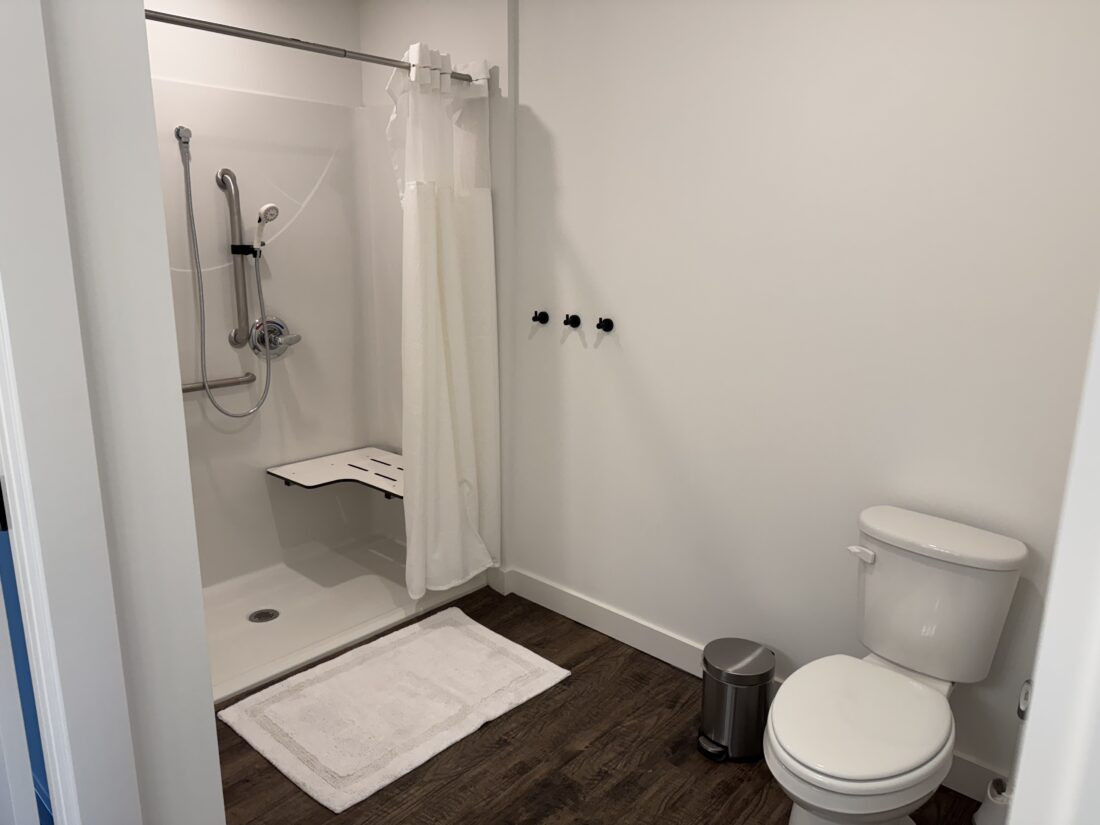
photo by: Josie Heimsoth/Journal-World
A bathroom inside a duplex of DCCCA’s transitional housing community is pictured on Thursday, June 4, 2026.
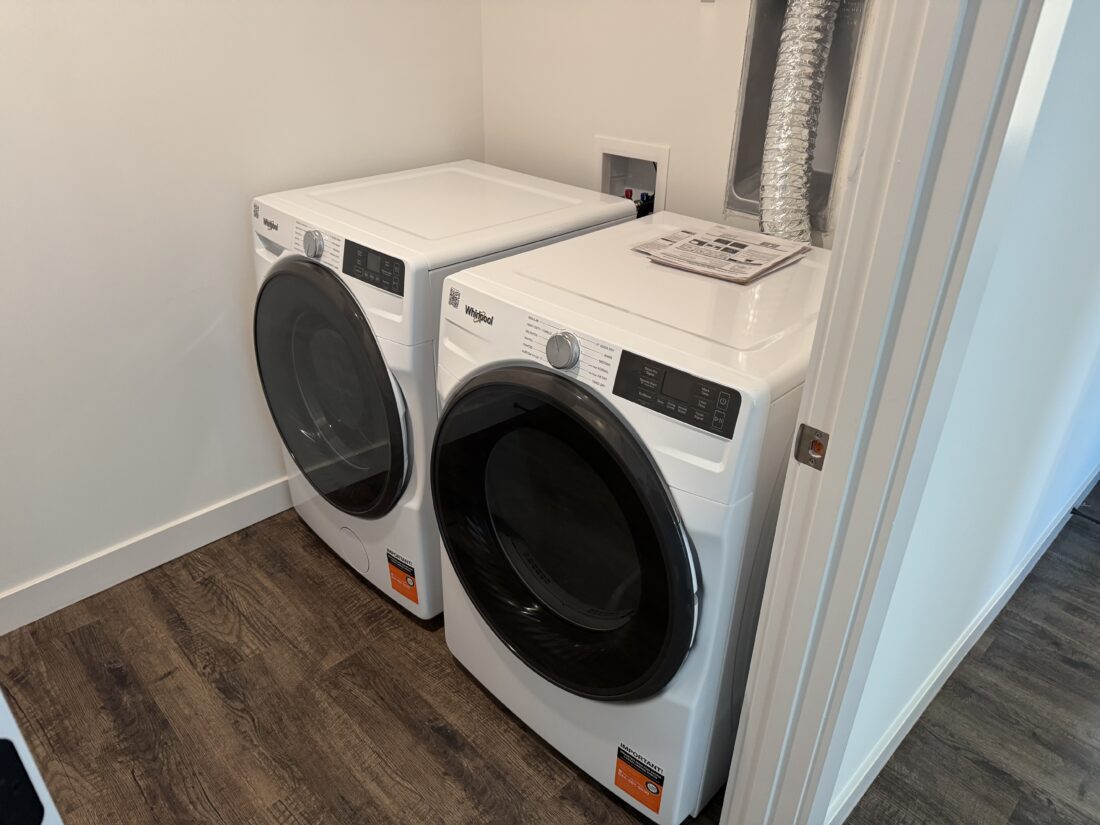
photo by: Josie Heimsoth/Journal-World
A washer and dryer are pictured inside a duplex at DCCCA’s new transitional housing community.
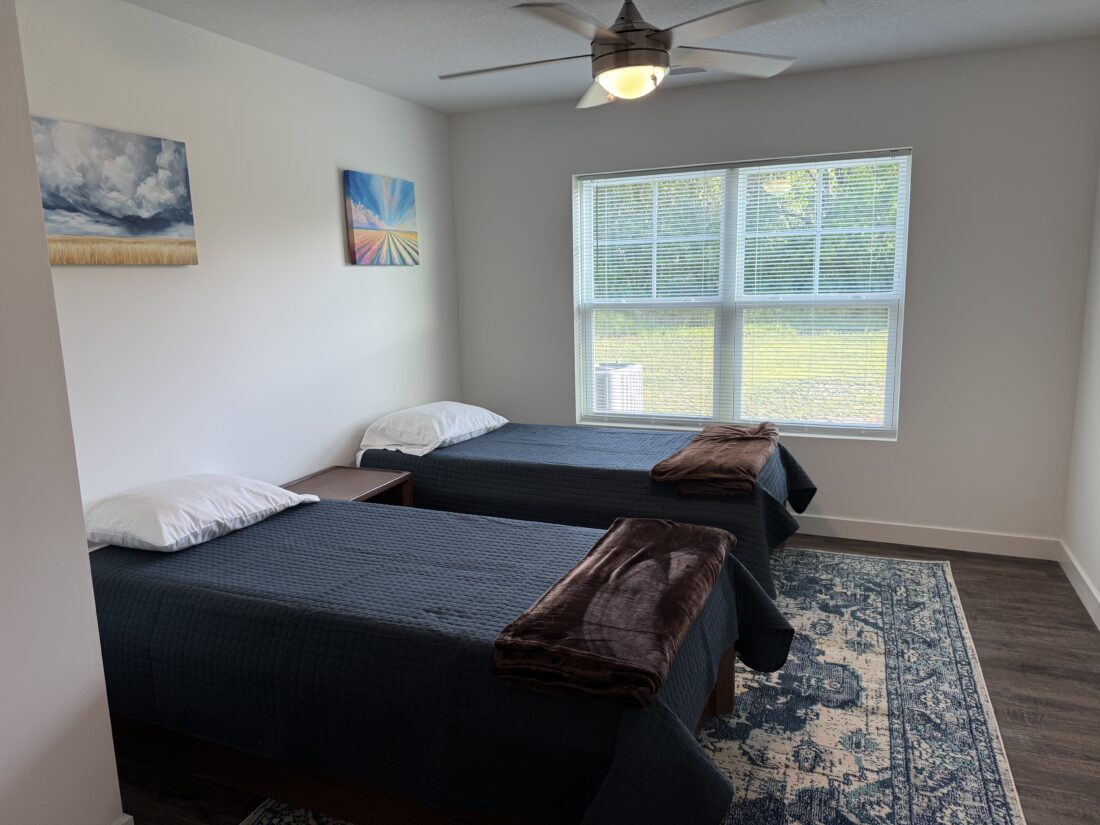
photo by: Josie Heimsoth/Journal-World
A bedroom inside one of the duplexes at DCCCA’s new transitional housing community is pictured on Thursday, June 4, 2026.
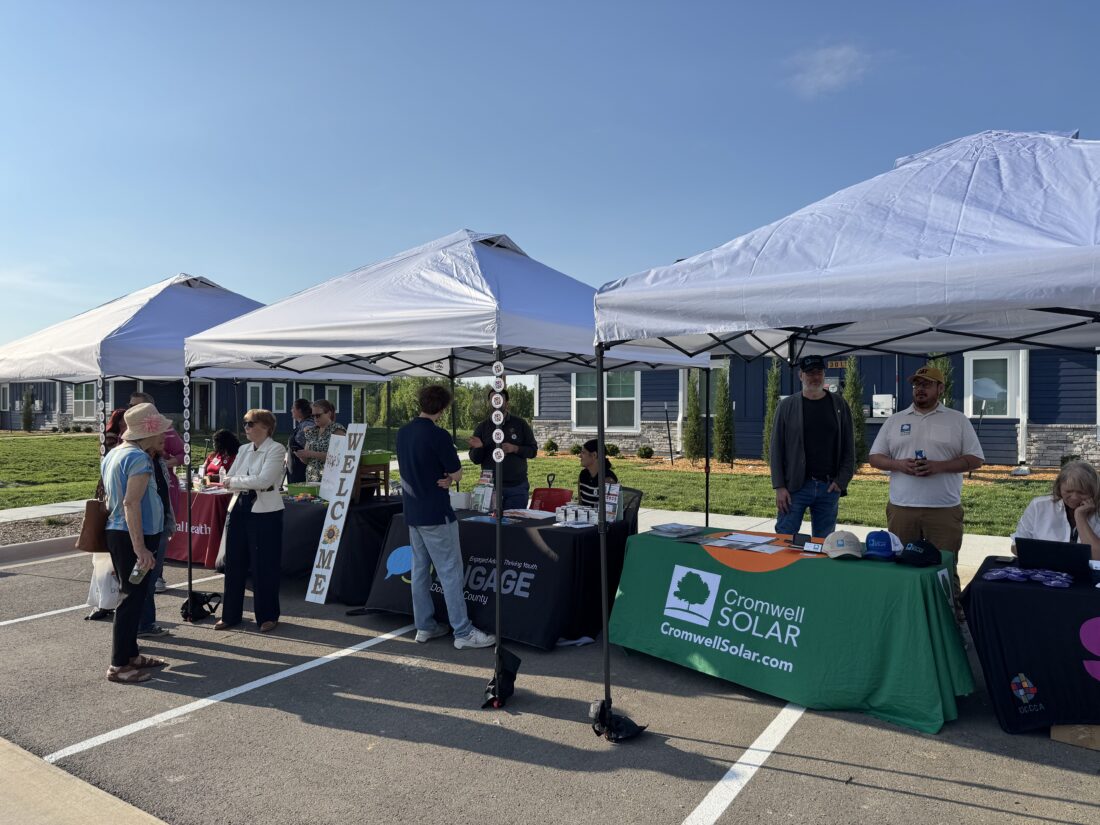
photo by: Josie Heimsoth/Journal-World
Community partners meet with the public to discuss their services and opportunities on Thursday, June 4, 2026.
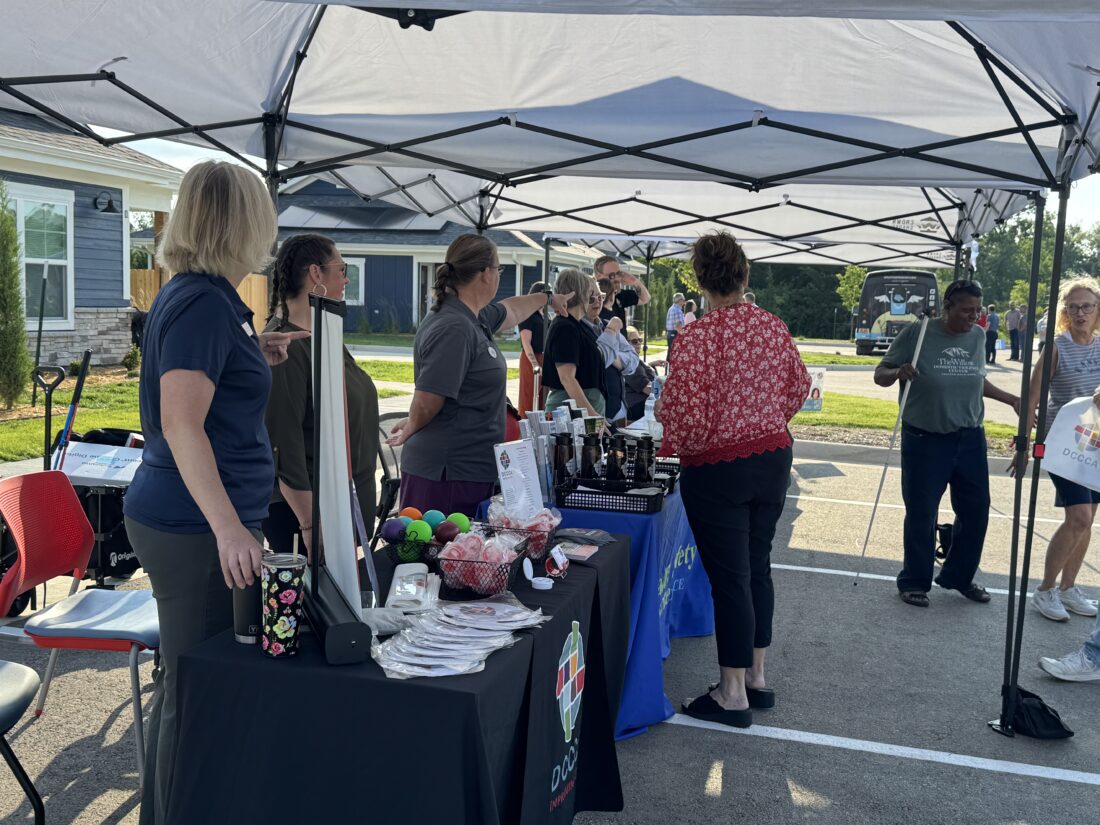
photo by: Josie Heimsoth/Journal-World
Community partners meet with the public to discuss their services and opportunities on Thursday, June 4, 2026.
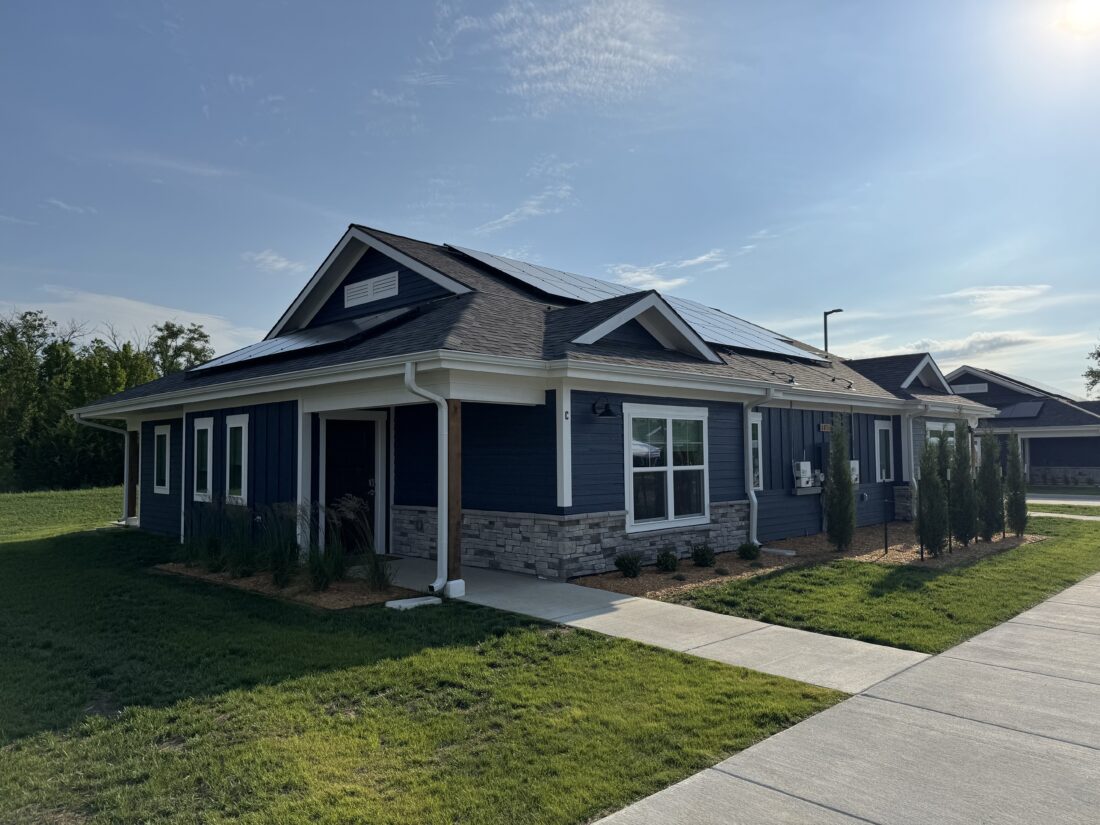
photo by: Josie Heimsoth/Journal-World
A duplex at DCCCA’s new transitional housing development, “Hope Rising.”
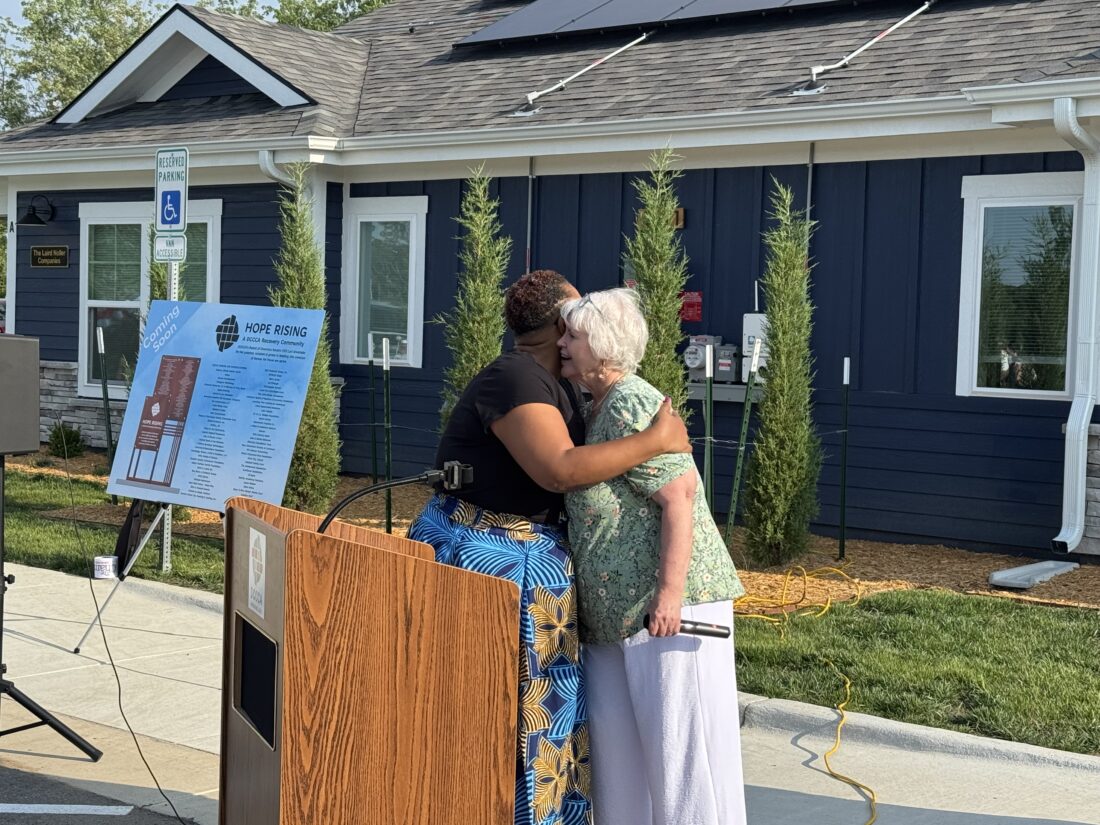
photo by: Josie Heimsoth/Journal-World
City Commissioner Amber Sellers hugs DCCCA’s CEO Lori Alvarado at the open house for DCCCA’s new transitional housing development on Thursday, June 4, 2026.
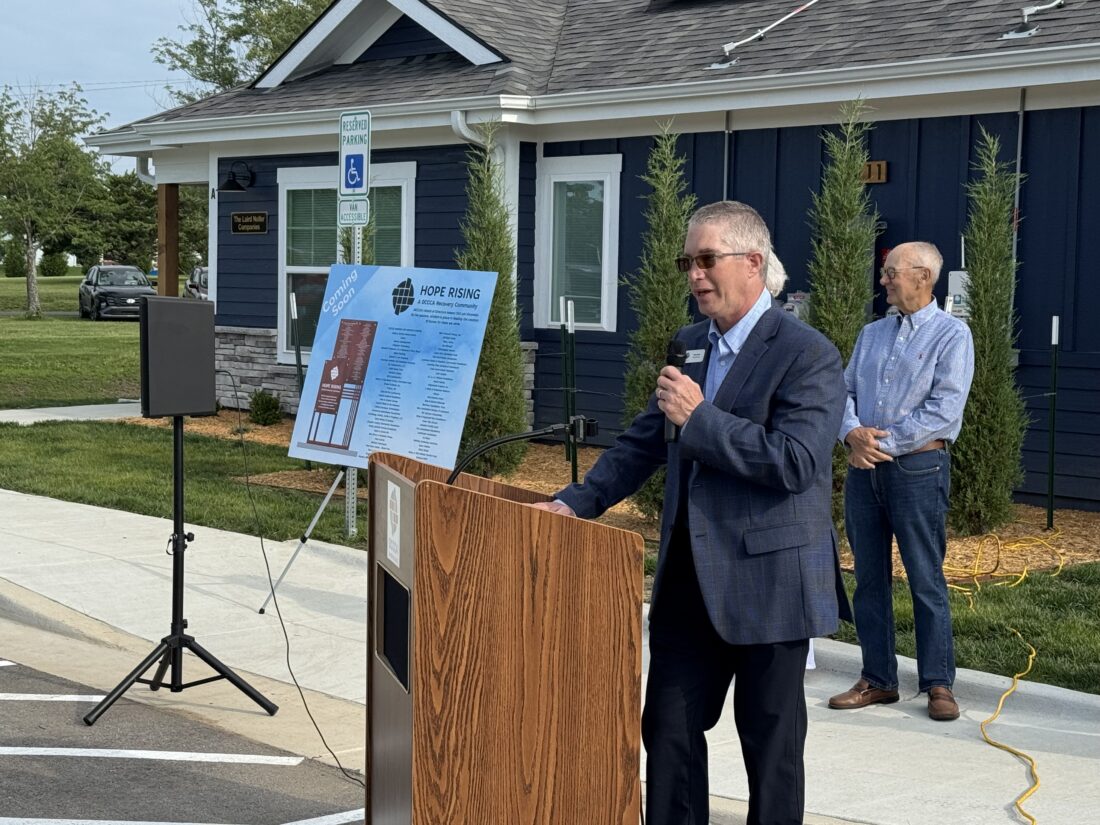
photo by: Josie Heimsoth/Journal-World
Mike Malm, president of DCCCA’s board of directors, speaks on Thursday, June 4, 2026.
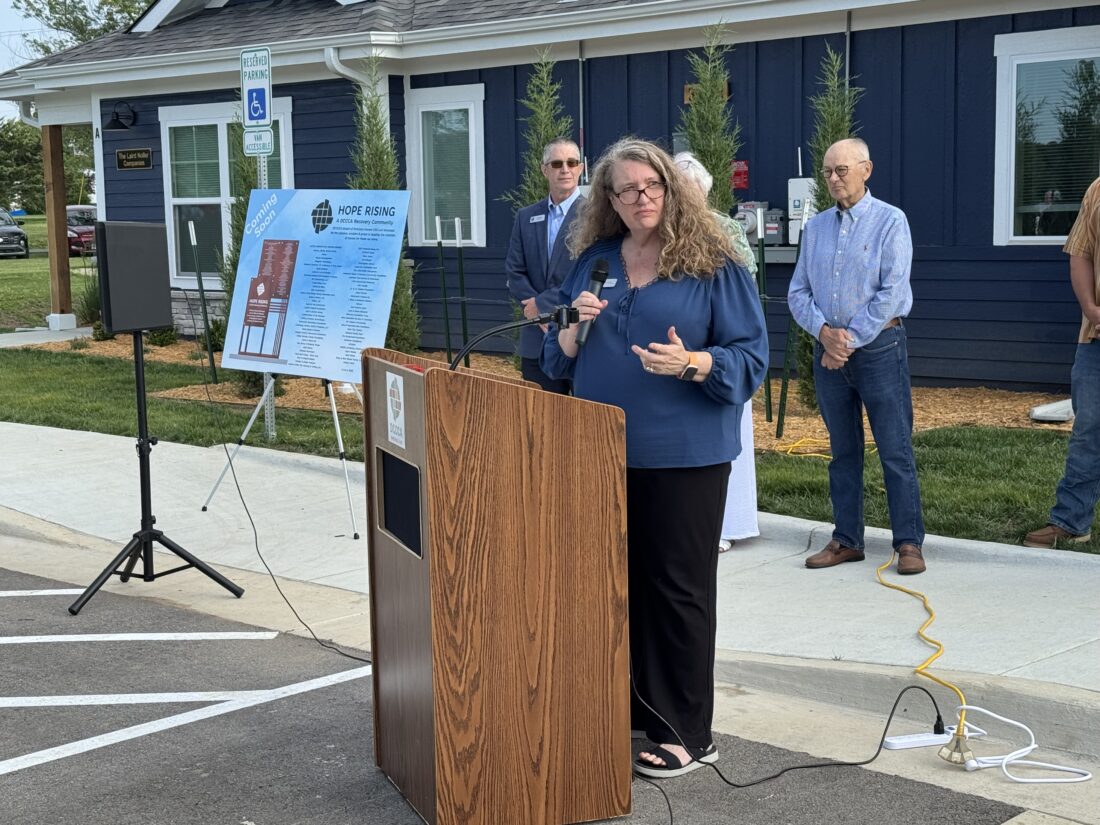
photo by: Josie Heimsoth/Journal-World
Kim Freese, chief behavioral health officer at DCCCA, speaks on Thursday, June 4, 2026.
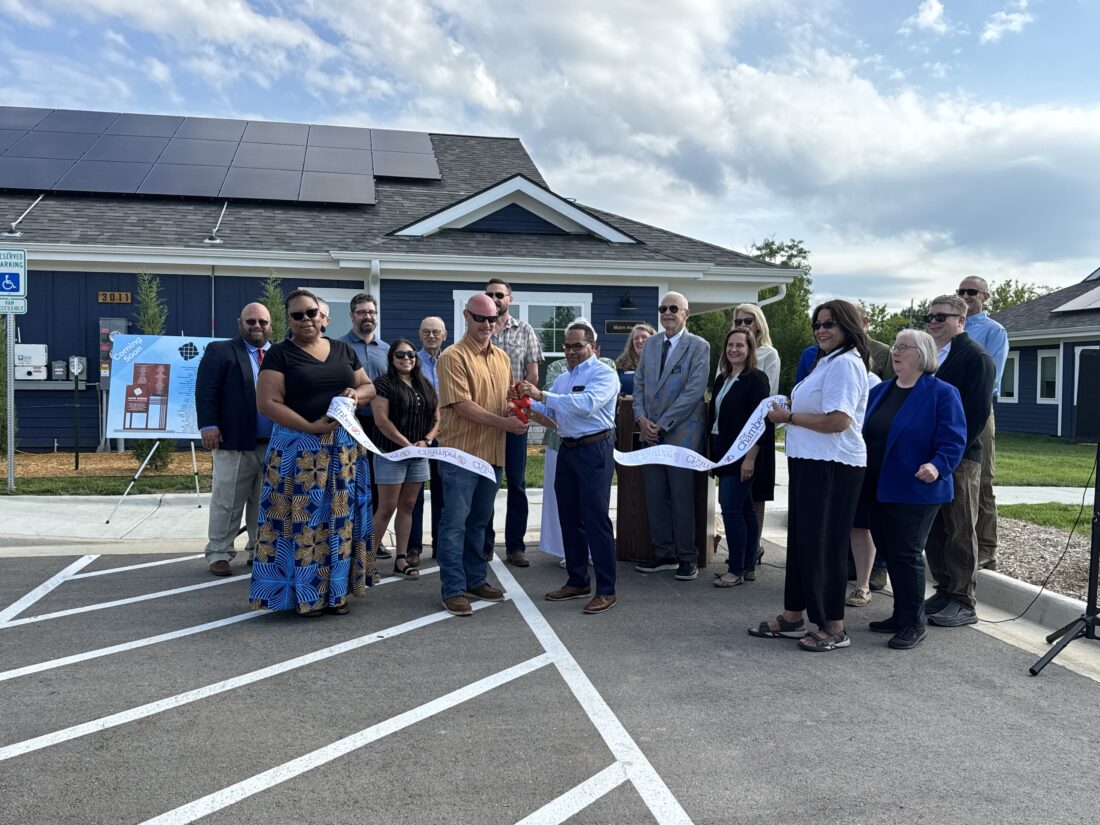
photo by: Josie Heimsoth/Journal-World
DCCCA board members and staff along with city and county officials participate in a ribbon cutting ceremony for DCCCA’s new transitional housing development on Thursday, June 4, 2026.
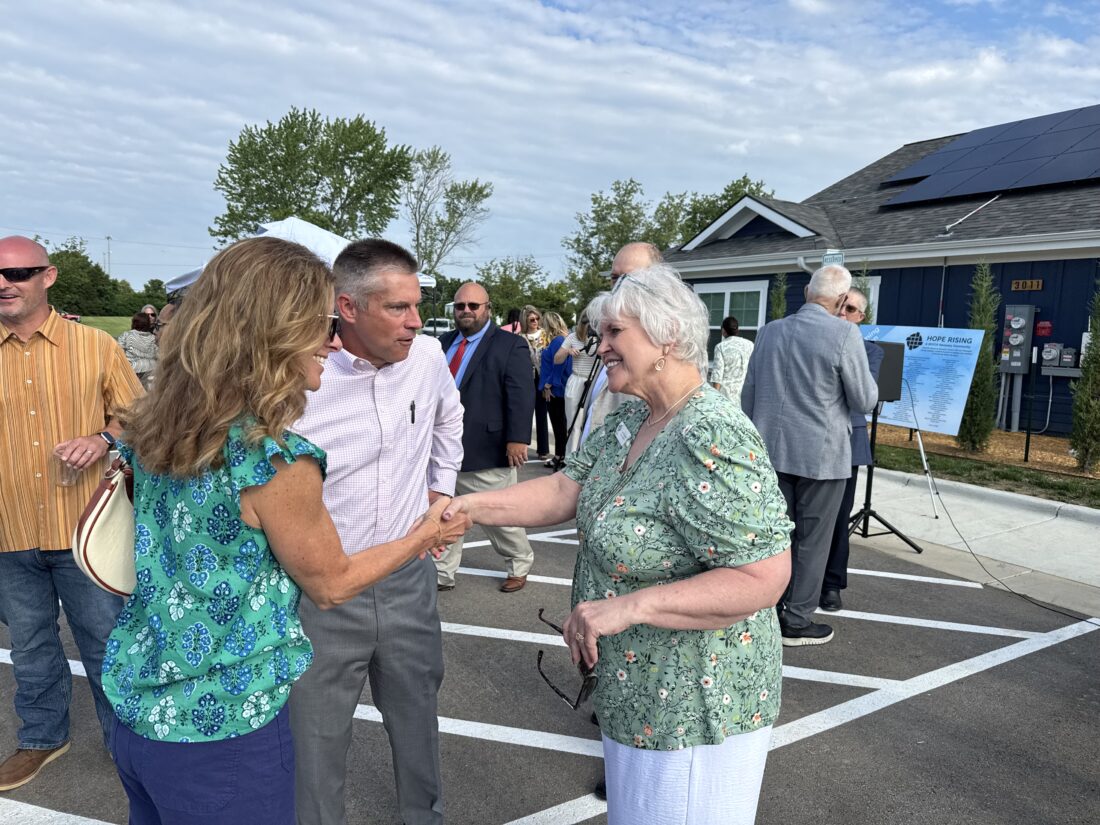
photo by: Josie Heimsoth/Journal-World
DCCCA CEO Lori Alvarado shakes hands with a community member at the open house for DCCCA’s new transitional housing development on Thursday, June 4, 2026.
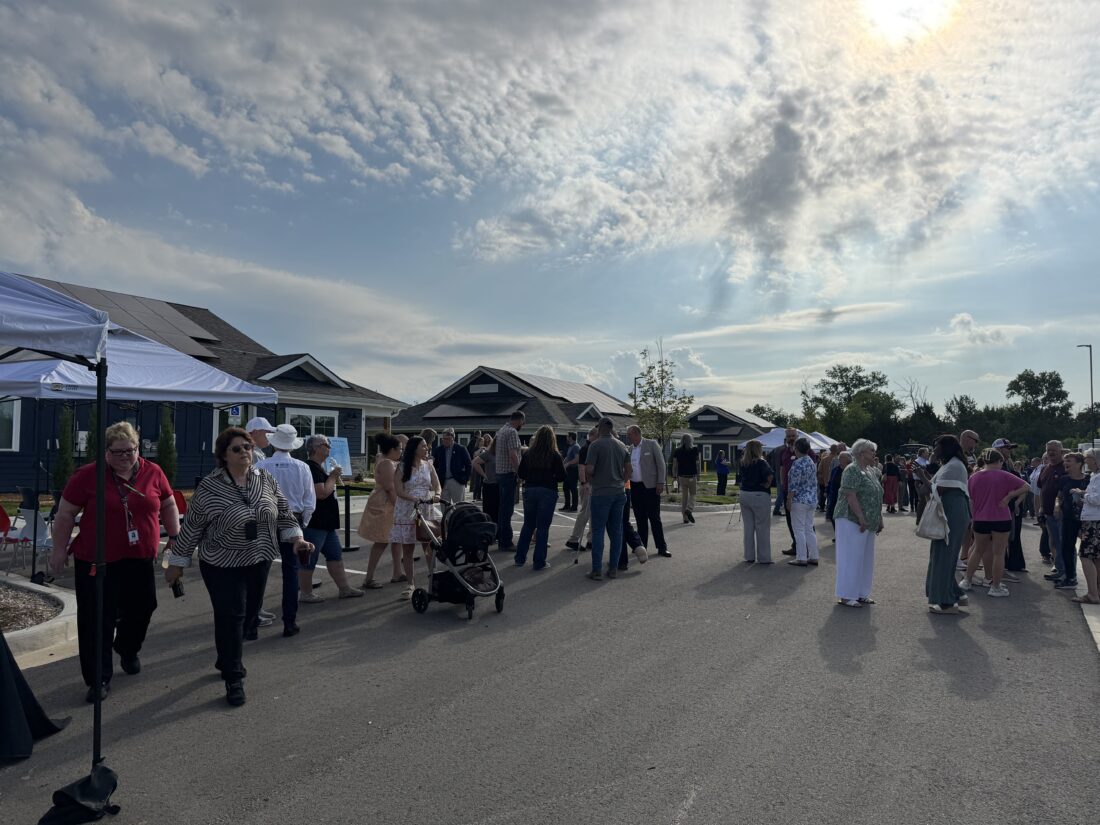
photo by: Josie Heimsoth/Journal-World
Community members attend an open house and ribbon cutting ceremony for DCCCA’s new transitional housing development on Thursday, June 4, 2026.
Other News
‘This is for all of us’: Midco Prairie, an oasis of native plants in downtown Lawrence, opens to the public
Douglas County commissioners express interest in fireworks sales dates that include a weekend

Douglas County commissioners to discuss whether to increase the number of days fireworks can be sold in the county
Lawrence’s first bike lanes with physical barriers are installed on Ninth Street
Data center company plans up to $1,000 a year in tax, utility credits for De Soto households