

Racial disparities, jail population on Criminal Justice Coordinating Council’s radar for 2023
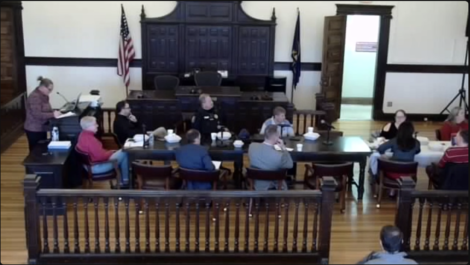
photo by: Douglas County
The Douglas County Criminal Justice Coordinating Council heard some suggestions for its 2023 work plan during its Tuesday, Feb. 14, 2023 meeting.
The Douglas County Criminal Justice Coordinating Council hasn’t set a specific agenda for the coming year, but it’s likely that it will tackle instituting a jail review process and reducing failures of defendants to appear in court, among several other issues.
Katy Fitzgerald, the county’s criminal justice coordinator, talked through her suggestions for the CJCC’s work plan for 2023 during the council’s meeting on Tuesday. She told council members she was looking to them to take the lead on specifying priorities. The group will decide how to move forward at its March meeting.
Some of the ideas Fitzgerald shared earlier this week included instituting a regular jail review process, improving court appearances to cut down on failure-to-appear rates and implementing alternative responses to probation violations. Those all relate to one of the CJCC’s most recent meeting topics — a study of bookings into the Douglas County Jail.
“We talked in the fall about trying to implement a regular jail review process, and I think it’s important that we think about revisiting this,” Fitzgerald told the group. “… I would encourage people to think about how can we maximize or utilize the resources we currently have to facilitate that in a meaningful way.”
CJCC chair Pam Weigand added that she hoped the group would, in particular, take a deeper dive into the data about what’s causing probation violations, which she said were a big contributor to jail populations generally.
Most of the ideas under consideration will probably need ample data collection to guide the next steps, Fitzgerald said. Others, such as understanding competency restoration, may need even further background work. Competency restoration is the process used when a defendant is found by a court to be incompetent to stand trial, typically due to an active mental illness or intellectual disability; “restoration” of competency must occur before the legal process can continue. Fitzgerald said she and the county’s director of behavioral health projects, Bob Tryanski, have already begun exploring how the restoration process affects the jail population as inmates often wait lengthy periods to have competency restored at state hospitals.
The jail study also found some racial disparities that suggested that law enforcement officers are more frequently arresting Black people relative to the general population. The CJCC’s work on that topic will continue, Fitzgerald said. That includes continuing to collect traffic stop data from local law enforcement agencies.
“This is a conversation that I’ve had with other community leaders and also with the board of county commissioners — this community needs larger conversations about race and equity that are larger than just the Criminal Justice Coordinating Council,” Douglas County Administrator Sarah Plinsky said at Tuesday’s meeting. “How do we do that as a community? How do we convene those conversations? How do we continue them? How do we continue to make progress in this space, all at the same time not necessarily taking the foot off the gas in terms of the data we’re collecting and the advancements we’re trying to make?”
Fitzgerald said she also wanted the group to think about how it could align with other community efforts that overlap with improving the community’s criminal justice system, such as agencies that tackle affordable housing or public health issues.
Other News

‘One of a kind’: Sale at the Lawrence Arts Center will find new homes for late musician’s unique custom guitars

Go, See, Do: KU homecoming, Halloween happenings and other events

Student-run coffee shop opens at Community Connections at Pinckney, teacher receives surprise $1,000 award

‘This is for all of us’: Midco Prairie, an oasis of native plants in downtown Lawrence, opens to the public
Douglas County commissioners express interest in fireworks sales dates that include a weekend
