Treatment and Recovery Center set to open soon; dedication and open house to mark the occasion
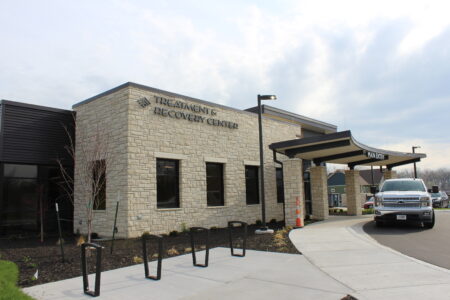
photo by: Austin Hornbostel/Journal-World
The Treatment and Recovery Center, located on the Treatment and Recovery Campus of Douglas County at 1000 W. Second St., is pictured on Friday, April 15, 2022.
Douglas County’s new behavioral health crisis center is set to open this summer after years in the making.
The Treatment and Recovery Center, located at 1000 W. Second St. on the Treatment and Recovery Campus of Douglas County, is designed to provide people experiencing a mental health crisis with immediate access to care and connect people with community resources that will put them on a path to recovery. The occasion will be marked with a dedication and ribbon-cutting ceremony at 5:30 p.m. Thursday, June 23, followed by an open house until 7 p.m.
The dedication will include brief remarks from a number of community leaders: the center’s executive director, Dr. George Thompson; Bert Nash Community Mental Health Center CEO Patrick Schmitz; LMH Health President and CEO Russ Johnson; Douglas County Commissioner Shannon Reid; and Kansas Department for Aging and Disability Services Secretary Laura Howard.
“When we or our loved ones are experiencing a crisis, especially a psychiatric emergency, we require the support of people who know what they are doing and who are compassionate and understanding in doing it,” Thompson said in a press release. “Our team aims to be trustworthy and competent companions for those who need our services. We want them to leave our facility with their hope and well-being restored and with the support essential to moving forward with their lives.”
The more than 20,000-square-foot facility is the final piece of the Treatment and Recovery Campus of Douglas County, joining two supportive housing facilities — Transitions and The Cottages at Green Lake — that were completed in 2021. The center checks in at an estimated cost of $10.6 million, which will be funded through a variety of resources, including a quarter-cent sales tax approved by voters in November of 2018.
Other News
RJ Mitte, ‘Breaking Bad’ actor and disability rights champion, dies at 34
Clinton State Park and other state parks will increase overnight camping, vehicle permit fees starting next month
‘No day is like the other here’: Students from Lawrence’s German sister city discover football, new foods and new friends on exchange
GCSAA celebrates 100 years with new plaza and statue honoring its founder and first president

Go, See, Do: Library book sale, candidate forum and more