Douglas County commissioners brace for challenges preparing 2027 budget as revenue growth slows
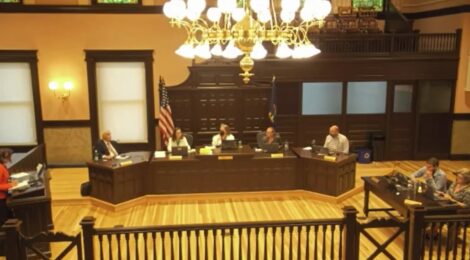
photo by: YouTube screenshot
Douglas County commissioners met on Wednesday, May 6, 2026.
Douglas County commissioners say slowing revenue growth could make the 2027 budget especially difficult and asked staff to look for where there can be cuts.
On Wednesday, county commissioners were given a preview of what to expect for the 2027 budget. Historically, county staff have prepared a flat mill levy – also known as a property tax rate – in proposed budgets to commissioners, and Commissioner Shannon Reid said she thought that’s what the county should continue to do for the proposed 2027 budget.
This doesn’t mean the County Commission is wanting a flat mill levy for 2027, though. Commissioners have actually lowered the mill levy by a total of 6.7 mills over four years. One mill is one dollar per $1,000 assessed value.
“I think having staff start at a flat mill levy and maintaining services as they are and with that, (and) seeing what room of growth exists,” Reid said. ” … I think it is most helpful for staff to start there.”
Commissioner Karen Willey said she thought the flat mill levy was helpful, and also when staff identified areas that could be cut.
As the Journal-World reported, even though Douglas County’s assessed property values have significantly increased over the past decade, averaging an increase of 6.8%, the most recent projections show growth of about 4% for 2026. That’s the lowest rate since 2021.
“Based on the data we’re given today, this is a significant decrease in our valuations,” Commissioner Patrick Kelly said. “I was trying to think back to past time on the Commission where we saw such a low increase.”
Kelly said he was concerned that in order to meet all of the needs in the community, cuts are likely to be necessary, especially as other factors such as the cost of living and fuel is increasing.
“I want you to prepare a flat mill levy, and I want you to be thinking about what cuts we might need to make,” Kelly said. “Because at these levels, I think it’s going to be hard just with the overall costs that we’re having.”
“I’m expecting this budget time to be tough,” Kelly said.
Major revenue sources in the county are also showing a pattern of stabilization after several years of more volatile growth. The county’s 1% general sales tax has increased over the past decade but has largely leveled off since about 2025, with only some growth expected going forward. Investment income has also shifted. After a sharp increase beginning in 2023 — when earnings nearly doubled from about $4.6 million to over $9 million — projections for 2026 and 2027 show returns leveling off at roughly $6.9 to $7 million annually.
In addition, the behavioral health fund — supported by a quarter-cent sales tax approved in 2018 — has helped fund the county’s Treatment & Recovery Center and other behavioral health services. Revenue from the tax grew steadily to about $6.6 million to $6.7 million annually by 2023, but that growth has since leveled off while annual operating costs have risen above $11 million. As a result, the county has relied on property tax support since 2024 to cover the gap.
Finance Manager Brooke Sauer said that currently, the county has received about 44 supplemental budget requests so far, totaling in $6.9 million. These requests are for additional funding outside baseline budgets for county departments and community partner organizations. She said around $4.9 million could be covered with the behavioral health sales tax.
“I don’t think that we will be looking at supporting a lot of supplemental requests this year,” Willey said. “I don’t see us being able to do that.”
County Administrator Sarah Plinsky told commissioners that over the last several years, commissioners have had the privilege to expand services in the community at a level that is unprecedented while lowering the mill levy.
“I think those days are over,” Plinsky said.
Budget hearings for the Douglas County 2027 budget are anticipated for July 6-9 with deliberations on July 10-15.
Other News
Douglas County commissioners discuss tracking results of awarded funding to community partners

Baldwin High already has won $25K and is competing for $1M through national sports program

On sister city visit, delegates from Hiratsuka, Japan, see Lawrence’s friendship firsthand
U.S. Sen. Roger Marshall faces Democratic, Libertarian challengers in general election

Incumbent Douglas County commissioner and newcomer challenger face off for District 5 seat