Construction on Wakarusa Drive to resume; city manager says KDOT’s secretary has apologized for delay
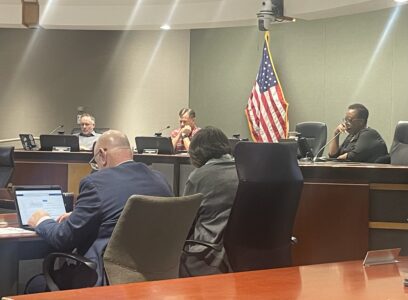
photo by: Sylas May/Journal-World
The Lawrence City Commission meets on Tuesday, Oct. 6, 2026, at City Hall.
Construction on Wakarusa Drive is set to resume Wednesday after a delay caused by utility conflicts, and the Kansas Department of Transportation has apologized to the city about the difficulties the closure of that roadway has caused.
That’s what City Manager Majed Al-Ghafry told the Lawrence City Commission on Tuesday night. He said he’d spoken with KDOT Secretary Calvin Reed about the project’s next steps and how the city and KDOT could work together more closely on it.
“He really apologized to us about that whole delay,” Al-Ghafry said.
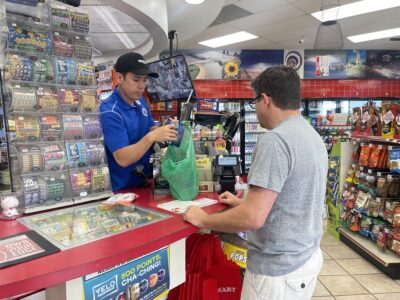
The closure started in August as part of KDOT’s ongoing reconstruction of the South Lawrence Trafficway. KDOT closed a section of Wakarusa Drive just south of the intersection of Clinton and Wakarusa and just north of the entrance to the shopping center that houses Miller Mart and a handful of other businesses. But then KDOT encountered an unforeseen problem with utilities, and it had to redesign the project to avoid that conflict, meaning the road remained torn up with no work happening for weeks.
That’s hurt the Miller Mart gas station and other businesses in the shopping center nearby, because people have to detour through the neighborhood to get to them, rather than being able to access them directly from the busy intersection.
As the Journal-World reported, the city recently put up its own signage for the businesses, something that KDOT doesn’t normally do and that the business owners were puzzled by the lack of. Moving forward, Al-Ghafry said, the city will be communicating with KDOT’s marketing and information staff.
It will also be collaborating with KDOT ahead of the project’s second and third phases. There have been changes to those, too, Al-Ghafry said. Originally, as the Journal-World reported, those were expected to take place this fall and winter, and to close the street just south of the entrance to the shopping center. But Al-Ghafry said Tuesday that they were now expected to be delayed “until probably the end of 2027.”
Vice Mayor Mike Courtney asked about how common conflicts with buried utilities are. Al-Ghafry, who has a background in public engineering, said that utilities are prevalent in the public right-of-way, and that multiple lines might be buried beneath a project site, using a common trench. And Municipal Services and Operations Director Melissa Sieben added that for older ones, documentation might be difficult to find.
“Stuff that’s been there a long time may not have those electronic records that we all love so much,” Sieben said. She said that even some large projects from the ’70s and ’80s, like the water feed from Clinton Lake, hadn’t been appropriately documented at the time.
While she didn’t say which city utility lines specifically were involved at the Wakarusa site, she did say that gas lines from Black Hills were there.
Courtney also wanted to recognize those in the community who wanted to help the businesses affected by the construction.
He said there had been “a ton of people” advocating for businesses there: “You even see places like Sandwich Bowl advocating for Auntie Em’s,” a deli whose owner, Hazim Alexander, told the Journal-World he’d lost 70% of his business since the closure began.
“That little area’s in a tough situation,” Courtney said, “and a lot of people are going up there to get food or buy gas.”
In other business, the commission:
• Authorized city staff to move ahead with a $26 million bond issuance to fund water and sewer projects in Lawrence’s Capital Improvement Plan. The bonds are revenue bonds, city Finance Director Rachelle Mathews told the commission, meaning they’re paid for by utility revenues, not through taxes.
Before its 4-0 vote (Commissioner Kristine Polian was absent), the commission had questions about conditions on the bond market. Khalen Dwyer of municipal advisory firm Columbia Capital Management told the commission that bond deals were still being done, even though “the past few weeks have certainly been interesting, to say the least.”
“Yes, there’s a market, and it is active,” Dwyer said, but interest rates are “meaningfully higher” than a few weeks ago.
The bonds will be used to fund projects already approved in the city’s Capital Improvement Plan, such as improvements to pump stations, water storage and the city’s water and wastewater treatment plants. But they won’t be used for refinancing debt, Mathews said; the meeting’s agenda materials had said otherwise, but she said that was a “clerical error.”
• Heard a report on pre-approved housing plans. As the Journal-World reported, the city is developing a pilot program to connect builders and property owners with ready-to-use construction plans for single-family homes, duplexes and other dwellings that have already gone through the necessary city reviews.
Planning and Development Services Director Jeff Crick said this program “truly is a pilot.” He said that pre-approved plans can be “kind of a two-edged sword”: on one hand, they really are pre-approved and can get started more quickly, but on the other hand, because of their uniformity, “there’s a little bit of character lost.”
Al-Ghafry said that the program, when implemented, could be “a really helpful thing to move forward with our housing stock.” And Mayor Brad Finkeldei thought it was “worth looking into.”
“It’s a great project, and I’m excited about it,” Finkeldei said.
City Government
Construction on Wakarusa Drive to resume; city manager says KDOT’s secretary has apologized for delay
Evacuation drill planned Tuesday at Lawrence City Hall

Bond issue for water and sewer projects, bike plan, Wakarusa Drive update on Lawrence City Commission’s agenda
Opinion: Environmentally conscious Lawrence is not focused on the biggest problem with electric vehicles
Locust Street apartments, Holcom housing development among this year’s applicants for $700K in Affordable Housing Trust Fund money