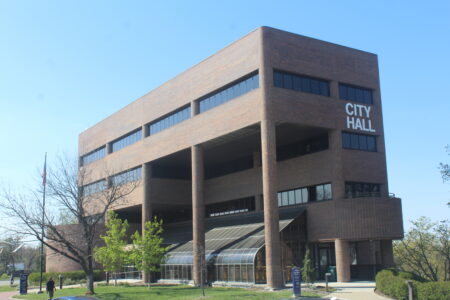
During new demolition moratorium, University Place hopes to strengthen protections for its older homes
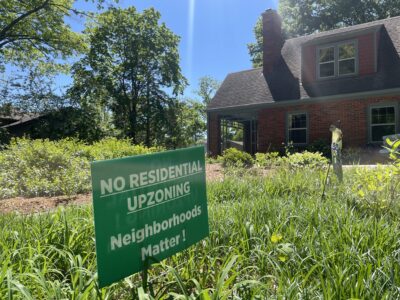
photo by: Sylas May/Journal-World
A sign speaking out against land use changes is pictured in the University Place Neighborhood on Wednesday, May 6, 2026.
For years now, residents of University Place have been afraid of losing their neighborhood’s history. And earlier this year, Pam Burkhead said, that fear became more real than ever.
The neighborhood to the southeast of the University of Kansas campus was worried that Lawrence’s new land development code would let potentially historic homes be torn down and dense new developments be built in their place. So the neighborhood association sought – and got – a pause on demolitions in February 2025, which would give them time to survey the area’s properties and make a case for historic preservation status.
“We have one of those true old-fashioned neighborhoods, where we still have July Fourth parties, we still have a Halloween activity, we still do things for our neighborhood and have meetings and such,” Burkhead, vice president of the University Place Neighborhood Association, told the Journal-World on Wednesday. “And when you start tearing those homes down … you lose that neighborhood.”
The pause expired earlier this year, she said.
And, within weeks, a home in University Place had been torn down.
“Demolition began less than 2 weeks after the demo moratorium ended,” neighborhood association President Mandy Enfield said of the home at 1812 Illinois St. in a letter to the City Commission urging them to impose another pause on demolition permits. And on Tuesday night, the City Commission did, in fact, vote in favor of a new moratorium, which would last through Nov. 1.
Burkhead said the demolition of the 1812 Illinois house was a “real shocker,” not just because it may have contributed to the neighborhood’s historic value, but also because of what’s replacing it – a three-story duplex development in a block of single-story homes. She said this would be more expensive for tenants to rent than the existing rental homes in the neighborhood, so “you’re not going to make affordable housing,” and noted that University Place was already dense as it is.
“We originally talked to planning commissioners and such and got the impression that you would not be able to build that tall,” she said. “… But obviously, they can, or at least they can today; we’re going to work on that.”
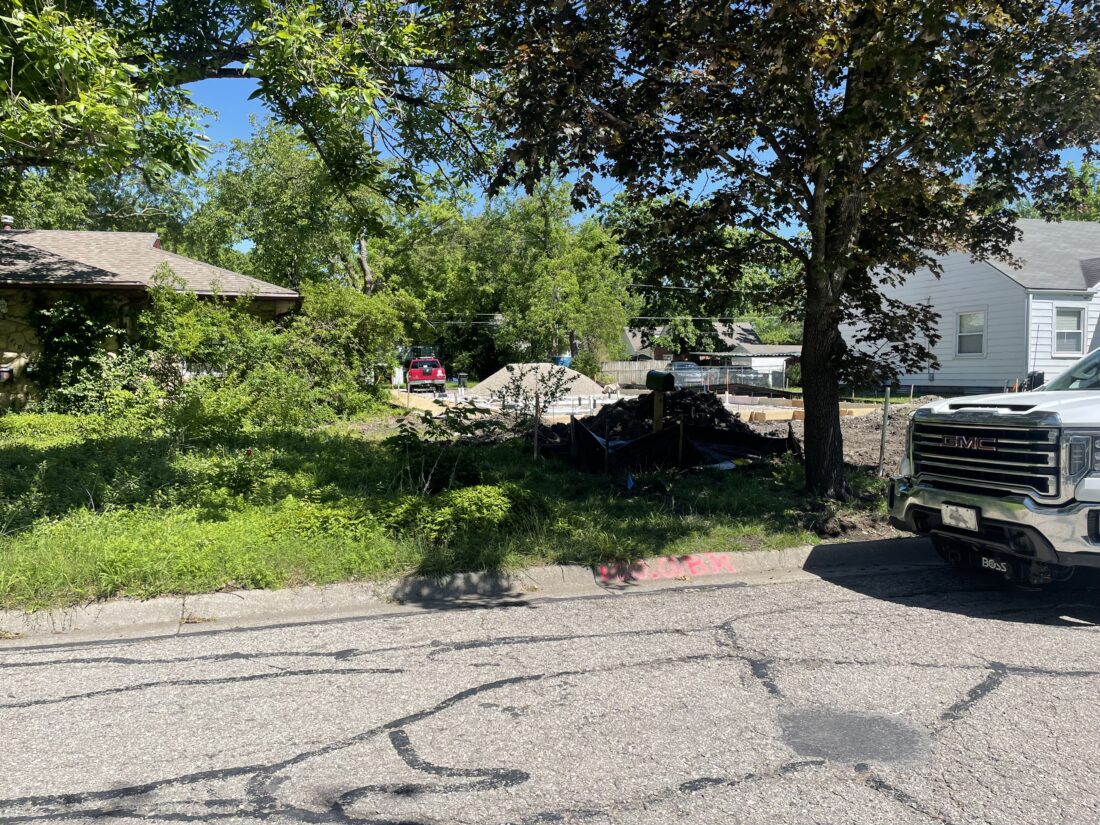
photo by: Sylas May/Journal-World
A site where a house was demolished in the 1800 block of Illinois Street is pictured on Wednesday, May 6, 2026.
The neighborhood has a few tools it hopes to use for that. One of them is the historic preservation process, and Burkhead said the work to get historic protections for as many homes in University Place as possible is ongoing.
The first step was the survey that motivated the original demolition moratorium. It was done by Hernly Associates, a local architecture firm that does historic preservation work.
“The house survey was fantastic,” Burkhead said. It covered more than 200 buildings that were at least 50 years old, and came up with two recommendations for potential historic districts. The larger of these would be on the east side of University Place and would have 109 properties, of which 53 are “potentially contributing” to the district’s historic status.
According to the survey report, the most common kind of home in the survey area is craftsman or bungalow-style, and many of these were built from the 1910s through the 1930s. However, there are some other styles, including homes in the classical and colonial revival styles, several more minimalist modern homes, an Italian Renaissance-style home, and the Italianate Akers House at 1645 Louisiana St., which is already listed on the National Register of Historic Places because of its architecture.
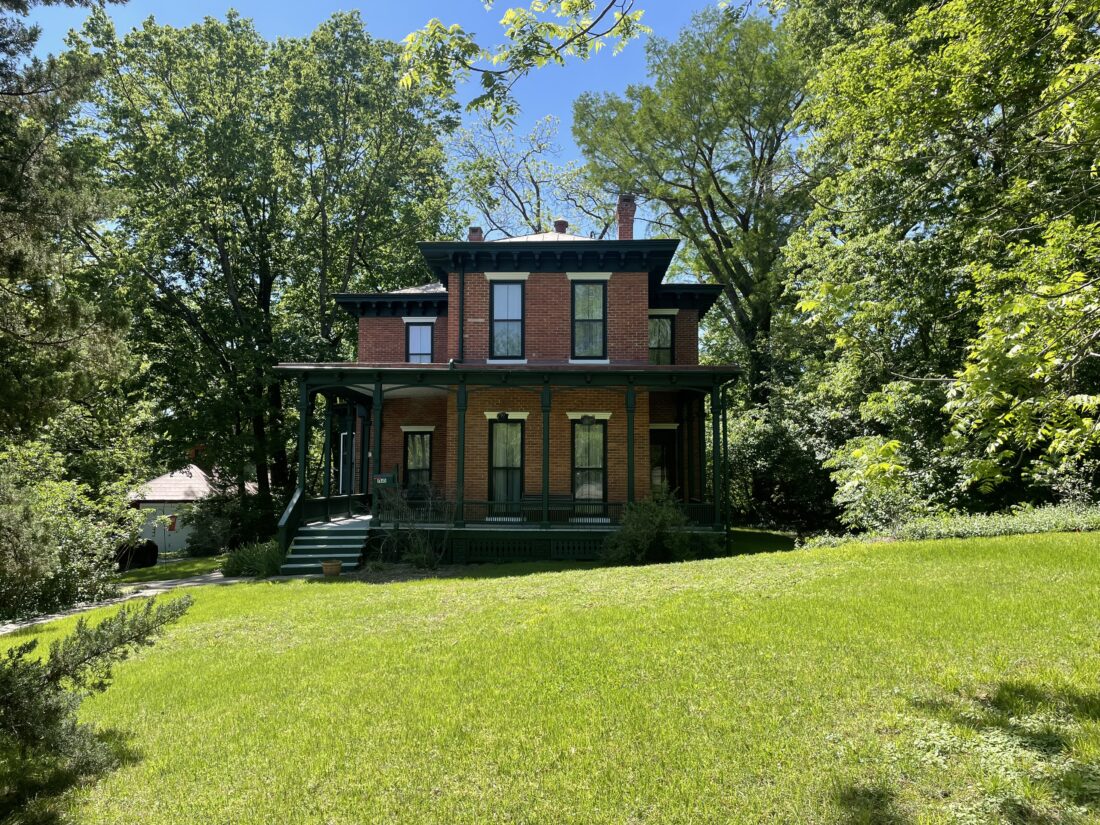
photo by: Sylas May/Journal-World
The Italianate home known as the Akers House in University Place is already on the National Register of Historic Places. It is pictured on May 6, 2026.
But the Hernly survey’s area isn’t all the neighborhood association wants to protect. Burkhead said the association wants to file for historic status using different criteria than the survey anticipated, which they hope will let them include more homes farther west.
“We want to expand,” she said.
The process of getting a historic designation takes a while and involves working with state authorities. Historic Resources Administrator Lynne Zollner told the City Commission on Tuesday that the process can take between 12 and 18 months.
The commission discussed whether the moratorium should be longer if University Place’s historic status probably wouldn’t be determined by November. But Mayor Brad Finkeldei said he believed it was best to let the application process begin and then revisit the issue later with a better idea of the area that was being considered.
“My theory was, get the application in, get a better definition of the area,” Finkeldei said Tuesday. Ultimately, the majority of the commission voted with him; Commissioner Amber Sellers was the lone dissenting vote.
For now, Zollner told the commission, there’s still work to be done to determine how a historic district might look.
“I do think there’s a historic district in University Place neighborhood,” she said. “I don’t know what it will look like boundary-wise at this time.”
Recently, the neighbors met with state historic preservation officials and gave them a draft of their research on the neighborhood’s history, “and so they’re looking at that to see what we have to do to beef that up,” Burkhead said. The State Historic Preservation Office is also reviewing each house on the survey individually, she said. They’re expecting it will take a while – “it’s a lot of houses.”
While the state is doing that, the neighborhood association will meet with Zollner and talk about the next steps for including more homes.
Historic status isn’t the only tool the neighborhood wants, though. Burkhead mentioned the possibility of a dedicated neighborhood plan, something she said University Place had been wanting for decades. And she also hopes to work with the city to get additional protections by tweaking the land development code itself. The Hernly survey suggested another potential measure to protect University Place’s character: a set of design guidelines for new construction like those in the Oread Neighborhood.
“We’re hoping to preserve this quaint-character neighborhood to stay as it is,” Burkhead said. “Because at some point, if Lawrence keeps tearing down their older neighborhoods, we’re not going to be so unique and we’re not going to be so welcoming, and we’re not going to be so unmistakably Lawrence because we’re so different.”
In her experience, this is an anxiety that people in other older neighborhoods share.
“Anybody in an older neighborhood anywhere around downtown or KU, we all have a little pit in our stomach,” she said. “Because every time a house comes on the market, we’re worried that someone could tear it down and build something like this and destroy our neighborhood.”
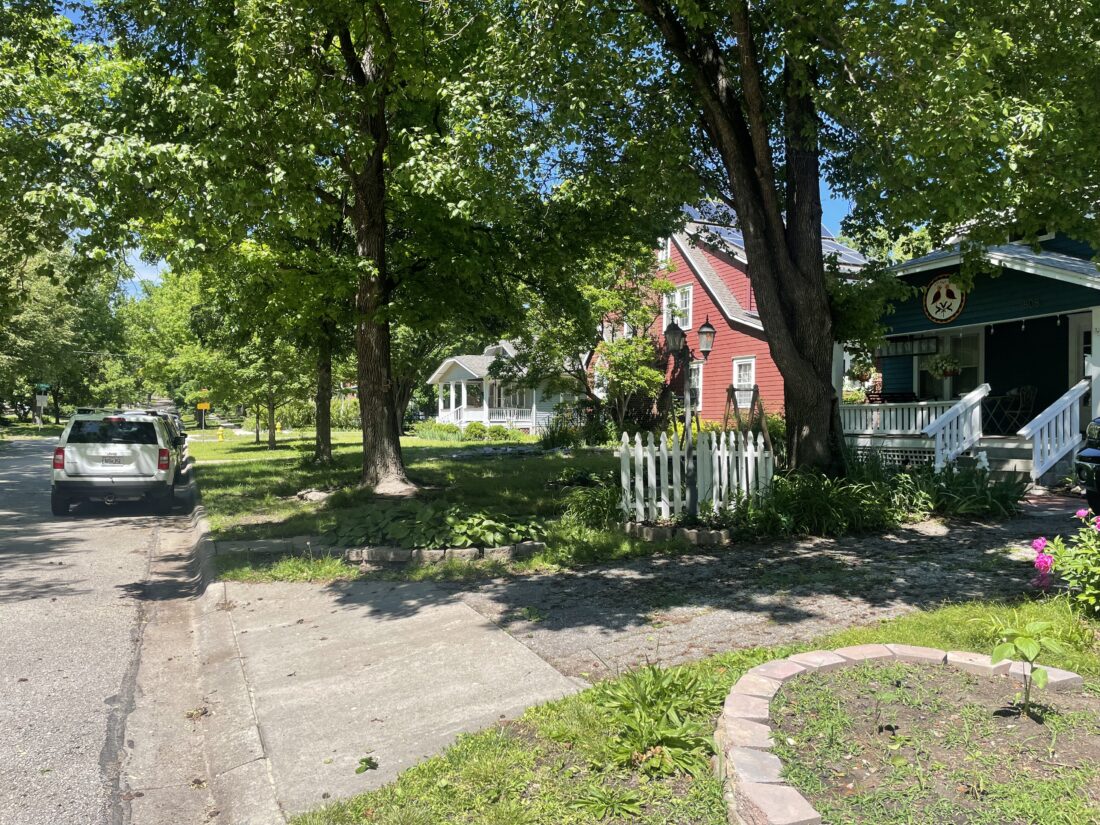
photo by: Sylas May/Journal-World
Homes in University Place Neighborhood are pictured on Wednesday, May 6, 2026.
City Government
Lawrence City Commission to weigh whether Costco should be included in STAR bond district
As they approve bikes plan, Lawrence city leaders ask about data collection, Kentucky and Tennessee streets
Lawrence city leaders want to toughen tobacco licensing rules ‘sooner than later’
Algerian government invites Mayor Brad Finkeldei, Lawrence delegation for a visit
Construction on Wakarusa Drive to resume; city manager says KDOT’s secretary has apologized for delay