Mowing at Prairie Park’s remnant prairie is part of a strategy to control noxious weeds; city, restoration team say it’s the least damaging option
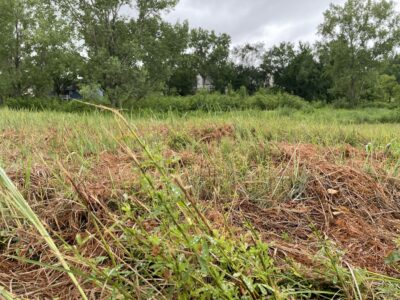
photo by: Sylas May/Journal-World
A mowed area of the prairie remnant at Prairie Park is pictured on Friday, June 26, 2026.
Recently, City of Lawrence workers mowed over parts of the remnant prairie at Prairie Park – but unlike when herbicide was sprayed on the prairie a few years ago, this wasn’t an error.
Rather, it was part of a strategy the city and Native Lands Restoration Collaborative are using to fight a hardy, invasive weed that is threatening the 5-acre remnant prairie. The weed is called Sericea lespedeza, and the city and Native Lands say this is the least damaging option for controlling it. And, although the strategy will involve an herbicide, it will be targeted at the weeds, not sprayed broadly over the whole prairie.
“The removal of Sericea Lespedeza, an invasive plant species that is classified as a noxious weed in Kansas, will not negatively impact the desired native plants in the prairie,” said city spokesperson Abby Bush Wilder in an email to the Journal-World. “In fact, if left untreated, the Sericea Lespedeza can spread quickly and outcompete native grasses and wildflowers, so addressing this in a strategic removal is critical.”
Courtney Masterson, executive director of Native Lands, said the weed spreads by both its root systems and its seeds, which can remain viable in the soil for more than 30 years. Because it’s not native and animals don’t eat it, and because of how many seeds it produces, it can easily outcompete native plants.
“Sericea is perennial, very drought tolerant and produces many seeds per plant, each year,” Masterson told the Journal-World via email. “Left unchecked, sericea will swiftly spread through native and non-native grasslands, creating monocultures that do not support diverse life.”
It takes multiple steps to get rid of the weeds. Now that the mowing is done, Masterson’s team will be able to go through and selectively treat just the weeds with herbicide.
“Our team will walk through the grasslands at Prairie Park and spot treat the invasive species, with special care to protect native plant species from damage,” she said. “Mowing the sericea short allows us to use a minimal amount of herbicide to achieve the goal and reduces collateral damage.”
Masterson thinks this treatment will need to be repeated in future years.
“Sericea is a significant invasive species in our area and ongoing management will be required, though the effort necessary to manage the species will lessen as the populations in Prairie Park shrink,” she said.
Both the city and Native Lands said mowing wouldn’t cause long-term harm to the prairie. Masterson said it was common to mow remnant prairies once a year to monitor for invasive species and woody plants, and that mowing, grazing, fire and other disturbances were often healthy for a prairie.
“Many native grassland plants are dependent on disturbances for survival,” she said.
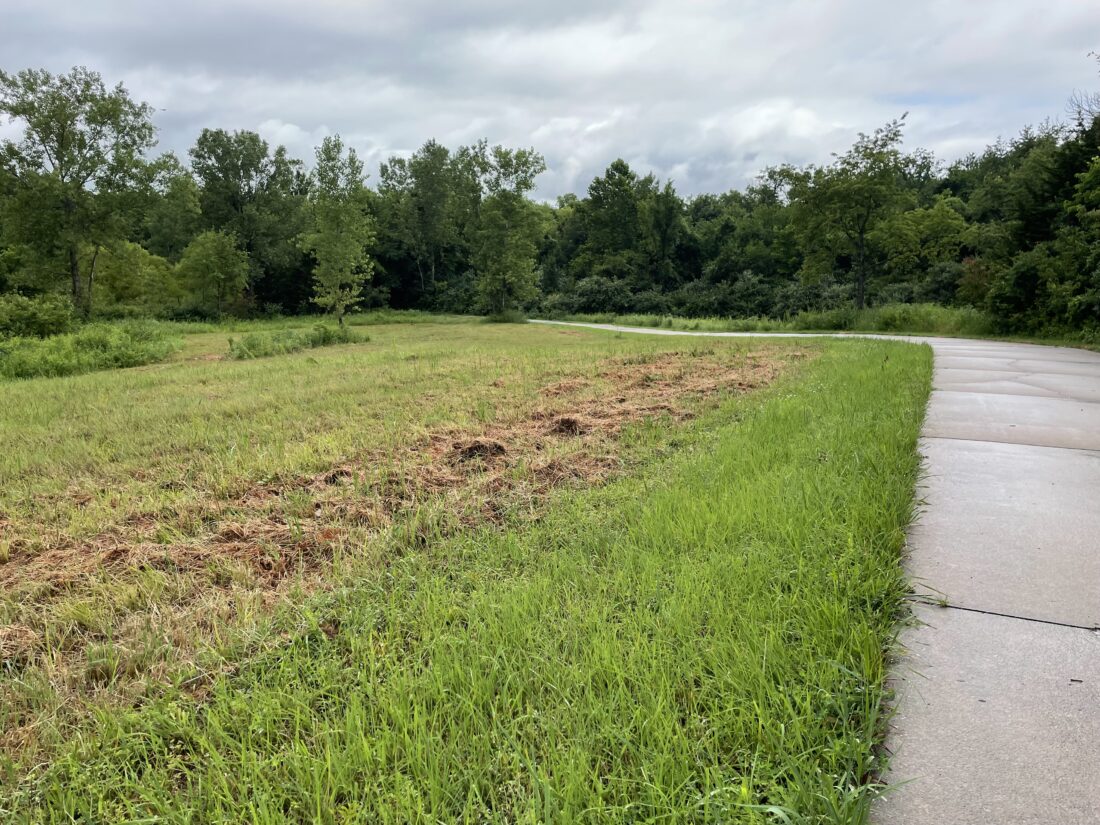
photo by: Sylas May/Journal-World
A mowed area of the prairie remnant at Prairie Park is pictured on Friday, June 26, 2026.
As for the herbicide application, Masterson and the city said that out of the options available to them, this was the one that would harm the native plants the least. The alternatives would be tilling, digging or smothering, and Masterson said those “are all likely to significantly harm native plant and animal species and may not achieve the management goals.”
“Unfortunately, Sericea Lespedeza must be managed with herbicide and mowing as soil disturbance and smothering would cause long term damage to the remnant prairie,” Bush Wilder said.
This application of herbicide will be deliberate and targeted, unlike an incident a few years ago when the city mistakenly sprayed the remnant prairie with a broad application of herbicide designed to treat hay fields.
That happened in 2023, and wildflowers and other native species began to wilt and brown days after the spraying. After residents of the Prairie Park Neighborhood and other community members expressed their anger and concern, the city’s parks department admitted that the herbicide had been applied in error.
Two growing seasons after the spraying, experts told Kansas Reflector there didn’t appear to be any permanent loss of plant species in the remnant prairie. But one naturalist Ken Lassman did tell them that the mix of plants on the prairie had changed, because the herbicide did not affect grasses but did reduce populations of broadleaf flowering plants.
The city said the recent mowing has sparked some public outcry, as well. In a Facebook post, it said that when the mowing began, “our team was met with anger and frustration. They had to leave the project and need to continue their work. We ask that all members of Team Lawrence are treated with dignity and respect.”
The Journal-World asked city staff for more details about what happened, including whether workers were threatened or whether people tried to interfere with their work. Bush Wilder did not provide any more information about what happened.
“The description is appropriate for what occurred,” Bush Wilder said.
Masterson said it was important that the public understood what was going on at the prairie, and that Native Lands would share updates through multiple channels, including on social media.
“The public will be informed when treatment begins, via signage on site and through outreach from our team,” she said.
And Bush Wilder said that Native Lands would be doing its best to respect the prairie and the people who value it.
“The Native Lands team will take every precaution to ensure the appropriate herbicide is applied thoughtfully and that their staff, park visitors, and the native landscapes they collectively care for are respected throughout the process,” she said.
City Government
Lawrence City Commission to weigh whether Costco should be included in STAR bond district
As they approve bikes plan, Lawrence city leaders ask about data collection, Kentucky and Tennessee streets
Lawrence city leaders want to toughen tobacco licensing rules ‘sooner than later’
Algerian government invites Mayor Brad Finkeldei, Lawrence delegation for a visit
Construction on Wakarusa Drive to resume; city manager says KDOT’s secretary has apologized for delay