Contamination in Lawrence’s recycling has risen to 17.5%, audit finds; that means city will continue paying more for processing
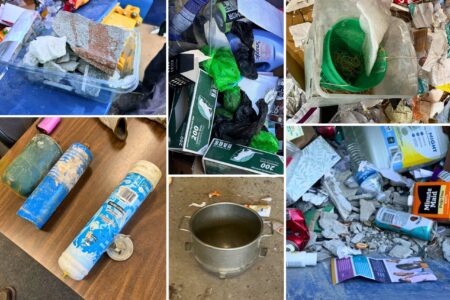
photo by: City of Lawrence
Contaminants found in the City of Lawrence's spring 2026 recycling audit are pictured in these undated photos.
Contamination in the City of Lawrence’s recycling has risen to more than 17%, a recent audit found, and the city will have to continue paying tens of thousands of dollars in surcharges to its recycling processor because of it.
The city announced the findings from its most recent recycling audit in a news release this week. The recycling audits happen twice a year, in spring and fall, and they determine how much the city will have to pay in surcharges to its recycling processor — currently Republic Services, which recently took over the landfill and recycling facilities formerly operated by Hamm. (The contract itself hasn’t changed with the new operator, as the Journal-World reported.)
According to a news release from the city, this year’s audit calculated the recycling contamination rate at 17.5%, which is up from 15.1% in last fall’s audit. It examined the contents of randomly selected residential recycling carts from around the city, about 33,600 pounds of materials in total, city spokesman Michael Leos told the Journal-World.
With this contamination rate, the city will still be paying surcharges to process its recycling. Leos told the Journal-World the base rate the city pays for recycling processing is $71.36 per ton of recyclables, but if its contamination rate is higher than 10%, it pays a surcharge of $7.50 per ton, and above 15% contamination it pays another $7.50 per ton surcharge. That means the city is currently paying — and will continue to pay — $86.36 per ton of recyclables.
Last year, 4,771 tons of recyclables from Lawrence were processed at the facility, Leos said. Using that rate, if the same amount were processed this year, the city would pay just over $412,000, $71,565 of which would be the surcharge.
Not all of the contamination is from what the city calls “pre-sort trash,” which is discovered and removed before the materials are sorted, according to the release. But the audit found more than 3,700 pounds of that.
The trash the audit found this year included food waste, “batteries, vape pens, propane and CO2 bottles, car parts, large chunks of concrete, dirty materials, yarn, VHS tapes, rope, large plastic tubs, metal pots, and other prohibited materials,” the release said. The yarn actually melted during the processing stage, the release said, and “became difficult to remove from the belts that move materials through the facility.”
In addition, the audit found things that might seem recyclable, but that can’t be accepted for sorting. That included 180 pounds of plastic straws and cutlery. It also included trash bags full of otherwise recyclable materials; the city’s website says materials should not be bagged.
To help reduce the contamination rate, the city is asking residents to check online to see what can go in their blue recycling carts before putting things in.
“The most important rule is simple: if you are not sure an item belongs in the blue cart, check first or leave it out,” the city’s release said. “Often, it is better for residents to throw away items they are unsure about instead of placing them in their blue cart.”
According to the city’s website, the items that can go in the recycling carts include aluminum and steel cans, glass bottles and jars, food and drink cartons, paper products, #1 through #7 plastic containers and cardboard boxes. The release said you should avoid putting recyclables inside of other recyclables and that all cardboard boxes should be flattened before going in the cart.
If you have questions about what’s recyclable and what’s not, the city has a directory on its website at lawrenceks.gov/swm/recycling. The release said the city is also working on a new search tool that will make it easier to find information on what to do with various materials. The city will share more information on that when it’s ready.
City Government
STAR Bond project is proposing $1.3B of development in Lawrence, including an arena geared toward ‘international cycling competitions’
Contamination in Lawrence’s recycling has risen to 17.5%, audit finds; that means city will continue paying more for processing
City of Lawrence seeking public feedback on its bike infrastructure plan

City to keep Community Building open through end of 2026; leaders want more data before deciding on 2027
City leaders approve incentive for 131-unit housing development near Wakarusa and Queens