Lawrence bus system’s app-based, Uber-like ‘microtransit’ service will launch next Wednesday

photo by: Rochelle Valverde
Residents board buses at the transit stop in the 700 block of Vermont Street on Aug. 18, 2022.
Starting next week, Lawrence residents in need of a late-night ride home will have another option to consider besides Uber and Lyft — and this one’s free.
Lawrence Transit’s new Uber-like “microtransit” option will be available next Wednesday, with hours running from 8 p.m. to 6 a.m. on weekdays and from 8 p.m. to midnight on Saturdays. Just like the existing ride share giants, people looking for an overnight ride in town will be able to book one through the “Lawrence Transit on Demand” app. In line with the city’s yearlong pilot program making buses free to ride in 2023, these rides won’t cost anything.
Rollout of the new app-based service is part of Lawrence Transit’s ongoing city bus route redesign process, which also includes the construction of a multimillion-dollar bus station at the corner of Bob Billings Parkway and Crestline Drive. While the new routes and the completion of the new station were recently delayed until January, implementing “Lawrence Transit on Demand” has continued as planned.
The service will expand its hours to Sundays at the start of the new year, coinciding with the other major transit developments. Night service on Saturdays will also be extended to the regular 8 p.m. to 6 a.m. schedule at that time.
The service does come with a couple of major differences from Uber and Lyft, Parking and Transit manager Adam Weigel told Lawrence’s Public Transit Advisory Committee at its Monday meeting — riders will be transported via transit vehicles such as buses, and they shouldn’t expect a private ride.
“This service will be a completely shared-ride service, so you won’t have the ability to say that you have to ride alone,” Weigel said. “You may very well take trips where no one else ends up sharing a ride with you, but general public service, it’s always allowed for trips to be shared.”
As an example, Weigel said if there’s another rider “generally on the way” to where someone’s headed, the bus may stop and pick up that additional passenger while heading toward a requested drop-off.
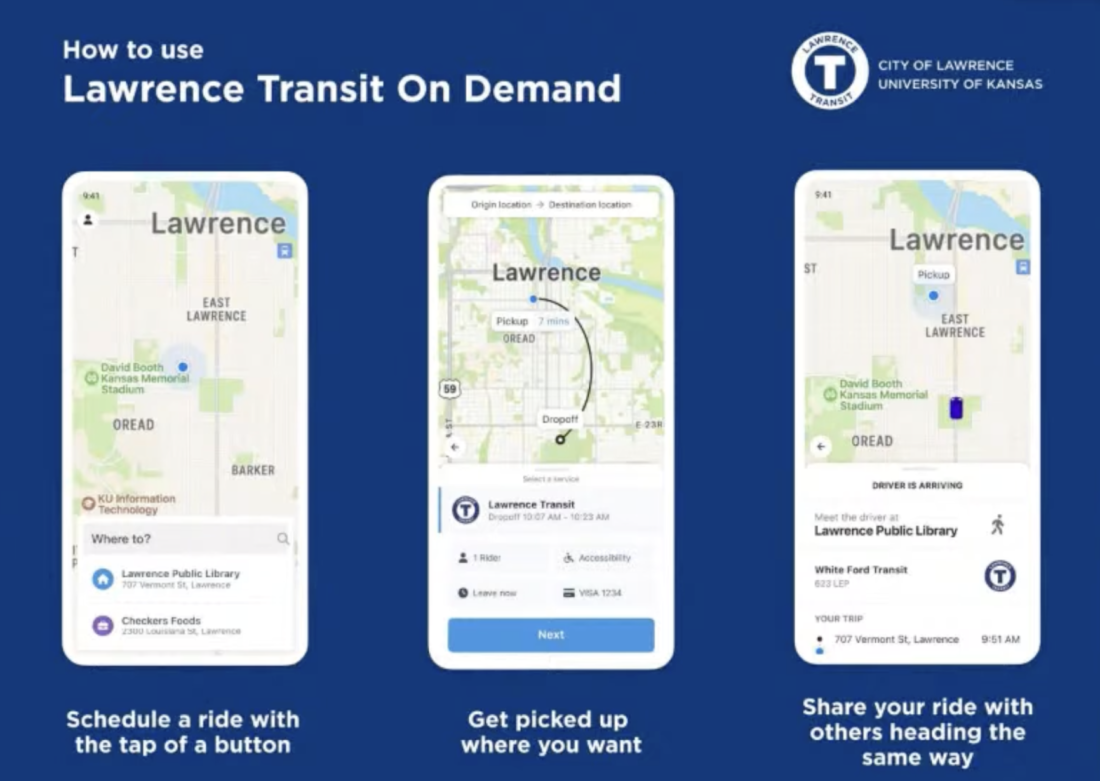
photo by: Lawrence Transit screenshot
The new “Lawrence Transit on Demand” service, an “uber-like” on-demand ride share option, will allow riders to schedule a ride via a dedicated app.
In part, the new app is the biggest difference compared with the city’s existing overnight shared ride service, Night Line, with the new name functionally serving as a rebrand. That service, too, has been operating most days of the week during the same hours since it launched back in 2013. But instead of through an app, riders have been calling in advance to schedule a trip and drivers have been picking them up at a designated location.
As it stands, Weigel said Night Line is used primarily by shift workers who start work hours before or after the regular daily bus route schedule, and the expectation is that group will continue using the service moving forward. The new opportunity lies in reaching people visiting bars or restaurants late at night who are in need of a safe ride home, he said.
“If you think about people getting safely home from bars or restaurants, if you think about other late-night trips where people haven’t planned ahead to be needing a trip, we expect that our vehicles will get some more activity with the new phone application available,” Weigel said.
Riders who want to use the service aren’t required to use the app, Weigel added. They can still schedule a ride up to five days in advance by making a call during regular business hours, just like the current arrangement. And riders can also schedule recurring trips, which Weigel said are prioritized over on-demand trips since they tend to be requests from people looking to make it to a work shift on time.
The software it takes to run the program is funded through June of 2027 thanks to a 2022 “Access, Innovation, Collaboration” grant from the Kansas Department of Transportation. The majority of the service costs — $124,000 — are covered by federal funds, with about $33,500 in local funds covering the rest.
Having those software costs funded for the next four years gives Lawrence Transit plenty of flexibility to budget appropriately for the future, Weigel said.
Weigel said the goal is to keep rider wait times low if at all possible, but that may be difficult to achieve if usage of the service gets too high.
“We certainly want to keep wait times at 15 or 20 minutes — no more than 20 minutes, hopefully — but if the use of this service skyrockets, people would experience higher wait times just because we essentially can only afford to have so many vehicles out at once,” Weigel said.
The University of Kansas also has a similar app-based service for students called SafeRide, which happens to be supported by the same company as the new Lawrence Transit app. SafeRide runs from 10 p.m. to 2:30 a.m. seven days a week — except during class breaks — and allows passengers to call for a ride home anywhere within city limits from the campus library, a bar or their workplace.
Other News
A student-run coffee shop will open at Community Connections at Pinckney next week
Douglas County commissioners to discuss proposed changes to funding agreements with community partners

RJ Mitte, ‘Breaking Bad’ actor and disability rights champion, dies at 34
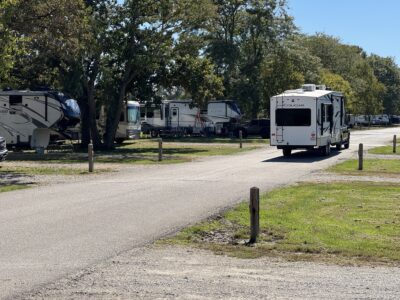
Clinton State Park and other state parks will increase overnight camping, vehicle permit fees starting next month
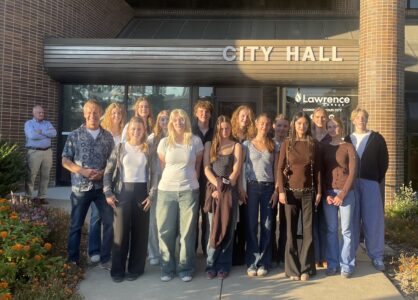
‘No day is like the other here’: Students from Lawrence’s German sister city discover football, new foods and new friends on exchange