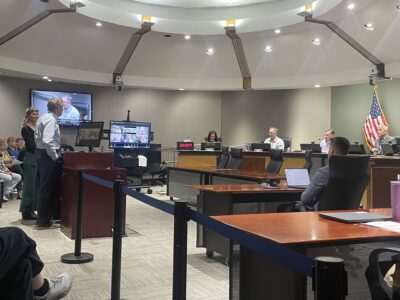
City leaders to consider postponing regular meetings of Community Police Review Board during complaint process review
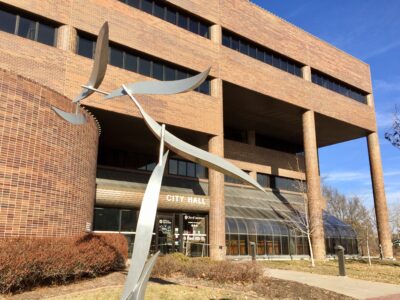
photo by: Rochelle Valverde/Journal-World
Lawrence City Hall, 6 E. Sixth St., is pictured on Jan. 31, 2023.
City leaders will soon consider suspending regular meetings of the Community Police Review Board until a work group considering the city’s police complaint process and other policing matters can recommend changes.
As part of its meeting Tuesday, the Lawrence City Commission will consider adopting a resolution to postpone review board meetings until the Community-Police Oversight Work Group completes its work. The review board, which under its current purview reviews only certain types of complaint appeals, will still convene if such an appeal is filed.
Assistant City Manager Casey Toomay states in a memo to the commission that city staff are recommending the change so that the work group, which includes two review board members, can focus on its task.
“To allow the members to focus on the important work of the Work Group, and to avoid over-extending the members who volunteer to serve in this capacity, we recommend postponing CPRB meetings until the Work Group completes its work and forwards its report to the City Commission,” Toomay states.
Accountability concerns regarding the city’s process for handling complaints against police date back several years, and the work of both the review board and the work group have been the subject of debate and delay since 2020.
At the urging of the Lawrence branch of the NAACP, the commission created the Community Police Review Board in 2018 following a long debate that included pushback from the local police union. The governing ordinance that was ultimately approved gave the board a limited scope of review. City leaders called for a review of the ordinance in June 2020 amid nationwide protests against police killings of Black people and other people of color and reports that the board had yet to review any complaints in its first two years of existence due to the way it was set up. Though there have been dozens of complaints made against police since the creation of the board in 2018, the board has reviewed only one.
Under the 2018 ordinance, which continues to be in place, complaints against police filed both internally and by members of the public are investigated by the employee’s direct supervisor or by a division of the police department. The board only reviews complaints dealing with racial and other bias and only if the person involved appeals the department’s decision in writing within 14 days.
Following a request from the commission in the summer of 2020, the review board took approximately a year to develop a draft ordinance to strengthen its oversight of police complaints. However, following the commission’s charge to the board, the commission also hired an outside consultant to conduct a comprehensive review of the Lawrence Police Department, which resulted in a recommendation in the summer of 2021 to convene a more collaborative work group that also included police representatives to consider the city’s police complaint process, the role of community oversight and the community’s relationship with police more broadly.
Review board members have called for stronger oversight for the past few years, referring to the board in its current form as a “rubber stamp” and “window dressing” for the department. Members opposed the change of direction, and as contention over the process has continued, several members have resigned from the board over the past 14 months. Meanwhile, the work group, which was supposed to convene in September of last year, has yet to meet.
The memo states that the work group “will commence its work shortly,” but does not provide a date for the first meeting.
In other business, the commission will:
•Receive and hold a public hearing on the 2023-2027 Community Development Block Grant and HOME Investment Partnerships Program Consolidated Plan. The plan includes the recommended funding allocation for federal community development and housing grants. Tuesday’s hearing opens a 30-day public comment period. The commission will consider approving the recommendation at a meeting in June.
City Government
Opinion: Local government made a small mistake. Taxpayers shouldn’t be on the hook to fix it

As club cancels ‘Beetlejuice’ screening at Oak Hill, city says there are no specific rules about events at cemeteries
Opinion: An $80 million Hail Mary that combines Costco and Lawrence’s love of trails
Lawrence Police Department receives KDOT’s top traffic safety award for second straight year
Lawrence City Commission approves extra layers of oversight for data centers, asks for patience on further regulations