New guide documents historic structures in unincorporated areas of Douglas County — barns, farmsteads, cabins, outhouses and more

photo by: Matt Resnick/Journal-World
An inside view of one of the barns on the Sowers/Crawford historic district property.
Gerry Coffman knew the barn on her rural Douglas County property was historic — it was built in the late 19th century, after all, and there are initials carved in the barn’s wood paneling, likely by her grandfather Homer Crawford, that date back to 1902.
But that the outhouse on the property also qualified as a historic structure? That was something she didn’t know — at least, until the historic features of her property were documented for Douglas County’s Rural Historic Resources Guide.
The guide is the product of a 12-year study by the county’s Heritage Conservation Council, and it documents around 2,400 historic resources in the unincorporated areas of the county. That includes the grain bin, buggy shed, stone fences and farmhouse on Coffman’s land — but also a diverse mix of other structures throughout the county, from a turn-of-the-century Victorian-style house in Marion Township to a potato barn in Grant Township to a cabin at Lone Star Lake.
It’s all part of an effort to bring more attention to these old buildings, keep them in good condition and highlight structures that property owners might not have even known had historic value. In Coffman’s case, the HCC’s efforts allowed the sprawling 160-acre property in southern Douglas County between Baldwin City and Overbrook that she and her sister Martha own to receive a historic district designation earlier this year.
“It’s really neat that Douglas County has taken interest in supporting its own history,” Coffman said.
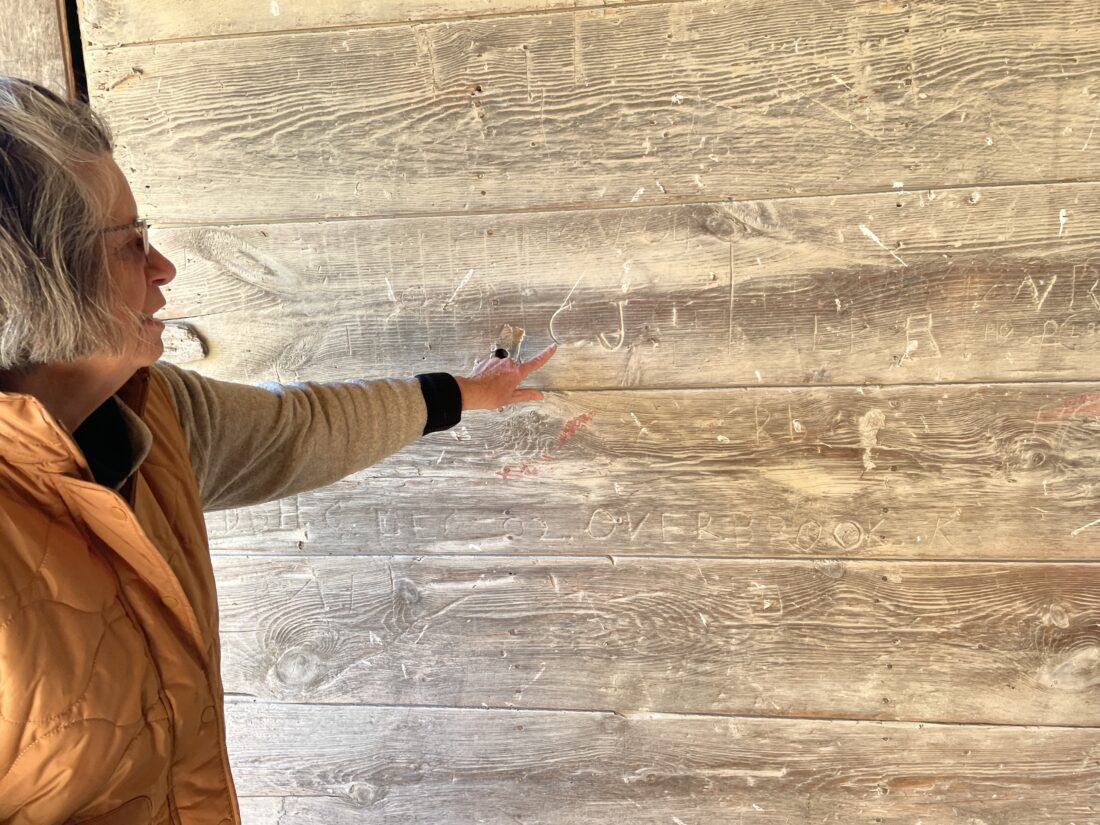
photo by: Matt Resnick/Journal-World
Gerry Coffman points to an etching left on the wall of one of her barns.
The historic resources study was launched by HCC in 2011, going township by township in rural areas to comprehensively survey historic properties and structures and add that data to the Kansas Historic Resources Inventory. Stan Hernly, a preservation consultant involved with the project, said he was “most impressed” that the county’s number of Kansas Historic Resources Inventory listings grew by nearly 85% as a direct result of the study.
The county now has approximately 2,800 total listings on the inventory, and the work to recognize these historic resources isn’t done yet. Only 2% of the Douglas County structures in the inventory are also listed on the state’s registry of historic places, and one of the HCC’s goals is to increase that number.
According to the guide’s data, most of the historic structures identified during the study were built between 1890 and 1930, and nearly half of the buildings were in “good” condition. Wood was the most common building material, and most of the buildings were categorized as either domestic or agricultural, such as farmhouses and barns. Other resources in the inventory include windmills, storm cellars, milk houses, poultry houses and silos.
“Just having this information available in one place where it can be shared will be generally helpful for people to find those historic resources,” HCC Coordinator Kaitlyn Ammerlaan said.
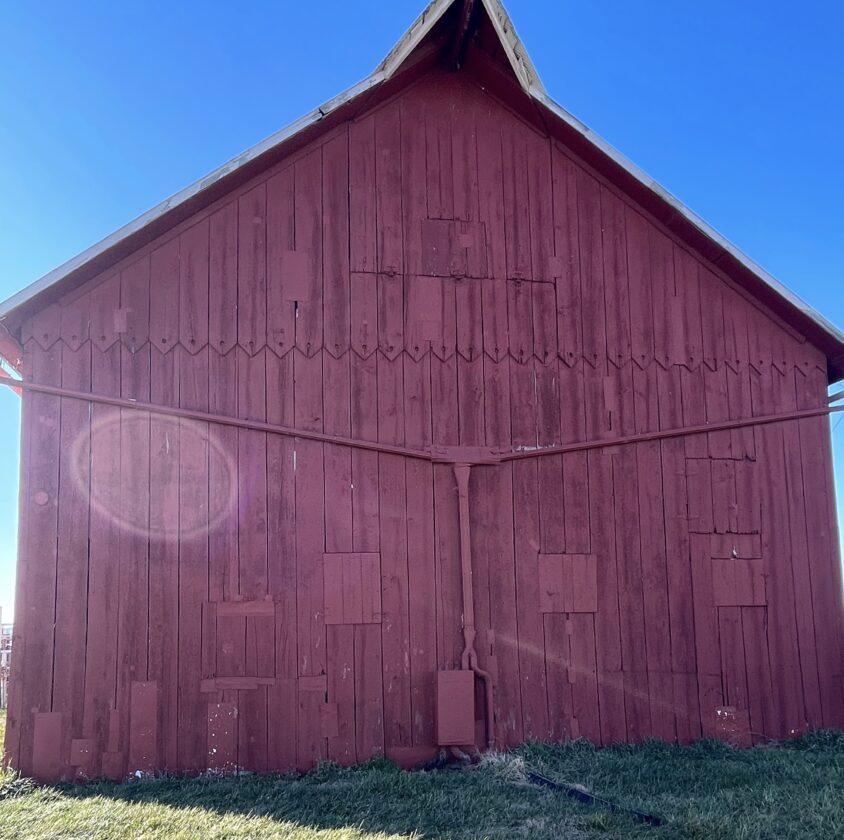
photo by: Matt Resnick/Journal-World
A barn, constructed in 1879, that contributed to the historic listing of Sowers/Crawford Farms on the Register of Historic Kansas Places.
• • •
Part of historic preservation is ensuring that old buildings’ unique quirks aren’t covered up by more modern renovations — which is what happened to part of Coffman’s property.
One of the buildings there is a large chicken house that dates back to 1879. Coffman said the original windows were varied in size and “looked like a Van Gogh painting.”
But when she renovated the chicken house, she put in new windows and new siding — which, she later learned, changed the structure so much that it no longer qualified as part of the property’s historic resources.
“Had we been working with a historic preservationist, I could have done things differently,” Coffman said. “… Now, I will always consult with a preservationist before doing anything.”
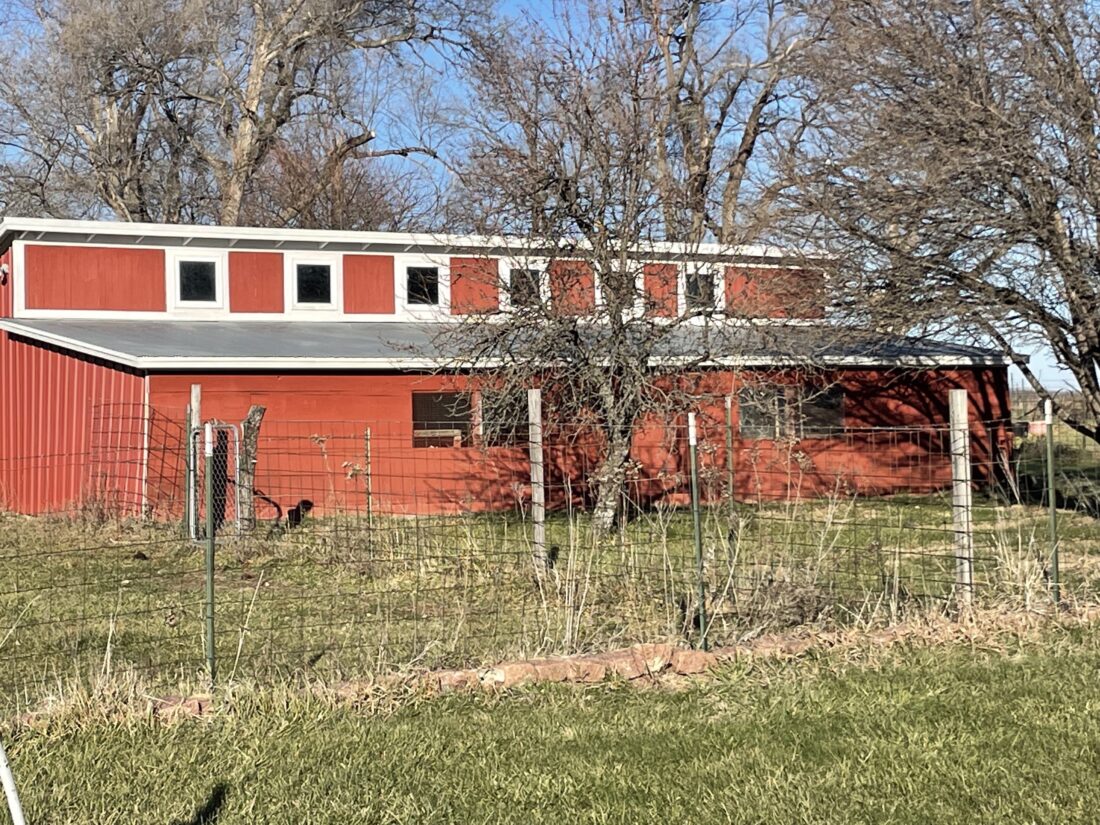
photo by: Matt Resnick/Journal-World
This chicken house located on the Sowers/Crawford property can no longer contribute to the property’s historic resources because of the way it was renovated.
But Coffman’s property still held plenty of historic value, and she said the two-story “gingerbread-style” barn was the “crown jewel.” The barn features original feed bunks that were once used by work horses on the farm and a wooden staircase leading up to the hayloft. A stone fence can be seen by another barn on the property.
Already, Coffman has been thinking about how to share the property’s history. She said she would be open to educational uses, such as hosting children for field trips.
She also knows how rare it is to see research efforts that focus on rural properties like hers, and was thankful for the work done by the researchers, including University of Kansas architecture faculty member Amy Van de Riet, who helped study her property.
“The type of support shown by HCC just does not exist everywhere,” Coffman said.
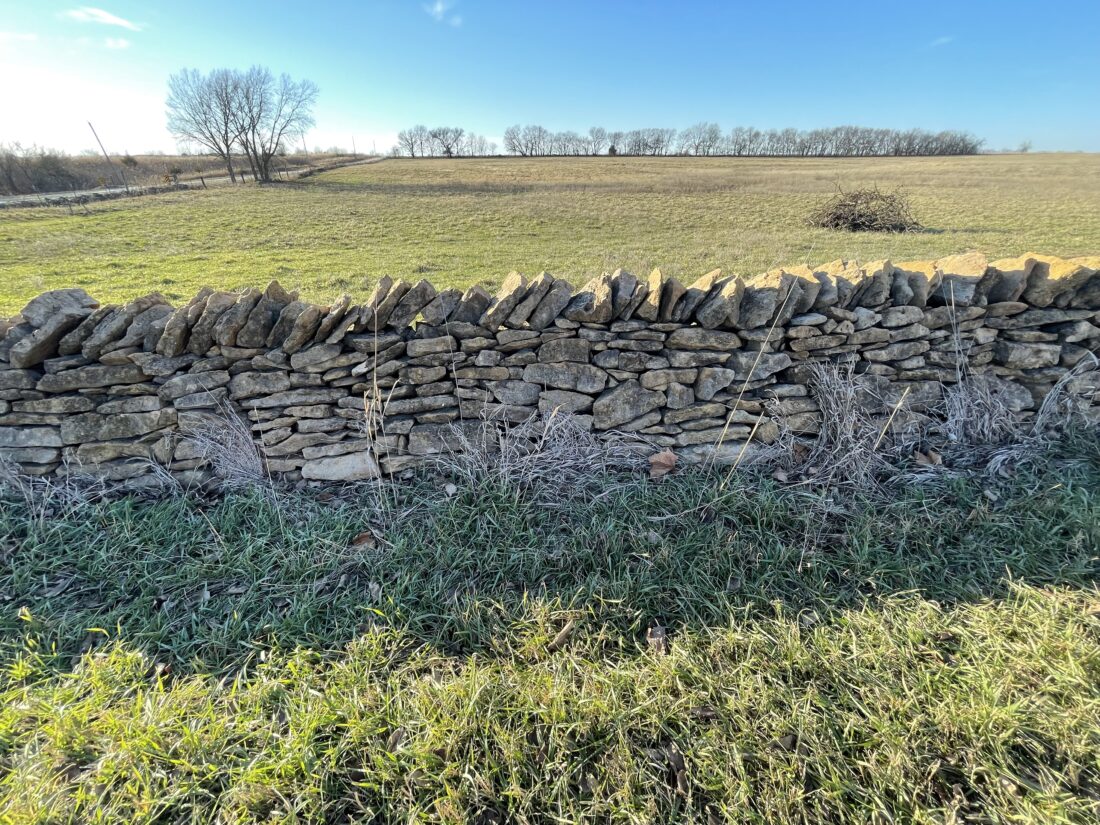
photo by: Matt Resnick/Journal-World
A stone fence located on the Sowers/Crawford Farmstead was a contributing resource to the property’s listing on the Register of Historic Kansas Places.
• • •
The guide itself provides some support for property owners who want to get their historic buildings back in shape — and suggestions for putting them to good use once they’re fixed up.
Among other things, it outlines financial incentives that property owners could use to rehabilitate buildings that are eligible for a historic registry listing. Hernly said the state offers an income tax credit that’s equal to a percentage of the rehabilitation costs for projects that qualify, and that it was recently modified to increase the incentive to 40% for projects in communities or townships with populations under 9,500. A 20% federal tax incentive is also available for qualifying projects.
“So in theory, if you had an income-producing farm and spent $100,000 rehabilitating a building on your property, you could get 60% tax credits between state and federal,” Hernly said. He said that’s a “ridiculously high” percentage of a project’s cost that could be covered.
Ammerlaan, too, emphasized that the tax credits are “fairly significant when you think about the cost of certain work.”
What happens once these properties are rehabilitated? The guide also has some suggestions for that — specifically, ways to draw more public attention to these sites. One approach it suggests is called “adaptive reuse”: Rather than letting an old barn or farmstead sit unused, property owners could convert it to an event venue or other attraction. The guide also advocates for “agritourism,” or bringing in tourists who want the novelty of participating in activities on a working farm, ranch, winery or other agricultural operation.
“It doesn’t just look at the resources as something representing the past, but also as something that can be used moving forward,” Hernly said.
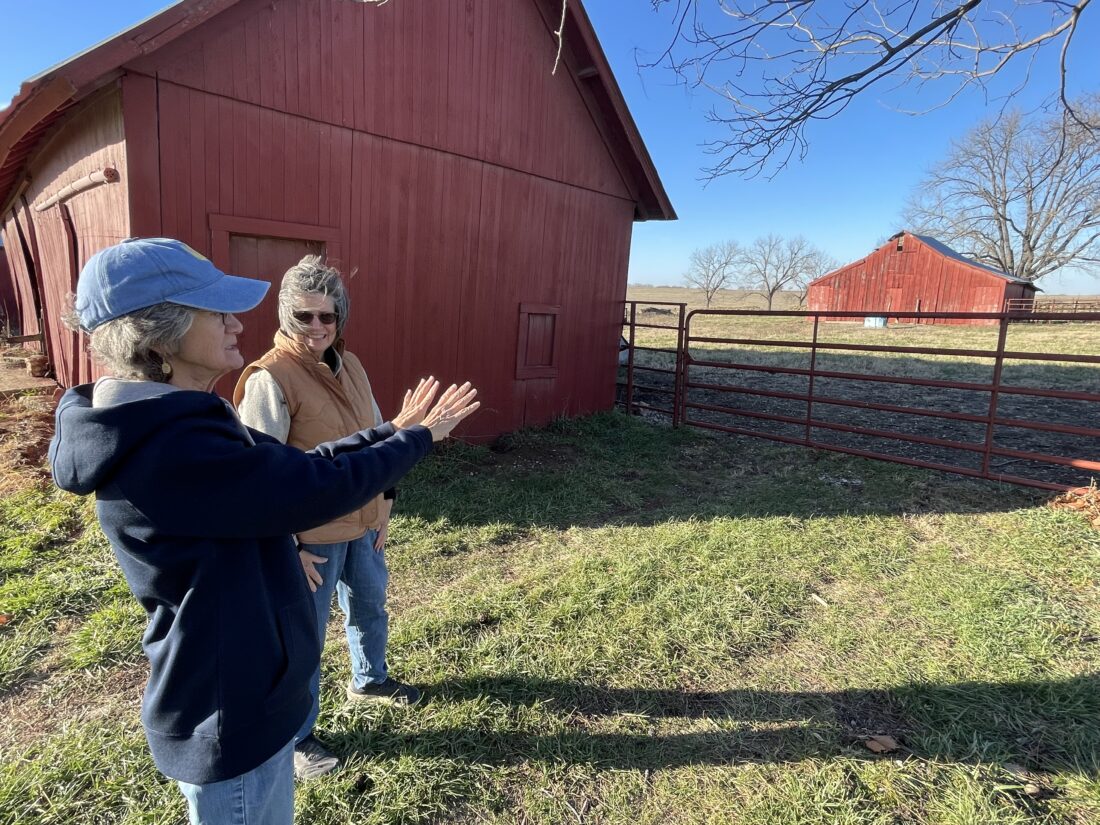
photo by: Matt Resnick/Journal-World
Gerry Coffman, right, and her sister Martha discuss their historic property in rural Douglas County.
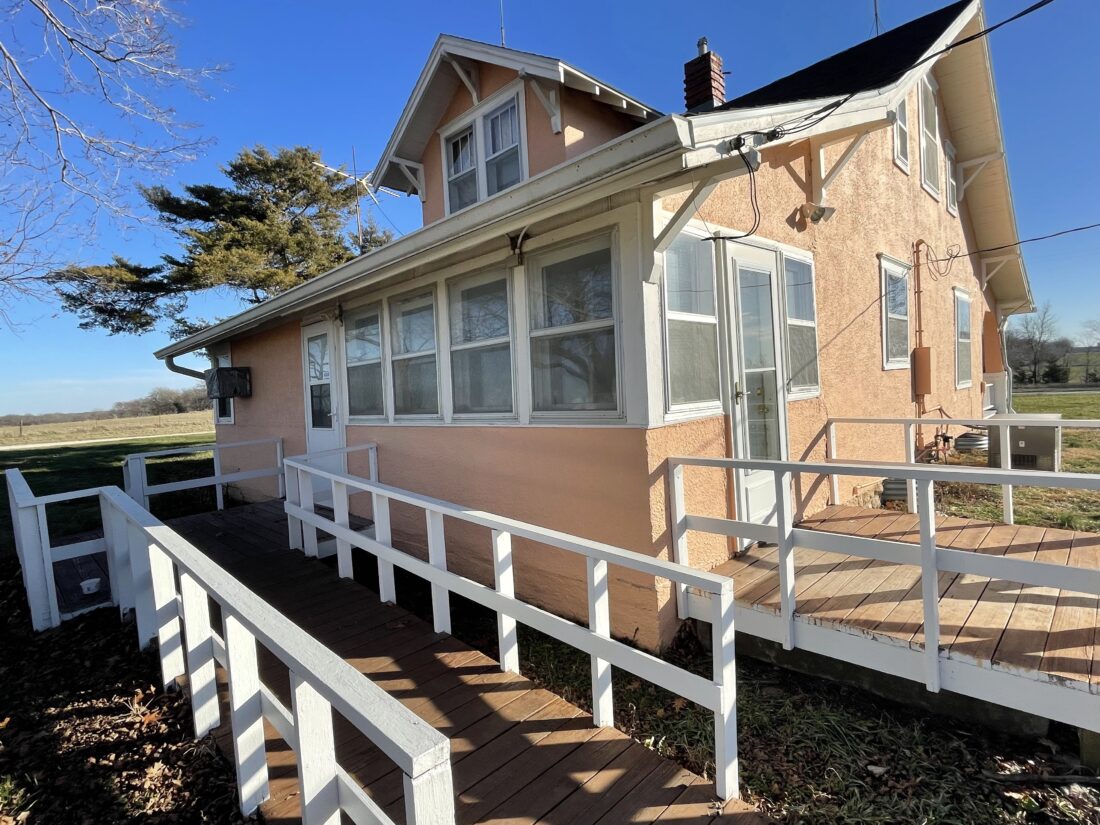
photo by: Matt Resnick/Journal-World
A farmhouse on the Sowers/Crawford property, which was constructed in 1926.
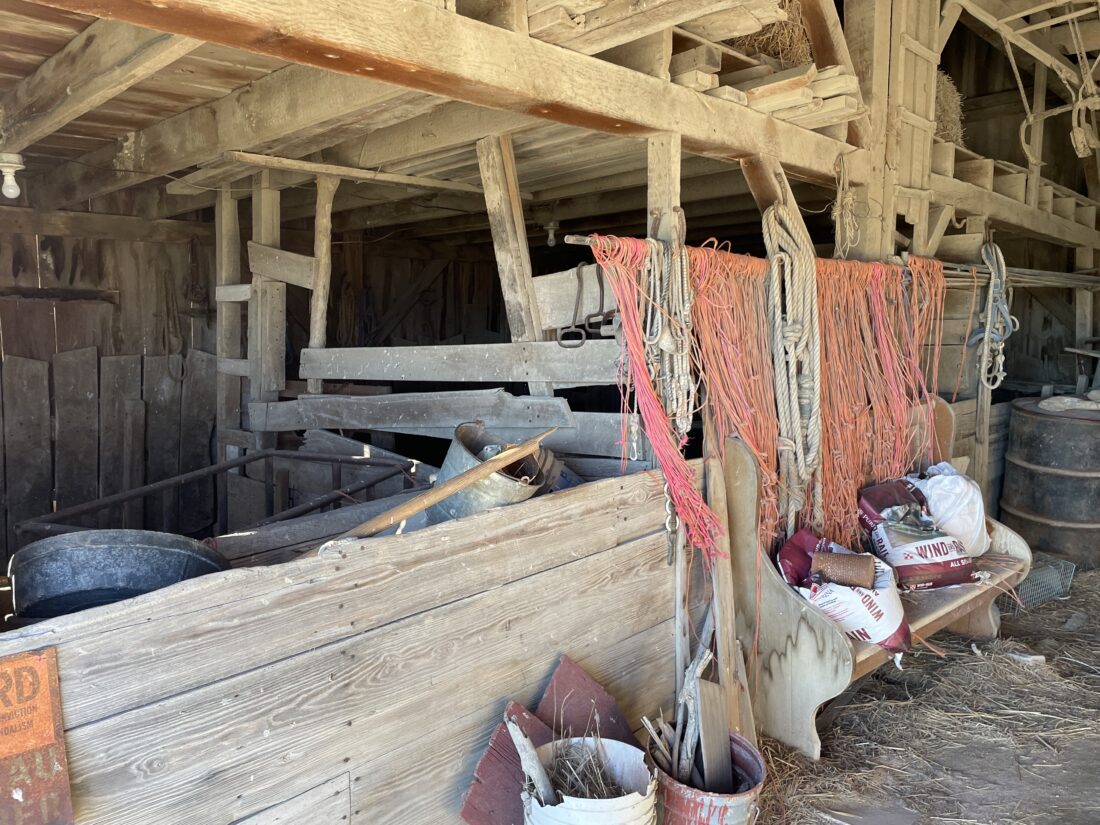
photo by: Matt Resnick/Journal-World
One of the historic barns on the Sowers/Crawford farmstead.
County Government
Housing Stabilization Collaborative’s new system directs rental and utility aid to more vulnerable households, review finds
Housing Stabilization Collaborative’s request for city trust fund aid won’t be considered because it was filed late
Douglas County commissioners discuss tracking results of awarded funding to community partners

General Election Voter’s Guide

An incumbent Douglas County commissioner faces no opponent in general election