Douglas County commissioners take next step in Wakarusa Drive extension project by approving environmental study contract
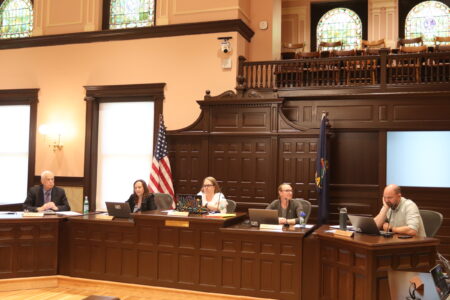
photo by: Josie Heimsoth/Journal-World
Douglas County commissioners met on Wednesday, May 13, 2026.
Douglas County commissioners unanimously approved a contract for an environmental assessment – which is needed for the Wakarusa Drive extension project to move forward.
The proposed road will extend Wakarusa Drive south from Kansas Highway 10, across the Wakarusa River to East 1000 Road. The road would be on federal property managed by the U.S. Army Corps of Engineers, and in Feb. 2026, the Corps of Engineers said the assessment would be required to authorize the project.
The engineering services contract is with HNTB Corporation, which did a similar study for the South Lawrence Trafficway project. The cost for these services will not exceed $276,835.
Chad Voigt, director of Douglas County Public Works, told commissioners that many different paths for the road were considered, but the option staff wants to move forward with is the “straightest shot” to improve access for rural residents and it has the least amount of wetlands impacts.
Voigt also said if the road is not constructed, Douglas County will have to pay over $9 million to the Kansas Department of Transportation due to a cost sharing agreement as a part of the work on the west leg of the South Lawrence Trafficway. While the City of Lawrence originally planned to be involved in the project, the city backed out of that plan and the county was left to finance the commitment.
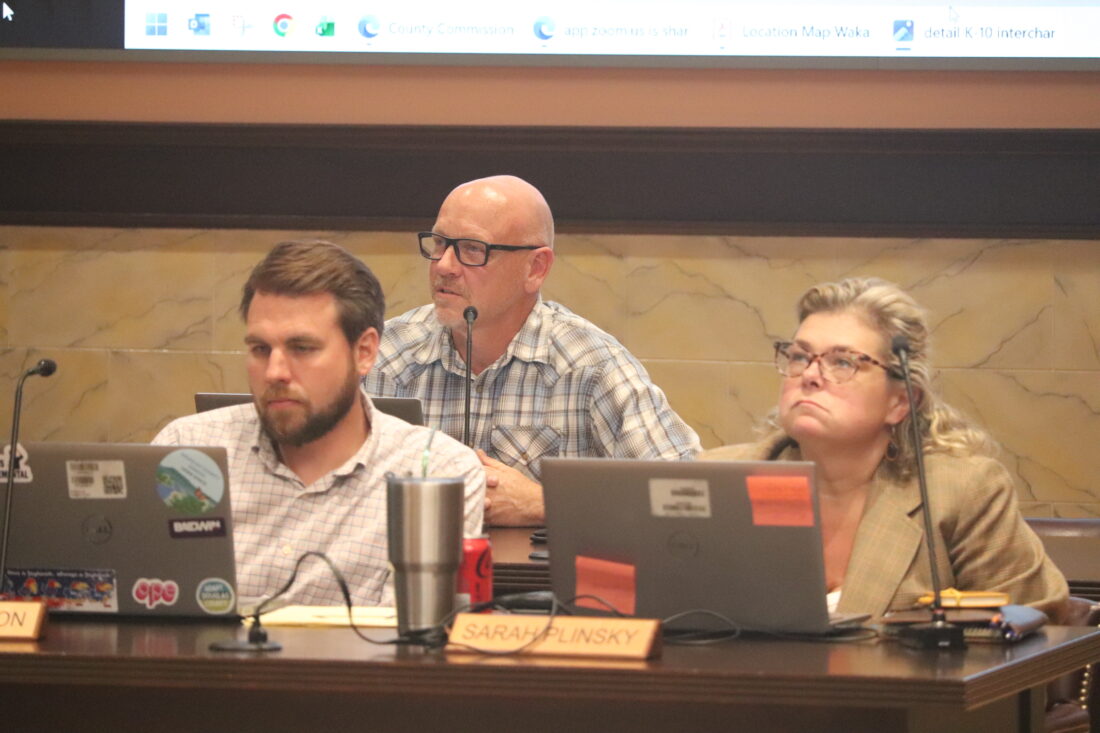
photo by: Josie Heimsoth/Journal-World
From left to right, Deputy County Administrator Sean Pederson, Director of Public Works Chad Voigt and County Administrator Sarah Plinsky are pictured on Wednesday, May 13, 2026.
Commissioner Shannon Reid said this was the step in a larger part of the process for the project, but it gives staff time to gather additional information and determine the right path forward.
“It also seems like a great opportunity to really engage the public and the community in a couple of opportunities to review and assess what is gathered by this consultant,” Reid said.
Commissioner Patrick Kelly said with any project, there is going to be tradeoffs.
“There may need to be adjustments that need to be made based on what we learn, but this sounds like to me, a good next step in the process.”
Multiple public commenters spoke in opposition of the project overall, saying it would negatively impact the Wakarusa Wetlands.
“I care deeply for the Wakarusa River Valley,” county resident Courtney King, a member of the Peoria and Miami tribes, said. “I have put years of my blood, sweat, tears and livelihood into caring for a small faction of once expansive … tall grass prairies, riparian woodlands, swamps and open marshlands that have been destroyed, embraced and marginalized by settler colonists.”
County resident Melinda Ball said she wanted to see the weight of Indigenous peoples and their historical significance of the Wakarusa Wetlands to be in the forefront of any decisions, not the background.
The scope of work for the study includes collecting environmental and mapping data; coordinating with federal, state, local and tribal agencies; conducting cultural resource investigations; and evaluating impacts related to soils, floodplains, water quality, wildlife, noise, hazardous materials, recreation and public safety.
Archaeologists are also planning to dig shovel tests every 15 meters along portions of the route and conduct deeper testing at about 45 locations to identify possible cultural or burial sites.
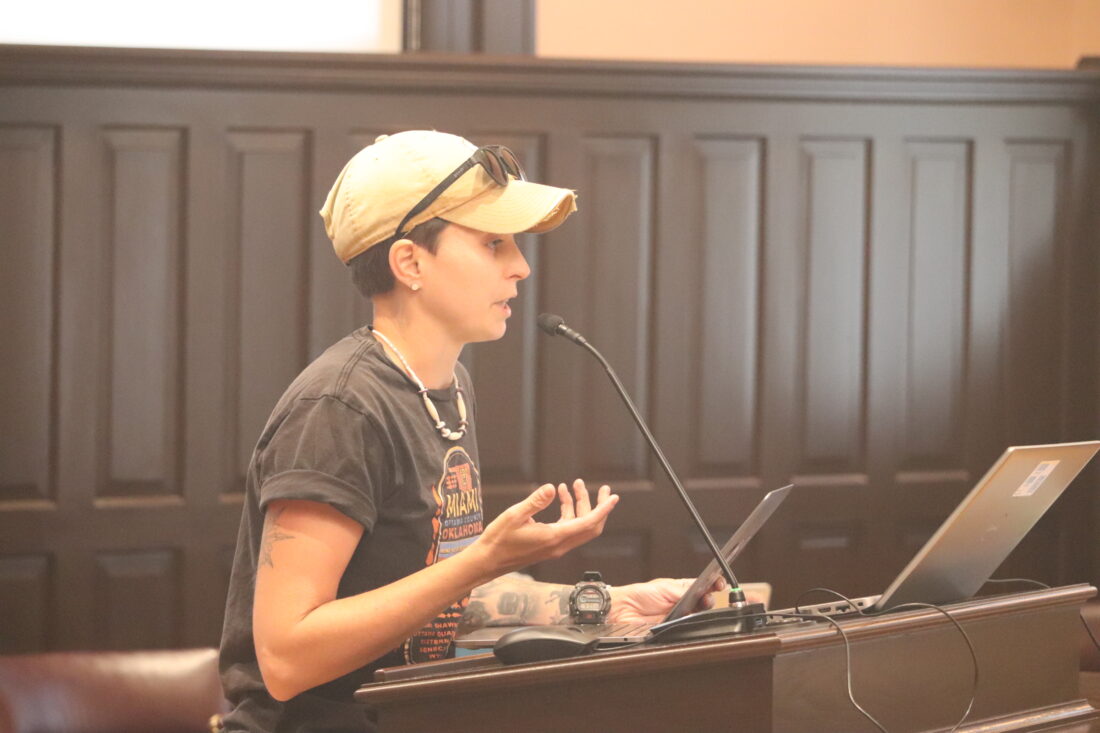
photo by: Josie Heimsoth/Journal-World
Courtney King speaks at the Douglas County Commission meeting on Wednesday, May 13, 2026.
The road will be a two-lane rural highway with paved shoulders and a design speed of 45-55 mph, and it is anticipated to carry 3,650 vehicles per day. The project also includes a parallel 10-foot-wide concrete shared-use recreation path, which will provide new pedestrian and bicycle access to city park facilities on U.S. Army Corps of Engineers lands at Clinton Lake.
In 2025, the Wakarusa Drive Extension project was anticipated to cost almost $10.3 million, with $681,000 in engineering fees. While the current Capital Improvement Plan has this amount allocated towards this project, Public Works will be updating these costs in the 2027 CIP to reflect additional work on the project.
When the assessment is completed, the Corps of Engineers will hold a 30-day public and agency comment period on its process and findings. This period is currently anticipated for July 2026. Public Works will also share a summary of findings with the County Commission during a future meeting which is scheduled for October 2026.
If the Corps of Engineers gives Public Works permission to proceed with the project by the end of this year, the timeline has the project beginning construction in April 2028 and concluding in Nov. 2028.
IN OTHER BUSINESS, COMMISSIONERS:
• Approved two contractual agreements with Kansas Legal Services and Kansas Holistic Defenders for a tenant eviction defense pilot program, beginning June 1 through Dec. 31, 2026. As the Journal-World reported, the goal of the program is to provide access to free legal defense services to eligible tenants in Douglas County and assist participants in stabilizing their current housing situation. Commissioners chose to award $20,000 each to KLS and KHD and to collaborate on the pilot.
• Approved a local disaster emergency declaration for the FIFA World Cup base camp operations, which would go into effect June 7. According to a memo in the agenda, hosting a tournament team has the potential for a temporary increase in population and demands on critical infrastructure and resources.
These conditions may require assistance from other counties and cities, and to access additional resources, the declaration must be on file, the agenda said. The declaration will continue past June 7 until it is rescinded.
• Approved a memorandum of understanding with the state for a State of Local Cybersecurity grant award in the amount of $15,120. These grant funds will go towards a new security solution for vulnerability scanning to identify risks such as misconfigurations, weak passwords, outdated software and unauthorized services on county devices. A condition of the grant award is a cost match of $3,780.
Other News
Clinton State Park and other state parks will increase overnight camping, vehicle permit fees starting next month
‘No day is like the other here’: Students from Lawrence’s German sister city discover football, new foods and new friends on exchange
GCSAA celebrates 100 years with new plaza and statue honoring its founder and first president

Go, See, Do: Library book sale, candidate forum and more
Gas station at Lawrence’s new Costco will be open starting next Wednesday