Lawrence City Commission says it’s committed to keeping property tax rate flat; Larsen brings up possible reduction

photo by: Mike Yoder
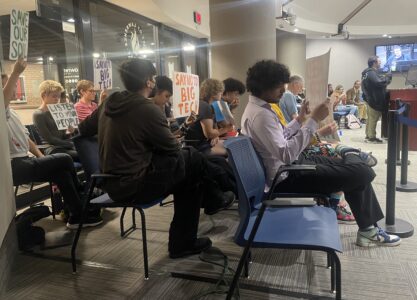
Lawrence City Hall, 6 E. Sixth St., is pictured Thursday, July 7, 2016.
The Lawrence City Commission’s longest-serving member said she thinks the city needs to consider decreasing its property tax rate given the anticipated increase in tax collections due to increasing property values.
As part of its meeting Tuesday, the commission received updated 2022 revenue projections and discussed key policy decisions affecting the 2023 budget. Those include whether the commission still supports additional staff raises, sustained funding for capital projects and a budget that holds the city’s property tax rate flat.
Vice Mayor Lisa Larsen, who joined the commission in 2015, said that the amount of revenue generated by one mill has gone up substantially since she’s been on the commission, and that if projections come to be, the commission should discuss the possibility of a decreasing the city’s tax rate.
“When I was first on the commission I believe one mill was about $850,000, so it really shows to me the increase, the pressure it’s placed on our community members,” Larsen said. “Taxes have gone up over these years, and now we’re looking at almost $1.2 million per mill, so that’s quite a jump for our community members.”
Other commissioners didn’t indicate whether they agreed with Larsen, but did agree that they did not want to increase the property tax rate and asked some questions about the city’s property tax rate, known as its mill levy rate.
Finance Director Jeremy Willmoth told the commission that the net increase in property valuations is expected to be between 10% and 12%, and that the city would get an estimate of its expected revenue in mid-June. Willmoth said that currently one mill is equal to about $1.14 million in tax revenue for the city. He said if property values go up 10%, then one mill would be worth about $1.25 million, so the city would have to cut that much spending for every one-mill reduction to the city’s mill levy rate.
The city’s 2022 budget was “structurally imbalanced,” including almost $8 million more in spending than the city was projected to collect in normal revenues — a gap offset this year by the city’s first installment of $19.3 million in federal relief funding from the American Rescue Plan Act (ARPA). Much of the excess spending represents ongoing rather than one-time expenses, including new positions and staff pay increases, meaning the city must account for the budget gap in years to come.
The city’s most recent revenue projections indicate that the budget gap is less than initially projected. That’s due in part to increases in projected revenues, including projected property and sales tax collections. Specifically, increases in property valuations have resulted in a $3.49 million increase in projected property tax collections, and increases in projected sales and use tax collections have resulted in a $10.7 million increase. As a result, the budget gap that has to be covered by ARPA funds over the next two years decreased from $20.88 million to $9.98 million.
The 2022 budget included $5 million in staff raises, and Willmoth said another $5 million would be needed this year if the commission wishes to get all employees to market rate. As far as capital projects go, the city estimates that sustaining the Capital Improvement Plan at the same pace would cost $55 million. All commissioners said they were committed to continued staff raises and indicated they were open to program reductions or potentially reductions to the CIP if needed to address the budget gap.
The city’s upcoming 2023 budget process includes the presentation of the recommended Capital Improvement Plan on June 14 and the presentation of the city manager’s recommended budget on July 12. The commission will set the budget’s maximum expenditure level on July 19 and the public hearing for the budget will be Aug. 23.
In other business, the commission:
•Voted 4-1, with Mayor Courtney Shipley opposed, to authorize the city manager to submit a letter of commitment to the Kansas Department of Transportation for the local match for the lane expansion of the South Lawrence Trafficway. The approximately $7 million city match is made up of funding for several locally funded road projects related to the expansion, and Shipley was opposed to including funding to extend Wakarusa Drive south across the Wakarusa River to County Route 458 (North 1200 Road) in the local match.
Shipley expressed concern about the environmental impact of the extension and said she did not see the need for the extension since the city-county comprehensive plan, Plan 2040, does not anticipate growth in that area in the coming years. Larsen said she supported the letter of commitment but that she also had “really strong reservations” about extending Wakarusa Drive south to Route 458. Commissioner Bart Littlejohn said he agreed with Larsen. Commissioner Brad Finkeldei noted the extension is included in local transportation plans and that funding to design the project is included in the city’s 2022 budget.
•Received a presentation on a study of the infrastructure needs and emergency response costs for the city to expand its long-held border along Kansas Highway 10. Taken together, the anticipated costs total more than $100 million.
City Government
Evacuation drill planned Tuesday at Lawrence City Hall

Bond issue for water and sewer projects, bike plan, Wakarusa Drive update on Lawrence City Commission’s agenda
Opinion: Environmentally conscious Lawrence is not focused on the biggest problem with electric vehicles
Locust Street apartments, Holcom housing development among this year’s applicants for $700K in Affordable Housing Trust Fund money
Business owners hurting from Wakarusa Drive closure say they’re getting no answers, no signs, no accountability