After recent instability, Lawrence Community Shelter looks to become a better partner in addressing homelessness

photo by: Mike Yoder
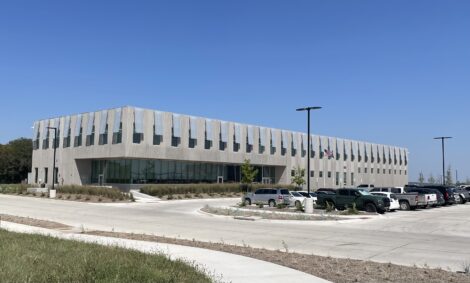
The Lawrence Community Shelter, 3655 E. 25th St., is pictured in this file photo from 2015.
With recent changes in top positions and more in store, Lawrence Community Shelter leaders say the organization is ready for a new direction.
The shelter’s new board president, Isabel Johnson, said efforts have begun to strengthen the shelter’s relationship with city and county governments and reassess the shelter’s role in addressing homelessness in the community. As the shelter prepares to restart its search for a new executive director, Johnson said she thinks the organization is looking toward a “new stage” of what it looks like to partner with other services that work to address homelessness instead of trying to go it alone.
“We are reinventing what it looks like to be a fully integrated system partner, and what that kind of a model for homeless prevention and emergency housing shelter looks like,” Johnson said.
Johnson, who was formerly the board secretary, took over as board president earlier this month after former board president Thea Perry decided to step down from that role. Johnson said she met with City Manager Craig Owens and County Administrator Sarah Plinsky on Monday as part of the shelter’s effort to strengthen its relationship with the two local governments and begin conversations about how the shelter can be a “good partner.” Johnson said the shelter, the city and the county are all looking at who should be involved in the various components of the system of services to address homelessness, such as providing shelter or transitional housing.
“We’re all learning what that can look like, not just through funding, but through where we put the funding and who does which piece of the system,” Johnson said.
The shelter is currently an independently operated nonprofit organization and the only permanent emergency shelter in Douglas County. It is funded by private donations, the City of Lawrence, Douglas County, and state, federal and other grants.
The city and county have both recently stepped deeper into the territory of addressing homelessness. The city helped run a sanctioned campsite and an emergency overnight shelter last winter, and will be in charge of the emergency winter shelter again this winter. The city also created a new housing initiatives division as part of its budget for 2022. Douglas County’s new behavioral health campus includes transitional housing, and the county recently approved an outside study to help assess the community’s needs when it comes to serving and supporting those experiencing homelessness.
• • •
The shelter’s current efforts come after a recent period of instability in its leadership, as well as other issues.
The shelter has had five executive directors since longtime leader Loring Henderson retired in May 2014. Earlier this year, as the Journal-World previously reported, shelter staffers voiced concerns about a toxic environment for staff and guests under then-executive director Renee Kuhl, as well as concerns about reductions in capacity at the shelter and other issues they thought negatively impacted people experiencing homelessness. After commissioning an outside investigation, the board announced in July that Kuhl was no longer employed by the shelter. Director of Shelter Programs Melissa Botts is currently serving as interim director.
The shelter began seeking Kuhl’s permanent replacement, but that process was recently put on pause and may be subject to some changes. After an initial review of applicants, Johnson said two candidates were selected for final interviews, but one dropped out and the board decided that the remaining candidate did not have the level of experience needed for the position. Not long after that, on Oct. 10, Johnson said Perry decided to resign ahead of the scheduled end of her term on Dec. 31.
Johnson, whom the board subsequently elected to serve the remainder of Perry’s term, said the process for hiring the new executive director is now being reconsidered. She said the board decided that it was important that the search be done in partnership with the city and the county, and that the board was hoping to hear what involvement the city and county might want to have in the process.
There are also other changes on the horizon. Board members serve three-year terms, which the board can vote to extend, and Johnson said her term and the terms of a couple of other board members are set to end Dec. 31. She said the board has been in the process of recruiting additional people to serve. Johnson said she is currently undecided as to whether she will seek another three-year term. Johnson, who is married to LMH Health President and CEO Russ Johnson, is currently self-employed as a child development specialist and previously served for 15 years on the board of a homeless shelter in Colorado.
In a statement, Perry endorsed Johnson’s leadership and gave some details on why she had decided to step down early. She said her decision was made primarily because of her own family obligations, but also because she thought the shelter could benefit from new approaches.
“In the past five years, the board has worked diligently within the established funding and governance framework, and with the incredible work of the staff, there has been progress,” Perry said in the statement. “I’ve come to believe further progress may necessitate reexamination of that framework with our City and County partners, and that essential work would best be accomplished by people with fresh energy and more time than I currently have available.”
• • •
As the shelter moves forward, the capacity of the building and who provides emergency winter shelter services is also likely to be a topic of discussion.
The city or volunteers have taken on the responsibility of emergency winter shelter services following reductions in capacity at the Lawrence Community Shelter in 2019. The shelter has the capacity to serve 125 people most of the time and 140 people during the winter. The shelter originally reduced its capacity to 65 people in August 2019 amid budget issues and changes to its staffing model, and then further reduced the number of people housed at its building in eastern Lawrence to a maximum of 40 people during the coronavirus pandemic so that it could space out guests in its dormitories and have room to quarantine guests as necessary.
Johnson said the shelter plans to increase its capacity to 50 people for the winter, but that further decisions about capacity would depend in part on the availability of housing. The shelter has adopted a housing-first model, which focuses on rapidly getting people into their own housing. Johnson said goals for overall capacity at the shelter would depend in part on the availability of housing to rapidly accommodate guests rather than having them stay at the shelter for longer periods of time.
Overall, Johnson said as the organization continues to learn how to operate in a pandemic and looks ahead toward new leadership, she thought it was in a better position to provide healthy and safe shelter to those who need it.
“We are a stronger organization, and I feel good about the process of hiring an executive director to lead us,” Johnson said.
City Government

‘We have to move forward’: On 3-2 vote, Lawrence City Commission approves budget with 1.4-mill hike

Manufacturer opens new production facility, adds 30 jobs in Lawrence industrial park
Lawrence City Commission set to take its final vote on budget next week; current proposal has a roughly 1-mill property tax rate increase
City manager says renovating Lawrence’s Fire Station 3 instead of relocating it could save millions of dollars
Incentive request for 341-unit apartment complex near KU Innovation Park wins City Commission approval