

KU Health System seeks its own exemption from concealed carry mandate
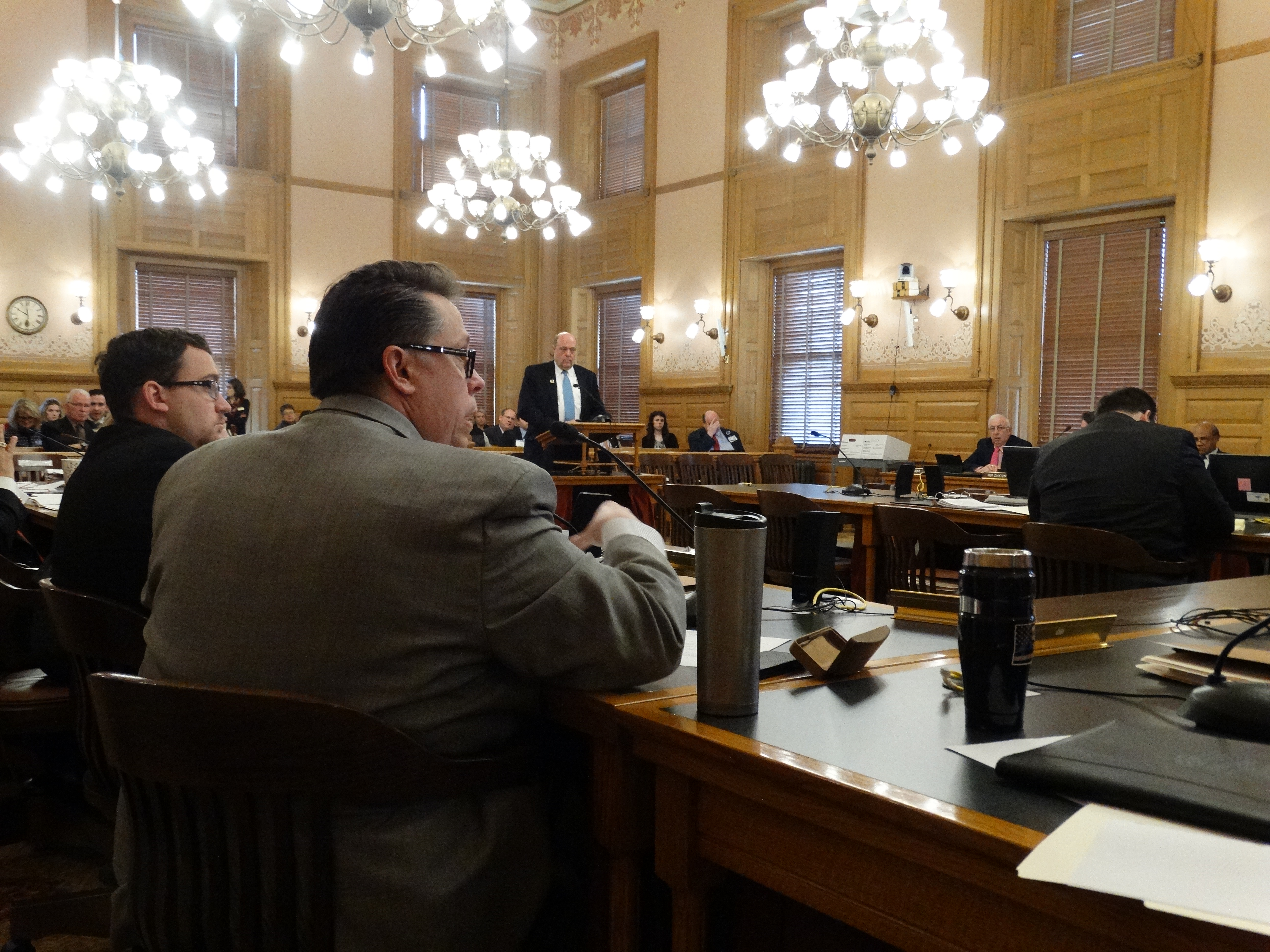
Rep. John Whitmer, front, R-Wichita, questions KU hospital CEO Bob Page during a hearing on a bill that would exempt the hospital from a state law that will soon require most publicly-owned buildings to allow people to carry concealed weapons.
Topeka ? The University of Kansas is seeking a special exemption from the state’s concealed carry mandate for its medical school and attached hospital in Kansas City, Kan.
Officials from the hospital, now known as KU Health System, testified Thursday before the House Federal and State Affairs Committee, the same panel that heard testimony Wednesday on a broader bill that would permanently exempt public college and university campuses as well as city and county buildings.
Under a law passed in 2013, the hospital will be required to allow adults who are legally allowed to own guns to carry concealed weapons in its buildings, unless the hospital provides security measures that ensure no one can bring in guns.
House Bill 2150 would carve out a specific exemption for the area of Kansas City known as the Health Care District.
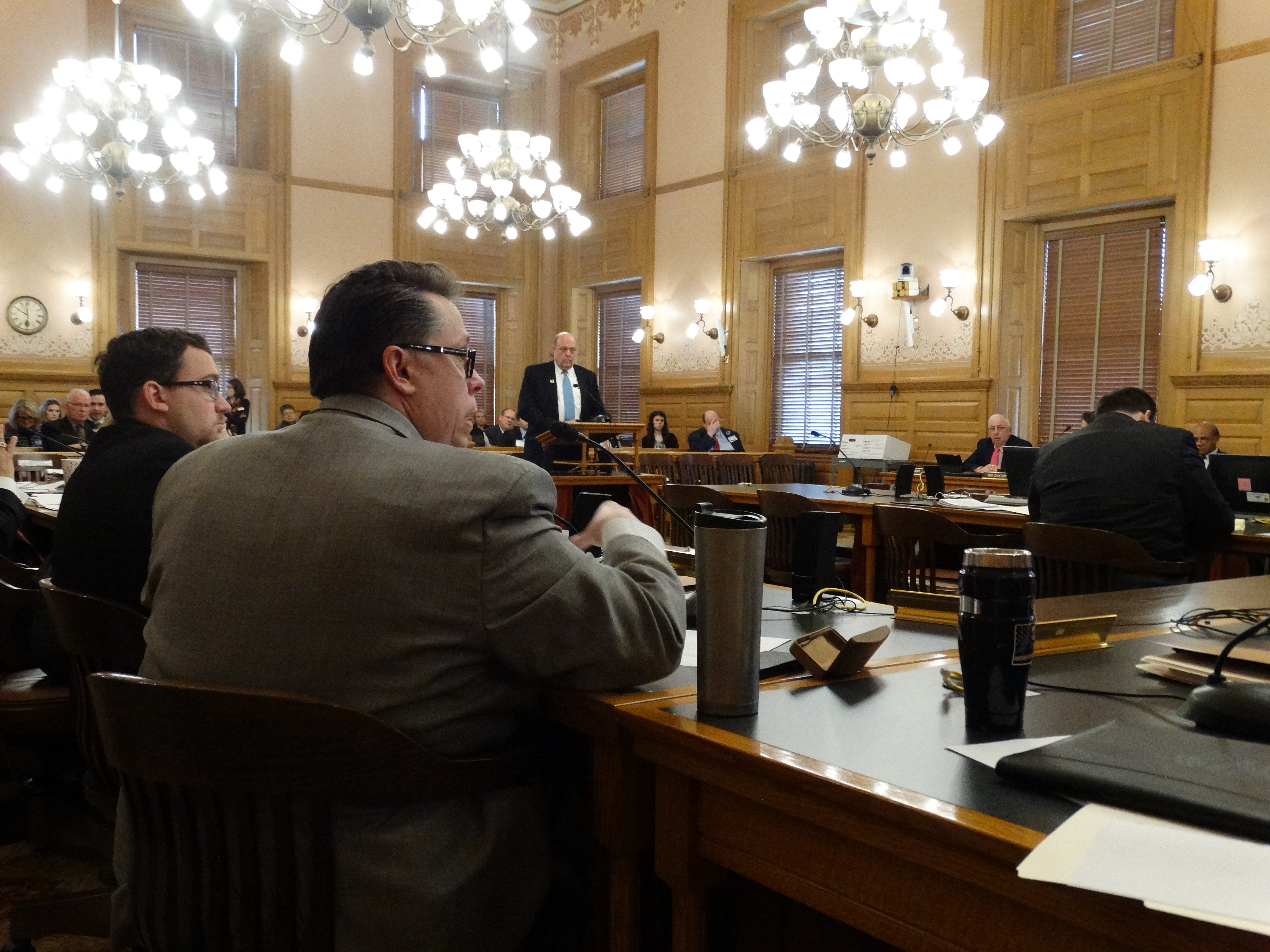
Rep. John Whitmer, front, R-Wichita, questions KU hospital CEO Bob Page during a hearing on a bill that would exempt the hospital from a state law that will soon require most publicly-owned buildings to allow people to carry concealed weapons.
“If guns are allowed to be brought into our hospital, we will be the only hospital in the seven counties surrounding the metropolitan area where that’s allowed, and we will be competitively disadvantaged in our main operating area,” said Bob Page, president and CEO of the hospital.
Lee Norman, chief medical officer at the hospital, said that hospital environments are unique and that hospital staff often has to deal with emotionally stressful situations.
“With gang members, disturbed and overstressed people, our campus police will lose the power to head off problems by preventing guns from being brought into high-stress situations,” he said.
The hospital is co-located with the KU Medical Center, the university’s medical school, and so has its own campus police force to provide security.
Rick Johnson, the chief of that police department, appeared in uniform urging lawmakers to pass the bill.
“Allowing the carrying of concealed handguns in a health care environment will not increase security, but will create new public safety threats,” he said. “I am absolutely convinced that firearms do not enhance hospital security, but will contradict best practices already in place.”
Many members of the panel, however, appeared unconvinced by those arguments.
“Right now, this bill takes away your 10,000 employees’ right to carry a handgun into the facility, because they’re working at all times of day, morning and night, and so is there no provision for them if they would feel safer in the nighttime traveling from the parking garage to one of the facilities?” asked Rep. Kristey Williams, R-Augusta. “That’s one of the concerns of mine.”
“We have, through Chief Johnson over here, an outstanding police department and a security force, so we will escort employees back to their cars in the evening,” Page said. “We have all kinds of mechanisms to control safety on our campus, and we believe those measures are sufficient to make sure our staff are safe.”
Under questioning from Rep. Eric Smith, R-Burlington, Johnson said there had been only two recorded incidents of weapons law violations at the hospital during 2016, and there had been none the year before.
“We do operate a metal detector in our emergency department. It’s very rare that we intercept weapons at that point,” Johnson said. “The more likely point of reception is through ambulances that come through.”
But Smith followed up, asking if Johnson truly believed that only two weapons had entered the facility, and whether it was possible some had gotten through undetected.
“I think that there’s more than that, but I do think it’s fair to say that because of our history and our presence of police and security on our campus, I think our community knows that if they’re going to come to KU hospital, they can’t bring their guns,” Johnson said.
Rep. John Whitmer, R-Wichita, said he thought the exemption the hospital is seeking is too broad because it would apply to all property in the district, not just hospital property.
“Let’s just say you contracted to build a facility of houses or a hotel, or a facility for families that want to stay on campus,” he said. “Maybe they’d put a restaurant in — I don’t know if you have one, or you might build one in the future — or an apartment complex.”
Page, however, said the intent of the bill was “to protect patient care areas and the staff that take care of patients in those areas.”
The hearing came one day after the same committee heard testimony on a bill to extend broader exemptions from the concealed-carry law for college and university campuses and other buildings run by local governments, including public hospitals and mental health centers.
Rep. Melissa Rooker, R-Fairway, who supports that bill, said she thinks it is at least three votes shy of the number it needs to advance out of committee, and she said those against the bill appear unwavering in their opposition. But she said a narrower bill just for hospitals might have enough votes.
Even if neither of the bills makes it out of committee, however, lawmakers have the option of trying to add them in the full House as amendments onto other bills on related topics.
State Government
2 Douglas County District Court judges up for retention on November ballot
General Election Voter’s Guide

Two state senators vying to be Kansas governor

14 candidates for Kansas House of Representatives will appear across Douglas County ballots in November. See who they are.
Three candidates vying to become state’s chief election officer
There will be a new Secretary of State in Kansas after the incumbent decided not seek re-election to the post that ...
Voters Guide: Meet the candidates vying to become Kansas’ next Attorney General
Current Kansas Attorney General Kris Kobach is facing off against Democrat Chris Mann for the office. Again. The ...