EPA cites no health violations in Lawrence’s water; utilities department working on quality report
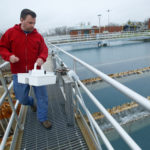
In this file photo from April 2013, Ryan Rubow pulls samples from the various tanks at the Kaw River Water Treatment Plant.
During the drinking water crisis in Flint, Mich., USA Today found there were nearly 2,000 other water systems in the United States that tested for excessive levels of lead, and The Associated Press is reporting 18 water systems in Kansas have exceeded the federal standard of lead levels.
The city of Lawrence has remained off those lists. According to the Environmental Protection Agency’s Safe Drinking Water Information System, Lawrence hasn’t had a health-based violation at least in the past 10 years.
The city’s utilities department is arranging a presentation to the City Commission on Lawrence’s water quality, said Jeanette Klamm, a management analyst with the department. It will outline current lead-control practices and planned, future initiatives for keeping Lawrence’s water free of contaminants.
Related story
• EPA: 18 water systems in Kansas show high lead samples, April 10, 2016
Klamm explained that in the water systems where lead is found, lead is leached from city or privately-owned pipes after it’s been treated. As is required of all water treatment plants, Lawrence adds chemical phosphates that coat the inside of pipes, protecting the water. Those phosphates were found to be missing from Flint’s water.
In the 1980s, when the U.S. passed laws banning the use of lead piping, Lawrence started a program through which it sought out lead service lines and replaced them, Klamm said. Service lines connect the water mains in the street to the meter. That program lasted for 10 years. During some of that time, it was still legal to use lead in soldering connections in the pipes.
Klamm said she was unsure how many pipes were removed during that program. She said there has been some sampling done since the Flint crisis to find any remaining service lines that contained lead.
In the U.S. communities where testing has shown elevated levels of lead, the contamination could be coming from homes that have lead content in their pipes or faucets, which are the homeowners’ responsibility. In accordance with the Safe Drinking Water Act, Lawrence tests for lead and copper content in water directly from residents’ taps.
A majority of Lawrence’s water comes from the Kansas River and Clinton Reservoir, and a small amount is pulled from underground wells.
The utilities department plans to distribute information to promote awareness for water quality after its presentation to the City Commission later this month.
City Government
Opinion: Local government made a small mistake. Taxpayers shouldn’t be on the hook to fix it

As club cancels ‘Beetlejuice’ screening at Oak Hill, city says there are no specific rules about events at cemeteries
Opinion: An $80 million Hail Mary that combines Costco and Lawrence’s love of trails

Lawrence Police Department receives KDOT’s top traffic safety award for second straight year
Lawrence City Commission approves extra layers of oversight for data centers, asks for patience on further regulations